
REVIEW · PRIVATE
10 Days Private Tour in Romania from Bucharest
Ten days in Romania feels like a movie. This private, locally guided route strings together big-city history, mountain-road drama, and the unforgettable painted churches of Bukovina, all with a private driver and the kind of pacing that lets you actually enjoy the stops, not just pass through. I especially love how the route balances major landmarks with smaller, story-heavy places, and how the guide team behind Nicolas Experience Tours, including Nicolas, keeps things fun while staying clear and practical.
One thing to keep in mind is the sheer distance you’ll cover, so expect long road days and a bit of early-day momentum. Also, while many sights are listed as admission included or free, your exact entrance coverage will depend on what your booking confirms, since entrance fees are marked as not included as a blanket item.
In This Review
- Key points you’ll care about
- Price and what you get for $3,472.81 per person
- Entering Romania Through Bucharest’s biggest symbols
- Palace of Parliament, People’s House, and the feeling of too-muchness
- Village Museum Dimitrie Gusti for Romanian life
- Romanian Athenaeum, Calea Victoriei’s cultural landmark
- Revolution Square and the start of December 1989
- Old Town, Hanul lui Manuc, and the pre-modern city vibe
- Curtea de Argeș, Poienari, and Transfăgărășan mountain-road drama
- Curtea de Argeș Monastery, royal tombs and a sad story
- Poienari Castle ruins, cliffside fort history
- Transfăgărășan Highway, the road that makes people plan ahead
- Sibiu time at Piata Mare
- Corvin Castle and Sarmizegetusa, Romania’s medieval power on display
- Corvin Castle, Gothic-Renaissance and huge scale
- Densus Church, Romania’s oldest stone church
- Sarmizegetusa Regia, Dacian capital with a strategic layout
- Salina Turda salt air, Cluj area color, and Surdesti’s wood church craft
- Salina Turda, the salt mine experience
- Gradina Botanica Alexandru Borza and Cluj-Napoca feel
- Surdesti Wooden Church, 1721 craftsmanship
- Maramureș color and a hard lesson at the communism memorial
- Merry Cemetery, Sapanta’s crosses with poems
- Memorial of the Victims of Communism and of the Resistance
- Barsana Monastery, Tihuța Pass, and Ciocanesti’s painted houses
- Barsana Monastery, tall wooden church magic
- Tihuța Pass, the Borgo Pass Dracula link
- Ciocanesti village, Golden Bistrita painted houses
- Voroneț Blue and the painted monasteries of Bukovina
- Voroneț Monastery, Stephen the Great and Voroneț blue
- Humor Monastery, fortified and hidden away from enemies
- Sucevita Monastery, UNESCO-listed fortified church storytelling
- Moldovita Monastery, 1532 fortified church murals
- Eggs, naive sculpture, and Bicaz Gorges along the river
- Lucia Condrea Egg Museum, 5,500 exhibits in Moldovita
- The Popa Museum, Nicolae Popa’s personal art mission
- Bicaz Gorges, a river cut through forests
- Medieval Sighișoara and Biertan Fortified Church, Transylvanian defense meets daily life
- Sighișoara Clock Tower and Arms Museum
- Biertan Fortified Church, hillock church with 7 bastions
- Brasov Old Town, Black Church, Bran Castle, and Peles Castle in one final rush
- Black Church in Brasov, medieval walls and time to roam
- Bran Castle, myth meeting marketed reality
- Peles Castle, the royal summer residence you can feel in your feet
- What stood out most from real feedback about Nicolas Experience Tours
- Who this private 10-day Romania tour is best for
- Should you book this 10-day Romania private tour?
- FAQ
- How long is the 10 Days Private Tour in Romania from Bucharest?
- What is the price per person?
- Is this a private tour or a group tour?
- What transportation is included?
- Do you provide a guide?
- Are entrance fees included?
- Is pickup offered, and do I get tickets on my phone?
- What is the cancellation policy?
Key points you’ll care about
- A guide who explains as you go: You get context for heavy stops, like the Palace of Parliament and the anti-communism memorial, plus the lighter Dracula-style moments.
- Private car, not a bus shuffle: Your group stays together with WiFi in the vehicle, and you can adjust the day’s plan when needed.
- Bukovina’s painted monasteries: Voronet, Humor, Sucevita, and Moldovita are the artistic core of this trip.
- Transylvania beyond Dracula: You’ll also see Corvin Castle, Densus Church, Sarmizegetusa Regia, and fortified churches.
- A route built for sensory travel: Salt mine air at Salina Turda, painted houses in Ciocanesti, and the mountain feel of Bicaz Gorges.
Price and what you get for $3,472.81 per person
At $3,472.81 per person, this is not a budget tour. But you are paying for a private setup across a huge swath of Romania, not just for guided sightseeing in one city.
Here’s the value math I see from the tour details: you get a private car for only your group, a licensed English-speaking guide/driver available throughout the trip, complimentary wireless internet in the car, and all car costs like gasoline, parking, and road tolls. The route also includes flexibility, meaning you can often adjust the daily order even after the tour begins. That matters a lot when you are traveling between regions like Wallachia, Transylvania, and Bukovina.
Two checks before you commit: first, accommodation and meals are not listed as included for you. Second, entrance fees are described as not included as a blanket item, even though many stops are specifically marked as admission included or free in the plan. In practice, that means your booking confirmation is where you’ll see what you personally pay at each stop.
Entering Romania Through Bucharest’s biggest symbols
Bucharest day one is a smart way to set the tone. You start with scale, then switch to culture, then hit the emotional turning points of the communist era, and finish in the old streets.
The private end of Bucharest
Palace of Parliament, People’s House, and the feeling of too-muchness
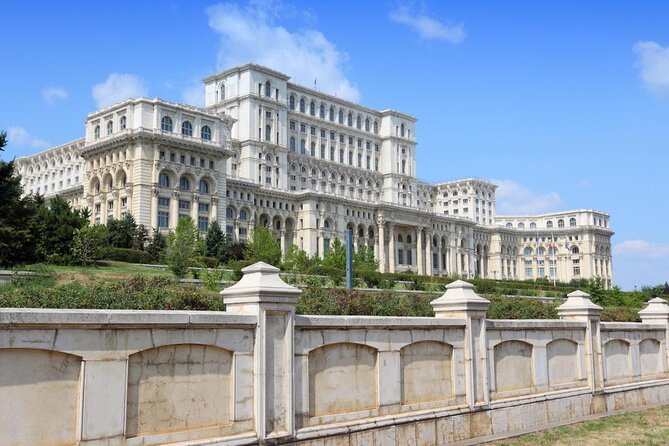
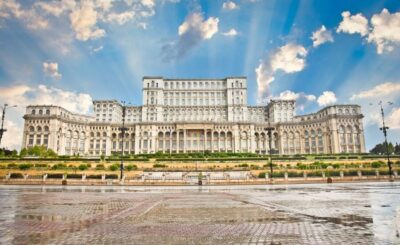
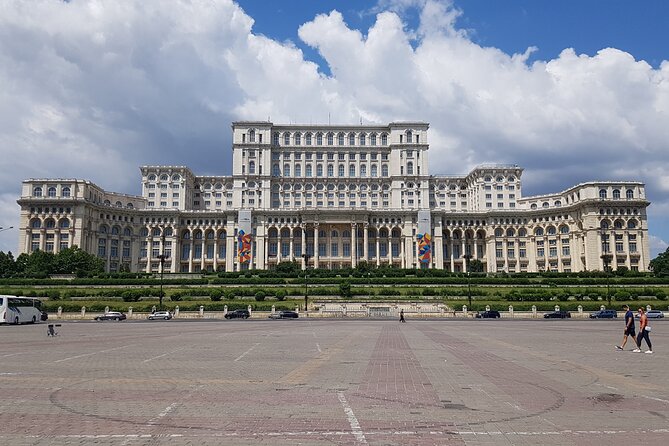
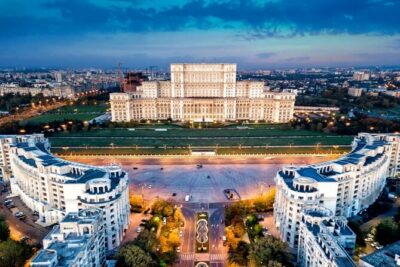
The Palace of Parliament is one of those places that can overwhelm you in seconds. You’ll spend about two hours here with an admission ticket included. Up close, it’s less about pretty photos and more about understanding why totalitarian ambition leaves scars on a country. Even if you know the headlines, being inside the frame of that enormous building makes the concept feel real.
Village Museum Dimitrie Gusti for Romanian life
Next you move from state power to everyday life at the Bucharest National Village Museum Dimitrie Gusti. It’s about an hour, admission ticket included, and it’s a rare chance to see Romanian traditions concentrated in one place. I liked the emphasis on how villagers built an ecological, sustainable way of living in their own backyard, not just as a museum exhibit, but as a worldview.
Romanian Athenaeum, Calea Victoriei’s cultural landmark
The Romanian Athenaeum is your culture reset. It’s often treated as Bucharest’s symbol, and you’ll have about 45 minutes here with an admission ticket included. If you want a quick sense of Romanian artistic identity, this is a good stop because it’s clearly tied to the city’s reputation.
Revolution Square and the start of December 1989
Then you land at Revolution Square, about 45 minutes, admission free. This is where the fall of Nicolae Ceausescu stops being history on paper and becomes a place you can stand in. You’ll also see the building that used to house the Central Committee, where the revolution of December 1989 began. The contrast with the Palace is part of the impact.
Old Town, Hanul lui Manuc, and the pre-modern city vibe
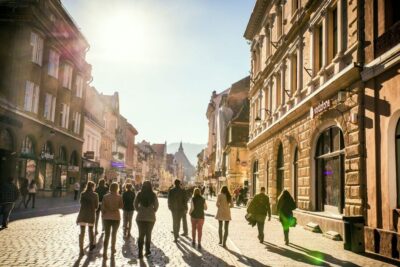
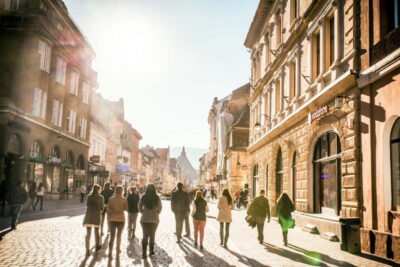
You finish with Old Town for around two hours, with admission ticket free. The walk starts at Hanul lui Manuc, a fortified inn built around 1806 by Manuc Bei, a wealthy landowner. It’s a neat way to understand Bucharest as a crossroads for merchants and languages, not just a capital of political drama.
Curtea de Argeș, Poienari, and Transfăgărășan mountain-road drama
Day two is about Wallachian legends and big mountain views. It also shows how Romania shifts from plains to steep, fortress-style terrain fast.
Curtea de Argeș Monastery, royal tombs and a sad story
Curtea de Argeș Monastery gives you about 45 minutes, admission ticket included. The focus is on royal tombs and the mix of ruins and surviving religious architecture, including the ruins of the Wallachian princely court and a 13th-century royal church. It’s the kind of site where you can feel how the story is both magnificent and tragic.
Poienari Castle ruins, cliffside fort history
Then comes Poienari Castle, about two hours, admission ticket included. You’ll be looking over the Arges River near the Carpathian foothills. The story angle here is Vlad the Impaler, including the legend of escape through a secret passage leading north through the mountains. Even if you don’t care about legends, the cliffside location makes the idea of fortress survival instantly understandable.
Transfăgărășan Highway, the road that makes people plan ahead
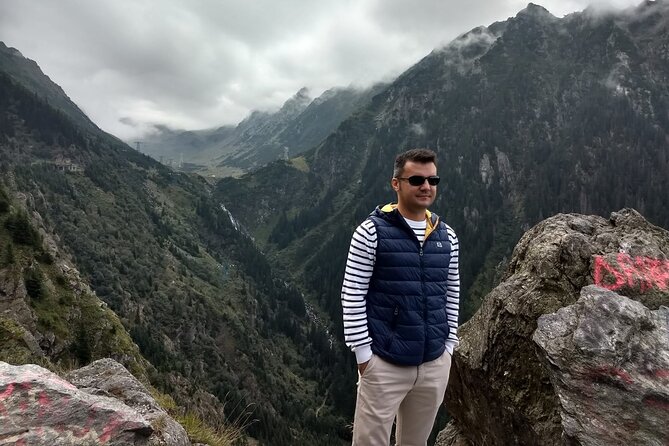
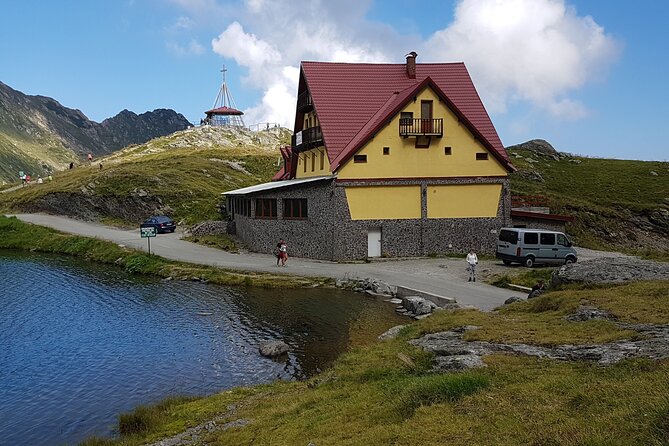
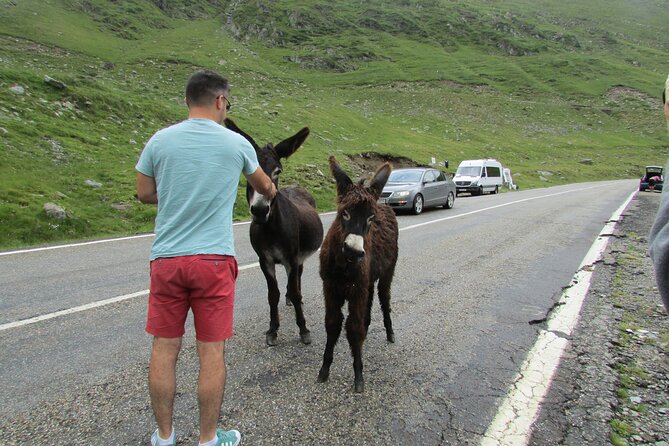
Transfăgărășan Highway is a highlight for scenery lovers. It runs for over 150 kilometers, and it’s fully open only from June to October. The highest point is 2042 meters, and the tunnel links sides at Lake Balea. You get about two hours here, and the driving context matters, because this is the road that turns a route into a memory.
Sibiu time at Piata Mare
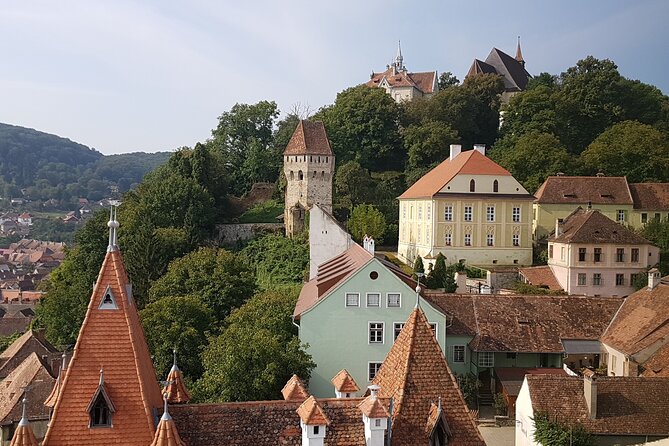
Your day also lands in Sibiu, using Big Square, Piata Mare, as the anchor. The plan mentions the Evangelical Cathedral and the Sibiu Old City Center, plus the city’s European Capital of Culture status. The practical benefit is simple: you get a walkable, photogenic core where it’s easy to slow down and just enjoy.
Corvin Castle and Sarmizegetusa, Romania’s medieval power on display
Day three is for castle people and anyone who likes ancient defense systems.
Corvin Castle, Gothic-Renaissance and huge scale
Corvin Castle, also known as Hunyadi or Huniazilor, is about two hours with an admission ticket included. It’s described as one of the largest castles in Europe and a Seven Wonders of Romania site. I like that this isn’t just a single-story Dracula moment. It’s a real medieval structure with Gothic-Renaissance character that feels built to impress and intimidate.
Densus Church, Romania’s oldest stone church
Densus Church (St Nicholas’ Church) is about an hour, admission ticket included. The key detail is that it’s the oldest stone church in Romania, built in its current form in the 13th century on a site that goes back to a 2nd-century Roman temple. Materials were even taken from Dacian Sarmizegetusa fortress. The interior murals add another layer, including 15th-century paintings where Jesus is shown wearing Romanian traditional clothes.
Sarmizegetusa Regia, Dacian capital with a strategic layout
Sarmizegetusa Regia takes the day into the ancient world, about three hours, admission ticket included. It was the Dacian capital and major military, religious, and political center, built on a mountain about 1200 meters high. The fortress includes six citadels and formed part of a defensive system in the Orăștie Mountains. If you like to understand how places were designed, this is the stop.
Salina Turda salt air, Cluj area color, and Surdesti’s wood church craft
Day four is a mix: breathing space at a salt mine, city strolling energy, and wooden architecture that feels handmade in the best way.
Salina Turda, the salt mine experience
At Salina Turda (Turda Salt Mine), you’ll spend about two hours with an admission ticket included. The big reason people come is the saline air. The plan even notes it can help with respiratory issues like allergies or asthma. Even if you don’t have those concerns, it’s still a memorable break from outdoor walking and a chance to see how Romania repurposes mining for visitor experience.
Gradina Botanica Alexandru Borza and Cluj-Napoca feel
The plan pairs Gradina Botanica Alexandru Borza with time tied to Cluj-Napoca’s Old City Center, about an hour, admission ticket included. You get mention of Baroque, Renaissance, and Gothic-style buildings, with some dating back to the 17th century, plus the idea that the food scene is strong enough that you might wait for a table. It’s a good combo when you want one foot in culture and the other in real life.
Surdesti Wooden Church, 1721 craftsmanship
Surdesti Wooden Church is about 45 minutes, admission ticket included. The standout detail is the height, with towers measuring about 54 meters, and the fact it was built in 1721. This stop is worth it if you enjoy architecture made with timber skill rather than stone.
Maramureș color and a hard lesson at the communism memorial
Day five keeps the emotional range wide, from humorous folk art to the serious cost of dictatorship.
Merry Cemetery, Sapanta’s crosses with poems
In Maramureș, Sapanta’s Merry Cemetery is about an hour with an admission ticket included. The premise is wonderfully human: crosses and tombstones with humorous poems about the deceased. It’s connected to local Dacian roots, including the idea of laughing at funerals and crying when babies are born, tied to Zalmoxis worship. Expect a place that makes you pause, not just pose for photos.
Memorial of the Victims of Communism and of the Resistance
Then you shift to the Memorial Museum for the Victims of Communism. It’s about two hours, admission ticket included. This is where the trip’s earlier communist-era context becomes sharper. The emphasis is on how much pain and suffering the Romanian people faced under oppression, and how resistance mattered.
Barsana Monastery, Tihuța Pass, and Ciocanesti’s painted houses
Day six is full-on Carpathian atmosphere: wooden church beauty, mountain pass lore, and folk art you can spot from a mile away.
Barsana Monastery, tall wooden church magic
Barsana Monastery is about 45 minutes, admission ticket included. The plan highlights it as one of the tallest wooden churches in Romania at 57 meters. You’ll also hear a spiritual, sensory angle tied to walking barefoot through grass in the courtyard area. If you like places that feel quiet and physical at the same time, this one works.
Tihuța Pass, the Borgo Pass Dracula link
Tihuța Pass is about two hours, admission free in the plan. It connects Bistrita with Vatra Dornei and is famous through Bram Stoker’s Dracula, where it’s referenced as the Borgo Pass. A useful detail here is that Stoker likely used a map name and never visited, so you get a story connection without treating it like documentary fact. You’ll also be near Hotel Castel Dracula, located at 1,116 meters, built in 1976.
Ciocanesti village, Golden Bistrita painted houses
Finally, you stop in Ciocanesti, about an hour, admission free. The focus is painted houses with traditional motifs, on both sides of the Golden Bistrita River, surrounded by pine spruce forests and fertile meadows. The practical benefit: this is scenic village travel, not museum travel.
Voroneț Blue and the painted monasteries of Bukovina
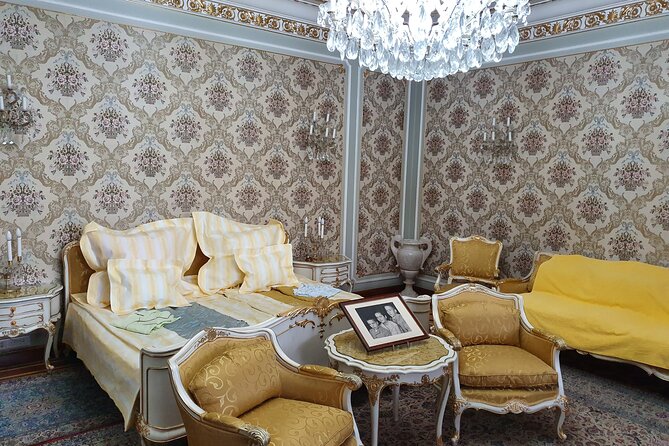
Day seven is the artistic heart. You’ll see multiple monasteries that are tied together by style, symbolism, and the way color works on stone over time.
Voroneț Monastery, Stephen the Great and Voroneț blue
Voroneț Monastery takes about 45 minutes, admission ticket included. It was built in 1488 over roughly three months and three weeks by Stephen the Great to commemorate victory at the Battle of Vaslui. The plan calls the frescoes Sistine Chapel of the East level, with the intense shade of blue known as Voroneț blue. If you only pick one monastery day, this is usually the one people talk about.
Humor Monastery, fortified and hidden away from enemies
Humor Monastery is another 45 minutes, admission ticket included. It’s presented as a fortified monastery that survived through time, built to protect spiritual treasures, often with churches built away from view. This stop gives you a sense of how faith architecture also served practical defense.
Sucevita Monastery, UNESCO-listed fortified church storytelling
Sucevita Monastery is about 45 minutes, admission ticket included, and the plan notes it is part of UNESCO cultural landmarks. The idea is that the fortress church works like an open book with biblical scenes and icons. Even if you do not read religious texts, you’ll still understand the visual storytelling.
Moldovita Monastery, 1532 fortified church murals
Moldovita Monastery is the last painted-church stop on this day, about 45 minutes, admission ticket included. Built in 1532, it’s described as one of the oldest monastic settlements in Romania. The church blends Byzantine, Gothic, and Moldavian elements, and the most memorable feature is the unique mural artwork both inside and outside.
Eggs, naive sculpture, and Bicaz Gorges along the river
Day eight keeps your senses busy, with a surprising museum, then a story-driven art stop, then a nature walk.
Lucia Condrea Egg Museum, 5,500 exhibits in Moldovita
The Muzeul International al Oualor Lucia Condrea is about an hour, admission ticket included. Opened in summer 1993, it’s a uniquely focused museum with over 5,500 exhibits displayed across two levels in 56 cases. This is the kind of place that makes you rethink what a museum can be, since it’s built around a single artistic theme.
The Popa Museum, Nicolae Popa’s personal art mission
The Popa Museum is about an hour, admission ticket included. Nicolae Popa founded it in his home in the 1970s. The story in the plan is that he was wounded during World War II, imprisoned by communists for resisting the regime, and left without personal possessions besides his house. His work then became a way to express Romanian values through naive sculpture.
Bicaz Gorges, a river cut through forests
Bicaz Gorges is about two hours, admission free in the plan. This is a nature interlude: a walk along a river that carved its way through mountains and virgin forests. It’s a good day to take a breather, because after monasteries and museums, you’ll want open air.
Medieval Sighișoara and Biertan Fortified Church, Transylvanian defense meets daily life
Day nine brings you back to castles and fortifications, but with the texture of living towns.
Sighișoara Clock Tower and Arms Museum
In Sighișoara, you’ll explore Old Town and visit the Clock Tower and Arms Museum, about two hours, admission ticket included. The plan describes the citadel as built in 1280 and still inhabited for over 700 years, which is rare. It’s also tied to Count Dracula, though the plan clarifies that it’s actually Vlad the Impaler’s birthplace.
Biertan Fortified Church, hillock church with 7 bastions
Then you visit Biertan Fortified Church, about two hours, admission ticket included. It’s UNESCO-listed and connected to early Transylvanian Saxon settlements in Ardeal. The church sits on a hillock in the center of town and is surrounded by three defensive walls and seven bastions. This stop is ideal if you like architecture that was designed to protect people as much as to impress them.
Brasov Old Town, Black Church, Bran Castle, and Peles Castle in one final rush
Day ten is a classic Romania finale, with medieval Brasov, Dracula legend at Bran, and royal elegance at Peles.
Black Church in Brasov, medieval walls and time to roam
You start in Brasov with a walking tour of Old Town for about two hours, admission ticket included. The focus is the Black Church, the Old Town square, and the city walls built in the Middle Ages. You also get free time for cafés, which is a smart way to end a long road trip.
Bran Castle, myth meeting marketed reality
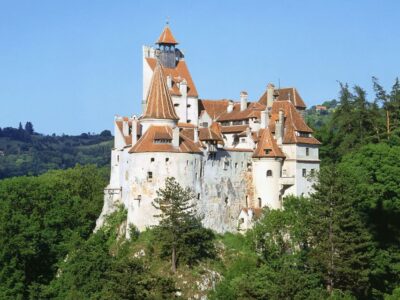
Next is Bran Castle, about two hours, admission ticket included. The plan frames it as between myth and history, with the widely held belief that Bram Stoker used descriptions that match Bran closely when writing Dracula. You’ll also have a chance to try traditional foods like handmade cheeses, pálinka, and traditionally produced ham and sausages. Even if you take the Dracula angle as entertainment, the food stop is worth the detour.
Peles Castle, the royal summer residence you can feel in your feet
Finally, Peles Castle takes about two hours, admission ticket included. The plan describes it as the Romanian royal family’s summer residence and calls it one of the most important castles in Europe. When you walk through a place built for royalty, it’s easy to understand why visitors spend time here beyond a quick glance.
What stood out most from real feedback about Nicolas Experience Tours
The rating is high, and the tone in the responses is consistent: Nicolas takes good care of people and keeps the trip fun. One review specifically thanked Nicolas and mentioned a lot of fun connected to Dracula, which tells me the guide team knows how to balance legend and real context.
Another review highlighted that the hotel selection felt thoughtful and centrally located. That matters because after days of driving and walking, your room location can make the whole experience more comfortable. And in the responses, Nicolas comes across as easy to work with, which fits the private-tour promise: you want someone who adjusts and communicates without turning the trip into stress.
Who this private 10-day Romania tour is best for
This tour fits best if you want variety and you like a route that changes mood every day. You’re a good match if:
- You want private travel across multiple regions, not a single-city itinerary.
- You care about both famous landmarks and story-driven places like Sarmizegetusa Regia and the communism memorial.
- You enjoy art and architecture, especially Romanian painted monasteries.
- You’re okay with a schedule that includes a lot of driving, because you’re covering Bucharest, Transylvania, and Bukovina.
If you prefer slow travel, or you want only one region in depth, you might feel the pace. In that case, you could consider a shorter focused trip.
Should you book this 10-day Romania private tour?
I’d book it if you want a complete Romania sampler with serious cultural stops and visually unforgettable highlights. The private car, the licensed English-speaking guide, and the fact that the route includes flexibility are the big reasons it works well for groups who don’t want logistics to eat the day.
Before you book, do two simple things: confirm exactly which entrance fees are covered for you, and double-check what your package includes for accommodation and meals. Once that’s clear, this is a strong choice for people who want Romania to feel like a story, not a checklist.
FAQ
How long is the 10 Days Private Tour in Romania from Bucharest?
The tour is approximately 10 days.
What is the price per person?
The listed price is $3,472.81 per person.
Is this a private tour or a group tour?
This is a private tour. Only your group will participate.
What transportation is included?
A private car (tourism or minibus) is provided only for your group, with all car expenses covered, including gasoline, parking, and road tolls.
Do you provide a guide?
Yes. You get a private licensed English-speaking guide/driver who is available throughout the tour. Accommodation, meals, and entrance fees for the guide are included.
Are entrance fees included?
Entrance fees are listed as not included as a blanket item, but the itinerary shows some stops with admission ticket included and some stops marked free. Your booking confirmation should spell out what applies to you.
Is pickup offered, and do I get tickets on my phone?
Pickup is offered, and a mobile ticket is included.
What is the cancellation policy?
Free cancellation is available up to 24 hours in advance of the experience start time for a full refund.
The Private End Of Bucharest
- Castles of Transylvania: Private Day Trip from Bucharest
★ 4.5 · 248 reviews - Dracula’s Castle, Peles Castle and Brasov – Private Day Trip from Bucharest
★ 5.0 · 211 reviews - Best of Bucharest | Private Walking Tour
★ 5.0 · 199 reviews - Bucharest Panoramic Sightseeing – Private City Tour
★ 5.0 · 128 reviews - THERME “Take It Easy” Pack: Full Spa Access + Private Transfers
★ 4.0 · 117 reviews
Whatever Else Bucharest Is Selling
- Bucharest to Dracula Castle, Peles Castle and Brasov Guided Tour
★ 4.5 · 2,933 reviews - Bucharest: Palace of Parliament Tickets and Guided Tour
★ 4.4 · 1,877 reviews - Transylvania and Dracula Castle Full Day Tour from Bucharest
★ 4.5 · 1,589 reviews - Bucharest: City Highlights Guided Walking Tour
★ 4.9 · 1,482 reviews - From Bucharest: Brasov Peles & Dracula’s Castle Day Tour
★ 4.5 · 1,244 reviews
Everything Else We Reviewed In Bucharest
- Bucharest: Dracula’s Castle, Peles Castle, & Brasov Old Town
★ 4.5 · 17,858 reviews - Bucharest: Dracula Castle, Peles Castle & Brasov Old Town
★ 4.6 · 10,891 reviews - Bucharest: Dracula’s Castle, Peleș Castle & Brașov Day Trip
★ 4.5 · 5,919 reviews - Bucharest: Palace of Parliament Tickets and Guide
★ 4.3 · 3,182 reviews - Bucharest: Day Trip to Dracula Castle, Peles Castle & Brașov
★ 4.4 · 3,049 reviews
Recently added around Bucharest
- Private Tasting Expedition Along Romania’s Most Famous Wine Route★ 5.0 · 3 reviews
- Private Guided Tour of Peles Castle and Bran Castle from Bucharest★ 5.0 · 3 reviews
- Private Sightseeing Tour of Bucharest★ 4.5 · 3 reviews
- Discover Europe’s Deepest Mines & Peles Castle’s Royal Charm★ 5.0 · 3 reviews
- Bucharest City Tour and Wine Tasting★ 5.0 · 3 reviews
Private, compared.
 ★ 4.5Castles of Transylvania: Private Day Trip from BucharestFrom $151248 reviews
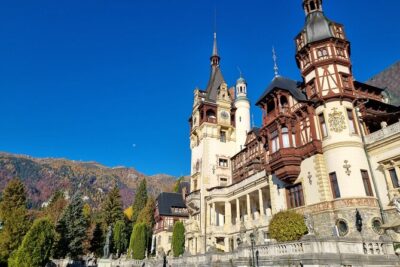 ★ 5.0Dracula’s Castle, Peles Castle and Brasov – Private Day Trip from BucharestFrom $199211 reviews
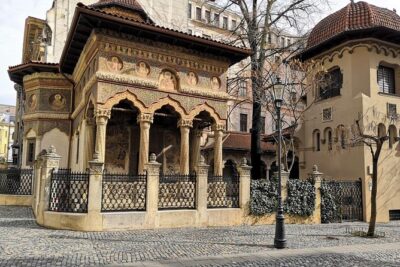 ★ 5.0Best of Bucharest | Private Walking TourFrom $314199 reviews
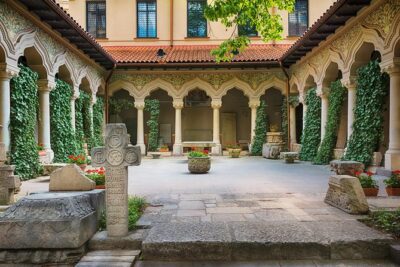 ★ 5.0Bucharest Panoramic Sightseeing – Private City TourFrom $101128 reviews
 ★ 4.0THERME “Take It Easy” Pack: Full Spa Access + Private TransfersFrom $118117 reviews
 ★ 5.0Piatra Craiului National Park Private Hiking Tour from BrasovFrom $126116 reviews
 ★ 5.04h Bucharest Private Tour (2h by Car and 2h Walking in Old Town)From $10090 reviews
 ★ 5.0Discover Bucharest: Private Highlights and Traditional Food TourFrom $14386 reviews