

REVIEW · 7-DAY EXPERIENCES
7 Days Private Guided Tour in Romania from Bucharest
Seven days in Romania feels like a story. This private week is built around Peles Castle and big name medieval towns, but it also drops you into the quieter, spiritual side of Romania and the mountain scenery people don’t always get. I especially like the private car for your group only and the way the plan stitches together Saxon, Orthodox, and Romanian royal-era sights. One thing to consider: admission fees are mostly not included, and a couple of stops involve walking and, in one case, a long stair climb.
For smoother days, you get a licensed English speaking guide/driver, and the service is designed for real-time adjustments once you’re on the road. I also like that guides such as Nicolas and Andrei have been specifically praised for keeping the week running smoothly, not just reading facts from a guidebook. If you want to move fast or you hate early departures, tell your guide what you prefer, because this route is packed.
In This Review
- Key highlights you should care about
- Why this Bucharest-to-Romania route works so well
- Price and value: what $2,480.58 per person buys you
- Your first day: Peles Castle royalty, Sinaia monastery quiet, then Brasov old-town charm
- Day 2: Bran Castle Dracula myths, Sighisoara living medieval streets, and Viscri’s fortified church life
- Day 3 in Sibiu: Renaissance squares, Orthodox cathedral beauty, and Saxon fortified church culture
- Day 4: Corvin Castle goth walls and the Eden-feel of Bigar Cascade Falls
- Day 5: Iron Gates Danube drama, Decebalus carved-stone power, and Roman Drobeta ruins
- Day 6: Brancusi’s stone symbols in Targu Jiu, Horezu monastery UNESCO art, and Polovragi Cave
- Day 7: Poenari’s 1480 stairs, Vidraru Dam scale, and Curtea de Arges cathedral details
- Budgeting entrances and planning your days without stress
- Who should book this private Romania week (and who should rethink it)
- Should you book this tour?
- FAQ
- FAQ
- How long is the Romania private guided tour?
- Where does the tour take place?
- What is the price per person?
- Is this a private tour or shared group?
- What’s included in the tour price?
- What’s not included?
- Are there any sights with free entry?
- Can I cancel for a full refund?
Key highlights you should care about
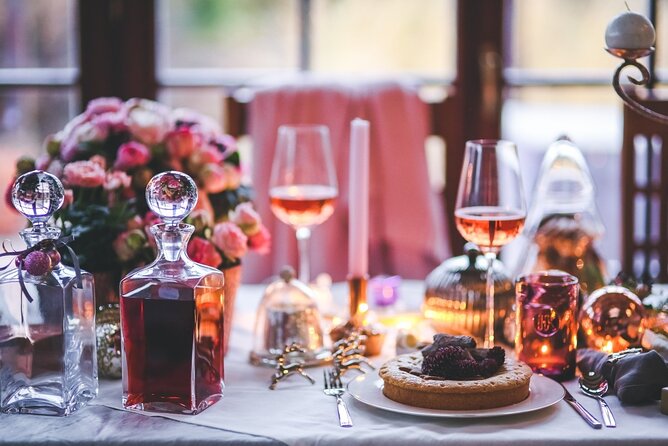
- Private car, your group only: no waiting on strangers, and you can ask for timing changes.
- Royal and gothic must-sees: Peles Castle, Bran Castle, and the Corvin Castle area.
- Transylvania towns with living edges: Sighisoara and Viscri, plus fortified church culture.
- Nature stops that feel earned: Iron Gates on the Danube and Bigar Cascade Falls.
- Orthodox art and UNESCO World Heritage: Sinaia, Horezu, and fortified churches in the region.
Why this Bucharest-to-Romania route works so well

This is a seven-day, full-week style tour, meaning you get enough time for both famous stops and the smaller “wait, that’s cool” moments. The route has a clear rhythm: royal-era glamour, fortified medieval life, and then nature and monasteries where the pace naturally slows down.
Because it’s private, you also avoid the usual travel drag of overcrowded buses and hard-to-hear commentary. When you’re paying for private guiding, you should get the benefit of control, not just a different seat.
Price and value: what $2,480.58 per person buys you
At $2,480.58 per person, this is not a budget excursion. The value comes from the private logistics: a car for just your group, plus a private licensed English speaking guide/driver available throughout the tour. You also get wireless internet in the vehicle and the car expenses covered (gasoline, parking, and road tolls).
The big “watch-outs” on value are predictable. Accommodation is not included, and food and drinks are not included, so your final total depends on where you stay and how you eat. Entrance fees are also not included for most stops, though several sights are listed as free.
If you’re a family or a small group that would otherwise rent a car and spend energy on navigation, this kind of private guiding often feels less like a splurge and more like buying back your time.
Guided, and already checked
Your first day: Peles Castle royalty, Sinaia monastery quiet, then Brasov old-town charm
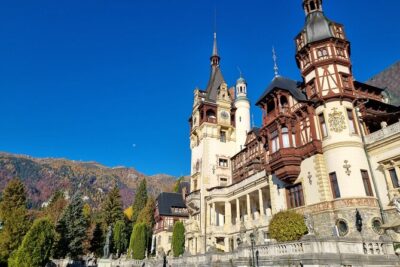
You start with Peles Castle, the Romanian royal summer residence. It’s famous for a reason: it’s one of those places where you can feel the care that went into the details. Plan to spend real time inside, not just snap a few photos at the gates, because the castle’s layout and decorative style are the point.
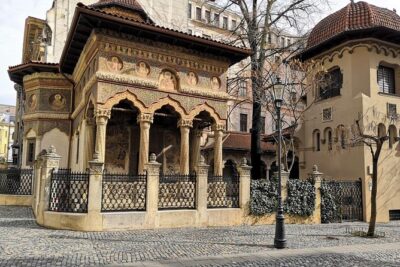
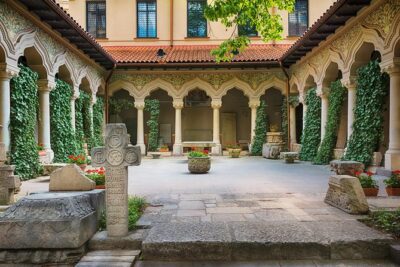
Next comes Sinaia Monastery, a short, calmer stop that works as a mood reset after castle time. Even if you’re not traveling for religious sites, the Orthodox artistic feel here is more than decoration. It’s part of how faith shows up in Romanian daily life.
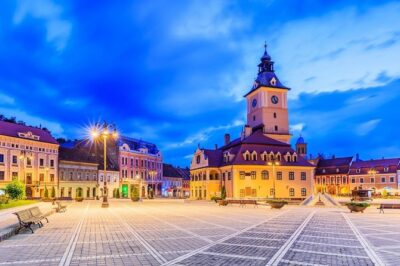
Then you land in Brasov Historical Center, where the main idea is walking and letting the old streets set your direction. This is also a day where the listed stop time gives you enough room to browse without turning everything into a checklist.
Practical note: bring comfortable shoes. The walking is not extreme every day, but you’ll do more than you think across seven days.
Day 2: Bran Castle Dracula myths, Sighisoara living medieval streets, and Viscri’s fortified church life
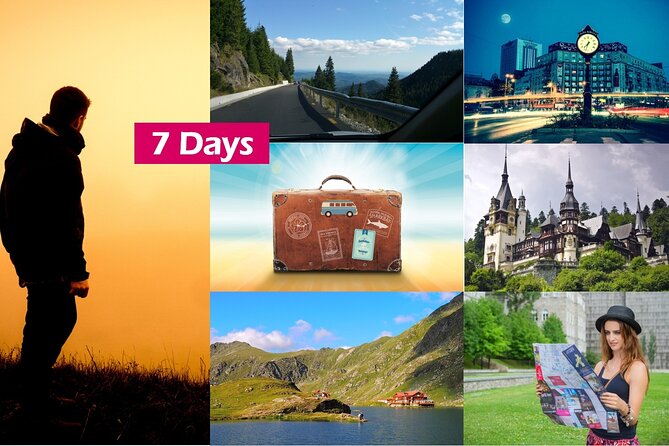
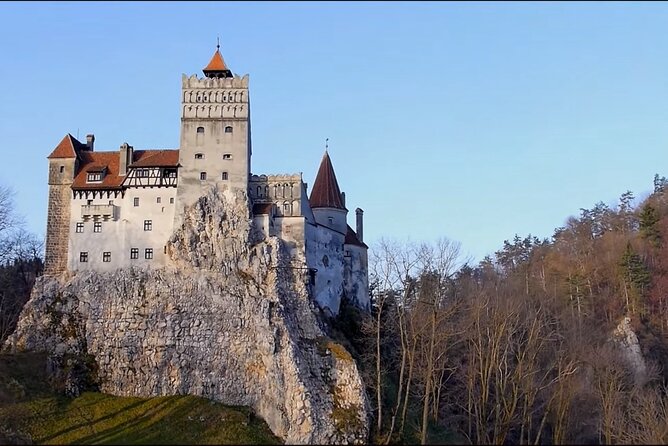
This is the day Dracula fans tend to remember most. Bran Castle is known as Dracula’s Castle, largely because the fictional Dracula story matches the vibe people expect from Bran. Whether you treat it as pure myth or as a starting point for discussion, it’s still a strong castle stop, and the setting makes it feel dramatic.
After that, you shift into Medieval Romania mode in Sighisoara. The citadel dates back to the 12th century, and the key detail is that it has stayed inhabited for more than 700 years, which is rare for a place like this. That “still lived in” factor changes everything. You’re not looking at a museum set, you’re walking through a town.
The Sighisoara Clock Tower adds a second layer: views and context. The multicolored tiled roof is the visual hook, and climbing up gives you a better sense of how the citadel is laid out. There’s also a museum inside with some mixed collection items, and the English explanations can be variable, so keep your expectations flexible.
Then you end in Viscri, a village with roots going back to the 12th century. It’s known for its fortified church and for the way the Mihai Eminescu Trust and even Prince Charles’ visits helped put Viscri on the modern map. If you like Romania at a human scale, this stop is the one that feels like you slowed the whole trip down.
Day 3 in Sibiu: Renaissance squares, Orthodox cathedral beauty, and Saxon fortified church culture
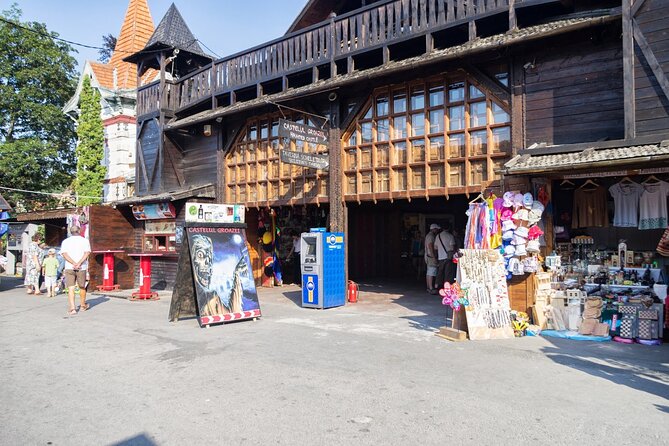
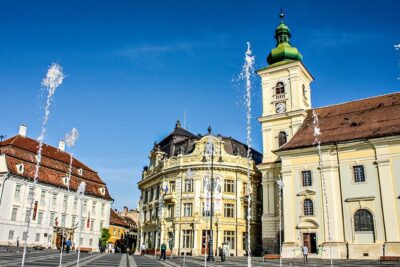
You begin in Sibiu with Piata Mare, the Large Square. It’s a big open space with a Renaissance-era feel, and it also has a grain market legacy that goes back centuries. I like squares like this because they’re useful. They help you understand the city’s shape fast, and they make the rest of the walk easier.
From there, you visit Catedrala Ortodoxa Sfanta Treime, described as a small-scale cousin to a major cathedral style, with a Byzantine-basilica look. Even if you don’t read every icon or fresco, the overall architecture is the takeaway.
Next is the Lutheran Evangelical Cathedral and Tower. This contrast is the point of Transylvania. You’re moving between communities and seeing different traditions in the same region.
Then you head to Biertan Fortified Church, a Lutheran fortified church tied to the ethnic German Transylvanian Saxon community. This is part of the fortified churches in Transylvania UNESCO World Heritage Site. The idea is simple and powerful: the church wasn’t only for worship, it was also a form of protection, built for a time when safety was not guaranteed.
If you’re the type who loves architecture and how people adapted to their environment, this day is one of the best uses of your time.
Day 4: Corvin Castle goth walls and the Eden-feel of Bigar Cascade Falls
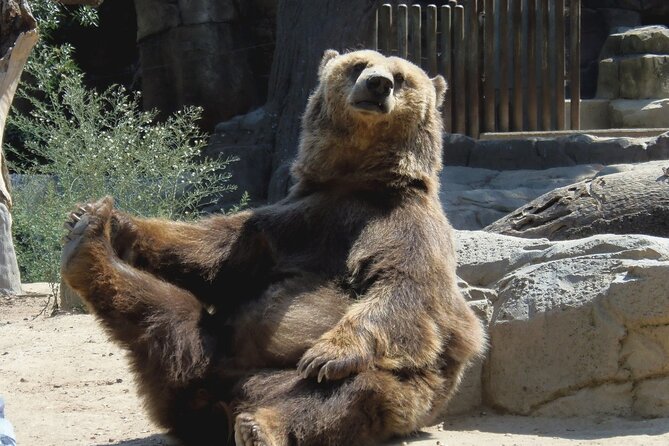
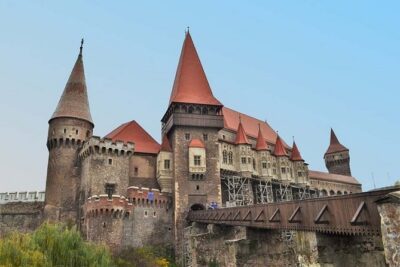
You go from church-tower history into Castelul Corvinilor (Hunyadi Castle), a gothic castle that’s often grouped among the most beautiful in the world. It’s also described as one of Romania’s seven wonders and as one of the largest castles in Europe.
A key story detail here matters for your visit. After a devastating fire, the castle was restored and reopened as a museum, so you’re not just looking at ruins. You’re looking at a living, maintained structure.
If you want practical photo spots, the defense towers are mentioned as a great place to grab a selfie with that castle wall drama in the background.
Then you swap walls for water at Bigar Cascade Falls. This stop is short on the clock, but it’s long on effect. It’s described as moss-covered rocks with water forming a veil-like look, and the surrounding scene is compared to a Garden of Eden. Even if you don’t buy the full comparison, it’s the kind of place where your senses quiet down fast: cool air, rushing water, and a slow-moving curiosity.
The private end of Bucharest

Day 5: Iron Gates Danube drama, Decebalus carved-stone power, and Roman Drobeta ruins
This day is all about scale.
You visit the Iron Gates, the Danube gorge area. The Danube here is described as dramatic, almost boiling due to currents, and the stop includes the human-engineering angle too. The information highlights a daring engineering work started in the 1960s under communist rule, which connects nature with modern history.
Then you see the Statue of King Decebalus, carved into a mountain cliff near Orsova. It’s set 128 meters above the Danube in the Kazan Gorge area, and it took 10 years to build, with early human-life traces also uncovered nearby. Even if you’re not an archaeology person, the raw fact is striking because it’s a monument to a leader and a landscape cut by history.
After that, you shift again to old-world remains with Castrul Roman Drobeta. The focus is Roman ruins at the Danube mouth plus an ancient Roman bridge. This is one of those stops that can feel like a bonus when you already thought the day was full, which is why it works so well inside a private route.
Day 6: Brancusi’s stone symbols in Targu Jiu, Horezu monastery UNESCO art, and Polovragi Cave
You start in Targu Jiu with the Brancusi Sculptural Ensemble, known as the Calea Eroilor memorial, or Heroes’ Way. The design is simple but symbolic, and the key sculptures listed are Table of Silence, Chairs Alley, Gate of the Kiss, and Infinity Column.
I like these stops because they’re quiet, reflective, and not rushed. You don’t need to know everything about modern sculpture to appreciate how the design lines up across an axis and how the open space changes how you see the pieces.
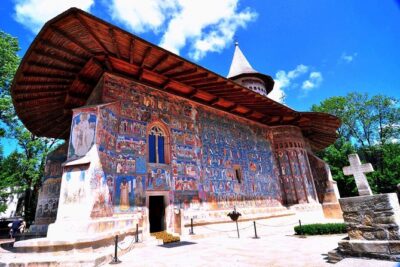
Then you head to Horezu Monastery (Hurezi Monastery), which is described as one of the most beautiful and refined Orthodox monasteries with UNESCO World Heritage status since the beginning. The value here is not just the buildings, it’s the sense of Romanian identity through architecture plus the mention of Horezu ceramics.
Finally, you visit Polovragi Cave. It’s described as located in the Carpathian foothills near the Oltet Gorges, with proximity to Transalpina mentioned. Cave stops are always a bit weather and crowd sensitive, and the plan gives you around an hour.
If you’re trying to balance mind and body on a seven-day trip, this day hits both: contemplative art, then monastery culture, then a walk through natural rock.
Day 7: Poenari’s 1480 stairs, Vidraru Dam scale, and Curtea de Arges cathedral details
Your last day leans adventure.
You start with Poienari Castle, a ruined fortress at about 860 meters. It’s known for its connection to Vlad the Impaler, and the big detail is the climb: 1480 stairs. Two hours are listed for this stop, which is a clue that you should treat it as active time, not a quick photo break. Bring water and pace yourself. Even with a private guide, your body sets the timing.
Next comes Vidraru Dam, completed in 1966 and creating Lake Vidraru. The height is listed as 166 meters, with an arch length of 305 meters and storage of 465 million cubic meters. Even if dams aren’t your usual travel interest, numbers like this help you understand the scale, and the day gives you a short but focused window to see it.
Then you finish at Curtea de Arges Monastery and Cathedral. The cathedral is early 16th century and dedicated to Dormition of the Mother of God. The building is described as faced with pale grey limestone, with interior brick and fresco decoration. It also sits near the Neo-Romanian style Royal Palace built in the late 19th century, which rounds out the royal-era thread from your opening day.
Budgeting entrances and planning your days without stress
Here’s the practical truth: the biggest unknown cost is usually entrance fees. The tour includes a guide and transport, but entrance tickets are not included as per the itinerary. That said, several listed stops are marked as free, including Brasov Historical Center, Bigar Cascade Falls, Iron Gates, Statue of King Decebalus, Castrul Roman Drobeta, several Brancusi ensemble pieces in Targu Jiu, and Vidraru Dam.
So your best move is not to assume everything costs money, but to budget a little extra anyway. The private value comes from not having to think about logistics constantly, but your wallet still needs a plan.
For meals, food and drinks are not included. The guide can help with pacing and practical stops, but you’re buying your own lunches and dinners. If you want local food, this is where your day-to-day choices shape the trip more than you might expect.
Who should book this private Romania week (and who should rethink it)
This tour makes the most sense if you want a small-group feel with private guiding, and you care about more than just postcard sights. It’s a strong match for people who like architecture, churches, and medieval towns, but also want enough nature time to feel the country beyond buildings.
It’s also ideal if you value flexibility. The service explicitly mentions flexibility to change the daily itinerary even after the tour begins, which is exactly what you want if weather or energy levels shift.
You might rethink it if you prefer a totally light pace, or if you hate stair climbing. Poienari alone is a workout, and most days involve moderate walking.
Should you book this tour?
If your idea of a great week in Romania is royal castles plus fortified Transylvania towns plus monasteries, and you don’t mind paying for private logistics, I’d lean yes. The price is high, but the package is also high-touch: private car, licensed English guide/driver throughout, and covered transport costs.
I’d only hesitate if entrance fees and your own food budget would make you uncomfortable, or if you need a very low-activity itinerary. If that’s you, ask your guide about pacing options before committing.
FAQ
FAQ
How long is the Romania private guided tour?
It’s listed as approximately 7 days.
Where does the tour take place?
The tour is based in Bucharest, Romania.
What is the price per person?
The price is $2,480.58 per person.
Is this a private tour or shared group?
It’s a private tour/activity. Only your group will participate.
What’s included in the tour price?
A private car for you and your friends or family, a private licensed English speaking guide/driver throughout the tour, accommodation, meals and entrances fee for the guide, wireless internet in the car, and all car expenses like gasoline, parking, and road tolls.
What’s not included?
Accommodation and your meals and food and drinks are not included. Entrance fees as per the itinerary are also not included.
Are there any sights with free entry?
Some stops are listed as free, such as Brasov Historical Center, Bigar Cascade Falls, Iron Gates, Statue of King Decebalus, Castrul Roman Drobeta, parts of the Brancusi ensemble, Horezu Monastery, and Vidraru Dam.
Can I cancel for a full refund?
Yes. There is free cancellation up to 24 hours in advance for a full refund.
Guided And Already Checked
- Bucharest: Palace of Parliament Tickets and Guide
★ 4.3 · 3,182 reviews - Bucharest to Dracula Castle, Peles Castle and Brasov Guided Tour
★ 4.5 · 2,933 reviews - Bucharest: Palace of Parliament Tickets and Guided Tour
★ 4.4 · 1,877 reviews - Bucharest: City Highlights Guided Walking Tour
★ 4.9 · 1,482 reviews - Bucharest: Salt Mine Guided Day Trip to Slănic
★ 4.6 · 559 reviews
Whatever Else Bucharest Is Selling
- Bucharest to Dracula Castle, Peles Castle and Brasov Guided Tour
★ 4.5 · 2,933 reviews - Bucharest: Palace of Parliament Tickets and Guided Tour
★ 4.4 · 1,877 reviews - Transylvania and Dracula Castle Full Day Tour from Bucharest
★ 4.5 · 1,589 reviews - Bucharest: City Highlights Guided Walking Tour
★ 4.9 · 1,482 reviews - From Bucharest: Brasov Peles & Dracula’s Castle Day Tour
★ 4.5 · 1,244 reviews
Everything Else We Reviewed In Bucharest
- Bucharest: Dracula’s Castle, Peles Castle, & Brasov Old Town
★ 4.5 · 17,858 reviews - Bucharest: Dracula Castle, Peles Castle & Brasov Old Town
★ 4.6 · 10,891 reviews - Bucharest: Dracula’s Castle, Peleș Castle & Brașov Day Trip
★ 4.5 · 5,919 reviews - Bucharest: Palace of Parliament Tickets and Guide
★ 4.3 · 3,182 reviews - Bucharest: Day Trip to Dracula Castle, Peles Castle & Brașov
★ 4.4 · 3,049 reviews
Recently added around Bucharest
- Private Tasting Expedition Along Romania’s Most Famous Wine Route★ 5.0 · 3 reviews
- Private Guided Tour of Peles Castle and Bran Castle from Bucharest★ 5.0 · 3 reviews
- Private Sightseeing Tour of Bucharest★ 4.5 · 3 reviews
- Discover Europe’s Deepest Mines & Peles Castle’s Royal Charm★ 5.0 · 3 reviews
- Bucharest City Tour and Wine Tasting★ 5.0 · 3 reviews
7-Day Experiences, compared.
 ★ 5.04×4 Driving Experience at Flying Altitudes – 7 DaysFrom $2,05413 reviews
 ★ 5.07-Day Private Tour of Transylvania from BucharestFrom $2,84813 reviews
 ★ 5.0Amazing Romania – Seven day private tour from BucharestFrom $2,9307 reviews
 ★ 5.0Transylvanian weekFrom $2,1667 reviews
 ★ 5.07 days Private Romania Grand Tour from BucharestFrom $1,7196 reviews
 ★ 5.0Discover Medieval Transylvania Small Group Tour – 7 daysFrom $1,6184 reviews
 ★ 5.07 Day Best of Transylvania Motorcycle Tour from ClujFrom $1,1444 reviews
 ★ 5.07-Day Dracula Tour in Romania from Bucharest including ‘The Ritual of Killing of a Living Dead’From $1,6853 reviews
Browse the lists this tour appears in