
REVIEW · TOURS
9 days Balkans Tour from Bucharest to Sofia and Budapest
One route, nine days, and four capitals. This trip strings together standout stops across the Balkans, from Bulgaria caves and waterfalls to UNESCO old towns and Danube city views, all with air-conditioned transport and 4-star hotels. I like the straightforward one-way flow, it helps you spend less time thinking about connections and more time doing the sights, and I also like that walking tours are built in daily.
That said, comfort can be a question mark. The itinerary can include long stretches behind the wheel, and one previous guest complained about an uncomfortable vehicle and late starts that cut into sightseeing time, so if you are picky about bus seats and timing, build in a little flexibility.
In This Review
- Key points before you go
- The one-way Bucharest to Budapest flow that saves your time
- 8 nights in 4-star hotels, with breakfast doing real work
- Day 1: Devetashka Cave, Krushunskiye Waterfalls, and the Lovech overnight
- Day 2: Lovech covered bridge and Sofia’s domes, mosques, synagogues, and shopping street
- Day 3: Rila Monastery, then Skopje orientation before you sleep
- Day 4: Skopje old bazaar and the long walk through Mother Teresa’s city
- Day 5: Tirana’s Skanderbeg Square and Ottoman-era landmark power
- Day 6: Kotor’s Stari Grad, fortified and UNESCO, with an evening vibe
- Day 7: Mostar’s Old Bridge legacy and Sarajevo’s two-empires story
- Day 8: Belgrade’s Republic Square, Skadarlija, fortress views, and the Danube meeting
- Day 9: Novi Sad stop on the Danube, then Budapest’s final arrival
- Price and what your $1,191.42 is really buying
- Booking fit: walking level, passports, and small day-to-day realities
- Should you book this Balkans loop?
- FAQ
- How long is the Balkans tour from Bucharest to Budapest?
- What is included in the tour price?
- Are meals included besides breakfast?
- What tips should I budget for?
- Is the tour walking-intensive?
- Where does the tour start and what time?
- Where does the tour end?
- Is the tour offered in English?
- What travel document do I need?
- What is the maximum group size?
Key points before you go
- One-way routing: no backtracking, so your days stay more efficient
- Daily breakfast in 4-star hotels for eight mornings
- Lots of UNESCO moments: Rila Monastery, Ohrid, Stari Grad Kotor, and more
- Moderate walking with specific distance examples like Sofia at about 4 km
- English speaking leadership plus local guiding in several key cities
- Clear exclusions: tips, food and drinks, and some paid sights like cave and waterfalls
The one-way Bucharest to Budapest flow that saves your time
What I like most here is the pace of the itinerary. It runs in one direction from Bucharest toward Budapest, so you avoid that travel-sense-numbness of repeating roads and re-planning. You still get a packed route, but the logic is simple, each day builds on the last.
You also have climate-controlled transport for the long transfers. That matters in summer heat, and it matters when the weather is cool but the coach ride is still long. The downside is also tied to transport time. When your day includes both a drive and a walk, you’ll want to keep your expectations realistic about when the sightseeing actually starts.
Group size is capped at 46 travelers, which is big enough that you will not feel like you are on top of everyone, but small enough that you should still be able to follow the leader and hear updates.
8 nights in 4-star hotels, with breakfast doing real work
You get eight nights of accommodation in 4-star hotels and breakfast for eight days. In a tour like this, breakfast inclusion is not just a checkbox. It’s your daily reset button. You wake up fed, then you head out for a walking tour or a major sight with fewer logistics headaches.
The hotels are described as 4-star, but hotel experience can vary by room type, building, and location. One past review criticized hotel quality, so I’d treat this as, you should expect decent comfort, but do not assume every stop will feel equally polished.
For your packing, remember the tour is a walk-and-move style day. You might carry your own bag on a few steps when entering some hotels, and most hotels have elevators, so it’s usually manageable.
Undecided? Here is what else Bucharest had on the shelf when we last looked.
Day 1: Devetashka Cave, Krushunskiye Waterfalls, and the Lovech overnight
Day 1 is where Bulgaria gets your attention fast. You start in Bucharest and head toward Devetashka Cave, a karst cave that is unusually well lit, plus it has a lush, green floor in the right seasons. In plain terms, it’s not just “walk through dark rock,” it’s a cave experience that can feel almost surprisingly natural once you’re inside.
Next up is Krushunskiye Waterfalls, described as the biggest travertine cascade in Bulgaria. The key here is the setting. You get terraces and natural pools, and the main waterfall splits into smaller streams down limestone.
Both of these are listed with admission not included, so budget separately for tickets. After that, you overnight in Lovech in a 4-star hotel. That is a good use of Day 1, you don’t burn the whole day arriving and then immediately moving again.
Day 2: Lovech covered bridge and Sofia’s domes, mosques, synagogues, and shopping street
Day 2 starts gently in Lovech with the Covered Bridge over the Osam River. This is one of those Balkan-town sights that feels simple but tells you how the place was built and used. You also get orientation time so the later city walking does not feel like a sprint.
Then you reach Sofia in the evening. You get a city center walking tour that hits a strong mix of faith and architecture: Alexander Nevsky Cathedral, Sveta Sofia Church, Banya Bashi Mosque, the Sofia Synagogue, and Vitosha, the main shopping street.
This is a great evening for your camera, but it’s also a great way to get your bearings quickly. By the end of the walk you can usually tell where the big sights are, which helps a lot if you want to return on your own for a longer look.
Day 3: Rila Monastery, then Skopje orientation before you sleep
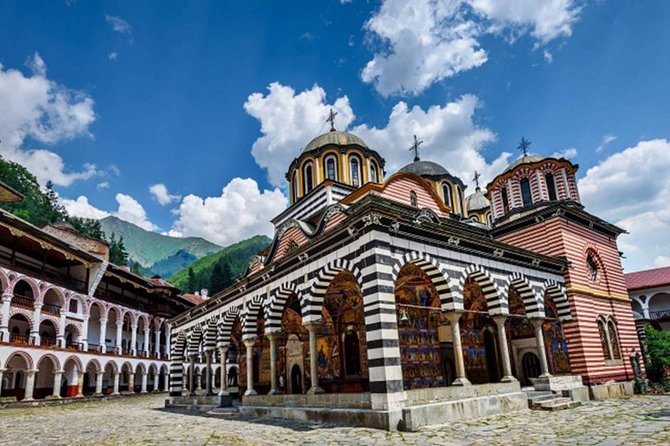
After breakfast, you head to Rila Monastery, Bulgaria’s best-known pilgrimage and UNESCO World Heritage site. It’s tied to Saint Ivan Rilsky (St John of Rila), and the tour includes a visit to the church, with artwork described as created by prominent 19th-century masters. The point is not just the buildings, it’s how the monastery functioned as a cultural and Orthodox center for centuries.
The pace here is efficient. You get a major sight without having to plan it from scratch, and you also keep enough time to move onward to Skopje later in the day.
In Skopje you do an orientation before a centrally located hotel, which is useful because the next day becomes much more detail-heavy.
Day 4: Skopje old bazaar and the long walk through Mother Teresa’s city
Skopje is where you trade quick looks for neighborhood memory. The walking tour includes the Vardar River quay, the narrow lanes of the Old Bazaar (called the biggest bazaar preserved in the Balkans), and the Memorial house of Mother Teresa. You also visit Kale fortress, described as 1500 years old, and you finish at Macedonia Square, with a statue of Alexander the Great on horseback.
This is one of the days where the walking distance matters. The tour style is easy to moderate, but it is still real walking. A similar city example from the trip guidance puts Sofia at about 4 km for 1.5 hours and Skopje at about 3 km for about 1.5 hours, so bring shoes you can trust.
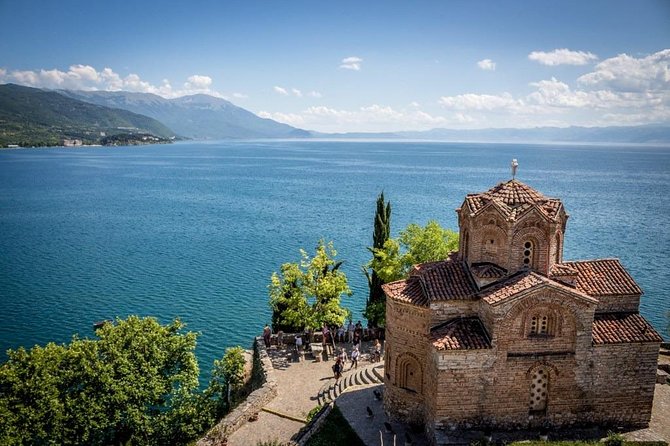
Then you go onward to Ohrid, also UNESCO, and famous for being on the lake that formed millions of years ago. The old town walk includes old churches and monasteries, plus the Ancient Theater, Sveti Sofia Church, Tsar Samuil’s Fortress, and a pedestrian shopping street.
If you love historical layers, Ohrid is one of the most emotionally rewarding stops on the route because you feel like you’re walking through the same stone paths people used long ago, not just ticking a sight list.
Day 5: Tirana’s Skanderbeg Square and Ottoman-era landmark power
After crossing into Albania, the tour reaches Tirana. Your walking tour focuses on the main square area, starting with Skanderbeg Square, then the National History Museum, Et’hem Bey Mosque, and the Skanderbeg statue.
Tirana can surprise people. The center feels big and intentional, like a capital built for gatherings. The mosque and square pairing is a useful contrast, because you get both civic space and religious landmark presence in the same walk.
The practical upside is that Tirana’s list is compact. It’s easier to absorb, especially if you have walked a lot already from Skopje and Ohrid.
Day 6: Kotor’s Stari Grad, fortified and UNESCO, with an evening vibe
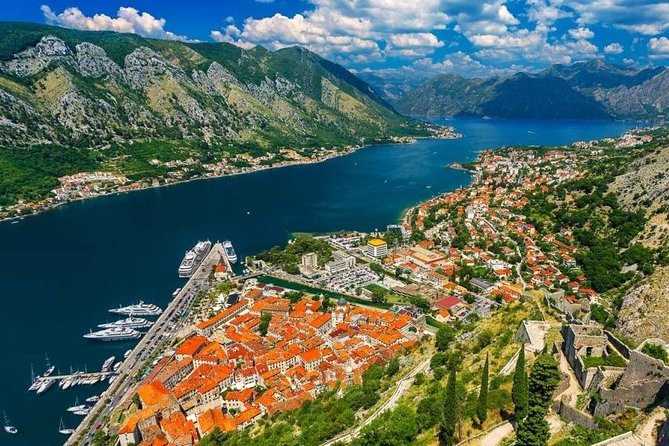
In the evening you arrive in Kotor, and the emphasis is on the fortified old town, Stari Grad, UNESCO. This is a classic Adriatic feel, but with a strong fortification backbone. The town is not just pretty, it’s structured like a defensive place.
Even though the tour time listed is about 3 hours, this is one of those stops where you can drift a bit just by looking at the walls, lanes, and how the old town sits inside the larger landscape of the city.
Admission here is listed as free for this tour segment, but you may still want to plan for personal spending like snacks or drinks once you’re there.
Day 7: Mostar’s Old Bridge legacy and Sarajevo’s two-empires story
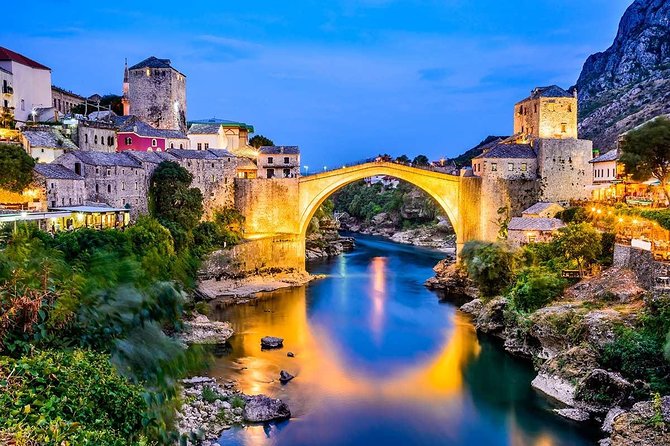
Day 7 mixes emotion and storytelling. In Mostar, you focus on the old town and the Old Bridge of Mostar. It was built in 1566, then it was destroyed during the Siege of Mostar in November 1993. The tour covers why it was destroyed and how it became part of modern identity again.
You also learn about the tradition of bridge diving that grew from the bridge’s return. It’s not just a spectacle. It is a local practice people use to signal resilience, and it ties the present to the past in a very visible way.
Then the tour drives on a scenic route passing Jablanica Lake and via the Neretva River canyon to Sarajevo. Your walking tour covers the origins of Sarajevo, the medieval Bosnian kingdom, and the Ottoman plus Austria-Hungarian parts of the city. That means markets and bazaars, plus a mix of religious architecture, and it culminates with the Latin Bridge and the story of how World War I was triggered there.
You also get references to the 1984 Winter Olympics and the Siege of Sarajevo. This is the day where the tour leader’s storytelling really matters, because the city is more than a postcard. You’re learning the reasons these neighborhoods feel the way they do.
Day 8: Belgrade’s Republic Square, Skadarlija, fortress views, and the Danube meeting
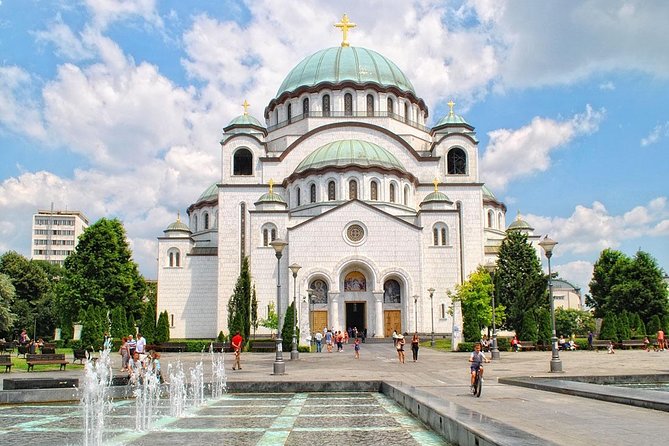
After breakfast, you head to Belgrade and arrive in the afternoon. The tour includes Republic Square, the National theater, the National museum, and Skadarlija, Belgrade’s bohemian quarter.
You also get a view of older Ottoman-linked areas, plus the only mosque in the city as listed in the tour content. Then the route shifts toward Kalemegdan park, the Belgrade fortress, and the Victor symbol. The walk ends with the confluence of the Sava and Danube rivers.
This is a practical city for perspective. If you want to see how capitals use river geography for identity, Belgrade helps. You get both monumental squares and the sense of a city built around waterways and viewpoints.
Day 9: Novi Sad stop on the Danube, then Budapest’s final arrival
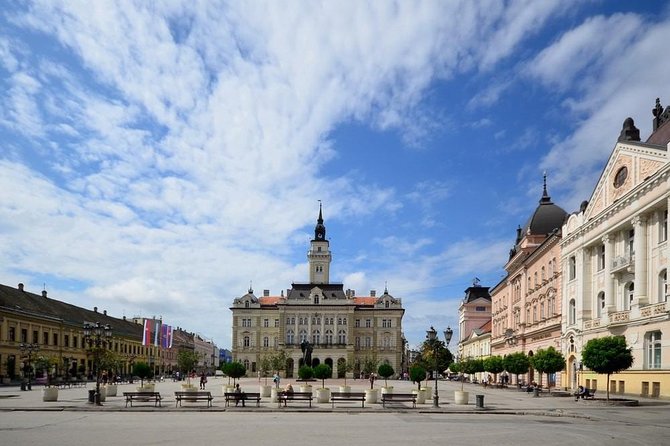
The last day keeps you moving, but in a calmer, scenic way. You stop in Novi Sad for about an hour to walk Zmaj Jovina Street and the Danube promenade. You also see the Palace of the Orthodox Bishop, then Dunavska Street with its long line of single-storied 19th-century houses.
The tour also points out the Danube embankment and the outside of Petrovaradin Fortress on the opposite bank. Even without going into the fortress, the outside views from the promenade give you a “two sides of the river” feeling.
Then you continue to Budapest, arriving in the evening. You are given about 3 hours in the city, and you get an orientation style finish. This is a good day to think about your priorities for the post-tour days, because your first impression of Budapest will already be underway when you arrive.
Price and what your $1,191.42 is really buying
At $1,191.42 per person, you are paying for a lot of the expensive parts of travel that are hard to DIY: long-distance transport, hotel nights, and daily guided walking time.
Here’s what’s included:
- 8 nights in 4-star hotels
- Air-conditioned vehicle for the whole tour
- Professional tour leader
- Breakfast (8)
Here’s what’s not included:
- Tips for driver and tour guide: 5 euro per day per person
- Food and drinks unless specified
- Entrance fees at museums
- Tickets not included for the cave and waterfalls on Day 1 (Devetashka Cave and Krushunskiye Waterfalls)
So the real cost of the tour isn’t just the sticker price. It’s the add-ons you’ll pay once you reach paid sights and your daily meals. Still, the structure is good for people who want guided walking time and don’t want to solve transport and hotel logistics across multiple countries.
My value judgment: if you like a full route and you’re comfortable with daily walking, the price can make sense. If you hate long drives or you require high comfort in transit, you’ll need to weigh the bargain against your personal tolerance.
Booking fit: walking level, passports, and small day-to-day realities
This tour asks for moderate physical fitness. That does not mean heavy hiking, but you should be ready to walk. The guidance notes:
- walking tours range roughly from 2 hours up to 4 or 5 hours
- distances can run from about 1 km to 7 km depending on the sites
- some hotels may require a bit of carrying your bag on steps, though many have elevators
You also need a current valid passport on the day of travel.
Language is English, and the experience includes a professional tour leader. It also mentions local tour guidance in Romania, Sofia, Skopje, Tirana, and Sarajevo, so you get local context at several key points.
Finally, the order of stops can shift for weather, traffic, and restrictions, but the visits stay aligned with what’s listed.
Should you book this Balkans loop?
I’d book this tour if you want a guided, one-way sampler across the Balkans with enough structure that you can relax and just follow the plan. The UNESCO mix (Rila Monastery, Ohrid, and Kotor’s Stari Grad) plus the city walking flavor in Sofia, Skopje, Sarajevo, and Belgrade can make this feel like a real circuit, not a rushed checklist.
I would hold off if you know you are sensitive to coach comfort or you struggle with late starts and long drives. The tour can be logistically full, and one past guest flagged issues with vehicle comfort and timing. If that would stress you out, you might prefer a smaller-group route or a slower itinerary.
If you do book, pack for walking, plan a little extra money for Day 1 paid sights and meals, and keep an open mind about hotel variation from stop to stop.
FAQ
How long is the Balkans tour from Bucharest to Budapest?
It runs for about 9 days.
What is included in the tour price?
You get 8 nights in 4-star hotels, transport by air-conditioned vehicle for the entire tour, a professional tour leader, and breakfast for 8 days.
Are meals included besides breakfast?
No. Food and drinks are not included unless specified.
What tips should I budget for?
Tips for the driver and tour guide are listed as 5 euro per day per person.
Is the tour walking-intensive?
It is described as easy walking with moderate effort. Walking tours can run from about 2 hours to 4 or 5 hours, with distances roughly from 1 km to 7 km depending on the day and site.
Where does the tour start and what time?
The start meeting point is Bulevardul Regina Elisabeta 7, București 030167, Romania, and the start time is listed as 8:30 am. The itinerary also notes a departure at 08.00 from BUS STOP University Square in front of the statues, so follow the exact instructions in your confirmation.
Where does the tour end?
The tour ends in Budapest at Kerepesi út 2, 1087 Hungary, near the train station.
Is the tour offered in English?
Yes, the tour is offered in English.
What travel document do I need?
You need a current valid passport on the day of travel.
What is the maximum group size?
The maximum is 46 travelers.
Whatever Else Bucharest Is Selling
- Bucharest to Dracula Castle, Peles Castle and Brasov Guided Tour
★ 4.5 · 2,933 reviews - Bucharest: Palace of Parliament Tickets and Guided Tour
★ 4.4 · 1,877 reviews - Transylvania and Dracula Castle Full Day Tour from Bucharest
★ 4.5 · 1,589 reviews - Bucharest: City Highlights Guided Walking Tour
★ 4.9 · 1,482 reviews - From Bucharest: Brasov Peles & Dracula’s Castle Day Tour
★ 4.5 · 1,244 reviews
Everything Else We Reviewed In Bucharest
- Bucharest: Dracula’s Castle, Peles Castle, & Brasov Old Town
★ 4.5 · 17,858 reviews - Bucharest: Dracula Castle, Peles Castle & Brasov Old Town
★ 4.6 · 10,891 reviews - Bucharest: Dracula’s Castle, Peleș Castle & Brașov Day Trip
★ 4.5 · 5,919 reviews - Bucharest: Palace of Parliament Tickets and Guide
★ 4.3 · 3,182 reviews - Bucharest: Day Trip to Dracula Castle, Peles Castle & Brașov
★ 4.4 · 3,049 reviews
Recently added around Bucharest
- Private Tasting Expedition Along Romania’s Most Famous Wine Route★ 5.0 · 3 reviews
- Private Guided Tour of Peles Castle and Bran Castle from Bucharest★ 5.0 · 3 reviews
- Private Sightseeing Tour of Bucharest★ 4.5 · 3 reviews
- Discover Europe’s Deepest Mines & Peles Castle’s Royal Charm★ 5.0 · 3 reviews
- Bucharest City Tour and Wine Tasting★ 5.0 · 3 reviews
Tours, compared.
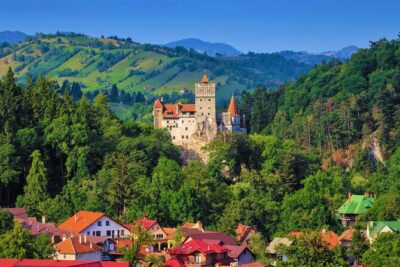 ★ 4.5Bucharest to Dracula Castle, Peles Castle and Brasov Guided TourFrom $332,933 reviews
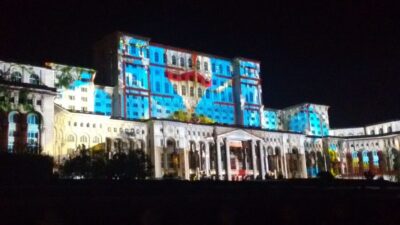 ★ 4.4Bucharest: Palace of Parliament Tickets and Guided TourFrom $281,877 reviews
 ★ 4.5Transylvania and Dracula Castle Full Day Tour from BucharestFrom $351,589 reviews
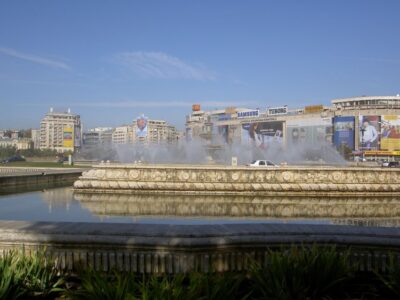 ★ 4.9Bucharest: City Highlights Guided Walking TourFrom $211,482 reviews
 ★ 4.5From Bucharest: Brasov Peles & Dracula’s Castle Day TourFrom $651,244 reviews
 ★ 4.5Bucharest: Peles Castle, Bran Castle, & Brasov Old Town TourFrom $401,035 reviews
 ★ 5.0From Brasov: Small-group tour Bran, Rasnov, and Peles CastlesFrom $82949 reviews
 ★ 4.4Bucharest: Peles Castle, Bran Castle, & Brasov Full-Day TourFrom $31879 reviews