
REVIEW · BRAȘOV
BV01 – City Tour Brasov in English: Secrets of Kronstadt
This walk through Brașov turns spooky legends into real streets. I especially love the stop at the Black Church and the quick visit to Strada Sforii, Europe’s narrow-street oddity. The one thing to plan around is that it is a real walking tour, and it is not suitable for mobility impairments.
You meet at Hotel Aro Palace at 15:30, then you get a tight, history-filled route through some of Brașov’s best-known corners, with an English-speaking guide for about two hours. If you get a guide like Radu, you will also get the side stories and conversation that make the facts feel human instead of just textbook.
In This Review
- Key Points You Will Notice Right Away
- The 15:30 Start at Aro Palace: Easy Rhythm for a Short Day
- From Kronstadt to Brașov: The Teutonic Knights Begin the Story
- Catherine’s Gate: Renaissance Style Inside Medieval Fortifications
- St. Nicholas Orthodox Church: Where Faith and Education Meet
- The Black Church: Gothic Drama and a Music Nerd Fact
- Piata Sfatului: The Heartbeat Square for Locals and Visitors
- Strada Sforii: Europe’s Narrow Street and the Firefighter Clue
- Weaver Bastion and the White and Black Towers: Views With a Job Description
- Schei Quarter: Romanian Orthodox Influence in Street Form
- Dracula and Beyond: Bran Castle and the Sinaia Mention
- Price and Value: $53 for Two Hours of the City’s Best Anchors
- Practical Tips So You Enjoy the Walk Instead of Surviving It
- Who This Tour Fits Best (And Who Might Prefer Another Option)
- Should You Book This Brașov City Tour?
- FAQ
- What time does the city tour in Brașov start?
- Which days does this Brașov tour operate?
- Where is the meeting point?
- Is the tour guided in English?
- Are entrance fees included for sights?
- Can I add Dracula Castle in Bran?
- Is this tour suitable for mobility impairments?
Key Points You Will Notice Right Away
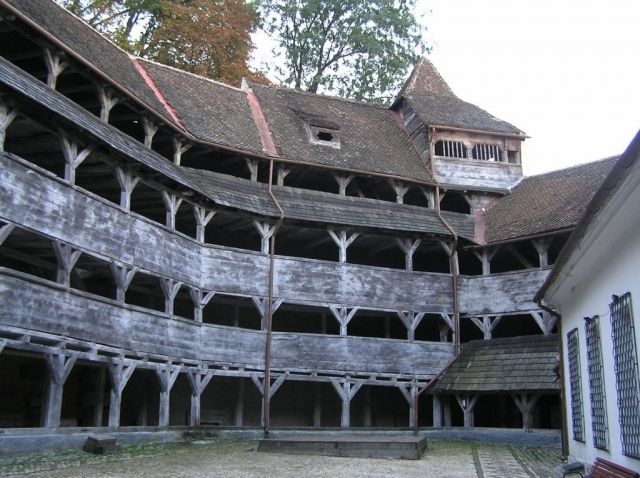
- Strada Sforii: one of Europe’s narrowest streets, with a firefighter-passage history
- The Black Church: Gothic landmark with a standout claim, the largest organ in Romania
- Piata Sfatului: the old town’s central gathering square, ideal for people-watching and photos
- Brașov fortifications: Catherine’s Gate, plus towers and defensive structures tied to guild life
- Schei Quarter: a window into the Romanian Orthodox community’s long influence in the city
The 15:30 Start at Aro Palace: Easy Rhythm for a Short Day
This is built for travelers who want quality without burning half the day. The tour starts at 15:30 right in Brașov, in front of Hotel Aro Palace, and it runs for about two hours on Monday, Wednesday, and Friday. That timing is handy if you want a late-afternoon stroll after lunch, or if you have other plans earlier in the day.
You do not need a car or any complicated logistics. You just show up with a passport or ID card and comfortable shoes. The tour also says oversize luggage is not allowed, so keep your bag small and manageable. If you are traveling with a larger suitcase, it is smart to handle storage before the walk so you are not juggling it around old-street corners.
English is the default, but there is an option for Hungarian upon request. In plain terms, this matters because Brașov’s story is layered. You will get it explained in a way that sticks.
From Kronstadt to Brașov: The Teutonic Knights Begin the Story
Brașov’s big trick is that it wears multiple identities without losing any of them. Historically known as Kronstadt, it was founded by the Teutonic Knights in 1211, and that early thread still shows up in the city’s shape and the way people built around defense and trade.
Your walk begins with the sense that this town was designed for survival. It is not only pretty. It is practical. Even when you are looking at a gate or a church, you are also seeing how Brașov guarded itself and organized community life.
If you like walking tours that connect architecture to human behavior, this is the kind of route that usually works well. You go beyond naming places and you start understanding why those places exist where they do.
Still in Brasov? Keep going.
Catherine’s Gate: Renaissance Style Inside Medieval Fortifications
Catherine’s Gate is a great place to start because it is both impressive and readable. It is Renaissance-style, but it was still part of Brașov’s fortifications. That mix is exactly what makes the town feel real.
As you look at the gate, it helps to imagine the city as a set of layers. Different periods added their own style, yet the defensive purpose stayed. You are not just seeing one “period piece.” You are watching a city evolve.
If you are the type who enjoys architecture photos, this is also a strong stop. Gates frame the street view in a way that feels cinematic, especially when you find the right angle to show the structure against the open space around it.
St. Nicholas Orthodox Church: Where Faith and Education Meet
Next comes St. Nicholas Orthodox Church, described as the oldest Orthodox church in Brașov and home to the first Romanian school. That detail matters because it shifts your thinking. This is not only about religious architecture. It is about community power through education and identity.
When a guide points out that connection, the church stops being a standalone monument. It becomes a landmark tied to how Romanian culture shaped daily life in the city.
This is also the kind of stop where pace matters. It is easy for a walking tour to rush. If your guide keeps a calm rhythm, you will have time to notice the atmosphere around the church and not just skim the exterior.
The Black Church: Gothic Drama and a Music Nerd Fact
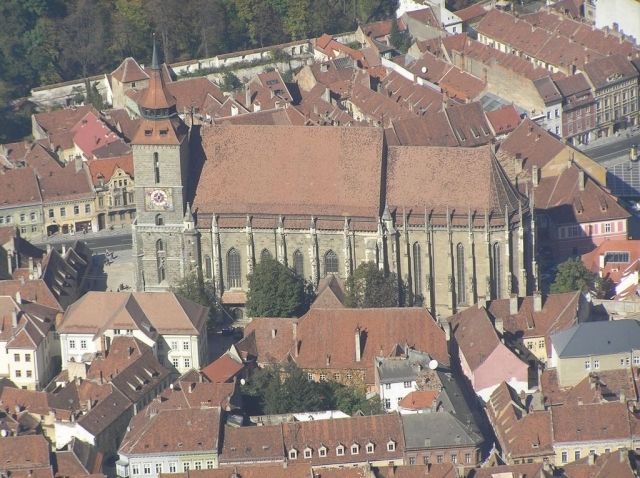
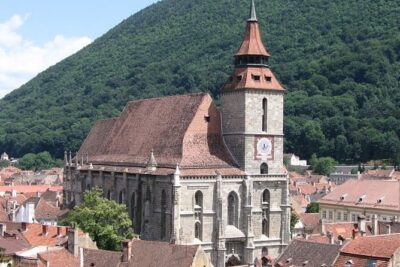
If you want one stop that makes the whole tour feel worth it, it is The Black Church. It is a Gothic landmark with a fascinating background, and the tour description specifically calls out the largest organ in Romania.
That organ fact is a sneaky win. Even if you do not care about church music, it gives you a concrete detail to anchor your memory. This is how you avoid forgetting the name and only remembering “a church I saw once.”
The Black Church also tends to be a good “pause” moment. It gives your feet a break while still feeling like you are moving through the city’s most storied core. If you care about photography, this is usually where you start thinking about interior light and outside shadows, even if you only get exterior time.
Piata Sfatului: The Heartbeat Square for Locals and Visitors
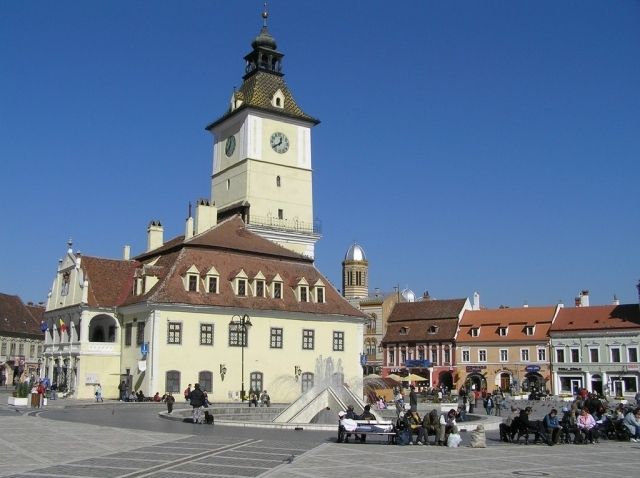
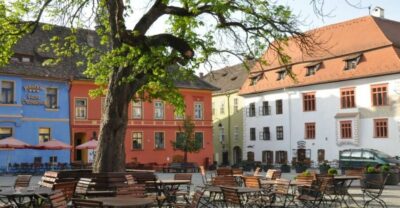
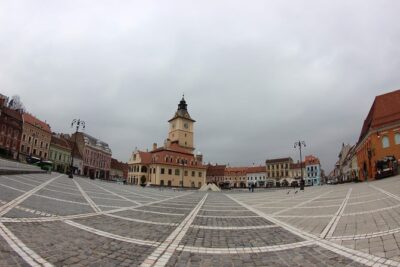
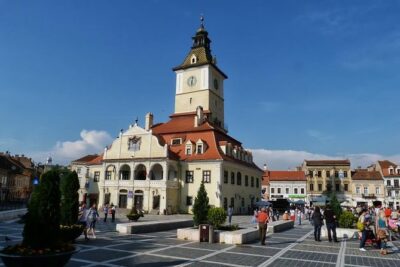
Piata Sfatului is the old town’s central gathering point, surrounded by colorful buildings and cafes. In other words, it is where the story turns from landmarks to living space.
This square is useful because it lets you reset. After earlier stops that can feel like they belong to the past, Piata Sfatului shows how Brașov still functions as a real city. You can watch how people move, check out the cafe rhythm, and reorient for the next streets.
For practical travelers, squares like this also help with photos. It is easier to frame a scene in a public open space than along narrow alleyways. If your camera roll needs one “broad view” shot, this is the place.
Other ways around Brasov
Strada Sforii: Europe’s Narrow Street and the Firefighter Clue
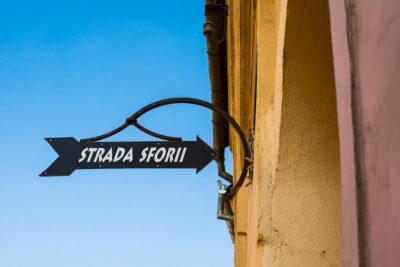
Then you hit Strada Sforii, one of Europe’s narrowest streets. The tour context says it once served as a passage for firefighters, which instantly turns a quirky photo spot into a useful story.
That detail matters because the street’s “wow” is not just width. It is function. You start to understand why a town would need such an awkward-looking corridor. Dense buildings and old defensive layouts create compromises, and this street is one of them.
For anyone who likes urban oddities, this is a fun stop because it feels like you are discovering something secret, even though it is right there in the open.
Weaver Bastion and the White and Black Towers: Views With a Job Description
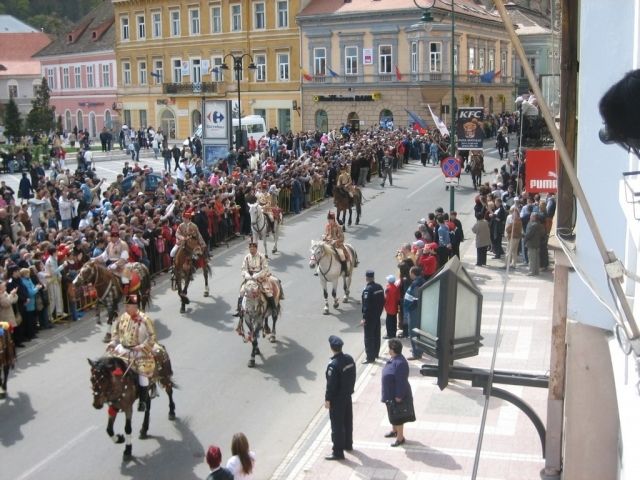
Brașov’s defensive story keeps going. You visit The Weaver Bastion, a defensive tower used by the city’s weavers’ guild. That sounds specialized, but it helps you understand how medieval cities were not just ruled by nobles and soldiers. Trades mattered. Skilled groups had roles in protecting and shaping the city.
Next come the White and Black Towers, which offer breathtaking views of the city and the surrounding mountains. Even if you have seen views before in other places, this one tends to land because Brașov’s old town layout is visually interesting. You are looking at a medieval center with natural borders and mountain backdrops, which makes the whole region feel connected.
A practical note: tower time is also where you can feel the pace of a two-hour tour. So if you love photos, tell yourself to slow down for a minute. Find one good vantage point and take your shots, rather than rushing from angle to angle.
Schei Quarter: Romanian Orthodox Influence in Street Form
The Schei Quarter adds a different cultural layer to the city story. The tour frames it as a historical district representing the Romanian Orthodox community’s influence.
This part of the walk matters because Brașov is not only Saxon German in its look and evolution, even if Kronstadt imagery often dominates the way outsiders think about the region. You get a sense of how different communities shaped Brașov over time.
If you are hoping to leave with more than just a list of monuments, Schei Quarter helps. It gives the feeling of “this is how people lived,” not just “this is what buildings look like.”
Dracula and Beyond: Bran Castle and the Sinaia Mention
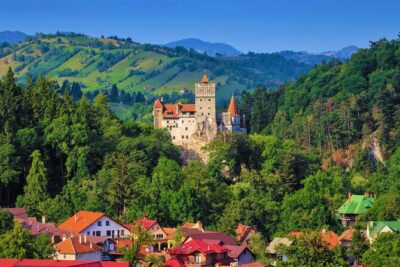
Your Brașov walk focuses on the city, but the experience package also points you toward Dracula in Bran Castle and Sinaia, described as the Pearl of the Carpathians. That usually means you can pair Brașov with a bigger day trip concept, depending on what you feel like doing next.
There is an optional Dracula Castle in Bran add-on mentioned as an afternoon visit, with an extra 55.00 euro per person including the entrance fee. So, if you want the “Dracula day” without trying to squeeze it into this short city walk, you can treat Bran as your next act.
What I like about having this option is flexibility. Brașov works as a medieval city break on its own. If you still want the gothic spectacle afterward, you can add it without losing time trying to force two very different styles into one tight schedule.
Price and Value: $53 for Two Hours of the City’s Best Anchors
At $53 per person for a two-hour English-guided walk, this is not the cheapest way to stroll Brașov. It also does not try to be. The value is in the coverage and the guide’s role.
You get multiple anchor stops that help you understand the city quickly: Catherine’s Gate, St. Nicholas Orthodox Church, the Black Church, Piata Sfatului, Strada Sforii, plus guild-era and tower viewpoints. That is a lot to pack into two hours, and it is also a lot to organize on your own without missing the “why” behind each place.
What you should budget separately is what is not included:
- entrance fees
- photo fees
- meals and drinks
- personal expenses
So even though the headline price is solid, plan to spend a bit more if you add entrances or want to pay for photos. If you do not want extras, you can still enjoy the walk because much of what you see is exterior and street-level.
Practical Tips So You Enjoy the Walk Instead of Surviving It
Old Brașov streets can be uneven, and Strada Sforii is narrow by definition, so your footwear choice matters. Bring comfortable shoes and wear clothing that works if late-afternoon weather changes.
Also, the tour is described as not suitable for people with mobility impairments, so if walking longer distances or standing is an issue, you may want a different format.
Finally, keep your bag simple. With no oversize luggage allowed, traveling light makes the experience smoother. If you have a day pack, you are likely fine. If you have a big suitcase, plan storage before you head to the meeting point.
Who This Tour Fits Best (And Who Might Prefer Another Option)
This tour makes the most sense if you want:
- a short guided orientation to Brașov’s medieval center
- strong “place stories,” not just dates
- a route that includes both famous landmarks and practical city details
It also fits well if you like history told with personality. One review highlighted Radu for side stories and a historian-style approach, plus the guide spending time in conversation about town history. Another set of experiences pointed out guides who used clear language and good humor, especially on private tours.
If you are chasing a super deep, all-day plan, this may feel too short. But if you want a high-quality first pass through Brașov before branching out, it is a very smart use of time.
Should You Book This Brașov City Tour?
Yes, book it if you want an easy, guided way to hit Brașov’s top sights in two hours, with an English-speaking guide and stops like Strada Sforii and the Black Church that give you memorable, story-backed photos. The price feels reasonable for the amount of ground covered and the way the guide connects architecture to what medieval life actually required.
I would skip it or choose something else if you cannot do a walking tour, or if you want a schedule built around long museum time and multiple paid entrances. In that case, you might be happier with a slower format.
FAQ
What time does the city tour in Brașov start?
The tour meets in front of Hotel Aro Palace at 15:30 and the duration is about 2 hours.
Which days does this Brașov tour operate?
It operates on Monday, Wednesday, and Friday.
Where is the meeting point?
The meeting point is in front of Hotel Aro Palace in Brașov.
Is the tour guided in English?
Yes, the tour includes a live English-speaking guide. Hungarian is available upon request.
Are entrance fees included for sights?
No. Entrance fees and photo fees are not included, and meals and drinks are also not included.
Can I add Dracula Castle in Bran?
Yes, there is an optional extension to Dracula Castle in Bran in the afternoon, and it includes the entrance fee for an extra 55.00 euro per person.
Is this tour suitable for mobility impairments?
No. It is not suitable for people with mobility impairments.
Whatever Else Brasov Is Selling
- From Brasov: Small-group tour Bran, Rasnov, and Peles Castles
★ 5.0 · 949 reviews - From Brasov: Tour of Castles and Surrounding Area
★ 5.0 · 363 reviews - Free walking tour of Brasov in English
★ 4.9 · 302 reviews - Brasov: Peles Castle, Bran Castle & Rasnov Fortress Day Tour
★ 4.8 · 238 reviews - Small Group Tour to Viscri Church Sighisoara Town Rupea Fortress
★ 5.0 · 225 reviews
Everything Else We Reviewed In Brasov
- From Brasov: Small-group tour Bran, Rasnov, and Peles Castles
★ 5.0 · 949 reviews - Carpathian Wilderness: A Wildlife Experience from Brașov
★ 5.0 · 398 reviews - From Brasov: Tour of Castles and Surrounding Area
★ 5.0 · 363 reviews - Free walking tour of Brasov in English
★ 4.9 · 302 reviews - Save King’s Landing – In search of Wildfire | Escape Room Brasov
★ 5.0 · 297 reviews
Still In Brasov
- From Brasov: Small-group tour Bran, Rasnov, and Peles Castles
★ 5.0 · 949 reviews - Carpathian Wilderness: A Wildlife Experience from Brașov
★ 5.0 · 398 reviews - From Brasov: Tour of Castles and Surrounding Area
★ 5.0 · 363 reviews - Free walking tour of Brasov in English
★ 4.9 · 302 reviews - Save King’s Landing – In search of Wildfire | Escape Room Brasov
★ 5.0 · 297 reviews
Recently added around Brasov
- 2 – Day Medieval Transylvania Private Tour from Brasov★ 5.0 · 3 reviews
- Mountain Bike Day Tour around Brasov★ 5.0 · 3 reviews
- Brasov: Bran Castle, Bear Sanctuary, Rasnov (Peles Optional)★ 3.1 · 3 reviews
- Brasov to Bucharest – Private Guided Transfer – Car and Driver★ 5.0 · 3 reviews
- Perfect bike tour around Brasov★ 5.0 · 3 reviews
Brasov Tours, compared.
 ★ 4.5Bucharest: Dracula’s Castle, Peles Castle, & Brasov Old TownFrom $4017,858 reviews
 ★ 4.6Bucharest: Dracula Castle, Peles Castle & Brasov Old TownFrom $4010,891 reviews
 ★ 4.5Bucharest: Dracula’s Castle, Peleș Castle & Brașov Day TripFrom $235,919 reviews
 ★ 4.4Bucharest: Day Trip to Dracula Castle, Peles Castle & BrașovFrom $453,049 reviews
 ★ 4.5Bucharest to Dracula Castle, Peles Castle and Brasov Guided TourFrom $332,933 reviews
 ★ 4.5Dracula’s Castle, Peles Castle and Brasov Day Trip from BucharestFrom $331,804 reviews
 ★ 4.5From Bucharest: Brasov Peles & Dracula’s Castle Day TourFrom $651,244 reviews
 ★ 4.5Bucharest: Peles Castle, Bran Castle, & Brasov Old Town TourFrom $401,035 reviews
Browse the lists this tour appears in