
REVIEW · BUCHAREST
Private: RedPatrol Bucharest Contrasts Tour in a Vintage Car
Bucharest can feel like two cities at once. This private Dacia 1300/1310 Contrasts tour strings the stories together for you, from royal-era elegance to communist housing blocks and the hard edges of Ferentari. I like that it mixes short photo-and-story stops with a real sense of place, not just drive-by sights.
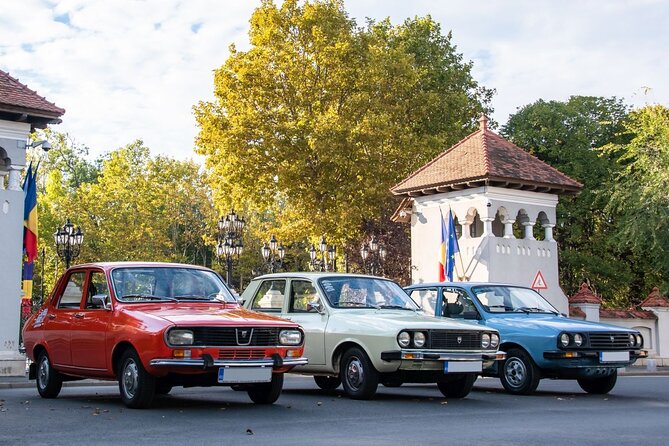
What I really like is the small-group feel inside a vintage car. You get hotel pickup and drop-off, guided transport across the city, and water in the car, plus a guide who turns street corners into timeline moments.
One consideration: this is a classic car experience. The Dacia is restored for safety and traffic rules, but it does not have AC, ABS, GPS, or automatic driving, so on warm or very busy streets you’ll want patience and a comfortable outfit.
In This Review
- Key highlights to watch for
- A vintage Dacia tour that reads Bucharest like a street map
- How the contrasts route stays manageable in 3 to 4 hours
- Stop 1, Academia Română: the communist demolition that stalled
- Fântână and the bourgeois neighborhood start of a royal city
- Cotroceni Palace gardens: belle époque Bucharest in a smaller window
- Drumul Taberei: working-class communist blocks and a mall on old ruins
- Ferentari’s fallen industrial edge and Rahova’s market reality
- Rocar factory ruins and Broscuțe Park: included admissions that complete the arc
- Palace of Parliament: the world’s biggest civil building and a rebuilt neighborhood
- The Dacia experience: comfort, safety, and what you should expect
- Guide-led storytelling matters, and you can feel it in the praise
- Price and value: what you get for about $126 per person
- Who this Bucharest Contrasts tour suits best
- Should you book RedPatrol’s Contrasts Tour in a Vintage Car?
Key highlights to watch for
- Restored Dacia ride: you ride in the car, you do not drive it, and you get the feel of 70s to 80s Bucharest travel.
- Real contrast neighborhoods: Drumul Taberei, Ferentari, and Rahova are paired with older royal and bourgeois Bucharest stops.
- Focused timing: most stops are 15 to 30 minutes, so you see several areas without losing the afternoon.
- Food-adjacent immersion: a peasant market visit in Rahova helps you understand everyday life, not just architecture.
- Ticket smartness: admission is included for Rocar ruins and Broscuțe Park, but not for several other stops.
- Winter comfort option: during wintertime, the cars are heated.
A vintage Dacia tour that reads Bucharest like a street map
If you want Bucharest to make sense fast, this type of tour is a good match. You don’t just see landmarks. You ride between neighborhoods that feel like separate chapters, then you get the connective story: power, planning, and how people lived when governments changed.
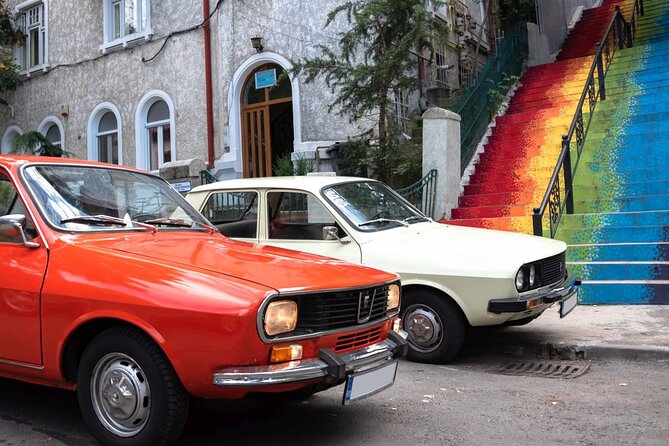
I’m especially drawn to the way a classic car forces you to slow down mentally. Windows open your view, streets show their texture, and you notice details you’d miss in a bus or taxi. When your guide points out what a building site used to be, or why one area grew wealthier while another was reshaped by state policy, the city stops being a list of sights.
You’ll spend roughly 3 to 4 hours on this private tour, with pickup from your Bucharest address. That’s a sweet spot if you’re here for a few days and want context without committing to a full day.
How the contrasts route stays manageable in 3 to 4 hours
The whole rhythm is built around short stops. Many are around 15 to 30 minutes, which keeps the energy up and gives you time for photos when the guide calls it out. The tradeoff is that you will not linger in one place long enough for deep museum time. This tour is about the street-level stories and the urban contrasts.
Your car-based route also matters. You’re not walking everywhere, so you can handle it even if you’re not trying to rack up museum hours. The guide and driver handle the driving, and you get water in the car. That’s a practical touch when you’re bouncing between areas with different vibes and densities.
One more plus: this is offered in English and is private, meaning your group stays together. That tends to make the Q and A flow better, especially when you’re trying to understand why Bucharest’s geography feels so uneven.
Other tours that arrive in something old
Stop 1, Academia Română: the communist demolition that stalled
You start at Academia Română, and the guide frames the area around a specific idea: in the 1980s, Ceausescu’s demolition plans ran into an abrupt stop with the Romanian Revolution. Even if you know the broad story of communism in Eastern Europe, this kind of grounded detail helps you feel the difference between ideology and real consequences on the ground.
Expect a short about 20-minute stop. Admission is not included, but the value here is the setting and the explanation. You’re not here to buy a ticket. You’re here to get a political “why” that makes later neighborhoods click.
If you’re the kind of person who likes understanding how a city is shaped by major events, this first stop sets the tone. If you’re mostly after photography only, you might wish you had more time, but the quick timing helps you move to the next chapter.
Fântână and the bourgeois neighborhood start of a royal city
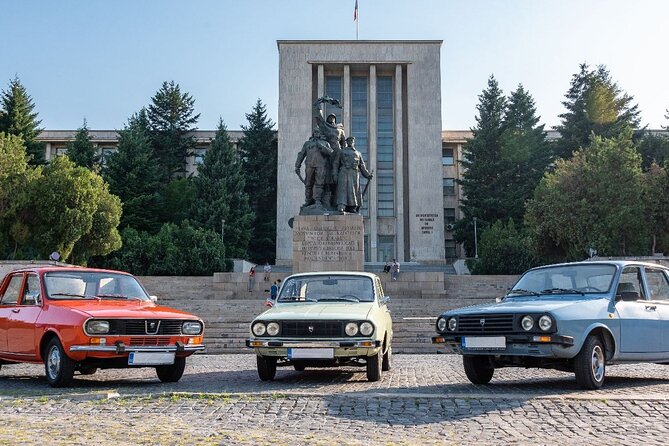
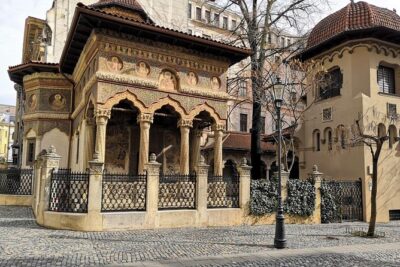
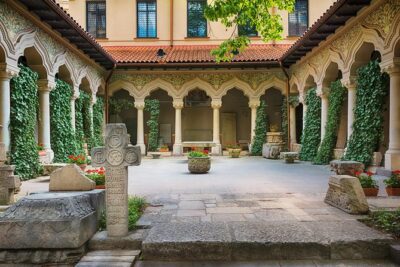
Next comes Fântână, described as a bourgeois neighborhood that began in the 19th century, growing from the era connected to the first Royal Palace of Romania. The key word here is origin. This stop is less about a single building and more about how Bucharest’s “well to do” story began.
You’ll get a brief presentation, around 15 minutes, with admission free. So you can treat this as a mental reset between heavy political topics and the more lived-in residential areas later.
Practical tip: if you’re photographing streets and facades, Fântână works well for quick shots. If you want an in-depth visit to a specific interior site, this isn’t built like that, so plan to read your city cues and save deeper museum time for another day.
Cotroceni Palace gardens: belle époque Bucharest in a smaller window
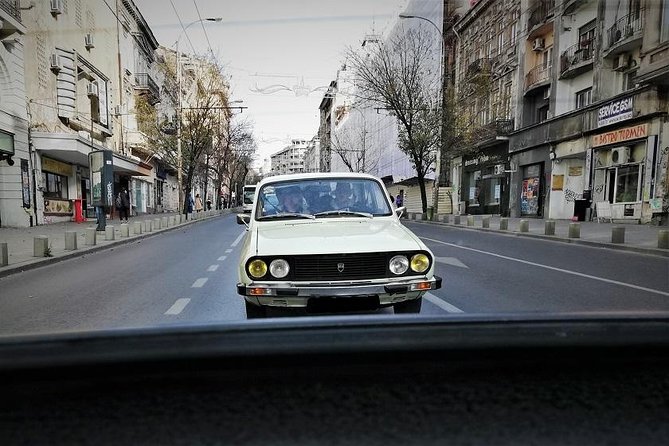
Then you head to the Cotroceni Palace’s gardens, tied to the first Royal Palace of Romania, built during the Modern Monarchy era. The guide’s focus is belle epoque Bucharest, which helps you see how the city marketed refinement even as the 20th century lined up its bigger changes.
This stop is about 30 minutes, and admission is not included. That means the value is outdoors and narrative-based. You’ll likely spend your time absorbing the setting and learning why this area mattered before communist-era planning reshaped so much of the city.
One good reason to keep this stop in your head: later, you’ll compare the royal and middle-class feel of places like this with the flattened, standardized housing blocks of the communist period. Cotroceni gives you a before picture.
Drumul Taberei: working-class communist blocks and a mall on old ruins
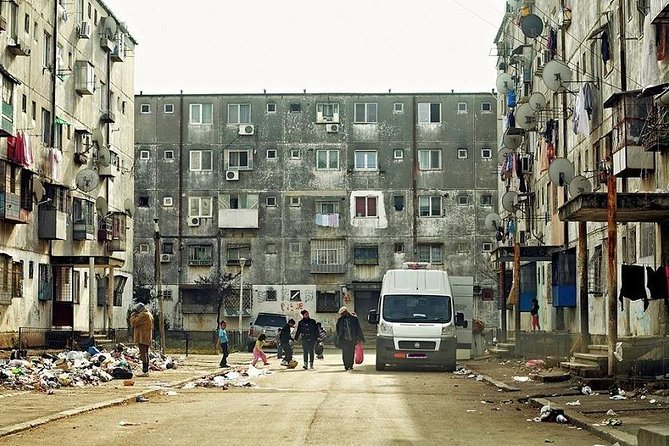
Parcul Drumul Taberei is where the story becomes more about daily life and state planning. You’re shown an area of working-class communist apartment blocks, with a detail that hits hard: a shopping mall was built on the ruins of a communist canteen.
Expect around 20 minutes, mostly for presentation, plus photos and stories. Admission is not included.
This is a stop I recommend to keep your eyes open during. Even if you don’t love architecture, the “what used to be here” framing makes you notice how cities reuse, erase, and repurpose. It’s also a good place to ask your guide how people use the area today, because the contrast between old intention and current use is often where the most interesting answers come from.
The private end of Bucharest

Ferentari’s fallen industrial edge and Rahova’s market reality
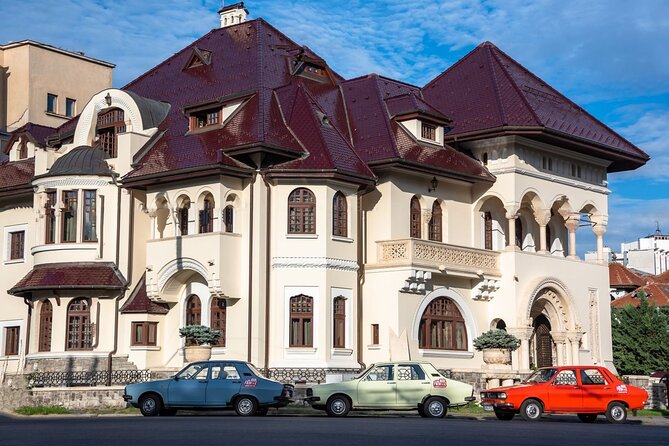
After Drumul Taberei, the route moves into the Ferentari story, including the idea of a fallen industrial area built by communists in the 1970s. The contrast tour concept works best here: you’re not learning communism as a concept, you’re watching its imprint in urban form.
Then comes Piața Rahova, exploring the Ferentari blocks of flats area and the transformation from post-socialist 1990s shifts, described as moving from workers’ territory into a city ghetto. That’s not a pretty summary, but it’s presented as a real part of Bucharest’s modern social geography.
You’ll also visit a peasant market here, which matters because markets are where cities show you their everyday economy. This is around 30 minutes, and admission is not included.
What you should know before you go: this section is more emotionally heavy than the royal-era stops. It’s also more photo-driven, because you’ll want to capture the contrasts. If you’re someone who gets uncomfortable in poverty-adjacent spaces, decide your comfort level ahead of time. The point is understanding, not staring.
Rocar factory ruins and Broscuțe Park: included admissions that complete the arc
Two stops later in the route come with admission included: Fosta Uzină Rocar and Broscuțe Park.
At Fosta Uzină Rocar, you’ll see a ruined area tied to socialist factories, left abandoned after socialist industries collapsed. It’s about 20 minutes. Admission is included. The guide’s job here is crucial because ruins are easy to treat like scenery unless someone explains the role factories played and why the neighborhood’s story changed.
Then there’s Broscuțe Park, connected to the Colonel’s Quarter from the first Soviet occupation era neighborhood. Expect about 20 minutes again, with admission included. The guide focuses on what life was like in Stalinist days in Bucharest, a topic that becomes more believable after you’ve seen how the city was built for workers, then left behind.
These two included admissions are a good value signal. You’re paying for a guide-led narrative, but you’re also getting at least some entrance costs covered when the tour moves into formal sites.
Palace of Parliament: the world’s biggest civil building and a rebuilt neighborhood
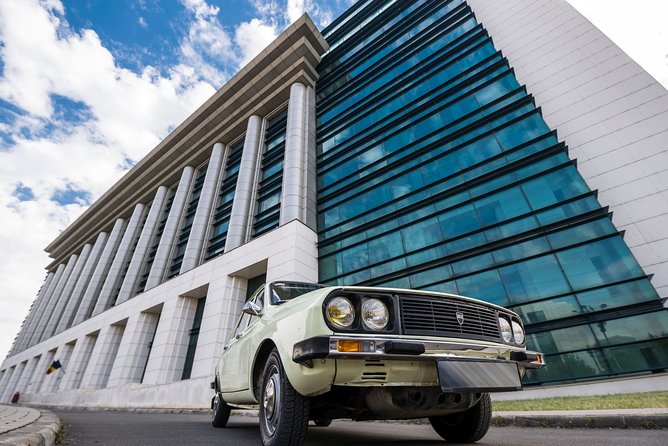
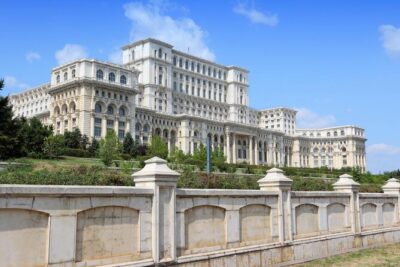
The final major story stop is the Palace of Parliament, described as the biggest civil building in the world. You also get the larger point: it sits in a neighborhood of about 20 square kilometers that was completely rebuilt after extensive demolition.
This is an about 20-minute stop, and admission is not included. So you’ll be mainly absorbing the story and the setting rather than doing a full inside visit during this tour.
Why it matters on a contrasts route: the Palace of Parliament can look like pure monument at first glance. The guide framing gives it political meaning. It represents power displayed through construction scale, and it also points back to the human cost of demolition elsewhere in the city.
If you want to go inside later, plan a separate timed visit. This tour is better at giving you context for what you’ll see, not replacing a longer Parliament visit.
The Dacia experience: comfort, safety, and what you should expect
You’ll be riding in a fully restored classic Dacia 1300/1310, designed to meet safety traffic regulations. It’s described as a car from the 70s to 80s classics era, and it does not include AC, ABS, GPS navigation, servo-direction, or automatic gear drive.
That detail changes the feel of the tour. It’s not about luxury. It’s about atmosphere and movement. If you hate loud environments or you’re very temperature-sensitive, consider going in cooler months. During wintertime, though, the cars are heated, which makes a big difference.
Also, you won’t drive the car. Your driver handles that, which helps keep the tour focused on stories rather than navigation.
One more real-world note: Red Patrol does not allow pets or children under 10 years old. So this tends to feel like an adult-friendly ride, especially when topics include poverty, industrial decline, and occupation-era life.
Guide-led storytelling matters, and you can feel it in the praise
The tour’s best asset is the human factor. In the feedback, guides and drivers repeatedly come up as professional, funny, and friendly. Specific names you may see in the lineup include Ivan Crinu as a guide, and Mihai as a driver.
That matters because a contrasts tour can go wrong if the guide only reads facts. When it works, you feel how streets connect to policy, and how people adapted. The tour clearly leans into humor and authenticity, even when the topics are heavy. That blend helps you learn without feeling crushed by the subject.
Price and value: what you get for about $126 per person
At $126.43 per person for roughly 3 to 4 hours, you’re paying for four things: private routing across Bucharest, hotel pickup and drop-off, a professional guide plus driver, and the classic Dacia transport experience. You also get water in the car and a tour personalized gift.
Is it cheap? No. But it also isn’t priced like a basic sightseeing walk. For many people, the value is the combo of ride plus narrative plus convenience. If you’re trying to cover multiple neighborhoods you might not otherwise visit safely or comfortably on your own, a guided car format can be a smart use of limited time.
If you want to stretch value, go into the tour ready to ask questions. The private format means your guide can respond directly, and the stop lengths make it easier to stay engaged.
Who this Bucharest Contrasts tour suits best
This tour fits you well if you want Bucharest to feel legible. I’d especially recommend it if you:
- enjoy urban history and want context that connects buildings to politics
- like photography and want photo stops in places you might skip on a typical “old town” route
- value hotel pickup and a guided car over figuring out transport on your own
- appreciate a mix of light and heavy topics, with humor used to keep the stories human
It might be less ideal if you want long museum-style visits or if you strongly prefer air-conditioned comfort and minimal sensory change. The classic-car experience is part of the point, and you should go with the right expectations.
Should you book RedPatrol’s Contrasts Tour in a Vintage Car?
I think this is a strong choice if your goal is understanding Bucharest beyond the postcard layer. The route’s power comes from pairing royal-era settings with communist-era planning and then the post-socialist reality in neighborhoods like Ferentari and Rahova. Add the restored Dacia ride, hotel pickup, and English guiding, and you get a format that is practical for a half-day.
If you’re sensitive to topics involving poverty and occupation-era history, you should be honest about how you like to learn. And if you want maximum comfort, plan your timing and dress for a vintage-car ride with no AC, though winter heating is provided.
If you want one memorable way to get the city’s contrasts into your head quickly, this tour is worth booking.
Whatever Else Bucharest Is Selling
- Bucharest to Dracula Castle, Peles Castle and Brasov Guided Tour
★ 4.5 · 2,933 reviews - Bucharest: Palace of Parliament Tickets and Guided Tour
★ 4.4 · 1,877 reviews - Transylvania and Dracula Castle Full Day Tour from Bucharest
★ 4.5 · 1,589 reviews - Bucharest: City Highlights Guided Walking Tour
★ 4.9 · 1,482 reviews - From Bucharest: Brasov Peles & Dracula’s Castle Day Tour
★ 4.5 · 1,244 reviews
Everything Else We Reviewed In Bucharest
- Bucharest: Dracula’s Castle, Peles Castle, & Brasov Old Town
★ 4.5 · 17,858 reviews - Bucharest: Dracula Castle, Peles Castle & Brasov Old Town
★ 4.6 · 10,891 reviews - Bucharest: Dracula’s Castle, Peleș Castle & Brașov Day Trip
★ 4.5 · 5,919 reviews - Bucharest: Palace of Parliament Tickets and Guide
★ 4.3 · 3,182 reviews - Bucharest: Day Trip to Dracula Castle, Peles Castle & Brașov
★ 4.4 · 3,049 reviews
Tours That Arrive In Something Old
- Bucharest: CityTour in one of a kind mini hot rod
★ 5.0 · 165 reviews - Bucharest: City Tour by a Mini Hot Rod
★ 4.9 · 110 reviews - Private -RedPatrol Tour of Bucharest with a Romanian Vintage Car
★ 5.0 · 74 reviews - Bucharest electric city tour by Smart Balance #green
★ 4.8 · 16 reviews - Private – Romanian Vintage Car Driving Tour of Bucharest 120 min
★ 5.0 · 12 reviews
Recently added around Bucharest
- Private Tasting Expedition Along Romania’s Most Famous Wine Route★ 5.0 · 3 reviews
- Private Guided Tour of Peles Castle and Bran Castle from Bucharest★ 5.0 · 3 reviews
- Private Sightseeing Tour of Bucharest★ 4.5 · 3 reviews
- Discover Europe’s Deepest Mines & Peles Castle’s Royal Charm★ 5.0 · 3 reviews
- Bucharest City Tour and Wine Tasting★ 5.0 · 3 reviews
Vintage Car Tours, compared.
 ★ 5.0Bucharest: CityTour in one of a kind mini hot rodFrom $95165 reviews
 ★ 4.9Bucharest: City Tour by a Mini Hot RodFrom $91110 reviews
 ★ 5.0Private -RedPatrol Tour of Bucharest with a Romanian Vintage CarFrom $12074 reviews
 ★ 4.8Bucharest electric city tour by Smart Balance #greenFrom $5816 reviews
 ★ 5.0Private – Romanian Vintage Car Driving Tour of Bucharest 120 minFrom $11512 reviews
 ★ 5.0Bucharest: Private Communist Tour in a Romanian Vintage CarFrom $12410 reviews
 ★ 5.0Bucharest: Ferrari Driving Experience – SHORT 10minFrom $1618 reviews
 ★ 5.0Bucharest: Ferrari Driving Experience – MEDIUM 30minFrom $4276 reviews
Browse the lists this tour appears in