
REVIEW · ROMANIA
Troubled – Notorious Neighborhood – area known for social issues
Bucharest gets honest fast in this tour. You walk and ride through Ferentari and Rahova, then head out to Sinești to see a side of the city most visitors skip, explained in plain language by guides like Sebastian and Valerica. I love the way the guides keep the tone human and respectful, with rules you can actually follow, so the experience feels safer and less like rubbernecking.
Two things I especially like: first, the tour leans into real daily life, including time around local markets where you can see what people actually buy. Second, the stops are timed well (about an hour per neighborhood or village), so you get context without getting rushed, and you do it in English with a private group feel.
One drawback to consider: this is not a postcard route. You are going into areas tied to poverty and social strain, and the visit includes locations like the Rahova Penitentiary, so you should expect discomfort and keep your behavior and filming low-key. Also, the guidance to dress simply and skip flashy jewelry or expensive items is real, not optional.
In This Review
- Key things that make this tour worth your time
- Why Ferentari, Rahova, and Sinești change how you see Bucharest
- Meet the guides and learn the rules of respectful visiting
- Stop 1: Ferentari, the rough edge of Bucharest up close
- Stop 2: Rahova, local life, and the weight of the Rahova Penitentiary area
- Stop 3: Sinești, Roma life and the contrast of the village
- The 3.5 hours: how the timing and transport actually play out
- Price and value: what $130.83 buys you in real terms
- What to wear and how to act when the setting is sensitive
- Who this tour suits, and who should skip it
- Book it or skip it: my decision guide
- FAQ
- How long is the tour?
- Is pickup available?
- Is the tour private?
- What language is the tour in?
- Do I need to pay admission for the stops?
- Where does the tour take you in Bucharest?
- What should I wear?
- Can I cancel for a full refund?
- Is it easy to join if I use public transport?
Key things that make this tour worth your time
- Ferentari street life: a tough, famous neighborhood, handled carefully and with context
- Rahova context beyond stereotypes: including time near the Rahova Penitentiary area
- Sinești and the contrast: you see Roma life in a way that is not just one uniform story
- English guidance with humor and clear boundaries: guides like Bogdan, Catalin, Sebastian, Matthew, and Valerica set expectations early
- Mixed transport: parts by vehicle, parts on foot, including market time
Why Ferentari, Rahova, and Sinești change how you see Bucharest
Bucharest is easy to understand when you stick to the center. This tour forces a more adult version of understanding, the one where different neighborhoods have very different day-to-day realities. You go beyond photos of buildings and into the rhythms of markets, streets, and family life.
What makes it valuable is not shock value. It is the way the guide frames what you are seeing, what you should and should not do, and why the city has sharp divides. If you are the type who wants the city to make sense, not just look pretty, this route hits.
Also, you get a clear time structure. The tour is about 3 hours 30 minutes, and the main stops are roughly an hour 10 minutes each, which keeps the experience focused. You are not wandering for half a day trying to piece it together yourself.
Meet the guides and learn the rules of respectful visiting
This is a tour where the guide matters as much as the route. Guides such as Sebastian, Bogdan, Catalin, Matthew, and Valerica are repeatedly praised for being engaging and for explaining things in a way that feels understandable, not like a lecture. You will also notice how often the tour emphasizes etiquette.
In practice, that means you are not free to run around filming random angles whenever you want. You get clear guidance about what is appropriate, how to move through the neighborhoods, and how to show respect. One of the best parts is that the tone is calm, even when the setting is not.
You also get a real safety mindset. The way the group stays together, follows the plan, and listens to instructions is part of why people come away feeling comfortable rather than anxious. The goal is that you see what is there, without turning it into a spectacle.
Undecided? Here is what else Bucharest had on the shelf when we last looked.
Stop 1: Ferentari, the rough edge of Bucharest up close
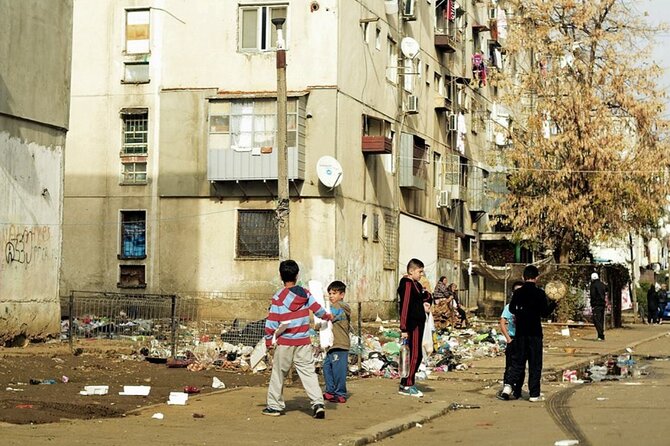
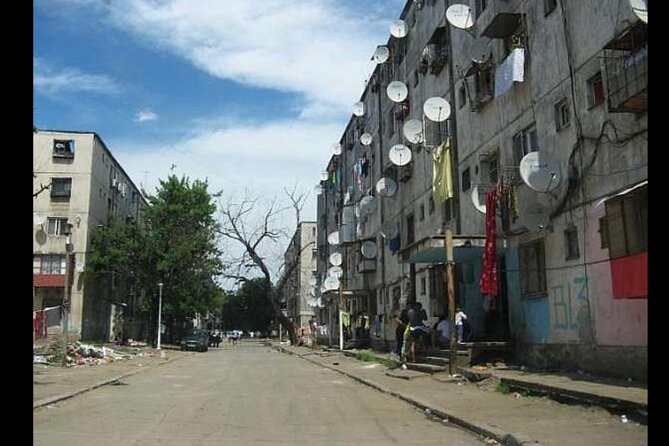
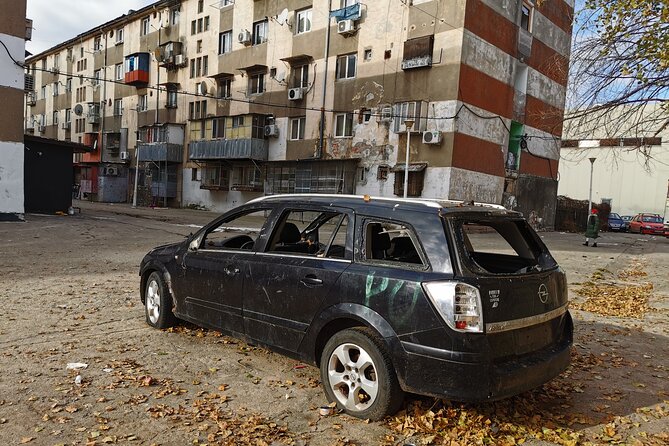
Ferentari is widely known as the low-standard, troubled neighborhood in Bucharest. The point of the visit is not to label people or look for misery. It is to help you understand how an urban area can fall into a different reality, with fewer resources and a tougher daily grind.
On this stop, you can expect a guided walk and street-level observations, paired with context about the area’s place in Bucharest. Since the tour includes market time during the overall experience, Ferentari fits into that theme of daily life, not just dramatic scenery.
Admission at this stop is free, so what you pay for is the guided attention and the ability to move through an area many visitors would avoid. The drawback here is obvious, but still worth saying out loud: you need to go in mentally ready for hard contrasts. If you only want pleasant streets and neat narratives, Ferentari will feel too blunt.
Practical tip: keep your phone usage minimal and ask before filming. Even when you can see something that surprises you, the most respectful approach is the slow one.
Stop 2: Rahova, local life, and the weight of the Rahova Penitentiary area
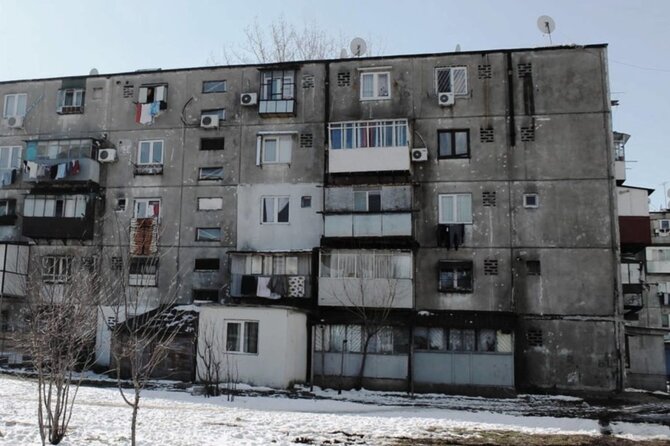
Rahova is another neighborhood where you see Bucharest’s social gaps in a direct way. It is also tied to fear and history in the tour framing, including the Rahova Penitentiary area. That alone makes this stop feel heavier than a typical sightseeing walk.
But you do not just get gloomy facts. You get how people live and how neighborhoods function day to day. The experience includes time that can involve walking and getting close to local routines, with the guide steering you away from disrespectful behavior.
This stop also tends to be where the tour earns its trust. The guides are careful about what is and is not possible, including movement through streets and what can be safely discussed in public. If you have ever felt awkward on a tour that tries to cover a sensitive subject, this one aims to reduce that awkwardness by setting boundaries early.
One more detail that matters: part of the experience happens by vehicle. That means the most intense sights are balanced with easier pacing. You are not absorbing everything through foot travel only.
Stop 3: Sinești, Roma life and the contrast of the village
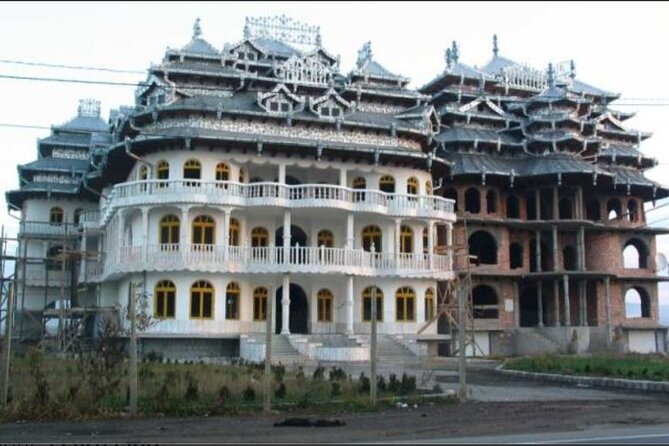
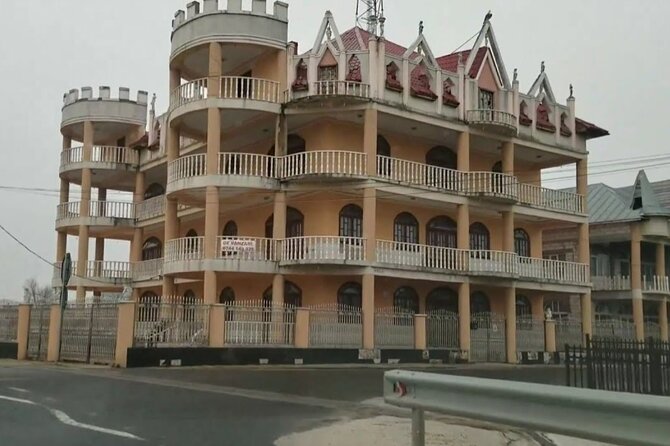
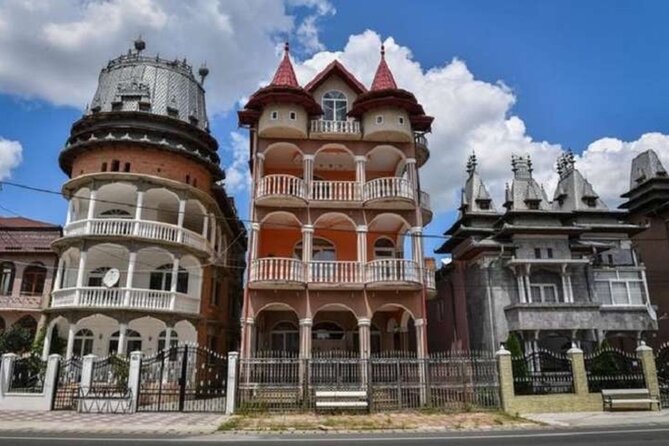
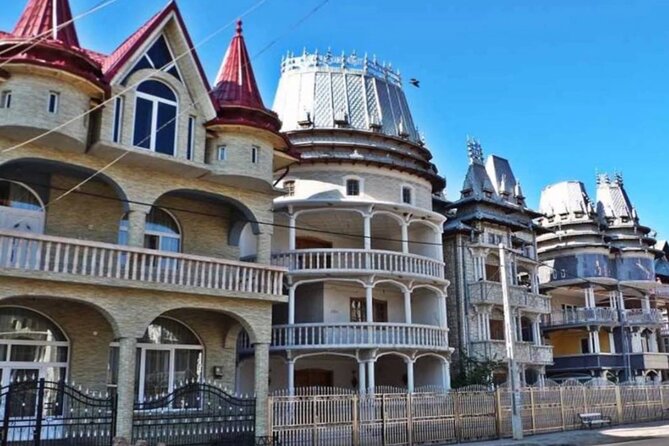
Sinești is a village stop, and the tour frames it with a strong contrast: you will see Roma palaces, meaning the gap between comfort and hardship can exist side by side with the stories you heard earlier in the route. That is an uncomfortable idea for many visitors, but it is also a reality worth seeing.
This is where the tour becomes more than a tour of one poor area. It helps you understand how Roma life is not one single story. Different families and different economic situations create very different visible environments, even within the same broader community.
Because it is a specific village visit, you should expect more time focused on how the place looks and how life is organized there. The duration here is also about an hour 10 minutes, so it is long enough to notice details without feeling like you are being dragged through quickly.
The respectful rules still matter at this stop. The tour guidance to dress simply and avoid jewelry or expensive items applies here too. The goal is that you look like a visitor who respects the setting, not someone dressed for a photo shoot.
The 3.5 hours: how the timing and transport actually play out
The itinerary is built around three main segments, each around an hour 10 minutes: Ferentari, Rahova, and then Sinești. Total time is about 3 hours 30 minutes, which usually includes travel between areas.
A big practical advantage is that the route is not entirely on foot. A meaningful chunk happens by vehicle, with walking segments in key places. That is helpful because these neighborhoods can involve uneven sidewalks, narrow streets, and situations where being too spread out is the wrong move.
You also benefit from pickup being offered. If you are based in the center and you do not want to figure out transit plus timing in advance, pickup can save you a lot of stress. The tour is also near public transportation, so you are not stranded if you prefer to meet outside of pickup.
The tour uses a mobile ticket, and it runs as a private activity, meaning only your group participates. That changes the vibe. You can ask more direct questions without feeling like you are competing with a large crowd for the guide’s attention.
Finally, you may want to book ahead. It is often booked about 48 days in advance, so if your trip dates are fixed, plan early.
Price and value: what $130.83 buys you in real terms
At $130.83 per person for roughly 3.5 hours, this is not a cheap add-on. But it is also not just a driver and a map. You are paying for access, context, and guidance in areas that many standard tours skip.
The value comes from several elements listed clearly in the experience setup:
- A private group format
- English guidance
- Pickup offered
- Free admission included for the stops
- A tour design with both vehicle time and walking, which helps you cover ground without overdoing it
Group discounts are also part of the pricing structure, so if you have friends traveling with you, this can become more reasonable fast. If you are solo, it is still a fair price when you care about being shown how Bucharest works beyond the center.
The one caveat is personal. If your travel style is purely entertainment and you hate any situation that asks for serious respect and calm behavior, you may feel underwhelmed. This route is more about understanding than about fun.
What to wear and how to act when the setting is sensitive
This tour comes with an explicit dress request: dress as simply as possible, and avoid jewelry and expensive items. That is not about fashion policing. It is about avoiding attention and keeping the atmosphere dignified.
Your best bet is to wear neutral, comfortable clothes you can move in, and keep your accessories minimal. Leave the flashy watch, heavy chain, and designer bag at home if you can. Bring nothing that makes you look like an easy target.
Behavior matters just as much as clothing. The best approach is quiet observation, respectful movement, and not treating people’s homes or everyday routines as photo props. The guides make it clear what is and is not possible, including during market moments.
If you remember one rule, make it this: ask yourself how you would want a visitor to behave if your neighborhood was being watched.
Who this tour suits, and who should skip it
This is a strong fit if you:
- Want Bucharest beyond the usual center circuit
- Prefer real-life context over staged sightseeing
- Enjoy guides who explain history and modern reality in a grounded way
- Are comfortable with a route that includes social hardship and difficult subject matter
It might not be the right choice if you:
- Want only light and pretty scenes
- Get uneasy in socially complex settings and hate being given behavioral guidance
- Expect a standard photo tour with minimal talking
If you do go, go with the right mindset. Think learning, respect, and calm curiosity.
Book it or skip it: my decision guide
Book this tour if you are curious about how Bucharest functions when you leave the postcard zone, and you want a guide like Sebastian, Bogdan, Catalin, Matthew, or Valerica to connect the dots. The repeated praise centers on feeling safe, learning a lot in a short time, and seeing daily life you would not find on your own.
Skip it if you want a relaxed, feel-good stroll. This tour is designed for realism, not comfort. The subject matter is tough, and the dress and behavior requests are part of the experience.
If you can handle that, you are likely to feel the payoff quickly: a stronger understanding of Bucharest, sharper context about Roma life in different situations, and a much more honest sense of the city’s edges.
FAQ
How long is the tour?
The tour runs for about 3 hours 30 minutes.
Is pickup available?
Yes, pickup is offered.
Is the tour private?
Yes. It is a private tour or activity, so only your group participates.
What language is the tour in?
The tour is offered in English.
Do I need to pay admission for the stops?
Admission tickets are listed as free for the stops.
Where does the tour take you in Bucharest?
You visit areas in Bucharest including Ferentari, Rahova, and a village stop in Sintești, with specific addresses along the route such as Rahova Penitentiary Strada Adrian 4 and Strada Principală Nr. 353A in Sintești.
What should I wear?
Dress as simply as possible and avoid jewelry and expensive items.
Can I cancel for a full refund?
Yes. You can cancel up to 24 hours in advance for a full refund.
Is it easy to join if I use public transport?
The tour is near public transportation.
Everything Else We Reviewed In Bucharest
- Bucharest: Dracula’s Castle, Peles Castle, & Brasov Old Town
★ 4.5 · 17,858 reviews - Bucharest: Dracula Castle, Peles Castle & Brasov Old Town
★ 4.6 · 10,891 reviews - Bucharest: Dracula’s Castle, Peleș Castle & Brașov Day Trip
★ 4.5 · 5,919 reviews - Bucharest: Palace of Parliament Tickets and Guide
★ 4.3 · 3,182 reviews - Bucharest: Day Trip to Dracula Castle, Peles Castle & Brașov
★ 4.4 · 3,049 reviews
Recently added around Bucharest
- Private Tasting Expedition Along Romania’s Most Famous Wine Route★ 5.0 · 3 reviews
- Private Guided Tour of Peles Castle and Bran Castle from Bucharest★ 5.0 · 3 reviews
- Private Sightseeing Tour of Bucharest★ 4.5 · 3 reviews
- Discover Europe’s Deepest Mines & Peles Castle’s Royal Charm★ 5.0 · 3 reviews
- Bucharest City Tour and Wine Tasting★ 5.0 · 3 reviews