
REVIEW · SIGHIȘOARA
2 Days – Private Tour to Transylvania – Brașov, Sighișoara, Sibiu
Two days, five big names in Transylvania. This private tour from Bucharest uses air-conditioned transport to pack in Peleș, Bran, Brașov, Sighișoara, and Sibiu without wasting hours on public buses. I like the door-to-door hotel pickup, and I like that the guide keeps things moving so the trip actually feels efficient.
One thing to plan for: castle entrance fees are not included, so expect to pay extra for Peleș and Bran when you arrive.
In This Review
- Quick hits before you go
- The real advantage: private 2 days that still feel paced
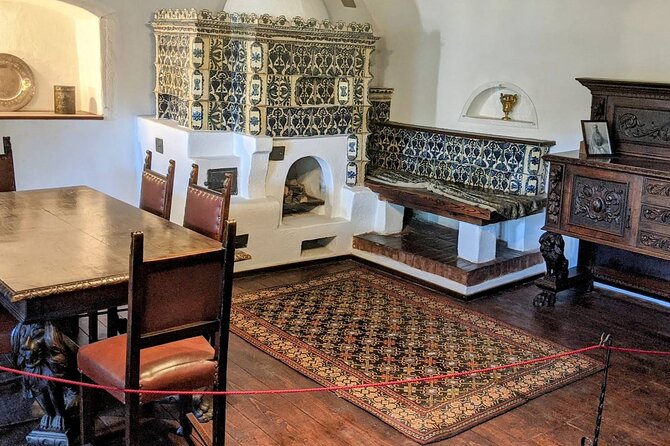
- Peleș Castle at Sinaia: the royal castle detail that’s hard to fake
- Bran Castle and Dracula: myth, legend, and what you should actually expect
- Brașov’s Historical Center: the medieval city break you need
- Sighișoara Citadel (UNESCO): a medieval town you can still walk through
- Sibiu: Saxon guild wealth, walled defenses, and big square energy
- Cozia Monastery near the Olt River: the quiet stop with real weight
- The people factor: guides who adjust the plan and explain the details
- Price and value: what the $431.35 covers, and what you add on
- Who this tour fits best (and who might want something else)
- Should you book this 2-day private Transylvania tour?
- FAQ
- How much does the private 2-day Transylvania tour cost?
- What is included in the tour price?
- What is not included?
- How long is the tour?
- What days are Peleș Castle closed, and what happens then?
- Is there an English-speaking guide?
- Are the historical centers in Brașov, Sighișoara, and Sibiu free to enter?
- How much time do you get in Sighișoara and Sibiu?
- Are there entrance fees for Peleș and Bran?
- Is free cancellation available?
Quick hits before you go
- Private, door-to-door transport from Bucharest saves real time across the long drives.
- An English-speaking professional guide who can explain what you are seeing, not just point at it.
- Peleș Castle plus Bran plus three UNESCO-style old towns, all in about two days.
- Sighișoara and Sibiu deliver that German Saxon feel, with medieval streets and major church squares.
- Flexibility when timing changes, including handling the Peleș closure on Monday and Tuesday.
- Smaller stops like Cozia Monastery add depth without turning the day into a marathon.
The real advantage: private 2 days that still feel paced
Transylvania looks simple on a map, but in practice the distances add up fast. What makes this tour work is the private car, with an English guide and professional driver taking care of the driving so you can focus on the sights. You get a hotel pickup and drop-off on both days, so you start and end with less hassle than trying to coordinate trains or bus connections yourself.
The pacing is also smart. You do not just rush from one place to the next with minimal time. Each major stop gets a block of time that makes sense for walking, photos, and a proper visit. For a two-day format, that is the difference between collecting stamps and actually feeling like you saw Romania, not just passed through it.
Peleș Castle at Sinaia: the royal castle detail that’s hard to fake
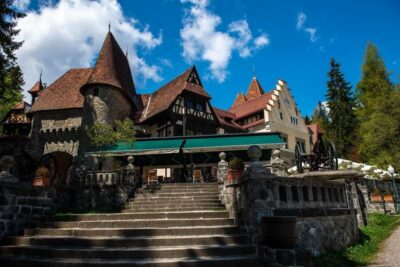
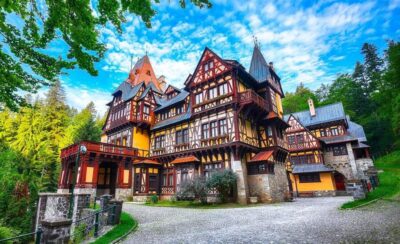
Peleș Castle sits at the foot of the Bucegi Mountains, in Sinaia, and it is the kind of place that makes you pause even if castles are not usually your thing. Commissioned by King Carol I in 1873 and completed in 1883, it served as the royal summer residence until 1947. The scale is less about having a huge fortress and more about craftsmanship, materials, and interior refinement.
Plan for 4 hours here. That time matters, because Peleș is not just a photo stop. The castle has around 160 rooms, with fine European art and decorative touches that you will notice more if you slow down. You will see Murano crystal chandeliers, German stained-glass windows, and Cordoba leather-covered walls. You also get the standout historical flex: Peleș is often described as the first European castle with electricity, plus it had a power plant, hot and cold running water, central heat, and even a central vacuum system.
One practical note that can affect your experience: on Monday and Tuesday, Peleș Castle is closed. In those cases, you visit the outer courtyard instead. If you care most about interiors, pick your dates carefully. If you are happy with the setting and exterior views, the courtyard visit still keeps the day on track.
Deeper into Transylvania
Bran Castle and Dracula: myth, legend, and what you should actually expect
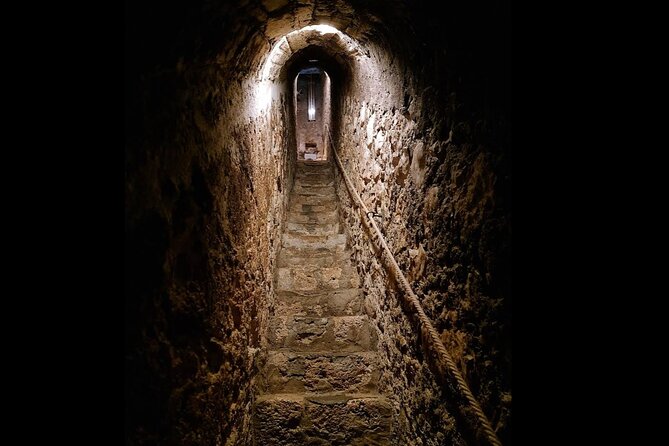
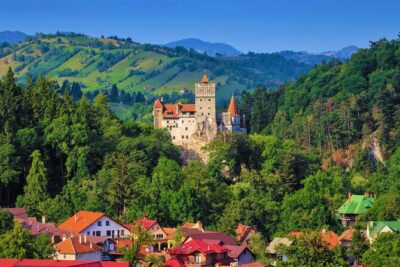
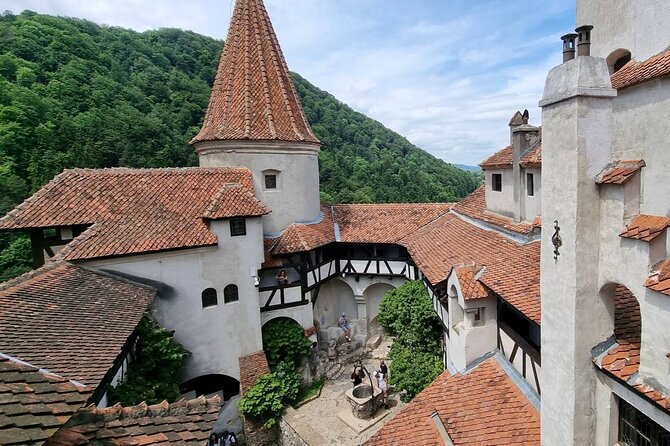
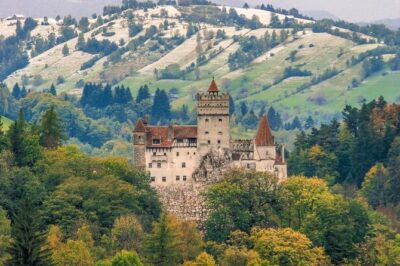
Bran Castle is the one people call Dracula’s Castle. The reality is more nuanced, and it is worth knowing that before you go. Outside Romania, the Dracula association is strong, but there is no evidence that Bram Stoker knew this castle. Bran also only has tangential links to Vlad the Impaler, the historical Vlad III connected to the Dracula legend.
Expect 4 hours at Bran. The visit is partly about the castle itself and partly about the stories layered over it. Since the interior ticket is not included, you will want to budget for it in advance so you are not caught off guard at the gate. The entrance fee for Bran is listed as 150 RON, about €30 per person.
If you like legends, you will enjoy how the site is presented and how the guide explains the difference between fiction and history. If you only want the most scholarly approach, Bran can still be worth it because the castle architecture and setting do carry real presence.
Brașov’s Historical Center: the medieval city break you need
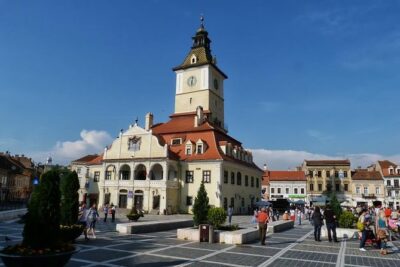
Brașov is where your trip starts to feel like a real city, not just a sequence of monuments. This stop is 4 hours in the historical center, and admission is free. The big value here is atmosphere: streets, architecture, and the sense of a place that has been trading and adapting for centuries.
Brașov is one of Romania’s most visited cities, and for good reason. It has a mix of history, urban energy, and impressive scenery nearby. During the communist period, its name changed for 10 years to Stalin City, a detail that helps you understand how even cities tied to older European trade networks were reshaped by modern politics.
One drawback to keep in mind: 4 hours can fly by if you treat it like a checklist. You’ll get the most out of Brașov if you plan a relaxed walk, take breaks, and let the guide point out specific spots. Think of it as your midday reset, before the UNESCO citadel towns on Day 2.
Sighișoara Citadel (UNESCO): a medieval town you can still walk through
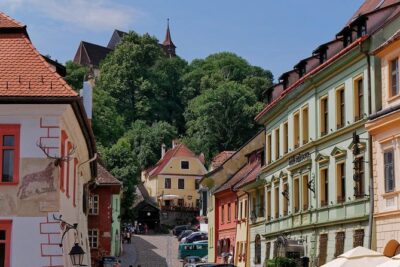
Day 2 starts in Sighișoara, specifically the historic citadel area. Sighișoara was built in the 12th century by Saxon settlers, and it is an inhabited medieval citadel. That matters. Many old towns are preserved behind glass. Here, you are dealing with a living place where medieval structure and everyday life coexist.
Sighișoara became a UNESCO World Heritage Site in 1999. You are looking at an 850-year-old testament to Transylvanian Saxon history and culture. The guide can also connect the town to the Vlad III thread, since Sighișoara is described as the birthplace of Vlad III the Impaler, the historical figure around which the Dracula legend grew.
This stop is scheduled for 3 hours, and it is free to enter. That length is ideal because Sighișoara is best enjoyed with walking. You can also catch a major theme of the town’s identity: it holds a medieval festival every year where crafts and arts show up alongside rock music and stage plays. Even if you are not there during the festival, it helps explain why this place feels more than museum-like.
If you like your old towns with texture and not just views, Sighișoara is often the stop that makes people say they want more time in Transylvania.
Sibiu: Saxon guild wealth, walled defenses, and big square energy
Sibiu is the other major Saxon citadel stop, and it leans slightly more toward grandeur. Sibiu was the largest and wealthiest of the seven walled citadels (Siebenburgen) built starting in the 12th century by the Transylvanian Saxons. The wealth from guilds helped pay for impressive buildings and the fortifications required to protect the city.
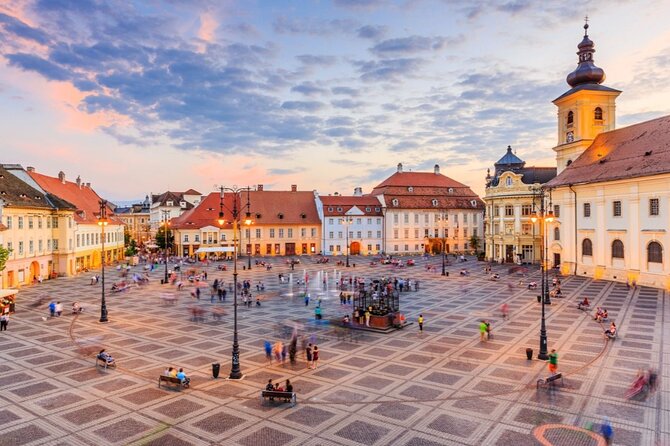
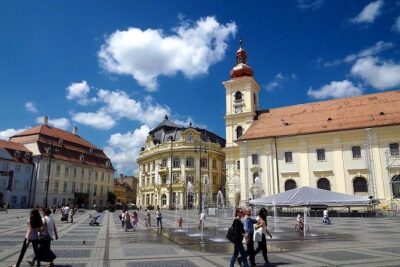
You get 4 hours here, and admission is free. What you should aim for is the structure of the old town: narrow streets that connect to church-dominated squares. You will likely spend time around Great Square and Little Square, where the scale of the buildings and the way the town is planned make the experience feel coherent.
You also still see wall sections around the historic area. Between the steep-roofed 17th century buildings and the gable overhangs, Sibiu has a distinctly Germanic feel, similar to the atmosphere you get in Sighișoara and Brașov, but with its own personality.
Still in Brasov? Keep going.
Cozia Monastery near the Olt River: the quiet stop with real weight
Cozia Monastery is a different kind of stop. It is an Eastern Orthodox site near the Olt River in Călimănești, and it is one of Romania’s most important and well-preserved medieval religious places.
You only have 30 minutes, which means you should come in ready to absorb quickly. If your goal is a long, slow church visit, this is not that. But as a historical and spiritual punctuation mark between UNESCO towns and castles, it works well.
Key facts to look for:
- Founded in 1388 by Mircea the Elder (Mircea cel Bătrân), ruler of Wallachia
- The church is Byzantine style with Romanian influences, with stone carvings and frescoes, including frescoes dating to the 14th and 18th centuries
- Mircea the Elder is buried there, which gives the monastery extra significance
- It is still an active monastery and also a pilgrimage destination
The name origin may link to the nearby Cozia Mountains. Even with limited time, the monastery can hit hard because it reminds you that Transylvania is not only Dracula and Saxon towns. It is also Wallachian history and Orthodox tradition.
The people factor: guides who adjust the plan and explain the details
This tour’s reputation is strongly tied to its guides and drivers, and you feel that in how smooth the experience becomes. For example, George is specifically mentioned for punctual pickup and for being accommodating enough to squeeze in an extra stop like a bear sanctuary. Laura is praised for teaching a lot about Romania and the region, which is exactly what you want from a guide on a short trip.
Sebastian shows up in multiple comments, especially around flexibility. One clear example: if Peleș is closed on the day you were scheduled to visit, the guide can reroute and secure tickets for the following day. That ability matters a lot in a two-day schedule where one closure could otherwise derail your whole plan.
Other guide names you might hear in the operator’s orbit include Catalin, Mircea, and Alin. Catalin is praised for knowledge across history, culture, architecture, and cuisine, plus for being punctual and taking care of guests. Alin is credited with going beyond the signed plan by taking someone to a synagogue in Sighișoara and visiting the Jewish cemetery there, and with handling practical requests like stopping at a supermarket for needed items to keep the trip going.
While you should not assume every customization is guaranteed, you can take this as a signal that the team is used to adjusting. If you have specific interests beyond castles and squares, ask your guide early. It is the kind of tour where a good match between your interests and the guide’s instincts can upgrade the whole experience.
Price and value: what the $431.35 covers, and what you add on
At $431.35 per person, this is not a budget outing. But in a two-day format, the value can be strong if you compare it to what you would spend in time, logistics, and multiple tickets when you travel independently.
Here is what is included:
- Hotel pick-up and drop-off on both days
- Private transport in a modern air-conditioned vehicle
- A professional English-speaking tour guide
- Mobile tickets
- Group discount (if applicable to your booking)
Meals are not included. Also, hotel accommodation is not included as part of the price, though there is a recommendation for accommodation in Sighișoara, with Central Park Hotel suggested.
Entrance fees are on you:
- Peleș Castle: 100 RON, about €20 per person
- Bran Castle: 150 RON, about €30 per person
Cozia Monastery is listed as free, and the historical centers of Brașov, Sighișoara, and Sibiu are also listed as free in this schedule.
So the real “extra” cost is mainly the two big castle tickets plus whatever you choose for meals and snacks. For many people, paying those separate entrances while keeping the transport and guiding bundled feels like a fair trade. You are paying to remove the friction: the driving, timing, and interpreting.
One caution: the Monday and Tuesday Peleș closure for Peleș means the experience shifts to the outer courtyard instead of interior views. That is a value consideration because you may feel the difference, especially if castle interiors are the main reason you booked.
Who this tour fits best (and who might want something else)
This is a strong fit if you:
- Want a private experience without renting a car
- Have limited time in Romania and want major Transylvanian highlights
- Like guided context for Dracula-related sites, Saxon towns, and medieval churches
- Prefer an efficient schedule with time blocks that feel realistic
It might be less ideal if you:
- Are traveling on a strict budget and want fewer paid entrances
- Plan to visit specifically on Monday or Tuesday and you care deeply about Peleș interiors
- Want lots of free time to wander without structure, since the itinerary uses planned durations at each stop
Should you book this 2-day private Transylvania tour?
I think you should book it if you want a high-impact Transylvania intro, with an English guide and a private car that keeps your days from turning into logistics. The combination of Peleș, Bran, Brașov, Sighișoara, and Sibiu covers the main “wow” factors and also adds variety, from royalty and Dracula myth to UNESCO citadel streets and Orthodox monastery heritage.
Before you commit, do two things:
- Choose your dates thoughtfully, especially if your travel days include Monday or Tuesday for Peleș
- Budget for the castle entrances and bring some flexibility for meal stops, since meals are not included
If you want Dracula energy, medieval town walks, and guided explanations without the stress of planning routes yourself, this private 2-day format is a practical and very rewarding way to do Transylvania.
FAQ
How much does the private 2-day Transylvania tour cost?
The price is $431.35 per person.
What is included in the tour price?
Hotel pick-up and drop-off on both days, private air-conditioned transport, and a professional English-speaking tour guide are included.
What is not included?
Entrance fees for Peleș Castle and Bran Castle are not included, and meals are not included. Accommodation is also not included.
How long is the tour?
It runs for about 2 days.
What days are Peleș Castle closed, and what happens then?
Peleș Castle is closed on Monday and Tuesday, and the visit is to the outer courtyard instead.
Is there an English-speaking guide?
Yes, the tour is offered with an English guide.
Are the historical centers in Brașov, Sighișoara, and Sibiu free to enter?
They are listed as free in the tour schedule.
How much time do you get in Sighișoara and Sibiu?
Sighișoara is scheduled for about 3 hours, and Sibiu is scheduled for about 4 hours.
Are there entrance fees for Peleș and Bran?
Yes. Peleș is listed as 100 RON (about €20) per person, and Bran is listed as 150 RON (about €30) per person.
Is free cancellation available?
Yes. You can cancel up to 24 hours in advance for a full refund.
Saxon Country: Sighisoara, Viscri, Biertan
- 2-Day Medieval Transylvania with Brasov,Sibiu and Sighisoara Tour from Bucharest
★ 4.5 · 145 reviews - 2-Day Transylvania from Bucharest: Brasov, Bran, Sighisoara
★ 5.0 · 60 reviews - 4 Days Private Tour in Transylvania: Sibiu, Sighisoara and Brasov
★ 5.0 · 18 reviews - 2-Day Small-Group Tour to Dracula’s Castle, Rasnov Fortress, Peles Castle, Sighisoara and Libearty Brown Bear Sanctuary with Overnight in Brasov
★ 4.5 · 9 reviews - 2 days Transylvania Tour with Brasov, Sibiu and Sighisoara
★ 5.0 · 6 reviews
Still In Brasov
- Bucharest: Dracula’s Castle, Peles Castle, & Brasov Old Town
★ 4.5 · 17,858 reviews - Bucharest: Dracula Castle, Peles Castle & Brasov Old Town
★ 4.6 · 10,891 reviews - Bucharest: Dracula’s Castle, Peleș Castle & Brașov Day Trip
★ 4.5 · 5,919 reviews - Bucharest: Day Trip to Dracula Castle, Peles Castle & Brașov
★ 4.4 · 3,049 reviews - Bucharest to Dracula Castle, Peles Castle and Brasov Guided Tour
★ 4.5 · 2,933 reviews
More Of Transylvania
- Transylvania and Dracula Castle Full Day Tour from Bucharest
★ 4.5 · 1,589 reviews - Castles of Transylvania: Private Day Trip from Bucharest
★ 4.5 · 248 reviews - 2-Day Medieval Transylvania with Brasov,Sibiu and Sighisoara Tour from Bucharest
★ 4.5 · 145 reviews - 2-Day Transylvania from Bucharest: Brasov, Bran, Sighisoara
★ 5.0 · 60 reviews - Transylvania: Cultural Full-Day Trip by Minivan
★ 4.8 · 57 reviews
Recently added around Bucharest
- Private Tasting Expedition Along Romania’s Most Famous Wine Route★ 5.0 · 3 reviews
- Private Guided Tour of Peles Castle and Bran Castle from Bucharest★ 5.0 · 3 reviews
- Private Sightseeing Tour of Bucharest★ 4.5 · 3 reviews
- Discover Europe’s Deepest Mines & Peles Castle’s Royal Charm★ 5.0 · 3 reviews
- Bucharest City Tour and Wine Tasting★ 5.0 · 3 reviews
Sighisoara and Saxon Village Tours, compared.
 ★ 5.0Small Group Tour to Viscri Church Sighisoara Town Rupea FortressFrom $111225 reviews
 ★ 4.52-Day Medieval Transylvania with Brasov,Sibiu and Sighisoara Tour from BucharestFrom $120145 reviews
 ★ 4.8From Brasov: Sighisoara and Viscri UNESCO Day TourFrom $10686 reviews
 ★ 4.6Sighisoara: Candlelight Tour of Dracula’s Home TownFrom $4483 reviews
 ★ 4.9City Tour Sighisoara Legends & Landmarks A Walk Through TimeFrom $4583 reviews
 ★ 5.02-Day Transylvania from Bucharest: Brasov, Bran, SighisoaraFrom $40960 reviews
 ★ 5.0Secrets of the Citadels: Brașov, Viscri, Sighișoara and SibiuFrom $12052 reviews
 ★ 5.0Sighisoara and Viscri Private Full-Day Tour from BrasovFrom $12551 reviews
Browse the lists this tour appears in