
REVIEW · SIGHIȘOARA
City Tour Sighisoara Legends & Landmarks A Walk Through Time
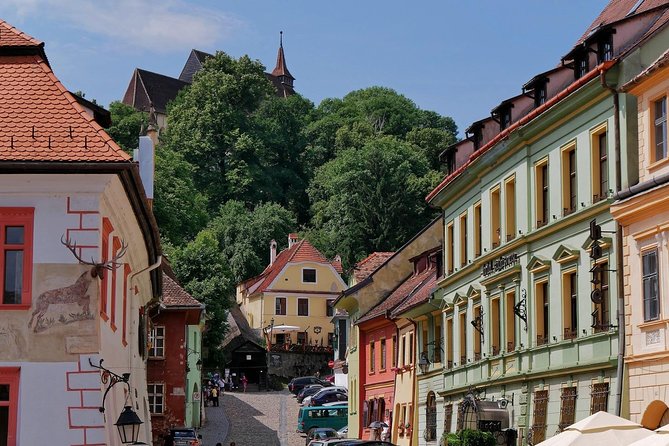
Sighișoara tells its story with every step. This 2-hour walk maps the UNESCO medieval citadel and the Vlad the Impaler tie-in onto real streets, so the legend feels grounded, not like a theme-park script. I especially like the way you hit top landmarks in a smart order, and the guided focus on the clock, fortifications, and the hill church, all in one stretch. I also like that guides in this program, including Peter and Charles, tend to answer follow-up questions and explain what you are actually looking at.
The one real consideration is the walking. You will climb, and there are stairs involved (including the famous covered staircase), so it is not suitable for people with mobility impairments. If stairs are an issue, plan on a slower pace or skip this style of tour.
In This Review
- Key highlights at a glance
- Sighișoara Citadel by Foot, and Why the Walk Works
- Starting at Piața Muzeului: The Monastery Church Sets the Scene
- Dracula’s Birth House: Vlad the Impaler Where the Legend Gets Grounded
- Clock Tower and the 64-Meter View: The Best Way to Read the Citadel
- Covered Staircase (164 Steps): A Small Detail With Big Meaning
- Church on the Hill: Gothic Views and Medieval Fresco Details
- German Cemetery: How People Lived and Who Had Influence
- Butchers’ Bastion, Tower Lines, and Guild Power You Can See
- Tailors, Furriers, Tin Moulders, and the Venetian House Details
- Ending at the House With the Deer Antler Façade
- Price and Value: Is $45 Fair for 2 Hours in Sighișoara?
- Who This Tour Fits Best (and Who Might Skip It)
- Should You Book This Sighișoara Legends and Landmarks Walk?
- FAQ
- Where does the tour start?
- What time does the tour depart?
- How long is the tour?
- How much does it cost?
- What is included in the tour price?
- Are entrance fees included?
- What should I bring?
- Is this tour suitable for mobility impairments?
Key highlights at a glance
- Vlad the Impaler birthplace angle tied to places you can see, not just a Dracula soundbite
- Clock Tower stop with a 64-meter height viewpoint and a look at clockwork and artifacts inside
- Covered Staircase with 164 steps, built to shield schoolchildren from bad weather
- Church on the Hill with Gothic features and medieval frescoes
- German Cemetery and guild defenses that explain who ran the city and how it stayed standing
- Deer antler façade finish for a memorable final photo with a true old-town oddity
Sighișoara Citadel by Foot, and Why the Walk Works
Sighișoara is one of Romania’s rare places where the medieval layout still feels intact. The town is compact enough that a short guided walk can make it click. You start in the citadel area and move through the places that explain how the city lived, defended itself, and reinvented its reputation over centuries.
This tour is built for orientation. In two hours, you get a route that connects the big landmarks with the smaller details, like towers, guild-linked buildings, and church positions on the hill. That matters because Sighișoara can feel like a postcard at first glance, but the story gets clearer when you understand how the streets and elevations shaped daily life.
You also get a human guide, not just a signpost. One theme that comes through in the guide feedback is patience with questions and a calm pace. That is a big deal in a town where you keep wanting to stop for photos, because the guide can help you notice what is meaningful instead of rushing you past it.
Starting at Piața Muzeului: The Monastery Church Sets the Scene
You meet at Piața Muzeului 5, right in front of the Monastery Church. It is a practical starting point, and it also works emotionally. You are in the citadel center immediately, not walking across a modern fringe first. The vibe is instantly old town: stone, narrow streets, and a tight cluster of buildings that make the whole area feel sheltered.
There are two nearby starting options listed, Piața Muzeului 5 or 6, and you can also end near there. I like this approach because it reduces stress. You can line up where it is easiest to find, and you are not guessing your way through the citadel maze before you even start.
Bring your passport or ID card. The tour info is clear on that requirement, and it is the kind of detail that can trip you up at the last second.
Saxon country, a few more options
Dracula’s Birth House: Vlad the Impaler Where the Legend Gets Grounded
One of the main reasons people come to Sighișoara is the connection to Vlad the Impaler, often linked with the Dracula myth. What I like about this tour is that it treats the birthplace angle as a doorway, not the whole experience.
You stop at the Dracula’s Birth House, which is now both a restaurant and a museum dedicated to Sighișoara’s history. Even if you only spend a limited time at the site, you get context for why this town matters. It is not just about a character name. The guide’s job is to connect the legend to the real place, including how medieval politics, regional identity, and reputation shaped what later became pop culture.
If you care about getting the story right, this is the part where a good guide really shows. Feedback on the guides highlights that they go beyond the obvious Vlad name, and help you understand what is being remembered, what is being adapted, and why the citadel fits that narrative so well.
Clock Tower and the 64-Meter View: The Best Way to Read the Citadel
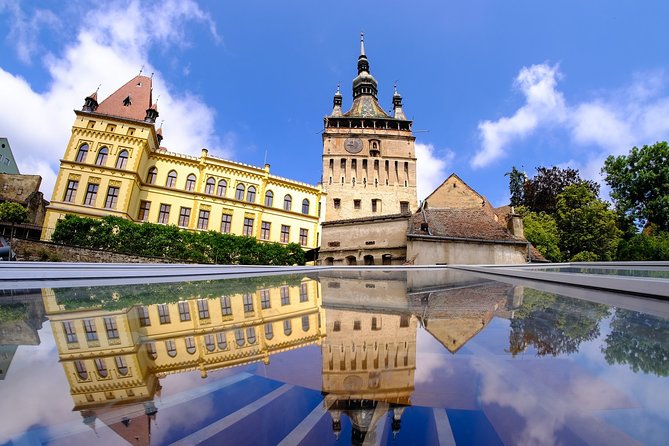
Next comes the Clock Tower, the citadel’s main landmark. You are going to see why it is the center of gravity for the town. A big part of Sighișoara’s charm is that it is readable from above. The clock tower gives you that mental map.
The tour highlights the 64-meter height, plus the fact that you learn about the tower’s clock mechanism and see historical artifacts inside. That matters because you are not just looking at a pretty building. You are getting a practical explanation for why the tower is more than decoration.
The viewpoint is also one of your best photo moments, especially if you are the type who wants the whole layout in frame, not only close-ups. If the weather is clear, you can often spot the street curves and tower lines that you miss at ground level.
One smart travel tip: if you are planning to visit more of Sighișoara later on your own, take the time to locate where you are standing when you look out from the tower. The rest of the day gets easier once you can match “what you see” with “what you walked.”
Covered Staircase (164 Steps): A Small Detail With Big Meaning
The Covered Staircase is one of those stops that surprises people. It is not just a cute wooden passage. It has a purpose, and you learn that it was built in the 17th century to protect schoolchildren from harsh weather.
It is also very walkable, but you should know it is stair-heavy. The tour includes it as a distinct moment, not a quick pass-through. If you like architecture that reflects everyday life, this stop is a winner. It is where function shows up as design.
Photos also tend to come out well here because the passage creates a natural frame and a rhythm of steps and shadow. If it is rainy, the roof helps. You still might get damp footwear from the hill area, so consider shoes with decent grip.
Church on the Hill: Gothic Views and Medieval Fresco Details
Then you head toward the Church on the Hill. It is described as Gothic, and what makes it memorable is the interior emphasis, including medieval frescoes. The hill placement is part of the story. It signals importance, and it also shapes how the church anchors the upper town.
What I find valuable about adding the church stop to a legends and landmarks walk is balance. Dracula and towers are exciting, but the church adds texture. It helps you see Sighișoara as a lived community, where spiritual life and public identity overlapped.
The tour is structured so you reach the church after the staircase. That sequence matters. You feel the effort of the climb, then you arrive at a landmark designed to reward attention with art and history in one place.
Practical note: there are stairs and uneven steps in older citadel zones in general. This tour is not promoted as mobility-friendly, so if you have knee or balance concerns, take that seriously.
German Cemetery: How People Lived and Who Had Influence
One of the more distinctive stops is the German Cemetery. The tour frames it as the resting place for some of Sighișoara’s influential families. That detail changes how you interpret the town.
When you only see towers and church façades, you get the official story. The cemetery helps shift your perspective toward who actually shaped the city day to day, and how the community remembered its leadership across generations.
I like this stop because it is usually the thing people skip when they rush. But here, it is included as part of the narrative system. The guide connects it back to what you already saw, which helps you avoid the feeling of “another photo stop, another cemetery, done.”
Also, if you want a tour that makes the town feel less like a stage set, cemetery context is one of the fastest ways to do it. It adds a quieter realism.
Butchers’ Bastion, Tower Lines, and Guild Power You Can See
Now you start reading Sighișoara as a fortification system. The tour includes the Butchers’ Bastion & Tower, and it emphasizes the role of craft guilds in protecting the citadel.
This is a smart inclusion. You might think defenses are only about soldiers. Instead, you learn how trades and civic groups mattered. That helps explain why the city has so many tower references tied to different crafts.
If you like medieval urban planning, this part is great because you are not stuck with abstract history. You can look at the tower shapes, their placement, and the logic of how walls and heights work together.
It also helps you understand why Sighișoara is considered one of Europe’s best-preserved medieval citadels. It is not just that the buildings exist. It is that the defensive layout still gives you clues to how the city stayed intact.
Tailors, Furriers, Tin Moulders, and the Venetian House Details
As you move deeper into the defensive and craft story, you reach the Tailors’ Tower and Furriers’ Tower. These stops focus on the historical fortifications and how the city protected itself from invaders.
Then you get the Tin Moulders’ Tower and the Venetian House. The Venetian House stands out as a Renaissance-style building with an intriguing background, and it adds variety after the more uniform medieval defense structures.
This contrast is one of the reasons I recommend this tour for first-timers. It is not only medieval gloom and battlements. The route includes architectural variety, so you come away with a broader sense of how Sighișoara evolved.
If you are the type who likes to spot style differences, this is where you start noticing how time layers on top of each other. You can stand in the street and feel the shift from craft-linked defense to more refined residential architecture.
Ending at the House With the Deer Antler Façade
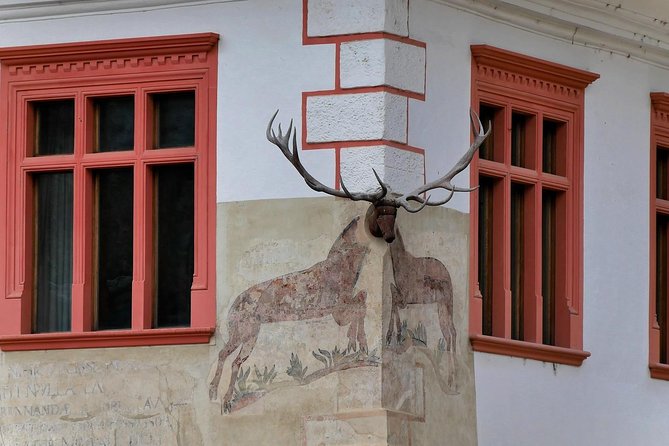
The tour finishes at the House with the Deer Antler. It is recognized for deer antlers mounted on the façade, and it is a fun final beat because it is memorable and visually quirky.
A good ending photo matters on a city walk like this. It gives you a clean “I was here” marker that you can reference later when you look up what you saw. And it helps the walk feel complete, rather than ending on a tower you might have already photographed from multiple angles.
If you still have energy after the tour, this is also the kind of finish location that lets you keep wandering without feeling lost.
Price and Value: Is $45 Fair for 2 Hours in Sighișoara?
The price is $45 per person, for 2 hours, with an English-speaking guide included. You are paying for the route logic and the interpretation. In places like Sighișoara, where the streets are narrow and the signs are limited, that guiding value is not small.
What is not included matters too. The tour notes that entrance fees are not included, and food and drinks are not included either. Souvenir photos are available to purchase. So you should expect to spend a little extra depending on which interiors require tickets that day.
Still, for a short timed visit, this is usually good value because you would struggle to assemble the same coherent path on your own in less time. The guide helps you connect Dracula-era references, clock tower mechanics, hill church art, cemetery context, and guild defenses into one story.
There is also a private tour supplement of EUR 20.00 per person mentioned in the details. If you want a quieter pace or more question time, that could be worth it, especially if you have mobility limitations and want to adapt the route slightly. (If stairs are a concern, you will still need to plan carefully.)
Who This Tour Fits Best (and Who Might Skip It)
This tour fits best if you want:
- A focused walk through Sighișoara’s top landmarks in a short window
- A guide who can explain what you are looking at, not just point it out
- Stops that go beyond Dracula into church, cemetery, and craft-linked defenses
The strongest guide feedback emphasizes how guides handle questions and keep a calm tempo. People noted guides such as Peter, Charles, Carol, Andrea, and Jacob for their attention and conversation. That translates into a more satisfying experience if you like learning as you go.
If you have mobility limits, take the “not suitable for people with mobility impairments” note seriously. The tour includes stair segments, including the covered staircase, and it climbs toward the hill church.
And if your idea of sightseeing is minimal walking, this might feel like more effort than you want for two hours.
Should You Book This Sighișoara Legends and Landmarks Walk?
If you are visiting Sighișoara for the first time and you want your bearings fast, I think you should book it. The route is tight, the stops are meaningful, and the guide interpretation turns the citadel into a story you can actually follow.
I would only skip or rethink it if stairs and uneven old-town steps are an issue for you. Otherwise, it is a smart way to get the main sights done with context, while leaving you energized to explore the rest of the citadel on your own afterward.
One last tip: wear comfortable shoes and plan to take breaks when you need them. Even with a short 2-hour tour, you are moving through historic terrain, and the best experiences happen when you can stop, look up, and enjoy the details.
FAQ
Where does the tour start?
You meet at Piața Muzeului 5, in front of the Monastery Church.
What time does the tour depart?
The tour departs at 11:00 daily.
How long is the tour?
The tour lasts 2 hours.
How much does it cost?
It costs $45 per person.
What is included in the tour price?
An English-speaking, specialized guide is included.
Are entrance fees included?
No, entrance fees are not included.
What should I bring?
Bring a passport or ID card.
Is this tour suitable for mobility impairments?
No, it is not suitable for people with mobility impairments.
Everything Else We Reviewed In Sighisoara
- Sighisoara: Candlelight Tour of Dracula’s Home Town
★ 4.6 · 83 reviews - From Cluj: Sighișoara and Church of Biertan Guided Tour
★ 4.8 · 36 reviews - Sighisoara Fortress Quest: Exploration Game and Tour
★ 4.5 · 33 reviews - City Tour Sighisoara Legends & Landmarks A Walk Through Time
★ 5.0 · 11 reviews - Saxon Secrets: The Malancrav & Biertan Experience
★ 4.8 · 8 reviews
If You Want It Darker
- City Tour Sighisoara Legends & Landmarks A Walk Through Time
★ 5.0 · 11 reviews
Saxon Country: Sighisoara, Viscri, Biertan
- Sighisoara: Candlelight Tour of Dracula’s Home Town
★ 4.6 · 83 reviews - From Cluj: Sighișoara and Church of Biertan Guided Tour
★ 4.8 · 36 reviews - Sighisoara Fortress Quest: Exploration Game and Tour
★ 4.5 · 33 reviews - City Tour Sighisoara Legends & Landmarks A Walk Through Time
★ 5.0 · 11 reviews - Saxon Secrets: The Malancrav & Biertan Experience
★ 4.8 · 8 reviews
Recently added around Sighisoara
- Sighisoara Heritage Tour-The place of birth of Vlad Dracula★ 5.0 · 3 reviews
- Day Trip to Sighisoara Rupea Fortress Viscri from Brasov★ 4.8 · 3 reviews
- Saxon Secrets: The Malancrav & Biertan Experience★ 4.8 · 8 reviews
- Sighisoara Fortress Quest: Exploration Game and Tour★ 4.5 · 33 reviews
- From Cluj: Sighișoara and Church of Biertan Guided Tour★ 4.8 · 36 reviews
Sighisoara and Saxon Village Tours, compared.
 ★ 5.0Small Group Tour to Viscri Church Sighisoara Town Rupea FortressFrom $111225 reviews
 ★ 4.52-Day Medieval Transylvania with Brasov,Sibiu and Sighisoara Tour from BucharestFrom $120145 reviews
 ★ 4.8From Brasov: Sighisoara and Viscri UNESCO Day TourFrom $10686 reviews
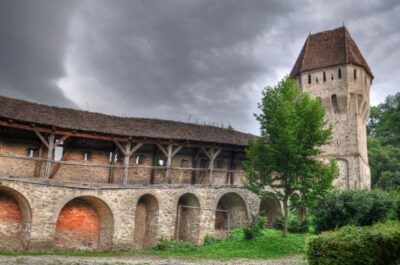 ★ 4.6Sighisoara: Candlelight Tour of Dracula’s Home TownFrom $4483 reviews
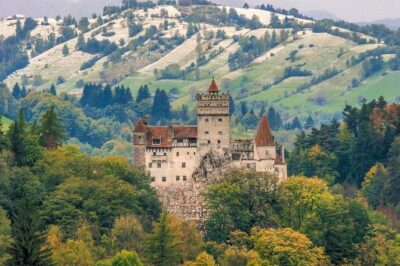 ★ 5.02-Day Transylvania from Bucharest: Brasov, Bran, SighisoaraFrom $40960 reviews
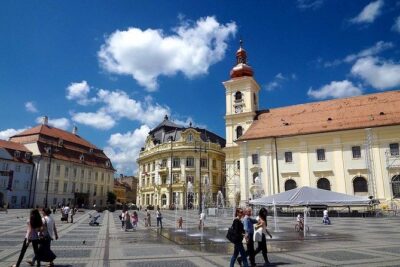 ★ 5.0Secrets of the Citadels: Brașov, Viscri, Sighișoara and SibiuFrom $12052 reviews
 ★ 5.0Sighisoara and Viscri Private Full-Day Tour from BrasovFrom $12551 reviews
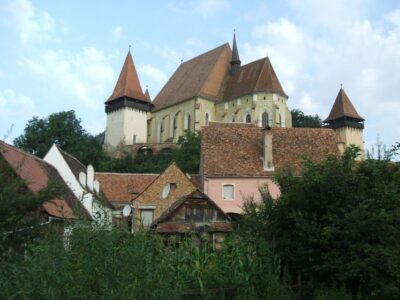 ★ 4.8From Cluj: Sighișoara and Church of Biertan Guided TourFrom $11536 reviews
Browse the lists this tour appears in