
REVIEW · TRANSYLVANIA
3-Day Tour of Transylvania’s Landmarks from Bucharest
Transylvania feels like it was built for stories. This 3-day landmarks trip trades crowded buses for a steady route through the Carpathians and Saxon towns. You’ll see castles and churches that actually explain the region, not just hint at monsters.
What I like most is the pacing. The day plan leaves room to look closely at places like Peleș Castle and the fortified layers of Sighișoara, without turning sightseeing into a frantic checklist. The other big win is the human factor: the same guide tends to stay with you for nearly all of the journey, and in past groups I’ve seen names like Ovidiu Botoni and others like Vio, Octavian, and Julian lead the experience.
One consideration: entrance tickets are not included, so some of the big-name sites will add costs on top of the tour price. If you hate budgeting mid-trip, that’s the only real snag here.
In This Review
- Key highlights worth your attention
- Why this Bucharest to Transylvania route works
- Day 1: Peleș Castle, Bran Castle context, and a first taste of Brașov
- Peleș Castle in Sinaia
- Bran Castle, plus the myth lesson you actually need
- Brașov, a city with walls and layers
- Day 2: Sighișoara’s hilltop defenses, Biertan’s fortified church, and Sibiu’s German old town
- Sighișoara’s medieval walls and the covered staircase
- Biertan’s fortified church and Lutheran bishop seat
- Sibiu: German-looking old town and three special sights
- Day 3: Transfăgărășan Highway (when open), Olt Valley backup, and Curtea de Argeș monastery
- Transfăgărășan Highway, the high-road version
- Olt Valley if the highway is not open
- Curtea de Argeș Monastery, architecture with legend fuel
- Guides, vehicles, and the pace that actually feels human
- Price and logistics, and how to budget without surprise fees
- Practical tips so you enjoy it fully
- Wear shoes for real walking and stairs
- Use the start time as a cue for your morning
- Expect tickets on your own
- Go with the flow on Day 3
- Who this tour fits best, and who might want a different style
- Should you book this Transylvania landmarks tour?
- FAQ
- How long is the tour?
- What is included in the tour price?
- Are entrance fees included for the castles and churches?
- Is pickup offered from Bucharest?
- What time does the tour start?
- What happens if Transfăgărășan Highway is not open?
- Is there a single room option, and is there an extra charge?
- Can I cancel for a full refund?
Key highlights worth your attention
- A guide for almost the whole trip, often the same person throughout, which keeps the story consistent and your questions answered.
- Comfort-focused transportation: air-conditioned vehicle, private transport, and parking fees included.
- Sighișoara on foot, with the 180-step Covered Staircase and enough time for the historic center.
- Fortified Saxon church stop at Biertan, including the fact that it served as a Lutheran bishop seat from 1572 to 1867.
- Dracula-adjacent Bran Castle, but taught with context, including the lack of proven links to Vlad Țepeș.
- Mountain-road option on Day 3, using Transfăgărășan when conditions allow, otherwise switching to the Olt Valley route.
Why this Bucharest to Transylvania route works
Starting from Bucharest is smart. Instead of trying to hop between far-flung points on your own, you get a clear rhythm: drive north into the Carpathians, spend time in medieval towns, then finish with a mountain road day before heading back to the capital.
This kind of itinerary can go wrong in two ways: too much driving, or too little time in the places that matter. Here, the stops are spaced so you’re not just rolling past scenery. For example, Day 2 is built around walking the historic core in Sighișoara, then shifting to fortified church history at Biertan, and finally ending in Sibiu. That sequence helps you feel the region evolve, from hilltop defenses to merchant-era architecture.
Also, the transportation detail is not fluff. The tour uses an air-conditioned, Euro 6-ranked vehicle and handles the driving and parking. You’re still on the road a lot, but it’s less exhausting. Your job is to show up, wear comfortable shoes, and enjoy the views when the highway opens up.
Day 1: Peleș Castle, Bran Castle context, and a first taste of Brașov
Day 1 is where you get the “Transylvania look,” quickly and clearly.
Deeper into Transylvania
Peleș Castle in Sinaia
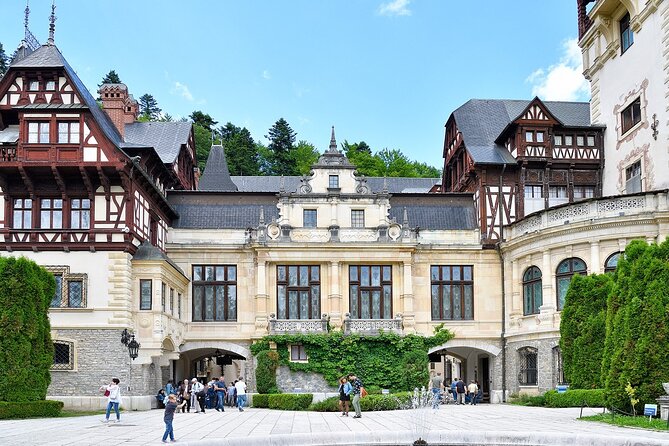
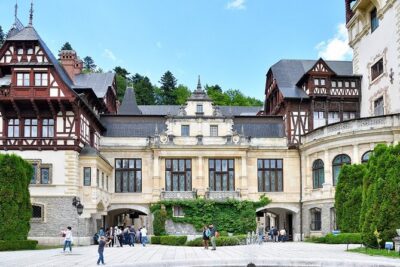
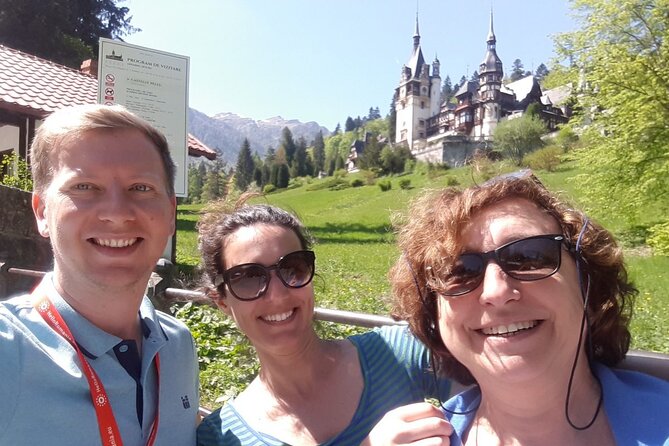
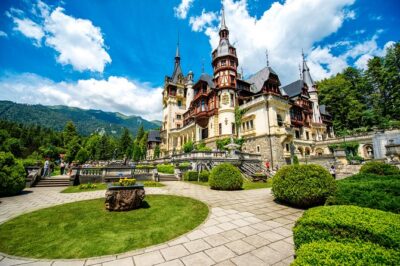
You leave Bucharest and head north to Sinaia, a mountain resort town connected to the broader Muntenia region. The main event is Peleș Castle, built starting in 1873, combining Neo-Renaissance and Gothic Revival architecture. What makes it worth your time is the interior style: Baroque-influenced details, with lavish period touches and ornate carved woodwork.
The visit is set for about 1 hour 30 minutes. That’s a good window for a castle like this because it’s detailed. If you rush it, you miss the craftsmanship. If you take your time, you get the feeling of a royal residence designed for comfort and display, not just defense.
Practical note: entrance is not included, so plan to pay for the castle ticket on site.
Bran Castle, plus the myth lesson you actually need
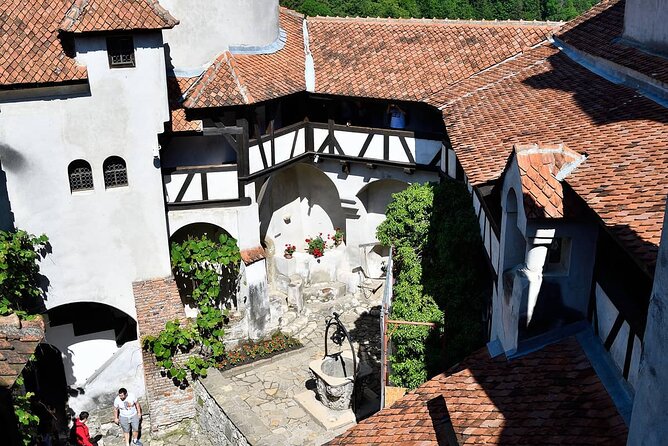
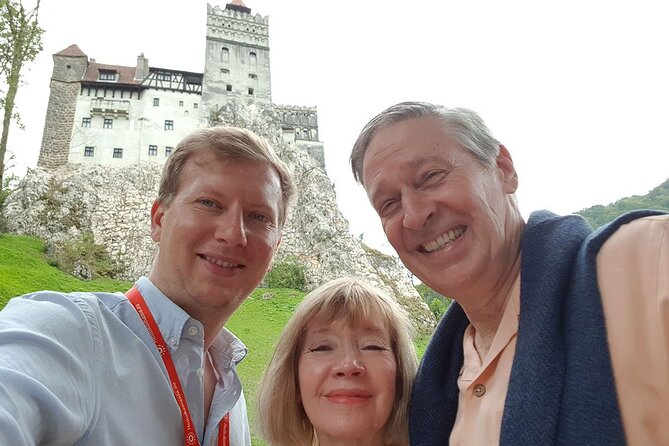
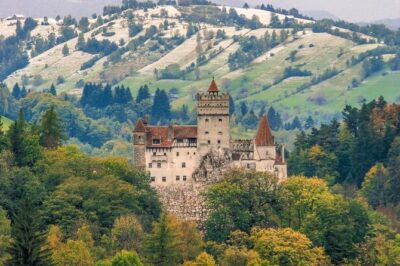
Next is Bran Castle, often sold as Dracula’s Castle. Here’s the helpful framing you’ll get: the association with Vlad Țepeș, and with Bram Stoker’s Dracula, is widely repeated, but there’s no solid proof that Stoker was influenced by Bran, and the fortress lacks proven links to Vlad the Impaler.
Even with that myth cleared up, Bran is still a historic destination. The site has deep roots: an earlier fortress existed in the early 13th century, was destroyed in 1242 by Mongol forces, and then the stone castle came later through support granted to local Saxons. The visit also includes museum pieces such as Queen Marie of Romania’s furniture and art collection.
Time is again about 1 hour 30 minutes, and that’s about right. Bran is atmospheric, but it’s not a two-hour maze. If you want photos, this is a good day for them, since you’ll be awake and fresh from the earlier castle.
Brașov, a city with walls and layers
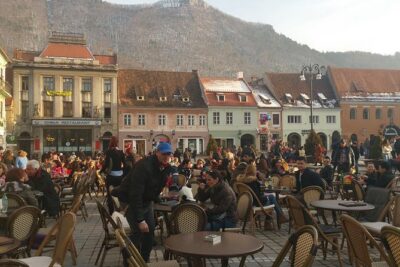
Then you reach Brașov, positioned by the Carpathians and known for Gothic, Baroque, and Renaissance architecture. The city history adds context fast: founded in 1211 by the Teutonic Knights on an earlier Dacian site, later settled by Saxons, and became one of the Transylvania’s seven walled citadels, known as Siebenburgen.
You’ll have about 1 hour 30 minutes here. That’s not enough to do Brașov justice alone, but it is perfect for getting your bearings. Think of it as your orientation stop before the deeper medieval experience of Sighișoara and the fortified church day that follows.
Day 2: Sighișoara’s hilltop defenses, Biertan’s fortified church, and Sibiu’s German old town
Day 2 is where the trip becomes more than castles with names on postcards.
Other Bucharest bookings that held up when we checked them

Sighișoara’s medieval walls and the covered staircase
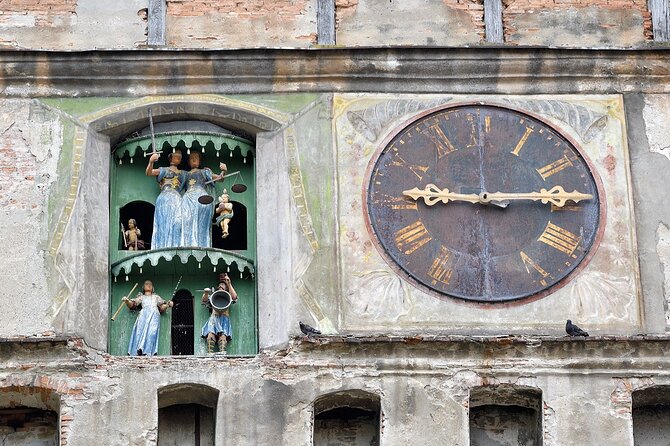
Sighișoara is a medieval citadel perched on a hill, fortified with a 930-meter ring of walls, 14 defense towers, and five artillery bastions. You also get a tall landmark in the Clock Tower, dating to around 700 years.
The walking tour is about 2 hours, and it includes climbing 180 steps via the Covered Staircase, Scara Școlarilor, also called the Scholars’ Stairs. At the top you’ll reach the Church on the Hill, Biserica din Deal, plus the Saxon Cemetery. You also stop at the 1431 birthplace of Vlad Tepes, which is tied to the legend via the literary Dracula connection you’ll hear about.
This stop is valuable because it connects architecture to how people lived and defended themselves. The hilltop layout matters. You can feel how the walls would control movement and protect residents.
If you’re not used to stairs, pace yourself on the climb. The tour is manageable for moderate fitness, but those steps are real.
Biertan’s fortified church and Lutheran bishop seat
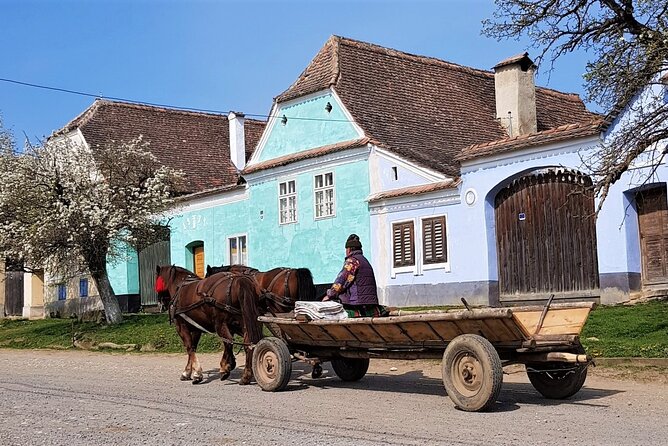
From Sighișoara you move to Biertan, a Saxon village centered around a fortified church. Here the point is defense plus religion plus administration. This fortified church served as the seat of the Lutheran Evangelical Bishop from 1572 to 1867.
You’ll learn the Saxons founded the town roughly between 1224 and 1283, and the village held economic importance through commerce. Over time, its significance declined as nearby cities grew, including Mediaș, Sighișoara, and Sibiu.
Time here is about 1 hour. That is a good match for a place like this. Fortified churches can feel overwhelming because the buildings are complex. One hour keeps it focused, letting you absorb the main story: why people built fortification around a house of worship.
Sibiu: German-looking old town and three special sights
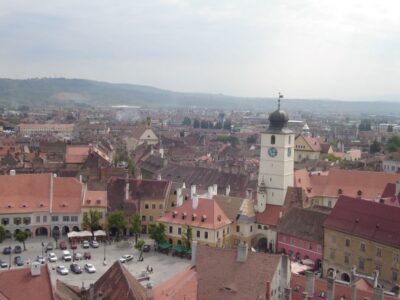
Finally, you reach Sibiu, known for an Old Town that still looks strongly German, with parts of the medieval wall still standing and three of the original 39 towers remaining.
You’ll see several standout places:
- Great Square
- Brukenthal Palace, a late-Baroque masterpiece that houses one of Romania’s impressive museums
- Bridge of Lies (Podul Minciunilor), a romantic and famous pedestrian bridge
- Haller House, a preserved Renaissance residence recognizable by its distinctive window structure
This is another stop set for about 2 hours. It’s enough time to walk, look, and connect the dots between merchant-town life and the region’s German influence.
If you like small details, Sibiu pays off. It’s not just one big site. It’s a walkable slice of history.
Day 3: Transfăgărășan Highway (when open), Olt Valley backup, and Curtea de Argeș monastery
Day 3 is your payoff day for mountain drama and grand architecture.
Transfăgărășan Highway, the high-road version
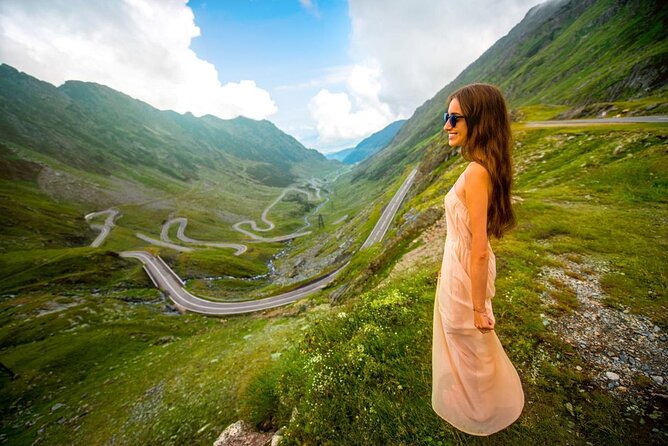
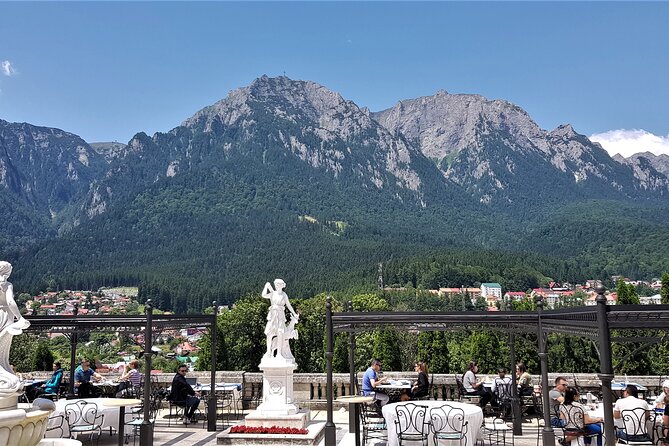
If you travel during July through September, the plan includes a drive through Transfăgărășan Highway when conditions allow. This is one of Romania’s famous high mountain roads, cutting through the southern section of the Carpathians and crossing areas connected to the Moldoveanu and Negoiu peaks. The route also “unifies” Transylvania and Wallachia in a geographic sense, linking regions that have shared and conflicted histories.
The driving time on paper is about 2 hours for this sightseeing portion. In reality, the scenic value depends on whether roads are open and weather is cooperating. If it’s a clear day, you get those huge mountain impressions. If it’s cloudy or wet, the road still matters, but you might want to keep your expectations flexible.
Olt Valley if the highway is not open
If Transfăgărășan Highway is not open, your guide takes you through the Olt Valley instead. This valley is between the Căpățânii, Lotru, and Făgăraș mountains. The route follows an older trade logic: Romans forged this corridor, and later it was used by Middle Ages merchants moving deeper into Transylvania.
This is a good swap. It keeps the “mountain road” feel while avoiding the frustration of a closed route.
Curtea de Argeș Monastery, architecture with legend fuel
After the mountain driving, you visit Curtea de Argeș Monastery. This monastery matters because it blends architectural influences: Georgia and Armenia combined with Islamic geometric motifs. Construction dates to 1515 to 1517, which helps you place it in the wider Ottoman-era cultural mix of the Balkans.
You’ll also hear the legend behind its construction. Stories focus on Meșterul, also called the Masterbuilder Manole, and Prince Negru Voda, also referred to as Radu Negru. The legend has many versions, but the core is the human cost behind monumental work.
The visit time is about 45 minutes. That’s short, but enough to appreciate the architecture and catch the story beats that make Curtea de Argeș memorable.
From there, the guide returns you to Bucharest so you can get ready for your departure.
Guides, vehicles, and the pace that actually feels human
A tour can list great sites and still feel awful if the guide rushes, or if you’re bounced around among multiple people. The strongest praise for this operator is the way the experience is handled day to day.
One repeated strength in past groups is that the guide does not overload the agenda. People specifically noted that they had the right amount of time at each location instead of sprinting. That matters on a 3-day trip. When you’re driving through the Carpathians, energy is limited. You don’t want your “castle time” crushed by a late lunch and a rushed museum window.
The other big theme is support and comfort. In past experiences, pickup from your hotel has been part of the welcome. The vehicles have been described as new and comfortable, even for larger groups, and the accommodation selected for the trip has generally earned high marks for comfort.
Also, you’re not stuck with generic commentary. Guides with names like Ovidiu Botoni and others like Vio, Octavian, and Julian have been praised for story-rich explanations that connect history, geography, and daily life in modern Romania. That kind of context makes the stones feel less like props.
Price and logistics, and how to budget without surprise fees
The tour price is listed at $1,089.92 per person for about 3 days. That’s not cheap, but the structure helps justify it if you want a guided, door-to-door feel.
Here’s what you’re paying for in practical terms:
- Air-conditioned vehicle plus private transportation
- Parking fees included
- Guided visits to multiple major sites across several towns
- A plan that handles the routing so you’re not coordinating trains, taxis, and ticket lines back to back
- Mobile ticket included, which reduces hassle
What you must budget for separately: entrance fees. The schedule clearly marks that tickets are not included for sites such as Peleș Castle, Bran Castle, and Biertan fortified church, and also for Curtea de Argeș Monastery. Brasov, Sighișoara, and Sibiu are marked as free admission for certain elements in the schedule, but entrance costs can still vary based on exactly what you choose to see inside.
Then there’s lodging. The tour doesn’t list hotel class, but it includes two hotel stays across the trip in a way that has been described as comfortable in the past. If you need a single room, there’s a single room supplement of 60 E per person.
If you want the cleanest budget, do this before you go: set aside a separate pocket for castle and church admissions. That way, the big-name sites feel like part of the trip, not an awkward bill at each stop.
Practical tips so you enjoy it fully
Wear shoes for real walking and stairs
Sighișoara includes the 180-step Covered Staircase, and that’s in addition to walking the historic center. Bring comfortable shoes you can trust. If your legs don’t love hills, plan slower pace for that portion.
Use the start time as a cue for your morning
The tour starts at 10:00 am. If you’re staying in central Bucharest, give yourself time for an unhurried breakfast and arrival. You’ll thank yourself once the Carpathian driving begins.
Expect tickets on your own
Because entrance fees are not included, keep a payment method ready for multiple stops. When you arrive, you won’t have to think, you’ll just pay and go.
Go with the flow on Day 3
Transfăgărășan Highway depends on timing and whether it’s open. The itinerary accounts for this with the Olt Valley alternative. Still, if you want the best mountain-road visuals, choose travel dates during July through September when possible, and keep weather in mind.
Who this tour fits best, and who might want a different style
This tour makes sense if you:
- Want guided context and not just sightseeing stops
- Prefer a structured 3-day arc through Transylvania without transport headaches
- Like medieval towns and fortified architecture as much as you like castles
- Appreciate a steady guide presence, since the story stays connected across multiple days
It may not fit as well if you:
- Are allergic to entrance fees you pay during the trip
- Want lots of free time to wander on your own with zero scheduled stops
- Have very limited mobility, because you’ll do walking and stairs in Sighișoara
Should you book this Transylvania landmarks tour?
I’d book it if you’re aiming for a classic Transylvania overview with strong historical context and a pace that respects your energy. The biggest selling points for me are the combination of major sites plus the practical handling: air-conditioned private transport, parking covered, a guided route that avoids feeling like a sprint, and a high comfort factor.
If you do book, go in knowing that entrance tickets are extra and plan around them. Also, bring shoes ready for steps. Do those two things, and you’ll get the experience this route is designed for, castles with myth and fact side by side, fortified towns that explain how people lived, and a Day 3 mountain road that makes the whole trip feel like a real journey.
FAQ
How long is the tour?
It’s approximately 3 days.
What is included in the tour price?
The tour includes an air-conditioned vehicle, private transportation, and parking fees.
Are entrance fees included for the castles and churches?
No. Entrance fees are not included, and some stops specifically note tickets are not included.
Is pickup offered from Bucharest?
Yes. Pickup is offered, and the tour is designed so you start from Bucharest.
What time does the tour start?
The start time is 10:00 am.
What happens if Transfăgărășan Highway is not open?
If Transfăgărășan Highway is not open, your guide will take you through the scenic Olt Valley instead.
Is there a single room option, and is there an extra charge?
Yes. There is a single room supplement of 60 E per person.
Can I cancel for a full refund?
Yes. You can cancel up to 24 hours in advance for a full refund. The tour also requires good weather, and if it’s canceled due to poor weather, you’ll be offered a different date or a full refund.
Whatever Else Bucharest Is Selling
- Bucharest to Dracula Castle, Peles Castle and Brasov Guided Tour
★ 4.5 · 2,933 reviews - Bucharest: Palace of Parliament Tickets and Guided Tour
★ 4.4 · 1,877 reviews - Transylvania and Dracula Castle Full Day Tour from Bucharest
★ 4.5 · 1,589 reviews - Bucharest: City Highlights Guided Walking Tour
★ 4.9 · 1,482 reviews - From Bucharest: Brasov Peles & Dracula’s Castle Day Tour
★ 4.5 · 1,244 reviews
Everything Else We Reviewed In Bucharest
- Bucharest: Dracula’s Castle, Peles Castle, & Brasov Old Town
★ 4.5 · 17,858 reviews - Bucharest: Dracula Castle, Peles Castle & Brasov Old Town
★ 4.6 · 10,891 reviews - Bucharest: Dracula’s Castle, Peleș Castle & Brașov Day Trip
★ 4.5 · 5,919 reviews - Bucharest: Palace of Parliament Tickets and Guide
★ 4.3 · 3,182 reviews - Bucharest: Day Trip to Dracula Castle, Peles Castle & Brașov
★ 4.4 · 3,049 reviews
More Of Transylvania
- Transylvania and Dracula Castle Full Day Tour from Bucharest
★ 4.5 · 1,589 reviews - Castles of Transylvania: Private Day Trip from Bucharest
★ 4.5 · 248 reviews - 2-Day Medieval Transylvania with Brasov,Sibiu and Sighisoara Tour from Bucharest
★ 4.5 · 145 reviews - 2-Day Transylvania from Bucharest: Brasov, Bran, Sighisoara
★ 5.0 · 60 reviews - Transylvania: Cultural Full-Day Trip by Minivan
★ 4.8 · 57 reviews
Recently added around Bucharest
- Private Tasting Expedition Along Romania’s Most Famous Wine Route★ 5.0 · 3 reviews
- Private Guided Tour of Peles Castle and Bran Castle from Bucharest★ 5.0 · 3 reviews
- Private Sightseeing Tour of Bucharest★ 4.5 · 3 reviews
- Discover Europe’s Deepest Mines & Peles Castle’s Royal Charm★ 5.0 · 3 reviews
- Bucharest City Tour and Wine Tasting★ 5.0 · 3 reviews
Transylvania Tours, compared.
 ★ 4.5Transylvania and Dracula Castle Full Day Tour from BucharestFrom $351,589 reviews
 ★ 4.5Castles of Transylvania: Private Day Trip from BucharestFrom $151248 reviews
 ★ 4.52-Day Medieval Transylvania with Brasov,Sibiu and Sighisoara Tour from BucharestFrom $120145 reviews
 ★ 4.8Transylvania: Dracula’s Castle and Birthplace TourFrom $175123 reviews
 ★ 4.8SB01 – City Tour Sibiu: Exploring the Heart of TransylvaniaFrom $3599 reviews
 ★ 5.0Day trips and excursions in nature, cities in Transylvania, Brasov!From $12084 reviews
 ★ 5.02-Day Transylvania from Bucharest: Brasov, Bran, SighisoaraFrom $40960 reviews
 ★ 4.8Transylvania: Cultural Full-Day Trip by MinivanFrom $44157 reviews
Browse the lists this tour appears in