
REVIEW · PRIVATE
6 Days Private Tour in Romania Spectacular Places from Bucharest
Some trips feel like a checklist. This one feels like a story arc.
From Bucharest, you get a private, English-speaking guide and a car that moves you through medieval towns, fortress walls, and mountain scenery at a pace that still leaves room to breathe. I love that the guide, Nicolas, keeps the history lively, with great humor and conversations that go past the usual facts. I also like the mix of big-name sights (like Peleș and Bran) with lesser-known stops that feel more grounded, like Rupea Fortress and the UNESCO fortified church at Biertan.
The main trade-off: entrance fees and your meals are not included, so your final total will depend on how many sites you choose to enter during the time stops. Still, for a private car tour where you are not stuck waiting on a bus, the structure feels worth it.
In This Review
- Quick hits from this private Romania route
- From Bucharest to Transylvania, a private trip that sets its own rhythm
- Day 1: Snagov Monastery, Peleș Castle, and Sinaia’s Carpathian Cathedral feel like a royal warm-up
- Day 2: Brasov Old Town break, Bran Castle for the Dracula chapter, Rupea for fortress views
- Day 3: UNESCO fortified church, Vauban-style star fortress, and Sighisoara’s clock tower
- Day 4: Densus Church’s Roman-to-medieval layers, Sarmizegetusa’s Dacian core, and Hunyadi Castle’s gothic drama
- Day 5: Turda Salt Mine, Cheile Turzii hiking, Borza Gardens, and Cluj-Napoca in one day
- Day 6: Transfăgărășan Highway, Cozia at Calimanesti, Poienari steps, Vidraru views, and Sibiu squares
- Price and logistics: why $2,140.17 per person can still make sense
- Budget reality: entrance tickets add up, but your guide can steer the choices
- Who this tour is best for
- Should you book it? My practical take
- FAQ
- Is this a private tour?
- Do I get hotel help and booking?
- Is pickup included?
- Are entrance fees included in the price?
- What transportation do we use during the tour?
- Is a guide available in English?
- How does free cancellation work?
Quick hits from this private Romania route
- Nicolas as your guide: consistently praised for clear, engaging storytelling and rich conversation, with a good sense of humor
- Private car only for your group: more comfort and flexibility than a standard group tour
- A smart day-to-day pace: some stops are short, others long enough to actually look, photograph, and ask questions
- Varied Romania, not just castles: fortified churches, Dacian sites, a salt mine, and hiking near Cheile Turzii
- Big-view road day: Transfăgărășan Highway puts scenery front and center
- Modern planning support: hotel recommendations plus booking help to match your budget
From Bucharest to Transylvania, a private trip that sets its own rhythm
This tour is built around a simple idea: you see the famous stuff, but you also get time to understand it. You travel with a licensed English-speaking guide/driver for the full 6 days, in a comfortable private car that stays just with your group. That matters, because Romania can be spread out, and your best hours are the ones you spend looking, not waiting.
The experience is framed as a chance to reset mentally and physically, and you can feel that in how the days mix intense sights with calmer moments. You are also given flexibility to adjust the daily plan after it starts, which is a big deal if the weather changes or you want a slower lunch stop.
Day 1: Snagov Monastery, Peleș Castle, and Sinaia’s Carpathian Cathedral feel like a royal warm-up
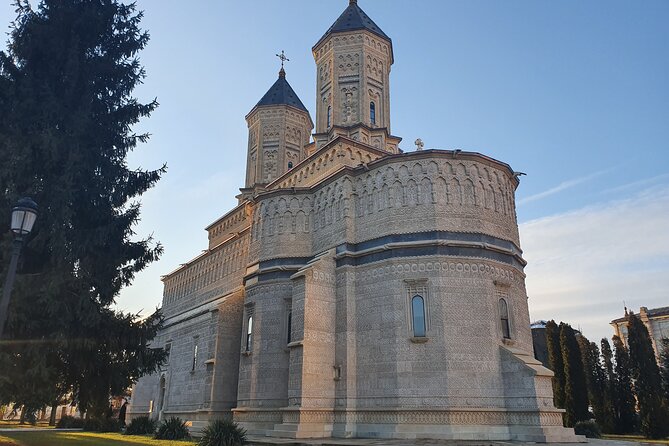
Day one starts with Snagov Monastery, tied to the controversial story around Vlad Țepeș. The pitch here is not just Dracula trivia. You learn how local legend connects the monastery to the ruler’s death, including the claim that monks could secretly move and bury his remains there near the altar.
From there, the mood shifts to royal grandeur at Peleș Castle, the Romanian royal family’s summer residence. Even if you are not a hardcore castle person, this stop works because it is so visually specific and so tied to European royal taste that it reads like a real place, not just a prop. Expect a longer visit window here, which helps you actually see details instead of rushing the main rooms.
Your final stop on day one is Manastirea Sinaia, often treated as essential on a Romania trip. The monastery is described as more than a pretty building. It is over 300 years old and connected to Prince Mihai Cantacuzino, whose pilgrimage inspired the church name linked to Mount Sinai. Since it is only about 500 meters from Peleș, this day keeps the “effort to sights” ratio high.
Practical thought: Snagov is a good start if you like stories with a little controversy. If you prefer pure architecture over legends, you might want to spend your main attention on Peleș and Sinaia.
The private end of Bucharest
Day 2: Brasov Old Town break, Bran Castle for the Dracula chapter, Rupea for fortress views
Brasov comes with a built-in pause: a 120-minute break in the historical center. This is the kind of scheduling that makes a tour feel human. You can walk, get oriented, and still have time to eat without watching the clock every five minutes.
Then you head to Bran Castle, widely labeled as Dracula’s Castle. The key here is to treat it as a tourism symbol, not a time capsule of every Dracula detail. It is still a great stop if you enjoy castle drama and exterior views, especially in good light, and it is easy to spend two hours without it feeling like a trap.
After Bran, you go to Cetatea Rupea, a restored 14th-century fortress. Rupea feels different from the big-brand sites because it reads more like lived-in landscape and stonework. You get about an hour, which is a solid length for climbing a bit, seeing the walls, and letting the scale sink in.
Consideration: Bran is popular, so build your expectations around the castle experience and the setting, not around finding empty halls.
Day 3: UNESCO fortified church, Vauban-style star fortress, and Sighisoara’s clock tower
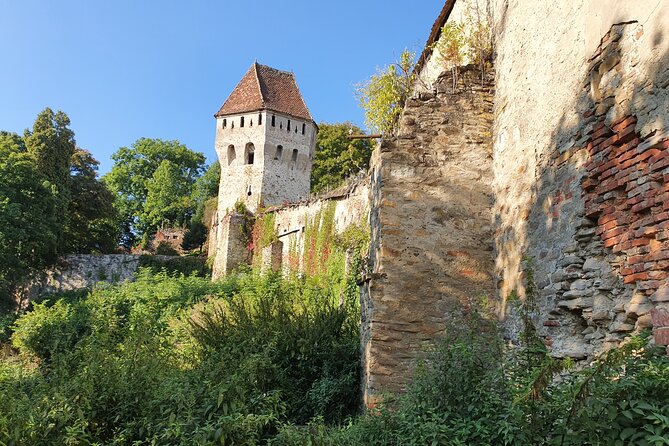
Day three mixes UNESCO prestige with fortification nerd heaven. First up is Biertan Fortified Church, a UNESCO World Heritage site linked to early Transylvanian Saxon settlement. What makes it memorable is the layout described for defense: the church sits on a hillock in the town center, surrounded by three defensive walls and seven bastions. That defensive geometry turns the architecture into a story you can literally walk around.
Next is Cetatea Alba Iulia, tied to the Vauban-style star fortifications. The highlight is the “seven-corner star model” designed by Sébastien Le Prestre de Vauban. Even if you do not know Vauban by name, you can still appreciate how the fortress is engineered to resist conquest, with multiple lines of fortification and the Alba Carolina citadel as the main reference point.
Then you reach Sighisoara’s Clock Tower. The tower’s construction timeline spans the late 13th century into the 14th, and later changes in the 16th century added brick levels and a balcony and roof. This stop is shorter, around 45 minutes, so you want to treat it as your focus point before moving into the next streets.
You end with a photo stop in the historic center of Sighisoara, where you admire the buildings and get context on what you are looking at. In a private setting, those “quick” moments can be more valuable than they sound, because you can ask questions on the spot.
Day 4: Densus Church’s Roman-to-medieval layers, Sarmizegetusa’s Dacian core, and Hunyadi Castle’s gothic drama
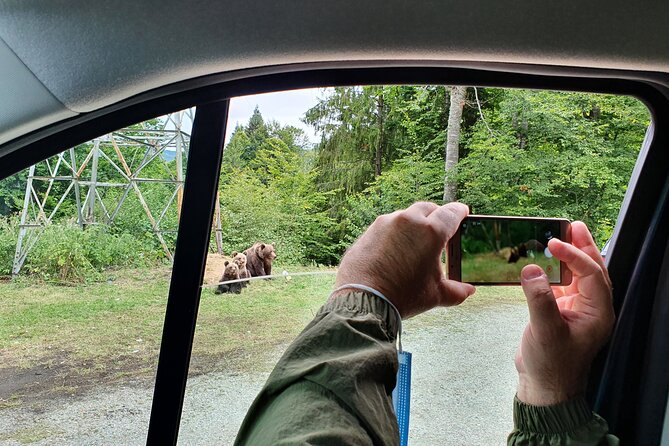
This is one of the most satisfying days if you like older than medieval. Densus Church is described as one of the oldest Orthodox churches in Romania, built on ruins dating back to the 4th century. It went through multiple stages, with major changes completed in the 13th century. That layering shows up in the mixture of styles, and the murals inside include paintings dating back to 1443.
You also get a cultural anchor from Romanian historian Nicolae Iorga, who singled out Saint Nicolae Church in Densus as an exceptional work in Romanian tradition. I like that this stop does not push you toward a single narrative. It encourages you to look at layers, not just a postcard view.
After Densus, you visit Sarmizegetusa Regia, presented as the Dacian Kingdom’s capital. The emphasis is on the Dacian site as a military, political, and religious center, which gives the visit a clear theme. You spend about two hours here, which is enough time to appreciate the scale without feeling rushed.
The day ends at Castelul Corvinilor, also known as Huniade Castle. It is positioned as a top gothic castle in the world, described as one of the largest in Europe, and even tied to Romania’s list of seven wonders. After a devastating fire, it went through extensive restoration and is now open as a museum. That restoration detail matters, because you are not seeing only ruins, you are seeing how people rebuilt meaning into stone.
Practical thought: This is a day with big emotional range, sacred interiors at Densus, open-air history at Sarmizegetusa, then gothic spectacle at Corvin. Wear comfortable shoes.
Day 5: Turda Salt Mine, Cheile Turzii hiking, Borza Gardens, and Cluj-Napoca in one day
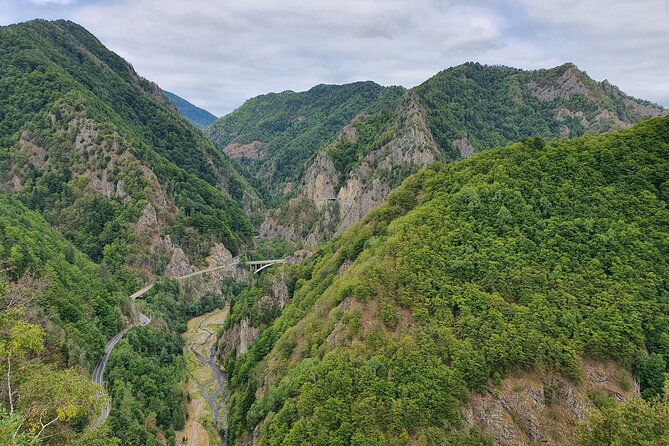
Day five turns the volume down and up again. First, you enter Salina Turda, the Turda Salt Mine. It is described as a feast for the eyes and the body, including the idea that saline air can help respiratory issues like allergies or asthma. You also get Roman-era references and a clear look at how salt mining worked over thousands of years.
What I like about Turda Salt Mine is that it is not only a big chamber. It includes details like former mines named Iosif, Terezia, and Rudolf, plus medieval salt exploitation machinery. There is even an altar carved into the salt wall and something called the Stairway of the Rich, with intricate woodwork.
After that, you shift outdoors to Cheile Turzii for hiking and nature viewing, with a chance to spot wild birds. The stop is about two hours, so this is not a marathon hike. It is a chance to recharge your senses with fresh air after the interior salt environment.
Then you visit Gradina Botanica Alexandru Borza, covering over 14 hectares with more than 10,000 plants from around the world. The garden is organized into themed areas, including a Japanese Garden with a brook and a Japanese-style house. There is also a Roman Garden tied to archaeological remains from the Roman colony of Napoca, including a statue of Ceres. Add in that the head gardener, Jablonovszki Elemer, led the project for 45 years, and the place starts to feel like a long-term labor of love.
Your final chunk of day five is Cluj-Napoca, centered on Piața Unirii. The square is one of Romania’s largest, measuring about 220 m by 160 m. You also see St. Michael’s Church, noted as having the highest church tower in Romania at 80 m, built in two phases, and you can find a statue of King of Hungary Matthias Corvinus in the same area.
Consideration: This is a full day with multiple sites. You will want to pace your photos and sit down for at least one proper meal break.
Other Bucharest bookings that held up when we checked them

Day 6: Transfăgărășan Highway, Cozia at Calimanesti, Poienari steps, Vidraru views, and Sibiu squares
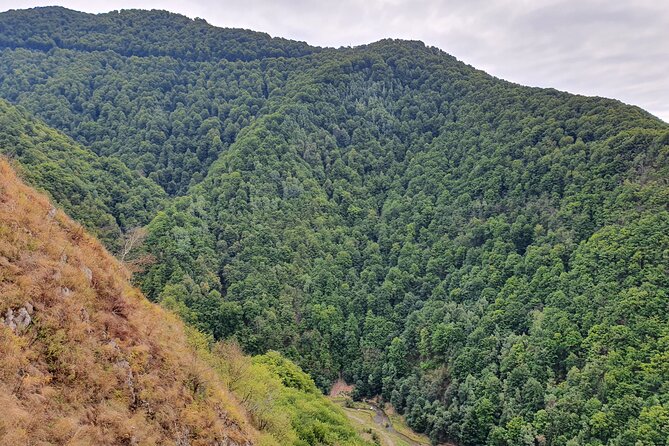
Day six is built for scenery. You start with Transfăgărășan Highway, described as one of the most spectacular roads in the world and even featured in a Top Gear segment. The point is the views from a paved mountain road. Expect a longer travel focus, because this is the kind of place where your stops are about angles and light.
Next you head to Calimanesti, anchored by Cozia Monastery. It is presented as having stood for over 600 years, guarded by fortified walls between the Olt river and Mount Cozia. The monastery is described as preserving a feeling like the Garden of Eden, and there is also a mention of Calimanesti Spring water associated with liver health, including the detail that Napoleon III used to drink from the same spring area.
Then comes Poienari Castle, the “real” Castle of Dracula in this story. You climb about 1,400 steps to reach the citadel, with a focus on photos and the sense of history tied to Vlad the Impaler retreating there during an Ottoman invasion. This is your biggest physical moment on the trip, so if you are even slightly unsure about stairs, plan your pace and take breaks.
After Poienari, you visit Vidraru Dam, described as an engineering wonder with views over the reservoir lake on the Argeș River. It is a shorter stop, around 30 minutes, but it works as a reset after all that uphill climbing.
Finally, you end in Sibiu, starting with Piața Mare, the largest square in the city, tied to Renaissance style and later ages. You finish at Union Square, divided into parts by Ocnei Street and associated with defensive-belt contours. The area also includes the Bridge of Lies, which you see as part of the street and square layout.
Practical thought: This is a day of viewpoint chaining. If you get motion or altitude fatigue, ask your guide for small pacing breaks.
Price and logistics: why $2,140.17 per person can still make sense
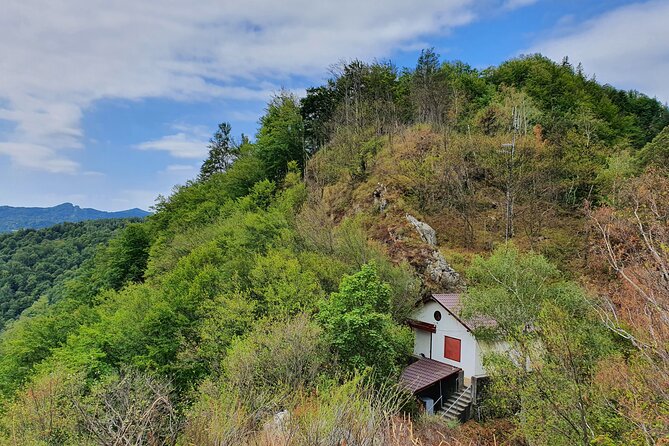
At $2,140.17 per person for 6 days, you are paying for privacy, pace control, and transport. What you get is not just a driver with a map, you get a private licensed English-speaking guide/driver plus all car expenses like gasoline, parking, and road tolls. Your group travels only in your own car (tourism or minibus), and you also get complimentary Wi-Fi in the vehicle.
There are also practical “value levers” that you feel immediately. The guide provides hotel recommendations aligned with your budget and can book for you. You get help coordinating entrances through the day, even though you personally pay the site fees. And the itinerary is flexible after it begins, which is rare for tours priced at this level.
The big cost caution is that entrances are not included. Depending on how many sites you choose to enter versus view from outside, your final spending can swing. The good news is that a private guide can help you decide what is worth paying for in the time you have.
If you are a couple or a small group, this kind of private routing can be better value than you might expect, because it reduces wasted time and transfers. If you are traveling alone and hoping to share costs, you may not get the same efficiency.
Budget reality: entrance tickets add up, but your guide can steer the choices
Entrance fees are explicitly listed as not included. You will likely pay at major sights like castles, monasteries, and special sites where tickets are required. Since your schedule includes multiple stops per day, the entrance costs can stack quickly.
Here is how to manage it without stress: decide upfront how you want to spend your money. If you care most about architecture and interiors, you will likely enter more sites. If you care more about walking, viewpoints, and street life, you might spend time outside some attractions and allocate your ticket budget to the ones that match your interests.
Also remember, meals and beverages are not included. The tour does include time breaks, like the two hours in Brasov, but you will still be responsible for where you eat.
Who this tour is best for
This is a strong fit if you want a guided story rather than a bus ride. If you like history discussions, you will probably enjoy how the guide handles Romania’s layers, including the Vlad Țepeș stories, Transylvanian Saxon heritage, Dacian context, and the gothic castle experience. The reviews highlight that Nicolas is good at keeping things engaging, including humor and back-and-forth conversation.
It is also a good fit for travelers who want control over pacing. Private travel means you can ask for stops to photograph, slow down for a view, or adjust the day when conditions change.
If you are mainly chasing relaxation, the day-to-day pace may still feel busy, but the mix of outdoor breaks, gardens, and shorter museum-style stops keeps it from feeling nonstop.
Should you book it? My practical take
If your ideal Romania trip includes castles, fortified architecture, UNESCO sites, and at least one serious scenery-driving day, this private route is a solid choice. The combination of a private car, a guide like Nicolas, and flexible pacing helps you get more out of each location than you would on a crowded schedule.
I would book it if you are comfortable paying entrance fees on top and you want to prioritize guided understanding over DIY planning. I would think twice if you prefer fully inclusive pricing, because meals and ticket costs are on you, not built into the base price.
FAQ
Is this a private tour?
Yes. This is a private tour/activity, and only your group participates.
Do I get hotel help and booking?
Yes. The tour includes recommendations for hotels based on your budget, and booking is provided for you.
Is pickup included?
Pickup is offered, and the tour includes service from your pickup through the tour.
Are entrance fees included in the price?
No. Entrance fees are not included as per the itinerary.
What transportation do we use during the tour?
You travel in a private car (tourism car or minibus) only for your group, with all car expenses like gasoline, parking, and road tolls included.
Is a guide available in English?
Yes. The tour includes a private, licensed English-speaking guide/driver available throughout the tour.
How does free cancellation work?
You can cancel for a full refund if you cancel up to 24 hours in advance of the experience start time. If you cancel less than 24 hours before, the amount paid is not refunded.
The Private End Of Bucharest
- Castles of Transylvania: Private Day Trip from Bucharest
★ 4.5 · 248 reviews - Dracula’s Castle, Peles Castle and Brasov – Private Day Trip from Bucharest
★ 5.0 · 211 reviews - Best of Bucharest | Private Walking Tour
★ 5.0 · 199 reviews - Bucharest Panoramic Sightseeing – Private City Tour
★ 5.0 · 128 reviews - THERME “Take It Easy” Pack: Full Spa Access + Private Transfers
★ 4.0 · 117 reviews
Whatever Else Bucharest Is Selling
- Bucharest to Dracula Castle, Peles Castle and Brasov Guided Tour
★ 4.5 · 2,933 reviews - Bucharest: Palace of Parliament Tickets and Guided Tour
★ 4.4 · 1,877 reviews - Transylvania and Dracula Castle Full Day Tour from Bucharest
★ 4.5 · 1,589 reviews - Bucharest: City Highlights Guided Walking Tour
★ 4.9 · 1,482 reviews - From Bucharest: Brasov Peles & Dracula’s Castle Day Tour
★ 4.5 · 1,244 reviews
Everything Else We Reviewed In Bucharest
- Bucharest: Dracula’s Castle, Peles Castle, & Brasov Old Town
★ 4.5 · 17,858 reviews - Bucharest: Dracula Castle, Peles Castle & Brasov Old Town
★ 4.6 · 10,891 reviews - Bucharest: Dracula’s Castle, Peleș Castle & Brașov Day Trip
★ 4.5 · 5,919 reviews - Bucharest: Palace of Parliament Tickets and Guide
★ 4.3 · 3,182 reviews - Bucharest: Day Trip to Dracula Castle, Peles Castle & Brașov
★ 4.4 · 3,049 reviews
Recently added around Bucharest
- Private Tasting Expedition Along Romania’s Most Famous Wine Route★ 5.0 · 3 reviews
- Private Guided Tour of Peles Castle and Bran Castle from Bucharest★ 5.0 · 3 reviews
- Private Sightseeing Tour of Bucharest★ 4.5 · 3 reviews
- Discover Europe’s Deepest Mines & Peles Castle’s Royal Charm★ 5.0 · 3 reviews
- Bucharest City Tour and Wine Tasting★ 5.0 · 3 reviews
Private, compared.
 ★ 4.5Castles of Transylvania: Private Day Trip from BucharestFrom $151248 reviews
 ★ 5.0Dracula’s Castle, Peles Castle and Brasov – Private Day Trip from BucharestFrom $199211 reviews
 ★ 5.0Best of Bucharest | Private Walking TourFrom $314199 reviews
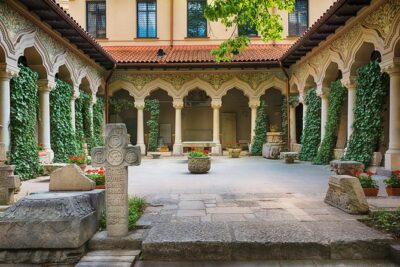 ★ 5.0Bucharest Panoramic Sightseeing – Private City TourFrom $101128 reviews
 ★ 4.0THERME “Take It Easy” Pack: Full Spa Access + Private TransfersFrom $118117 reviews
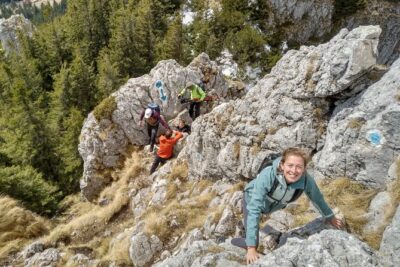 ★ 5.0Piatra Craiului National Park Private Hiking Tour from BrasovFrom $126116 reviews
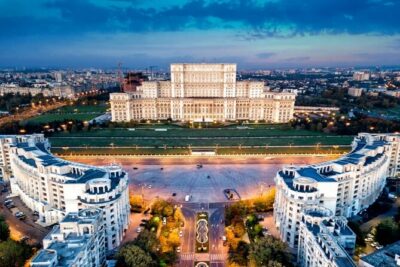 ★ 5.04h Bucharest Private Tour (2h by Car and 2h Walking in Old Town)From $10090 reviews
 ★ 5.0Discover Bucharest: Private Highlights and Traditional Food TourFrom $14386 reviews