
REVIEW · BUCOVINA
6 Days Transylvania and Bukovina Small Group Tour from Bucharest
Castles and painted churches, all in one run. On this 6-day Transylvania and Bukovina small-group trip from Bucharest, I like that you roll from place to place with George as your licensed guide and driver, so you get the stories, not just the photos. You also get organized transport, 3- to 4-star hotels, and a few included meals.
I love two things right away. First, the itinerary leans hard into UNESCO and signature religious art, including Sighisoara’s historic center and Bucovina’s painted monasteries like Voronet, Moldovita, and Sucevita. Second, the pacing is built around guided time in the cities, so you understand why these towns look the way they do, including the mix of communities and faiths you see across Transylvania.
One real consideration: entrance fees are not included, and you’ll visit several churches and monasteries with a strict dress code. That means you should plan to cover knees and shoulders, or you risk being refused entry when it matters most.
In This Review
- Key things to know before you go
- George and the small-group ride out of Bucharest
- Cozia Monastery and the Olt Valley’s “why this place matters”
- Sibiu’s three squares, big views, and religious diversity you can actually see
- Sighisoara’s Clock Tower and the city built for walking
- Targu Mures and Bistrita: baroque streets and a church with two styles
- Moldovita, Sucevita, and Voronet: Bucovina’s painted churches in focus
- Marginea black ceramic and buying like a local
- Piatra Neamt, Bicaz Gorges, and Red Lake: Carpathian scenery with stories
- Brasov and Bran: fortified old streets and the real border story behind Dracula
- Sinaia’s Peles Castle and the Bucharest finish with big monuments
- Price and value: what $1,163.56 covers, and what you should add
- Who should book this, and who might want to go independent
- Should you book this 6-day Transylvania and Bukovina tour?
- FAQ
- What is the duration of the tour?
- Where does the tour start and what time?
- How big is the group?
- Is pickup offered?
- Are entrance fees included?
- Are meals included?
- Is there a dress code?
- Is there a single room option?
- What happens if the tour has too few travelers or bad weather?
- Is the tour refundable if I cancel?
Key things to know before you go
- George is the driver-guide, so you get context during the ride, not only at stops
- UNESCO Sighisoara plus multiple historic towns in one tight route
- Bucovina’s painted churches are the main artistic payoff of the trip
- Black ceramic workshops in Marginea give you more than a quick photo stop
- Carpathian scenery days with Bicaz Gorges and Red Lake, plus a local market moment
- Bring cash or card for castle and monastery entrance tickets since they are not included
George and the small-group ride out of Bucharest
The tour works because it uses a small group size, capped at 7 travelers. That matters on busy days, since you can hear the guide without strain and you are not trapped behind a giant crowd. Starting at 8:00 am from Bucharest also helps you beat the worst rush at key sights.
What I find especially practical is the setup: a professional licensed tour guide who is also your driver, in an air-conditioned vehicle. On this kind of road trip across multiple regions, that combination saves time and keeps momentum. It also means you can ask questions on the way, like why a town has the architecture it does or how the different communities shaped local life.
If you are the type who likes to understand what you are looking at, this approach pays off. The stop highlights sound great on paper, but the real value is getting the narrative while you are actually moving through the places, from the Olt Valley to the Carpathians and then back to Bucharest for the big-city finale.
Cozia Monastery and the Olt Valley’s “why this place matters”
You start with a calm, historically heavy stop at Cozia Monastery in the Olt Valley. This is a 14th-century Wallachian monument tied to major regional leadership, and then restored in the 17th century. The point is not just age, it is the layered feel of a site that kept its importance while being shaped by different periods.
Two details make Cozia worth slowing down for. The façade includes extraordinary Armenian decorations, and the interiors are filled with richly frescoed work. If you normally skip churches because you think you have seen it all, this is the kind of monastery where you notice craftsmanship and deliberate design.
Timing is relatively efficient at this stop, with about 30 minutes and an admission ticket marked free. That does not mean it is shallow, it means the schedule gives you a focused hit before you move toward the Transylvanian towns.
Deeper into Transylvania
Sibiu’s three squares, big views, and religious diversity you can actually see
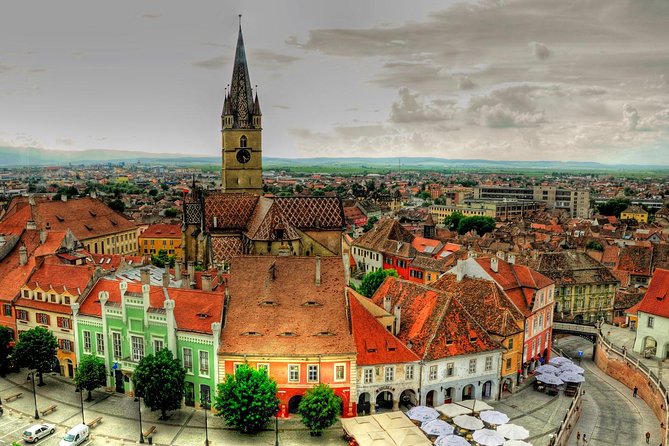
Next is Sibiu, a medieval city that many people love for its atmosphere. The guide angle here is how Sibiu grew from peaceful coexistence between Romanian and Saxon communities. You can see that story physically, in the religious monuments side by side, including Catholic, Orthodox, and Protestant presence.
The highlight I would put at the top is Sibiu’s three squares. They are Big Square, Small Square, and Huet Square, and walking between them helps you get a real medieval layout instead of a few isolated photo points. You also get towers and 15th-century bastions, which give the city a fortified feel even if you are not thinking about defense.
Two more Sibiu wins for your time. You will also see one of the largest Gothic evangelical churches in Transylvania. And if you like museums, you will have options once you are there, since the city has a strong cultural structure.
Practical note: this day includes about 3 hours in Sibiu, and the admission ticket is shown free. That means you can spend your money later on higher-fee stops like castles and some monastery interiors.
Sighisoara’s Clock Tower and the city built for walking
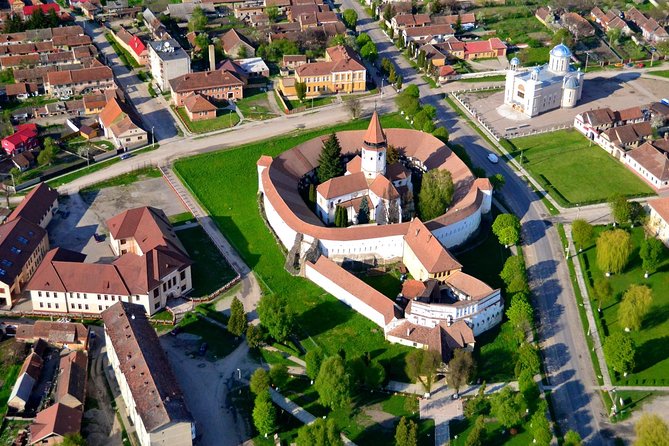
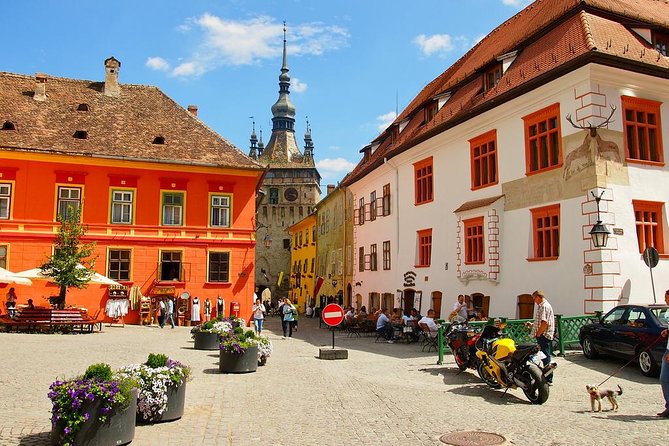
Sighisoara is a stop that hits multiple interests at once. You get the Clock Tower and a compact historic core that is still inhabited, plus the fact that the historic center is UNESCO-listed. That combination makes it feel different from many “old towns” that are only preserved for visitors.
The experience is built around getting you above street level and into the old structure. You will admire the church on the hill, reached by a wooden staircase called the schoolchildren’s ladder. That detail is exactly the kind of thing you remember later, because it makes the steep town feel human, not just architectural.
Sighisoara also brings in the Hungarian community story through specific monuments. You will see the statue of Petofi Sandor, the Catholic church associated with the Hungarian community, and the tower of the shoemakers. Even if you do not read every plaque, the guide interpretation is what ties those pieces together into a single picture of how different groups lived here.
Lunch is not included, and there is mention of a lunch possibility at a house linked to Vlad the Impaler, but that lunch option is not part of the included meal plan. Plan on making your own food stop there if you want something quick and local.
Targu Mures and Bistrita: baroque streets and a church with two styles
From Sighisoara you move to Targu Mures, where the dominant mood shifts to baroque. The Palace of Culture is the visual anchor here, described as an extraordinary baroque palace and a symbol of the city. If you liked the earlier medieval texture, this is your change-of-pace day, and it helps you see how style and power moved across regions.
You also get a quick cultural perspective tied to the Hungarian community remaining numerous. The information in the route suggests that architects involved in historic building design were Hungarians, which gives context for why certain aesthetic choices keep repeating.
Then comes Bistrita for a short walking tour. The main monument is the Lutheran church, built in the 14th century in Gothic style but remodeled with Renaissance elements later on. That is the kind of change that can be subtle if you are not told what to look for, so I like that this stop is clearly about architectural evolution.
The time allocations here are short, about 30 minutes for Targu Mures and about 1 hour for Bistrita. That is not a downside by default. On a packed trip, short stops can work well if the guide helps you focus on what matters.
Moldovita, Sucevita, and Voronet: Bucovina’s painted churches in focus
This is where the trip’s artistic payoff becomes very real. Over the middle of the schedule you visit multiple monasteries known for frescoes and the special look of the region’s religious art.
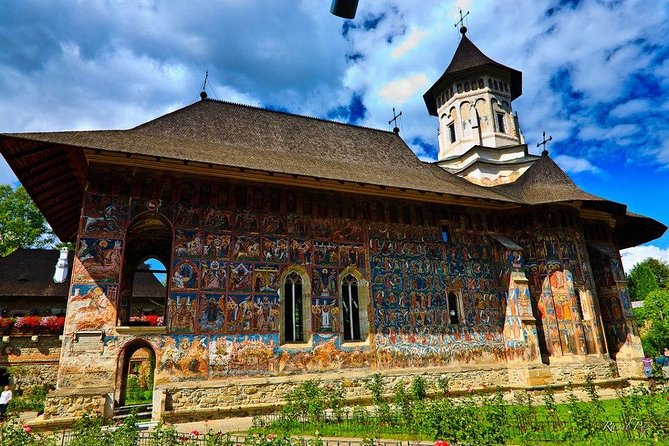
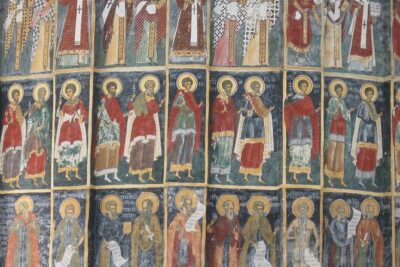
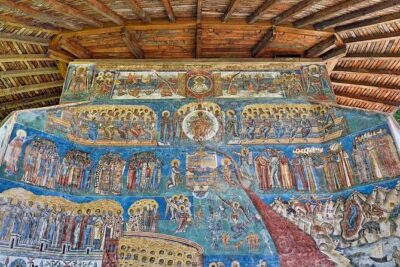
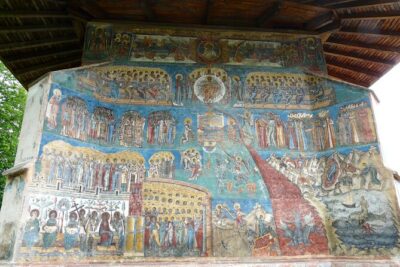
At Moldovita Monastery, the guide-led visit centers on the exterior and interior frescoes, tied to the 16th century and founded by Pietro Rares. The point of your time here is not just seeing paintings, it is seeing how they cover space and command attention. Even a quick look can feel “flat” if you do not understand the placement, so the guide narrative helps you read the whole wall.
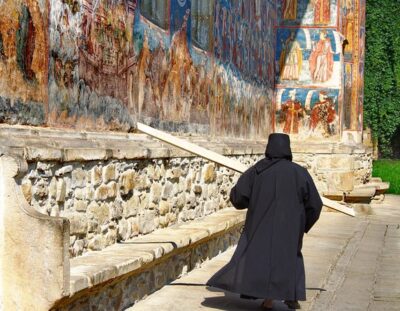
Then you go to Sucevita Monastery, founded by the Movila brothers in the 17th century. The route notes Gothic and Byzantine elements blending into a Moldovan architectural style. You also get a specific reason the frescoes on the northern façade survived, because protective walls were kept in place. That detail matters because it explains why you are seeing intact color instead of faded fragments.
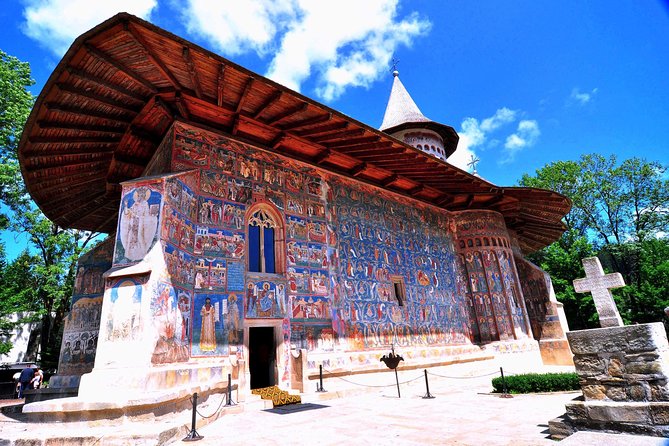
The next stop is Voronet, commonly nicknamed the Sistine Chapel of the Carpathians in the itinerary description. What you are meant to notice is the inimitable, unique blue color tied to this monastery. If you have only seen postcards of painted churches, this is one of the moments where you understand why the color catches your eye in the first place.
A practical tip for these church stops: admission is not included for Moldovita, Sucevita, and Voronet, so your day budget should account for tickets. Also keep your shoulders and knees covered, because this dress rule applies at places of worship and some selected museums.
The painted walls, other itineraries
Marginea black ceramic and buying like a local
After the monastery day, you get a cultural stop that feels grounded instead of purely scenic: Ceramica neagra in Marginea. This is about artisans who work with famous black ceramic. You can enter the workshop to closely observe working phases of ceramic pots, and you can buy items typical of the region.
I like this stop because it is not designed as a rushed shopping trap. The value is the viewing portion. Watching how the process moves through stages makes it easier to choose a piece you genuinely want, not just a souvenir you grab because it looks unusual.
You can also find painted eggs and decorative pieces using traditional Romanian techniques. Those are often small, practical gifts, and they can work well if you want to bring home something tied to a craft rather than a landmark.
The stop is only described for about 15 minutes, so if you have a real interest in ceramics, you will want to be decisive. Focus on one or two items, and let the guide help you with what is worth your time.
Piatra Neamt, Bicaz Gorges, and Red Lake: Carpathian scenery with stories
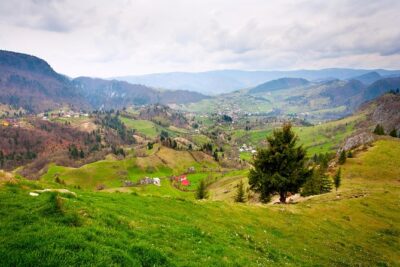
From Bucovina you shift toward the Carpathians, and the scenery becomes more dramatic.
You stop briefly in Piatra Neamt, described as a famous ski resort with a citadel connected to the time of Stephen the Great, plus an 18th-century synagogue. The stop is short at about 15 minutes, but it gives a sense of how the region mixes old power centers with later community layers.
Then comes Bicaz Gorges, and this is where the drive becomes part of the attraction. You admire a road flanked by a stream and crossed by thrilling cliffs. The itinerary also mentions a market along the gorges with typical handicrafts and souvenirs. That gives you a chance to stop without having to guess where to find local items, and it can be a nice break from long riding.
Finally, you visit Red Lake, a natural barrier lake formed after a landslide. The route notes that tree trunks are still present in the lake, giving it an evocative atmosphere. You also get a strong legend element, tied to how the name spread, which adds a story layer to what might otherwise be just a viewpoint.
If you want a smooth day, bring layers for the Carpathian part. Even when the schedule is sunny, temperature shifts can be noticeable in mountain areas.
Brasov and Bran: fortified old streets and the real border story behind Dracula
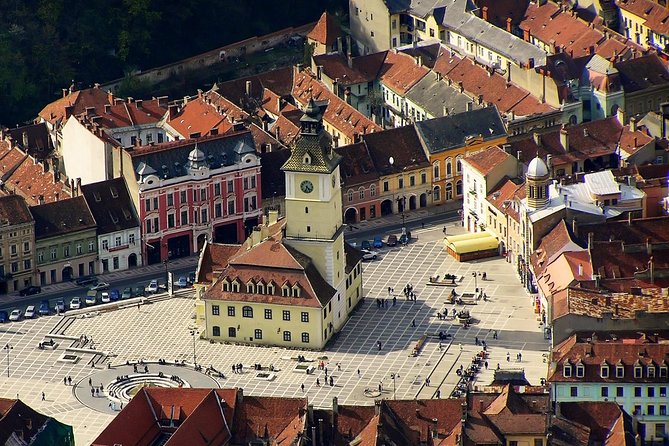
Brasov is the kind of city that rewards walking, and you get a guided look at its older character. The route describes Brasov as once entirely fortified, with German-style architecture that mixes Gothic, Baroque, and Renaissance influences. That blend is why Brasov can feel both historic and visually varied.
You also visit the First Romanian School in the Schei district, a district known for entries into the city during medieval times through the Catherine’s and Schei Gate. If you like political and cultural history that is tied to buildings people used daily, these are the kinds of references that make the city feel alive.
Another anchor is the Black Church. Even when you are not going inside, having it on your guided path helps you understand what kind of religious community shaped the city.
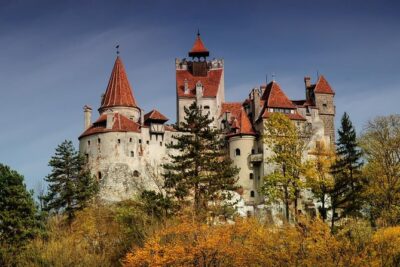
After Brasov, you go to Bran Castle, described as Dracula’s Castle. Here, the key context is geography. Bran was on the border between Wallachia and Transylvania, and defense mattered, which is why the stronghold existed and was preserved. That historical framing helps separate pop-culture expectation from why castles were built where they were.
Important for your planning: Bran Castle admission is not included. Expect to budget for entrance fees for at least the major castle and some interior monastery visits.
The stop time here is about 2 hours for Bran. That can be enough to see the highlights, but it is not “wander for hours” time. If you want slow museum-style pacing, you should keep your expectations tuned to a guided highlight tour.
Sinaia’s Peles Castle and the Bucharest finish with big monuments
The trip ends with a return toward Bucharest, but not before a major wow-stop: Peles Castle in Sinaia.
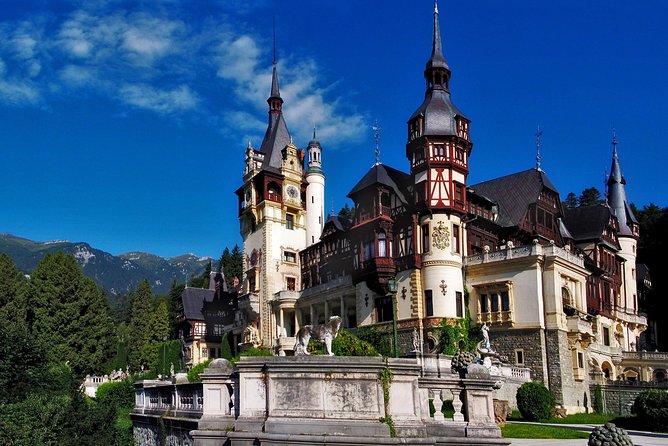
Peles is described as the summer residence of Romania’s first king, King Charles I of Hohenzollern, and built with a blend of European craftsmanship. The itinerary notes that it was designed by a Czech architect, and it’s famous for being modern for its time, built between the 19th and 20th centuries. The standout idea here is variety by room, each with a unique style.
The guide’s framing matters for your visit because rooms change so much. You are also told about the Florentine room, noted as bringing a Renaissance atmosphere with an Italian feel. That is exactly the type of specific detail that makes a castle interior visit more memorable.
Admission is not included for Peles Castle, so again plan for tickets.
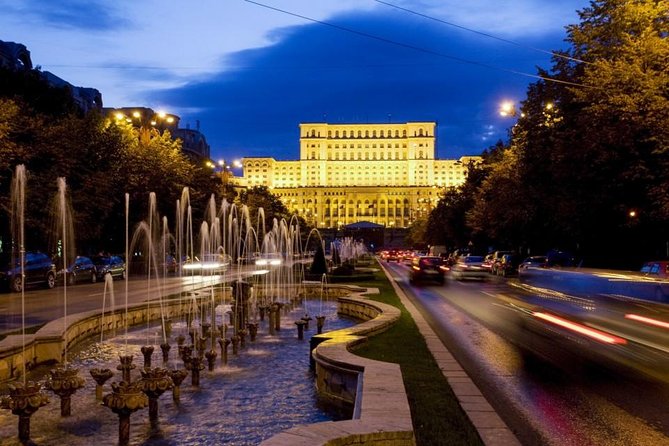
From Sinaia you head back to Bucharest with a panoramic tour featuring the Triumph Arch, the Atheneum, Revolution Square, and Parliament Palace. This is a practical way to close the loop: you end with the scale of the capital after spending days in regional towns, monasteries, and mountain scenery.
Price and value: what $1,163.56 covers, and what you should add
At $1,163.56 per person, this tour price feels like a package built for convenience and interpretation. You are paying for a small group experience, air-conditioned transport, hotels in 3- to 4-star categories, and a licensed guide who also drives. You also get breakfast (5 mornings are listed as included), which helps you avoid finding food early every single day.
What is not included is the part that can change your final total: entrance fees for castles, churches, and monasteries. The itinerary repeatedly marks admission tickets as not included for multiple major stops. So you should treat the posted price as the foundation and budget an extra amount for sites.
Another cost consideration is the single room supplement of 120 euro, paid locally. If you are traveling solo, this is worth confirming before you commit, so you are not surprised.
In return, you avoid the headache of piecing together driving, local navigation, ticket timing, and daily decision-making. For many people, that is the best value in this part of Romania.
Who should book this, and who might want to go independent
This tour fits best if you want a guided overview of Transylvania and Bukovina that hits the major signatures without logistical stress. I think it works especially well for first-timers who want context for monasteries, castles, and towns with layered communities. The small group cap also makes it easier to ask questions, and George’s style of proud, excited storytelling is a real advantage when you are seeing so many historic places in a short window.
It might feel less satisfying if you want a slow, flexible vacation. The schedule includes many stops across multiple days, and you will likely spend most of your time moving between highlights. Also, if you dislike dress code rules or you do not want to budget entrance tickets, you may find the structure limiting.
If you do pack accordingly, though, this kind of tour can give you a strong mental map of the regions and why they look the way they do.
Should you book this 6-day Transylvania and Bukovina tour?
I would book it if your priorities are UNESCO-level old-town atmosphere, Bucovina’s painted monasteries, and castle country with enough guide context to make it more than a sightseeing checklist. The combination of small group size, a driver-guide, and organized hotels keeps it easy to enjoy even when days are full.
You should pause if you want fully independent pacing, or if you are not comfortable adding entrance fees on top of the tour price and following a strict dress code at worship sites. If that sounds manageable, this is a strong way to see a lot of Romania’s signature sights without having to figure out the route and timing yourself.
FAQ
What is the duration of the tour?
The tour is listed as 6 days (approximately).
Where does the tour start and what time?
The meeting point starts at 8:00 am in Bucharest.
How big is the group?
The tour has a maximum of 7 travelers, so it stays small-group.
Is pickup offered?
Pickup is offered.
Are entrance fees included?
No. Entrance fees are not included, and tips for the driver and tour guide are not included either.
Are meals included?
Breakfast is included for 5 days.
Is there a dress code?
Yes. A dress code is required for places of worship and selected museums. No shorts or sleeveless tops are allowed, and knees and shoulders must be covered to avoid being refused entry.
Is there a single room option?
There is a supplement for a single room of 120 euro, paid locally.
What happens if the tour has too few travelers or bad weather?
This experience requires good weather. If canceled due to poor weather, you will be offered a different date or a full refund. If canceled because the minimum number of travelers is not met (2 participants), you will be offered a different date or a full refund.
Is the tour refundable if I cancel?
No. This experience is non-refundable and cannot be changed for any reason.
Everything Else We Reviewed In Bucharest
- Bucharest: Dracula’s Castle, Peles Castle, & Brasov Old Town
★ 4.5 · 17,858 reviews - Bucharest: Dracula Castle, Peles Castle & Brasov Old Town
★ 4.6 · 10,891 reviews - Bucharest: Dracula’s Castle, Peleș Castle & Brașov Day Trip
★ 4.5 · 5,919 reviews - Bucharest: Palace of Parliament Tickets and Guide
★ 4.3 · 3,182 reviews - Bucharest: Day Trip to Dracula Castle, Peles Castle & Brașov
★ 4.4 · 3,049 reviews
The Painted Walls Of Bucovina
- Bucovina Painted Monasteries & Transylvania Tour: 4-Day Private
★ 5.0 · 6 reviews - 11-Day Romania Tour from Bucharest with Transylvania & Bucovina
★ 5.0 · 6 reviews - Transylvania & Bucovina Private Tour – 6 days
★ 5.0 · 3 reviews
More Of Transylvania
- Transylvania and Dracula Castle Full Day Tour from Bucharest
★ 4.5 · 1,589 reviews - Castles of Transylvania: Private Day Trip from Bucharest
★ 4.5 · 248 reviews - 2-Day Medieval Transylvania with Brasov,Sibiu and Sighisoara Tour from Bucharest
★ 4.5 · 145 reviews - 2-Day Transylvania from Bucharest: Brasov, Bran, Sighisoara
★ 5.0 · 60 reviews - Transylvania: Cultural Full-Day Trip by Minivan
★ 4.8 · 57 reviews
Recently added around Bucharest
- Private Tasting Expedition Along Romania’s Most Famous Wine Route★ 5.0 · 3 reviews
- Private Guided Tour of Peles Castle and Bran Castle from Bucharest★ 5.0 · 3 reviews
- Private Sightseeing Tour of Bucharest★ 4.5 · 3 reviews
- Discover Europe’s Deepest Mines & Peles Castle’s Royal Charm★ 5.0 · 3 reviews
- Bucharest City Tour and Wine Tasting★ 5.0 · 3 reviews
Bucovina Painted Monastery Tours, compared.
 ★ 5.0Bucovina Painted Monasteries Day TourFrom $10283 reviews
 ★ 5.01-Day Bucovina Painted Monasteries tour from Suceava – EnglishFrom $14033 reviews
 ★ 5.0Day trip from Iasi to the UNESCO Painted Monasteries in BucovinaFrom $24426 reviews
 ★ 5.0Half Day Tour to Bucovina Painted MonasteriesFrom $596 reviews
 ★ 5.011-Day Romania Tour from Bucharest with Transylvania & BucovinaFrom $2,3676 reviews
 ★ 5.0Bucovina Painted Monasteries & Transylvania Tour: 4-Day PrivateFrom $1,3566 reviews
 ★ 5.0Transylvania & Bucovina Private Tour – 6 daysFrom $1,4193 reviews
 ★ 5.0Two days tour to Bucovina & UNESCO Painted MonasteriesFrom $6963 reviews
Browse the lists this tour appears in