

REVIEW · CITY TOURS
Bucharest City Tour – A Day to Remember
Four hours, real Bucharest. I love the small group size and the way the Palace of Parliament is made understandable, not scary. One catch, you should expect extra costs for entrance fees, plus real walking time on cobbles and sidewalks.
This tour meets you in the city center in front of the Romanian Athenaeum, and you head out with an English live guide. You spend the morning following the sights along Calea Victoriei, then you come back through key squares and historic stops before ending with time to ask questions.
At $161 per person for 4 hours, this is a focused way to get oriented fast, especially if you want architecture and simple historical context in one pass. Lunch and drinks are not included, so if you want that end-of-tour shared drink, plan to pay for it.
In This Review
- Key things that make this tour worth your time
- Bucharest earns its Little Paris nickname fast
- Meet in front of the Romanian Athenaeum, then start with orientation
- Walking Calea Victoriei, the oldest road in the city
- Royal Palace and Revolution Square, two anchors for understanding change
- Passing the first savings bank and the National Military Circle
- Palace of Parliament: the world’s largest administrative building
- Old Princely Court, then back into street level Bucharest
- Romanian food flavors and history without the lecture vibe
- Price and value: what $161 buys in 4 hours
- Small group of 8: why it changes how the tour feels
- Quick practical notes before you go
- Who should book this Bucharest city tour
- Should you book it? My honest take
- FAQ
- Where do I meet the guide?
- How long is the tour?
- What language is the tour guide?
- How large is the group?
- What is included in the price?
- What is not included?
- Is there free cancellation?
- What should I bring?
- Are there any restrictions or suitability limits?
Key things that make this tour worth your time
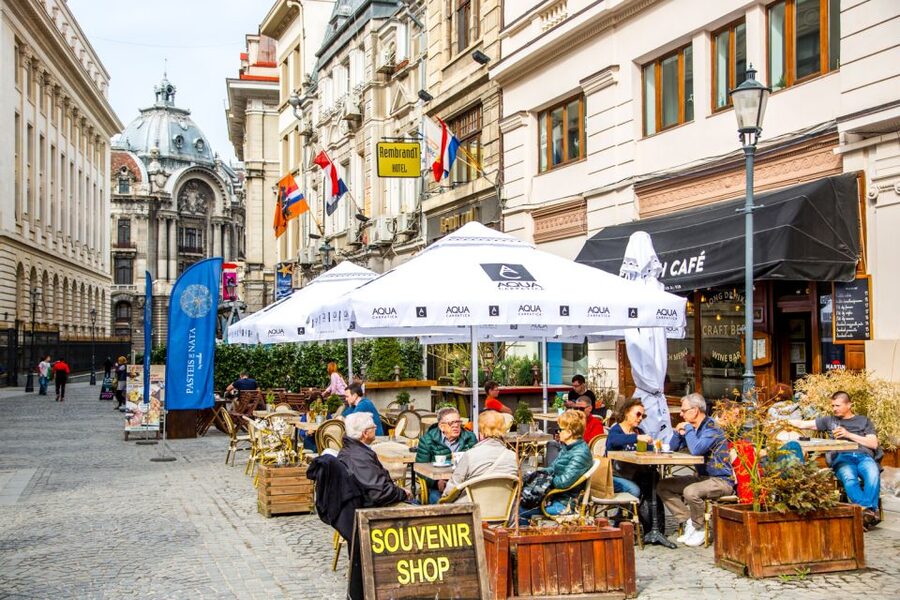
- Calea Victoriei, the oldest road, with a smart “from here to there” route
- Palace of Parliament visit, including what it houses: Senate and Chamber of Deputies, plus three museums and a conference center
- Old Princely Court stop, a natural follow-up after the Parliament viewpoint
- English live guide with plenty of information and strong general knowledge
- Small group of 8, so questions feel normal, not rushed
- A shared drink at the end, plus time to wrap up what you saw
Bucharest earns its Little Paris nickname fast
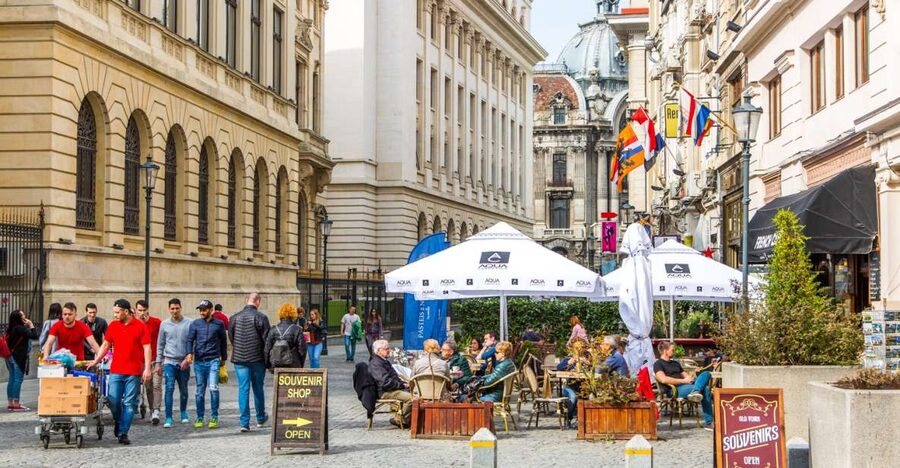
Bucharest is one of those cities where it helps to have a route, because the details can overwhelm you. People have been calling it Little Paris for decades, and in a short day you can still see why: grand buildings, wide streets, and lots of “stop and look” architecture.
This tour starts you off at a central landmark and then lines you up with the biggest visual stories. Bucharest was founded almost 600 years ago, and the walk gives you enough historical context to connect the city’s look with the people who shaped it. You also get Romanian food flavors built into the experience, so it is not just stone and statues.
My only “plan ahead” warning is simple: it is a compact half day with multiple stops, so wear comfortable shoes. Also, entrance fees are not included, so some attractions may cost extra depending on what you choose to enter.
Meet in front of the Romanian Athenaeum, then start with orientation
Your meeting point is easy to find: in the center of Bucharest, in front of the Romanian Athenaeum. That matters because you are not wasting the first part of your day figuring out where everyone is and how to start.
From there, you head out with your English live guide, in a group limited to 8 participants. That small size is a real quality-of-life feature. You can hear the guide without straining, and you can ask follow-up questions without waiting your turn for a long time.
In the best small-group tours, the guide does two things well. First, they help you understand what you are seeing, even if you have not studied Romanian history. Second, they help you pace the route so you get views and photos without feeling like you are being dragged from one place to the next.
This one also ends with a drink together and time for remaining questions. Since drinks are not included in the listed price, think of this as a guided conversation moment where you can ask, clarify, and get practical advice for the rest of your visit.
Other ways around Bucharest
Walking Calea Victoriei, the oldest road in the city
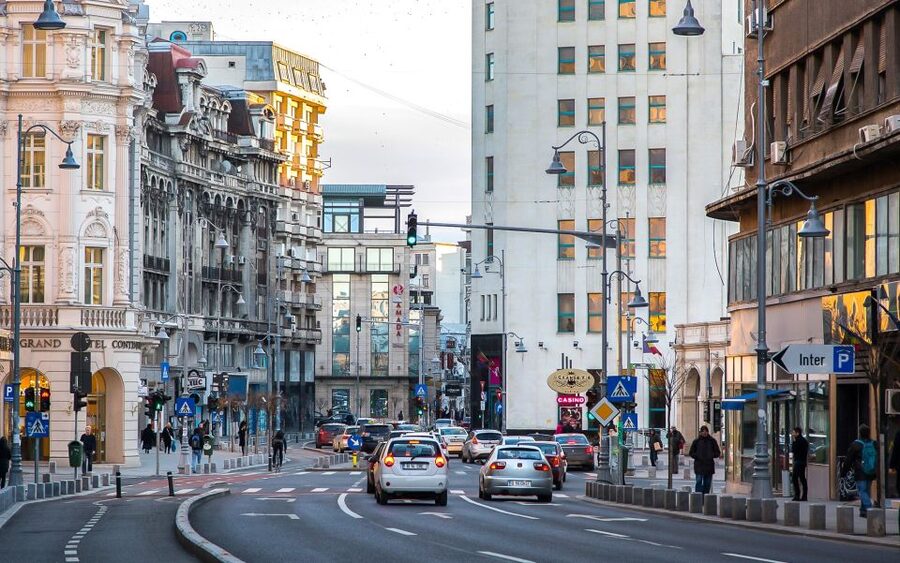
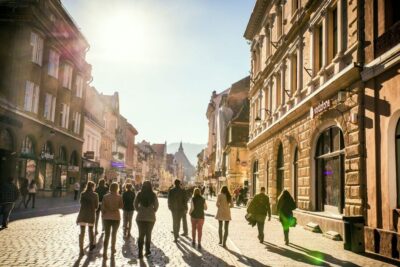
The route follows Calea Victoriei, described as the oldest road in Bucharest. Even if you do not know the details yet, that single fact changes how you look at the street. You start noticing the rhythm of buildings, the layout of plazas, and the way the city organizes its public spaces.
Along this corridor, the tour includes several major stops you can use as reference points for the rest of your trip. You are not just looking at random monuments. You are moving through a deliberate sequence that helps you build a map in your head.
This is where the guide’s value shows up. With the kind of explanation that gives you context without turning the day into a lecture, the architecture starts to make sense. The goal is not to overwhelm you with dates. It is to help you connect the landmarks to the broader story of the Romanian people and how Bucharest developed.
Also, you get a mix of major sights and “in-between” landmarks. That matters because your brain holds onto a day better when it has variety. Wide avenues, squares, and distinct building shapes stick in your memory more than a single long museum slog.
Royal Palace and Revolution Square, two anchors for understanding change
Along Calea Victoriei, the first big landmarks you get pointed toward are the Royal Palace and the Revolution Square. These are the kinds of places that can feel intimidating if you visit alone, because you might not know why they matter.
In a guided format, you can learn the basics quickly and move on without feeling behind. You get a clearer sense of how power, politics, and public life have been expressed through architecture and major public locations.
A practical tip: bring a mindset for “looking” more than “studying.” You are not trying to memorize every detail. You are learning what each place represents, then using that knowledge to notice what you would otherwise miss.
This section is also an efficient way to get the contrast that makes Bucharest interesting. One sight can communicate authority and state presence, while another can signal historical turning points tied to the revolution theme. Even if you only absorb a few key takeaways here, it gives the rest of the city more meaning when you keep moving.
Passing the first savings bank and the National Military Circle
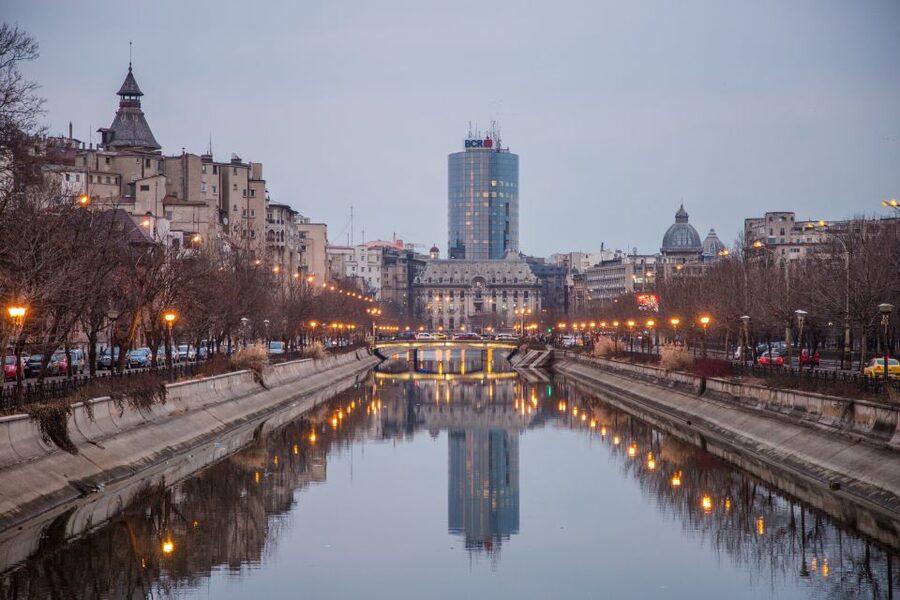
Still along the major route, you also get stops tied to finance and military life: the first savings bank and the National Military Circle. These are not always the headline attractions most people plan, but that is part of why this tour feels useful.
Banks and military institutions shaped the day-to-day world behind the grandeur. Even without going deep into specifics, it helps to see them in context while the guide is keeping the narrative flowing. You learn that history is not only about palaces and cathedrals, it is also about institutions that organized society.
If you like tours that explain how different pieces of a city fit together, this is the strength here. You are getting a broad sweep that includes civic power, economic life, and public identity, without turning it into a textbook.
One note for your own expectations: the tour includes looking and learning at these stops, but entrance and interior access is not guaranteed for every building you pass. Entrance fees are not included, so if a stop offers an interior option, you might need to pay separately.
Palace of Parliament: the world’s largest administrative building
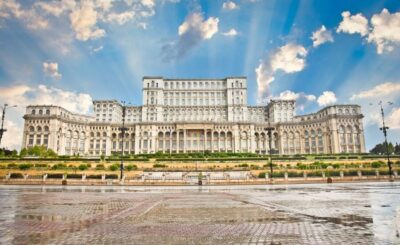
The big centerpiece on this route is the Palace of Parliament, described as the largest administrative building in the world. That alone makes it worth prioritizing on a short trip.
What makes the stop more than a photo moment is what the building contains. The tour mentions that it houses the Senate and the Chamber of Deputies. It also includes three museums and an international conference center. In other words, you are seeing a political core and a cultural layer in one complicated structure.
If you want a single attraction that changes how you understand Bucharest, this is it. The guide’s job is to give you just enough background so the scale does not turn into confusion. When you know what the building is and what it holds, the visit becomes clearer right away.
Practical advice: expect this to be the time where you slow down. Bring your photo stamina. Look for how the building relates to surrounding streets and squares, not only what you can frame in one shot. Then, if there are museums or interior areas that interest you, decide based on time and your budget for entrance fees.
Even with extra costs, this stop tends to be the reason people feel they got value out of a short, guided day. It compresses a lot into 4 hours.
Old Princely Court, then back into street level Bucharest
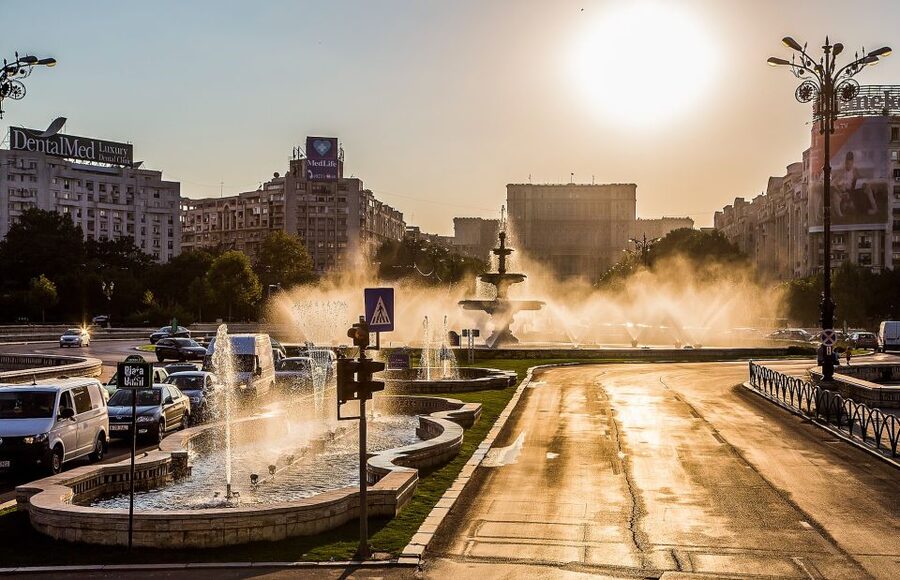
After the Palace of Parliament, the tour continues to the Old Princely Court. This is a smart pairing with the Parliament visit. You go from a massive administrative complex to a place tied to earlier court life.
That shift helps you compare eras in the city quickly. Even if you only learn a little bit, you start to see that Bucharest did not develop in one straight line. Different periods left different architectural fingerprints, and the city still carries those layers.
This stop also helps you round out your mental map of the day. The Royal Palace and major civic squares are earlier “state expression” points. The Parliament is a modern heavyweight. The Old Princely Court brings in a different tone and gives you a more rounded understanding of what Bucharest has been.
And once that is done, you finish with the tour wrap-up. You share a drink together and can ask questions you still have. That is one of the best parts of guided city tours, because it converts curiosity into a plan for what you do next.
Romanian food flavors and history without the lecture vibe
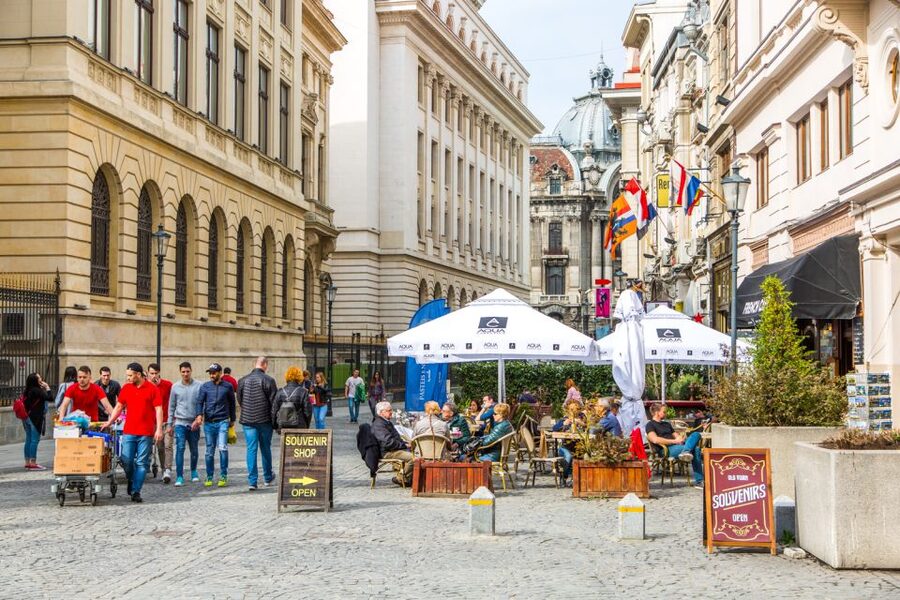
The tour highlights include savoring the flavours of Romanian food and learning a little history of the Romanian people. The key is how this kind of tour typically works in practice: you pick up context as you walk, so the history does not float in the air.
I like food elements on walking tours because they anchor your day. Buildings can blur after a few hours, but tastes and small moments help your brain make a connection. You also get to experience local culture in a way that fits a short itinerary.
As for history, you do not need a background course. The goal is simple: a little history helps you understand what you see. When the guide explains why places matter, it makes your later self-guided exploring feel less like random wandering and more like intentional sightseeing.
From the review-style feedback associated with this tour, the guide comes across as friendly and full of information, with solid general knowledge. That combination is a big deal. You want a guide who can answer questions, not just recite facts.
Price and value: what $161 buys in 4 hours
$161 per person for a 4-hour city tour is not a bargain price, but it can still be good value if you care about a tight route and clear explanations. You are paying for a live English guide, a small group limit of 8, and a plan that hits multiple big landmarks without you getting lost.
What is not included is important. Entrance fees, lunch, drinks, and souvenirs are listed as extra. So the real cost for you may depend on what you choose to enter and how you handle meals.
Still, there is a way to treat this as a smart investment. If you will spend the next day mostly self-guiding, this tour can act like a foundation. It gives you the map and context, so your other hours are more efficient.
Here’s a practical budgeting approach:
- Keep some cash set aside for entrance fees at whatever stops offer them
- Decide whether you want the end-of-tour shared drink, since drinks are not included
- Plan to eat lunch on your own after the tour
If you are the type who likes to understand what you are seeing, not just snap photos, the guide time is where the money goes. For many people, that is the difference between a “saw some sights” day and a “now I get the city” day.
Small group of 8: why it changes how the tour feels
A group limited to 8 participants is the sweet spot for many walkers. You are not stuck listening to someone else’s phone call. You can hear your guide. And questions do not get swallowed.
In this size group, the guide can also adjust pacing based on how people are moving and how long you seem to be lingering at viewpoints. That matters on a city like Bucharest where architecture rewards eye time.
This is also a good setup for travelers who want personal attention but do not need a private tour price. If you are planning your time well and want to spend your day efficiently, small group tours are often the best compromise.
One downside to small groups can be that you all move together, so if you need extra breaks, you should plan for it. That is not a flaw of the tour so much as a reality of group pacing.
Quick practical notes before you go
To keep things smooth, bring a passport or ID card and wear comfortable shoes and comfortable clothes. You are walking enough to justify that choice.
Some restrictions are in place. Pets are not allowed, but assistance dogs are allowed. Alcohol and drugs are not allowed. Making fire, explosive substances, and nudity are also not allowed.
Also, check your health planning. This tour is listed as not suitable for people with mobility impairments, people with epilepsy, people with a cold, and pregnant women. If any of those apply, it is worth looking for a more suitable option.
Who should book this Bucharest city tour
I think this tour is best if you want:
- A guided orientation in a half day, not an all-day museum crawl
- A route that hits major Bucharest landmarks, including Palace of Parliament and Old Princely Court
- Clear explanations in English, with time at the end to ask questions
- A small group experience capped at 8 participants
You might also like it if you enjoy city walking routes built around key streets, like Calea Victoriei, and you want the history of the Romanian people woven into what you see.
If you hate walking, need lots of bathroom breaks, or want deep time inside multiple buildings, this may feel too compact. And because entrance fees are not included, you will want to plan for extra payments if you decide to go inside.
Should you book it? My honest take
Book it if you want a focused, English-guided Bucharest overview that connects streets, squares, and landmark architecture to a basic understanding of the country’s story. The best reason to choose it is the concentration of big sights in 4 hours, plus the small-group format that keeps the experience interactive.
Skip it or consider another option if you know you will be stressed by walking, if you are in one of the listed not-suitable categories, or if you strongly prefer a fully self-paced schedule with no extra guide time. Also, plan your budget for entrance fees, lunch, and any drinks you want at the end.
If your goal is to leave Bucharest knowing where you are and what you just saw, this is the kind of tour that makes your next day easier.
FAQ
Where do I meet the guide?
You meet the guide in the center of Bucharest, in front of the Romanian Athenaeum.
How long is the tour?
The duration is 4 hours.
What language is the tour guide?
The live tour guide speaks English.
How large is the group?
The group is small, limited to 8 participants.
What is included in the price?
The tour guide is included.
What is not included?
Entrance fees, souvenirs (available for purchase), lunch, and drinks are not included.
Is there free cancellation?
Yes, you can cancel up to 24 hours in advance for a full refund.
What should I bring?
Bring your passport or ID card, and wear comfortable shoes and comfortable clothes.
Are there any restrictions or suitability limits?
The tour is not suitable for people with mobility impairments, people with epilepsy, people with a cold, or pregnant women.
Other Ways Around Bucharest
- Bucharest: City Highlights Guided Walking Tour
★ 4.9 · 1,482 reviews - Bucharest: 2-Hour City Highlights Bike Tour
★ 4.8 · 269 reviews - Bucharest Tuk Tuk city tour
★ 5.0 · 188 reviews - Bucharest Tuk Tuk City Tour
★ 4.9 · 167 reviews - Bucharest Panoramic Sightseeing – Private City Tour
★ 5.0 · 128 reviews
Whatever Else Bucharest Is Selling
- Bucharest to Dracula Castle, Peles Castle and Brasov Guided Tour
★ 4.5 · 2,933 reviews - Bucharest: Palace of Parliament Tickets and Guided Tour
★ 4.4 · 1,877 reviews - Transylvania and Dracula Castle Full Day Tour from Bucharest
★ 4.5 · 1,589 reviews - Bucharest: City Highlights Guided Walking Tour
★ 4.9 · 1,482 reviews - From Bucharest: Brasov Peles & Dracula’s Castle Day Tour
★ 4.5 · 1,244 reviews
Everything Else We Reviewed In Bucharest
- Bucharest: Dracula’s Castle, Peles Castle, & Brasov Old Town
★ 4.5 · 17,858 reviews - Bucharest: Dracula Castle, Peles Castle & Brasov Old Town
★ 4.6 · 10,891 reviews - Bucharest: Dracula’s Castle, Peleș Castle & Brașov Day Trip
★ 4.5 · 5,919 reviews - Bucharest: Palace of Parliament Tickets and Guide
★ 4.3 · 3,182 reviews - Bucharest: Day Trip to Dracula Castle, Peles Castle & Brașov
★ 4.4 · 3,049 reviews
Recently added around Bucharest
- Private Tasting Expedition Along Romania’s Most Famous Wine Route★ 5.0 · 3 reviews
- Private Guided Tour of Peles Castle and Bran Castle from Bucharest★ 5.0 · 3 reviews
- Private Sightseeing Tour of Bucharest★ 4.5 · 3 reviews
- Discover Europe’s Deepest Mines & Peles Castle’s Royal Charm★ 5.0 · 3 reviews
- Bucharest City Tour and Wine Tasting★ 5.0 · 3 reviews
City Tours, compared.
 ★ 4.9Bucharest: City Highlights Guided Walking TourFrom $211,482 reviews
 ★ 4.8Bucharest: 2-Hour City Highlights Bike TourFrom $33269 reviews
 ★ 5.0Bucharest Tuk Tuk city tourFrom $54188 reviews
★ 4.9Bucharest Tuk Tuk City TourFrom $58167 reviews
 ★ 5.0Bucharest Panoramic Sightseeing – Private City TourFrom $101128 reviews
 ★ 4.9Bucharest: City Tour by a Mini Hot RodFrom $91110 reviews
 ★ 4.8SB01 – City Tour Sibiu: Exploring the Heart of TransylvaniaFrom $3599 reviews
 ★ 4.9City Tour Sighisoara Legends & Landmarks A Walk Through TimeFrom $4583 reviews
Browse the lists this tour appears in