
REVIEW · RURAL ROMANIA
Bucharest one day tour with Parliament Palace and Village Museum
One day can explain Bucharest fast. This guided tour strings together the city’s biggest landmarks and the stories behind them, with hotel pickup that keeps things easy, plus a focused visit to the Palace of Parliament that most people cannot pull off on their own. I like how the guide connects architecture, politics, and daily life into one clear narrative, not a pile of random facts. The one real catch is planning around entry costs and documents, because the Palace of Parliament needs your original passport and tickets for key museums are not included.
You’ll also get a proper orientation of the historic center, with a panoramic ride through Bucharest and a guided walk through the Old Town streets. I love that the day is paced with enough time at each stop to actually see what you came for, including a guided stop at the Revolution area and the Village Museum. The format is built for comfort, private vehicle transport, and a smooth flow between sites, but it is still a full 8-hour day, so comfortable shoes matter.
In This Review
- Key highlights
- Why this one-day plan works in Bucharest
- Morning orientation: squares, arches, and quick context
- The park route and the lead-in to the Village Museum
- Village Museum: seeing Romania’s countryside in a staged world
- Panoramic ride: Cantacuzino, the Romanian Athenaeum, and royal echoes
- Revolution Square and the monuments that set the emotional tone
- Palace of Parliament: how to enjoy the time without feeling lost
- Old Town walking tour: connecting streets, churches, and repurposed banks
- Timing, tickets, and money: what you’re really paying for
- Who this tour is best for
- Should you book this Bucharest one-day tour?
- FAQ
- FAQ
- How long is the Bucharest one-day tour?
- What time does the tour start?
- Does the tour include hotel pickup and drop-off?
- Are entrance tickets included for the Palace of Parliament and other museums?
- Do I need a passport for this tour?
- Is lunch included?
Key highlights
- Hotel pickup and drop-off so you start the day without wrestling with transit.
- Palace of Parliament time on site guided for context, not just photo ops.
- Village Museum visit with a guided look at how the countryside was preserved and staged in one place.
- Revolution Square + anti-communist landmarks to understand Bucharest’s turning points.
- Old Town walking tour that helps you connect buildings, passages, churches, and museums as you go.
- Wi-Fi in the car for downtime between big stops.
Why this one-day plan works in Bucharest
Bucharest is a city of contrasts, and a guide is the difference between seeing impressive buildings and understanding why they matter. This tour is designed to give you the storyline: independence-era style changes, communist-era power, and the post-1989 reshaping of public life. I like that the guide keeps tying each stop back to what you will feel in the street, like the scale of government buildings, the mood of public squares, and the way old buildings were repurposed.
It is also practical. You do not waste time figuring out how to chain far-flung sights, because you get round-trip transport in a private vehicle. That matters in a day trip, when the goal is to see a lot without feeling rushed in every single place.
Morning orientation: squares, arches, and quick context
You start at 8:30 am, which is early enough to get you into central sights before the city gets fully busy. The morning is a mix of “big picture” landmarks and short guided stops where you learn what to look for next.
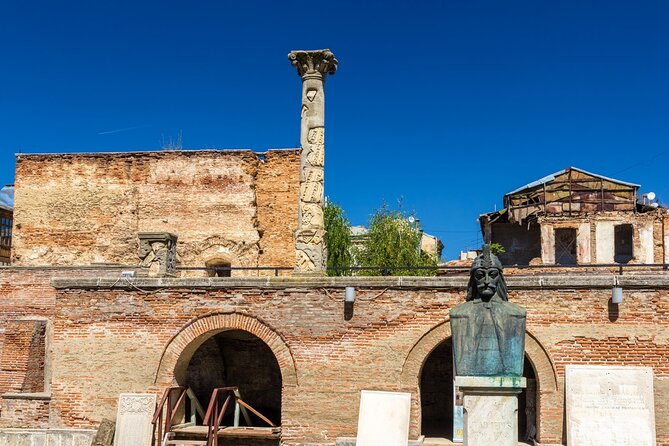
You begin at a square lined with impressive buildings and statues, a location with deep ties to Romania’s revolution history. Then the tour moves to Romana Square, described here as a place connected to a replica of the Trajan Column, a detail you can later connect to what you may see in the history-oriented museum stop themes. If you like your sightseeing with explanations you can actually use, these short pauses are a smart way to set the mental map for the rest of the day.
From there, you head toward the home associated with Nicolae Ceausescu, living with his family from 1965 until the Romanian Revolution. Even without going into heavy politics, it changes the way you see the surrounding streets because you understand the city’s power structure, not just its facades.
You also pass or stop around major commemorative architecture, including the Triumph Arch, built in 1922 as a World War I honor. It is a smaller replica of the one in Paris, and that comparison helps you understand Bucharest’s habit of borrowing and adapting European symbolism.
Getting into the Parliament, other tickets
The park route and the lead-in to the Village Museum
One of my favorite practical choices in this tour is how the itinerary transitions from political landmarks to cultural preservation. The route goes through part of the largest park in Romania, and the description here includes well-known spots around that area. That matters because you are not just traveling from point A to point B, you are getting a sense of where people relax, meet, and spend their time.
Then the plan lines you up for the Muzeul National al Satului Dimitrie Gusti, Bucharest’s Village Museum. This is the stop where the day becomes more than “government and monuments.” It is about how Romania’s regions and building styles were gathered, presented, and experienced in one location.
Village Museum: seeing Romania’s countryside in a staged world
The Village Museum stop runs about 1 hour, and it is a good length if you want to understand the idea without burning half your day. The guide focuses on the standout buildings and what they represent.
A key example is a building replica of the University Lomonosov from Moscow. It’s not random architecture trivia. You learn how, during the communist period, this site housed the newspaper Scanteia, described here as the Spark. After the Revolution, the building’s role shifted again, and you can connect that to the way public communication changed in Romania.
The tour also highlights another important function: the building is connected to government headquarters. So even at a “village” museum, the guide keeps you anchored to politics and control, then shows you how that legacy was reinterpreted after 1989.
Even if you are not a museum person, I think the Village Museum works because it is visual. You can walk among the structures and quickly see how architecture becomes storytelling. The one caution: admission for the Village Museum is not included, so you’ll want to budget for tickets separately.
Panoramic ride: Cantacuzino, the Romanian Athenaeum, and royal echoes
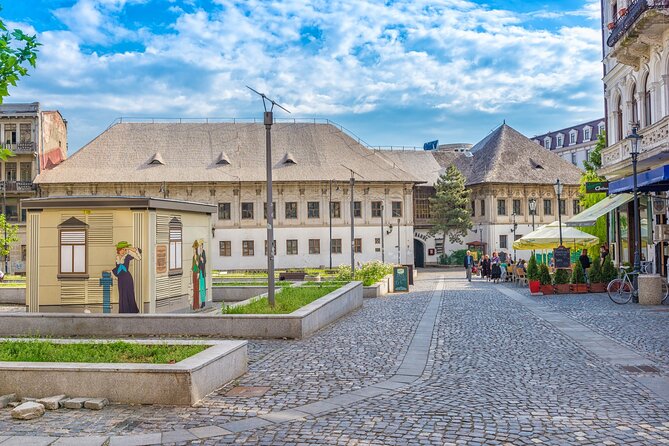
After the Village Museum, the day turns back toward the city’s core, with a panoramic tour of Bucharest. This is a smart reset. You get a moving view that helps you understand distances and locations you will soon walk through.
The tour includes the Cantacuzino Palace area, now the George Enescu Museum. Even if you do not plan to go inside another museum, the exterior context helps. It tells you that Bucharest is not only communist-era blocks and grand squares. It has artistic and cultural landmarks with their own era and influence.
You also get Ateneul Roman, the Romanian Athenaeum. It is described as a charming concert hall built with public subscription, marking Romania’s change in style when the country became independent. The stop here is about 30 minutes, and you learn why the hall’s very existence tied into national identity, not just entertainment.
The tour then includes another anchor point: the former Royal Palace, now the National Art Museum. That connection is useful when you are trying to understand Bucharest’s evolution through power centers. Palaces become museums, museums become cultural symbols, and the city constantly repurposes space.
Revolution Square and the monuments that set the emotional tone
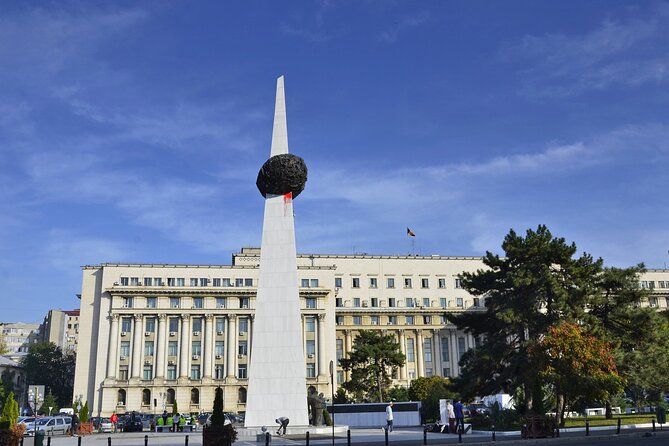
Before you get to the biggest building of the day, you pause near Monument to the Heroes of the Revolution of 1989 in Revolution Square. The stop is about 15 minutes, and the guide gives you what you need to frame what you are seeing: the monument honors the fallen heroes from the Romanian revolution in 1989.
This kind of stop might feel “brief” on paper, but it actually changes the way you interpret everything afterward. When you later stand in monumental government space, you are not just looking at marble and scale. You understand it as part of a system that was challenged, and in many ways replaced.
Village days, other versions
Palace of Parliament: how to enjoy the time without feeling lost
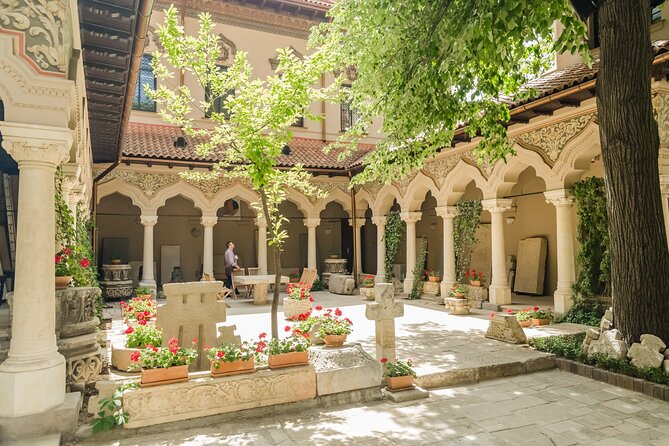
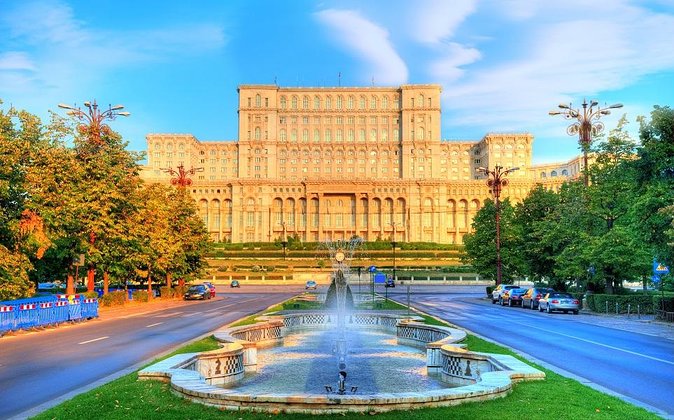
Now comes the main event: the Palace of Parliament. This is a 2-hour stop, and it is exactly the kind of time you need because the building is immense. The tour also notes it is the second largest building in the world, which is the reason many people feel under-prepared when they go independently.
What you should expect here is guided context. You are not only visiting rooms and hallways, you are getting explanations tied to Romania’s political history and the symbolism of scale. That is where a tour earns its keep, because it helps you see the building’s design decisions as communication, not just construction.
One important planning note: entry tickets for the Palace of Parliament are not included, and to enter you need a valid passport. You need the passport in original on the day of the tour. If you have a photo copy on your phone, that will not help you here. I always recommend putting your passport in an easy-to-reach pocket or day-bag pocket before you start the day.
If you want maximum comfort, you should also plan on moving steadily. This is a big, formal space. Dress appropriately and expect a timed feel even when you have a guided schedule.
Old Town walking tour: connecting streets, churches, and repurposed banks
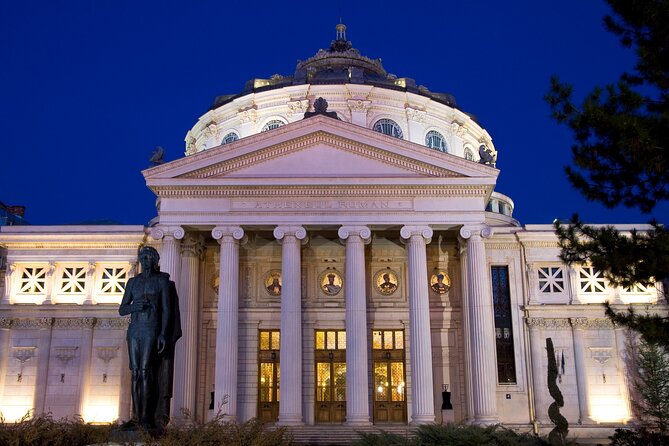
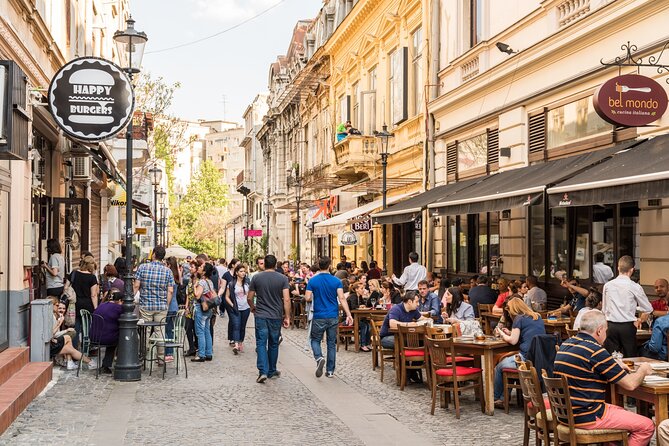
After the Parliament, you head into the Old Town for a walking tour of about 1 hour. This is where the day shifts from “big landmarks” to the intimate scale of Bucharest street life.
The guide helps you connect what you see to how the city’s institutions changed over time. One example is a building described as continuously a bank from the beginning of the 20th century. Another standout is the National History Museum building, designed as a Postal Palace and described as a replica from one in Geneva. These comparisons are useful because they give you a visual vocabulary to recognize what you are looking at.
The walk also includes Stavropoleos Church, built in 1724 in Brancovenesc style. You learn that the name Stavropoleos is the genitive case of Stavropolis, Greek for the city of the Cross. Even if you only remember one thing from the church details, it will help you understand the way Greek language and religious symbolism shaped local naming.
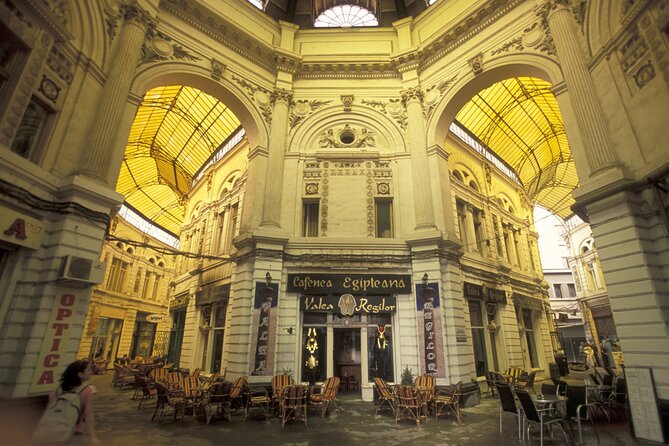
There is also a beautiful passage described as connecting the National Bank of Romania with Victoriei Boulevard. If you like small spaces that feel like secrets, this is the kind of stop you will enjoy, because passages in old cities are where everyday movement creates character.
The tour ends with an Old Town finish that includes a bookshop housed in the former Agriculture Bank headquarters. That repurposing is the theme of the day: buildings change jobs, but the city still shows you its layers.
Timing, tickets, and money: what you’re really paying for
The listed price is $138.91 per person for about 8 hours. That number can look “steep” if you compare it only to a free walking tour. But value here comes from three things you cannot easily replicate solo in a short window:
You get hotel/port pickup and drop-off, which is a real time-saver. You get transport by private vehicle/minivan, plus a guide who organizes the sequence. And you get a panoramic tour with planned stops in the main squares, plus a guided Old Town walk.
Ticket costs are the one part you must handle separately. Admission tickets are not included for the Palace of Parliament, the Village Museum, and the Romanian Athenaeum. The tour does call out that entrance fees are handled in a way that helps you avoid surprise costs, and that likely means many other stops are free or incorporated into what you do on site. But for the three named places, assume you will pay separately and plan ahead.
Lunch is not included. That means you will want to either eat earlier, plan to buy something near your route, or bring snacks. If you skip lunch on a long day, you will feel it during the bigger indoor stops where you are standing and walking more than you might expect.
Who this tour is best for
This is best for you if you want a guided storyline and you have only one day. It’s also a good fit if you like context, like understanding why Bucharest has certain monuments and why buildings got reused after political shifts.
It can also work for first-timers who want orientation fast. The panoramic ride plus Old Town walking tour helps you connect neighborhoods and landmarks so your second day feels easier.
If you are the type who hates waiting in lines or you prefer slow independent exploration, you might find the schedule a bit full. Still, the guided structure is the point, especially for the Palace of Parliament and the Village Museum.
Should you book this Bucharest one-day tour?
My take: yes, if you want one day to give you real understanding, not just snapshots. The combination of Revolution-era context, a guided look at monumental government space, and a museum stop that interprets architecture through politics is a strong mix for first-timers.
Book it if you can handle separate tickets for the Palace of Parliament, Village Museum, and Romanian Athenaeum, and if you will bring your passport for the Palace entry. If you want maximum value for your time, this plan does that by using hotel pickup, private transport, and guided time where it counts.
FAQ
FAQ
How long is the Bucharest one-day tour?
The tour is listed as about 8 hours.
What time does the tour start?
The start time is 8:30 am.
Does the tour include hotel pickup and drop-off?
Yes, hotel or port pickup and drop-off are included.
Are entrance tickets included for the Palace of Parliament and other museums?
Tickets are not included for the Palace of Parliament, the Village Museum, and the Romanian Athenaeum.
Do I need a passport for this tour?
Yes. To enter the Palace of Parliament you need a valid passport, and you must bring the original passport on the day of the tour.
Is lunch included?
No, lunch is not included.
Everything Else We Reviewed In Bucharest
- Bucharest: Dracula’s Castle, Peles Castle, & Brasov Old Town
★ 4.5 · 17,858 reviews - Bucharest: Dracula Castle, Peles Castle & Brasov Old Town
★ 4.6 · 10,891 reviews - Bucharest: Dracula’s Castle, Peleș Castle & Brașov Day Trip
★ 4.5 · 5,919 reviews - Bucharest: Palace of Parliament Tickets and Guide
★ 4.3 · 3,182 reviews - Bucharest: Day Trip to Dracula Castle, Peles Castle & Brașov
★ 4.4 · 3,049 reviews
Village Romania, Other Days
- Slavery in Romania,Myths and Truths on Gypsies, Walking Tour
★ 4.9 · 42 reviews - Original Carpathian Village Experience and Sinaia in one day tour
★ 5.0 · 40 reviews - Palace of the Parliament, Village Museum & Ceaușescu Mansion
★ 4.9 · 31 reviews - Traditions in Bucharest: Village Museum and Wine Tasting Tour
★ 5.0 · 27 reviews - Private Bucharest city tour visit the Palace of the Parliament & Village Museum
★ 4.5 · 21 reviews
Getting Inside The Parliament
- Bucharest: Palace of Parliament Tickets and Guide
★ 4.3 · 3,182 reviews - Bucharest: Palace of Parliament Tickets and Guided Tour
★ 4.4 · 1,877 reviews - Bucharest: Parliament Palace Skip-the-line Ticket
★ 4.2 · 1,518 reviews - Bucharest: Parliament Senate Entry Tickets and Guided Tour
★ 4.5 · 163 reviews - Skip the Line Ticket of the Palace of Parliament in Bucharest
★ 4.0 · 71 reviews
Recently added around Bucharest
- Private Tasting Expedition Along Romania’s Most Famous Wine Route★ 5.0 · 3 reviews
- Private Guided Tour of Peles Castle and Bran Castle from Bucharest★ 5.0 · 3 reviews
- Private Sightseeing Tour of Bucharest★ 4.5 · 3 reviews
- Discover Europe’s Deepest Mines & Peles Castle’s Royal Charm★ 5.0 · 3 reviews
- Bucharest City Tour and Wine Tasting★ 5.0 · 3 reviews
Village Life and Rural Traditions, compared.
 ★ 5.0Small-Group Day Trip in Romanian Authentic Mountain Villages from BrasovFrom $11978 reviews
 ★ 4.8From Brasov: Romanian Mountain Villages Day TourFrom $11656 reviews
 ★ 4.9Slavery in Romania,Myths and Truths on Gypsies, Walking TourFrom $2942 reviews
 ★ 5.0Original Carpathian Village Experience and Sinaia in one day tourFrom $17840 reviews
 ★ 5.0Exclusive Tour: Corvin Castle, Alba Iulia and traditional villages from SibiuFrom $15633 reviews
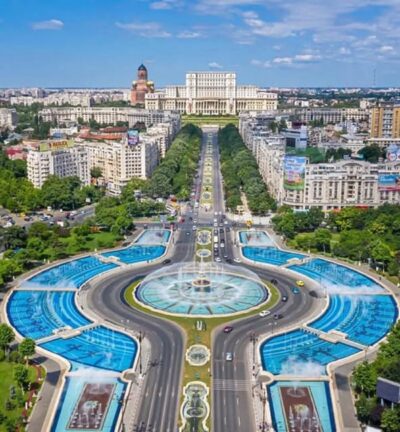 ★ 4.9Palace of the Parliament, Village Museum & Ceaușescu MansionFrom $4531 reviews
 ★ 4.9Transylvania Gems: Sighisoara, Medias, Biertan & Gypsy lifeFrom $20229 reviews
 ★ 5.0Traditions in Bucharest: Village Museum and Wine Tasting TourFrom $14827 reviews
Browse the lists this tour appears in