
REVIEW · SIBIU
Sibiu: Daily Sightseeing Guided Tour
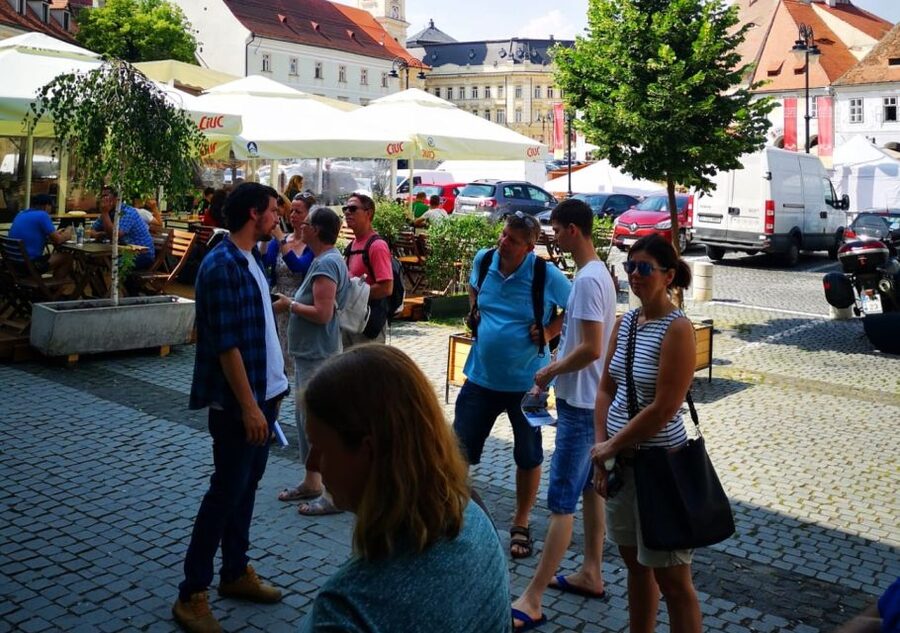
Sibiu clicks into place fast with the right walk. This guided Old Town route gives you a clear medieval overview in about 1.5 to 2 hours, with a guide who tells the stories in both German and English. I especially like how the tour hits the city’s signature spaces, from Piața Mare to Strada Cetății, and how it brings famous stops like Bridge of Lies to life with explanation you can actually follow. One thing to keep in mind: because the guide runs bilingual narration, the timing can stretch a bit, especially if you have lots of questions.
For a first visit, this is an efficient way to get oriented, then wander with better context. It runs rain or shine, and it focuses on what you can see on foot without wasting time. If you only want a quick peek at a single spot, you might find the route a bit focused rather than scattered.
In This Review
- Key highlights to look for on this Sibiu walking tour
- Why Sibiu’s Old Town fits a 90-minute guided walk
- Meeting at Sibiu Tourist Info Center, then getting oriented immediately
- Piața Mare: the main square stop that gives you the city’s spine
- Piața Huet, Piața Mică, and Friedrich Schiller: how the smaller squares teach you to see
- Bridge of Lies: five minutes, but it’s designed to stick
- Strada Cetății: the street section where medieval Sibiu starts feeling real
- Bilingual German and English narration, and why it can affect your pace
- Price and value: is $16 worth 1.5 hours of Old Town?
- What this tour includes, and what it does not
- Who should book this Sibiu sightseeing tour
- Should you book this Sibiu daily sightseeing tour?
Key highlights to look for on this Sibiu walking tour
- Certified storytelling that stays on-topic and answers questions in detail
- Bilingual German and English delivery by the same guide
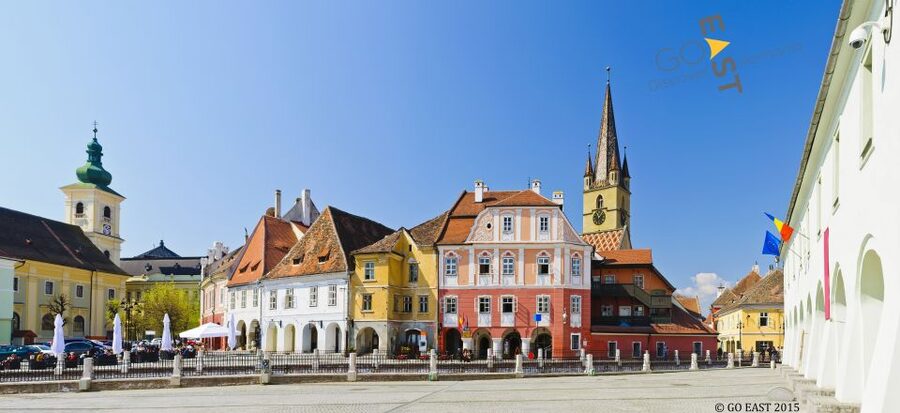
- All the big squares in one walk: Piața Mare, Piața Huet, Piața Mică, plus a stop at Piața Friedrich Schiller
- Bridge of Lies covered with the kind of background that makes it make sense
- Strada Cetății as your “medieval texture” section, not just a street passing by
- High value pacing, typically around 1.5 hours, with some departures running closer to 2 hours depending on bilingual flow
Why Sibiu’s Old Town fits a 90-minute guided walk

Sibiu is one of those cities where the streets feel old before you even start reading about them. That’s the whole point of this tour: you don’t just look at buildings, you connect them to the people and ideas that shaped the city. In roughly a block-and-squares rhythm, you get a map in your head, so later wandering feels easier.
The structure matters. You’re not hopping around Sibiu County by bus, and you’re not stuck in a single square for the whole time. Instead, you move through the Old Town’s main public rooms, then into the smaller lanes and street texture that make medieval towns feel real.
The other big plus is the guide format. The tour is live, and it’s delivered in English and German by the same guide. That’s great if you want your own language, but also handy if you’re traveling with someone who doesn’t match you perfectly. You’ll hear both, and the guide stays focused on the stories that link the stops together.
Meeting at Sibiu Tourist Info Center, then getting oriented immediately
You start at the Sibiu Tourist Info Center, and that’s a smart choice for a first walk. It means you begin in an actual “visitor” hub, so you can confirm directions and follow-up ideas right away. From there, the tour flows directly into the Old Town’s most recognizable squares.
Expect a guided pace that’s built for seeing, not rushing. The stops are short, which is good news if you tend to lose focus after too long of standing still. It’s also practical. If rain shows up, you already know you’re moving through key areas in a compact radius rather than stretching your day across the entire city.
Sibiu, three more ways
Piața Mare: the main square stop that gives you the city’s spine

Your first major sight is Piața Mare, the main square, with about 15 minutes of guided time. This is where you typically start picking up the “shape” of Sibiu. Think of it as the anchor point that helps all the other locations make sense.
In a medieval city, squares are not just pretty. They’re where people gathered, traded, argued, prayed, and absorbed news. A good guide uses that logic to connect architecture and layout to everyday life. On this tour, the storytelling is designed to help you understand why these spaces feel the way they do, and why certain landmarks are still famous.
One practical tip: when you reach Piața Mare, take a moment to locate the surrounding streets in your mind. Even if you’re taking photos, try to frame at least one “walk route” you can repeat later on your own. That way, the guide’s explanations turn into a mental map you can use.
Piața Huet, Piața Mică, and Friedrich Schiller: how the smaller squares teach you to see
Next comes Piața Huet (about 10 minutes). Even without a long stop, you’ll understand why the tour includes it. Smaller squares often reveal the character of daily life more clearly than the biggest one. They can show you how the city scaled around different communities and rhythms.
Then you move to Piața Mică, again with around 10 minutes. This is one of the stops that helps you feel the Old Town as a connected set of spaces. If you’ve ever visited a city where every square looks identical on a map, this kind of sequence helps you notice differences in style, street angles, and the way buildings face public space.
You also get a stop at Piața Friedrich Schiller for about 10 minutes. The name may not sound like a “must-see” until a guide ties it into the broader story of the city. On this tour, the guide’s job is to make those stops feel like chapters, not random checkpoints.
A useful way to approach these squares: don’t aim to memorize everything. Aim to catch themes. Are the corners tighter? Do the buildings frame a different kind of space? Does the guide’s explanation suggest a different kind of historic use? By the end, you’ll start seeing the Old Town as a system, not a collection.
Bridge of Lies: five minutes, but it’s designed to stick
The Bridge of Lies stop is short, about 5 minutes. That might sound too brief, but it’s exactly the kind of stop that benefits from a tight focus. The guide’s explanation is what turns a quick photo moment into something you remember.
A bridge like this is famous for its name, but the real payoff is understanding why it became famous and what stories grew around it. The tour also connects Bridge of Lies to other local “legend type” details, so the narrative doesn’t feel isolated.
If you’re tempted to rush past, don’t. Give the guide those few minutes, then look again on your own. The bridge becomes a reference point for the rest of your walking, especially when you later notice rooflines and city details that the guide highlights.
Strada Cetății: the street section where medieval Sibiu starts feeling real
Your final major sightseeing block is Strada Cetății, about 15 minutes. This is where the tour shifts from squares into the kind of street that makes Old Towns memorable. Squares give you overview. Streets give you texture.
One highlight the tour description promises is learning about the famous “eyes” of Sibiu’s rooflines. You’ll hear how the city’s roof details are part of the character locals and visitors recognize. Even if you only catch a few roof glimpses during the walk, that idea changes how you look at buildings afterward.
Also, the street stop tends to be the moment when you realize how useful a guide can be for architecture and layout. One of the common themes from people who’ve taken this tour is that it helps you see different building styles and how they fit into Sibiu’s overall look. Even without a long museum-style lecture, you get enough guidance to notice what you’d otherwise miss.
Guided, and already checked

Bilingual German and English narration, and why it can affect your pace
The tour is conducted in German and English, and it’s handled by the same guide. That’s a big advantage in practical terms: you’re not stuck with one language that leaves you behind, and you’re not relying on a second person to repeat the same information.
It can also change how the timing feels. Because bilingual narration sometimes means segments are repeated or extended, the tour may run a bit long, especially on busier days. People have noted that this bilingual format can stretch the experience slightly, even if it’s still within the overall 1.5 to 2-hour window.
If your schedule is tight, plan buffer time around the start. If you’re traveling with a friend who loves asking questions, bring that energy. Many guides on this route are praised for being patient and answering questions in depth, which is exactly what you want when something sparks your curiosity mid-walk.
If you want a name to watch for, guides such as Ciprion, Linus Mǎrginean, Bogdan, Anna, Sofia, and Mihai have been mentioned as leading the experience. You might not get the same guide twice, but the overall approach is the same: storytelling that feels personal, not mechanical.
Price and value: is $16 worth 1.5 hours of Old Town?
At $16 per person for about 1.5 hours, this is priced like a straightforward walking tour, not a premium, long-format production. The value comes from how focused the route is. You get the main public spaces you’ll want to revisit anyway, plus a legend stop like Bridge of Lies, all tied together by a guide’s story threads.
Here’s the practical math I use when deciding on tours like this:
- You’re paying for time you would otherwise spend figuring things out.
- You’re paying for context that makes later independent wandering easier.
- You’re paying for a route that covers enough to feel like you gained something in a short visit.
Given the list of included stops, the tour covers more than just one square photo-op. It moves through Piața Mare, Piața Huet, Bridge of Lies, Piața Mică, Piața Friedrich Schiller, and Strada Cetății in one organized loop, then returns you to the Tourist Info Center. That structure is what makes the price feel fair.
And because it runs rain or shine, you’re less likely to lose your sightseeing day to weather. In Romania, weather can shift fast, so having a compact guided walk is a real benefit.
What this tour includes, and what it does not
Included:
- A guided walk through Sibiu’s Old Town squares and main highlights
- Stops at Main Square (Piața Mare), Small Square (Piața Mică), Huet Square (Piața Huet), and Cetății Street (Strada Cetății)
- Live guide storytelling in English and German
- Wheelchair accessibility
What it is not:
- A long walking odyssey across the entire region
- A museum-heavy plan with indoor breaks (the core format is outdoor walking through squares and streets)
That’s good for many people. If your trip schedule is tight, this is the kind of tour that helps you get oriented quickly, then lets the city do the rest.
Who should book this Sibiu sightseeing tour
This is a strong fit if:
- It’s your first time in Sibiu and you want a guided orientation
- You like walking tours that connect what you see to why it mattered
- You want bilingual narration and don’t want to choose between languages
- You’re okay with a short stop count and a tight route that prioritizes the main highlights
It may not be the best match if:
- You want a long, slow walk with deep time at one location
- You have a hard clock and cannot tolerate bilingual timing that sometimes runs slightly longer
- You prefer unguided wandering with minimal structure
Should you book this Sibiu daily sightseeing tour?
If you’re trying to get the most meaning out of a short visit, I’d book it. For $16, you get a compact walk across Sibiu’s signature public spaces, guided live in English and German, with storytelling that helps you recognize details like Bridge of Lies and the “eyes” on Sibiu rooflines. It’s also the kind of experience that helps you stop being a passive observer. You start seeing patterns.
Just go in with the right expectation. This is a guided orientation, not a slow, sit-down deep study. If you give the guide the full hour-and-a-half range and allow for bilingual pacing, you’ll leave with a city map in your head and a better reason to come back for your own wanderings.
Whatever Else Sibiu Is Selling
- From Sibiu: Day Tour to Brasov and Dracula’s Castle
★ 4.7 · 120 reviews - SB01 – City Tour Sibiu: Exploring the Heart of Transylvania
★ 4.8 · 99 reviews - Sibiu Old Town Exploration Game and Self-Guided Tour
★ 4.5 · 82 reviews - Sibiu: Alba Iulia and Corvin Castle Guided Tour
★ 4.7 · 66 reviews - Exclusive Tour: Corvin Castle, Alba Iulia and traditional villages from Sibiu
★ 5.0 · 33 reviews
Everything Else We Reviewed In Sibiu
- From Sibiu: Day Tour to Brasov and Dracula’s Castle
★ 4.7 · 120 reviews - SB01 – City Tour Sibiu: Exploring the Heart of Transylvania
★ 4.8 · 99 reviews - Sibiu Old Town Exploration Game and Self-Guided Tour
★ 4.5 · 82 reviews - Sibiu: Alba Iulia and Corvin Castle Guided Tour
★ 4.7 · 66 reviews - Exclusive Tour: Corvin Castle, Alba Iulia and traditional villages from Sibiu
★ 5.0 · 33 reviews
Sibiu, Past The Big Square
- From Sibiu: Day Tour to Brasov and Dracula’s Castle
★ 4.7 · 120 reviews - SB01 – City Tour Sibiu: Exploring the Heart of Transylvania
★ 4.8 · 99 reviews - Sibiu Old Town Exploration Game and Self-Guided Tour
★ 4.5 · 82 reviews - Sibiu: Alba Iulia and Corvin Castle Guided Tour
★ 4.7 · 66 reviews - Exclusive Tour: Corvin Castle, Alba Iulia and traditional villages from Sibiu
★ 5.0 · 33 reviews
Recently added around Sibiu
- Private Transfagarasan&Balea Lake★ 5.0 · 3 reviews
- SB05 – Carpathian Heights: Hiking to Bâlea Cascada & Lake★ 5.0 · 4 reviews
- Private Walking Tour of Alba Iulia Citadel with Wine Tasting★ 5.0 · 4 reviews
- Transfagarasan, Vidraru and Poenari Fortress Tour from Sibiu★ 4.5 · 5 reviews
- Tour of Sibiu – Church in Cristian – Village of Sibiel★ 5.0 · 7 reviews
Sibiu Tours, compared.
 ★ 4.52-Day Medieval Transylvania with Brasov,Sibiu and Sighisoara Tour from BucharestFrom $120145 reviews
 ★ 4.7From Sibiu: Day Tour to Brasov and Dracula’s CastleFrom $106120 reviews
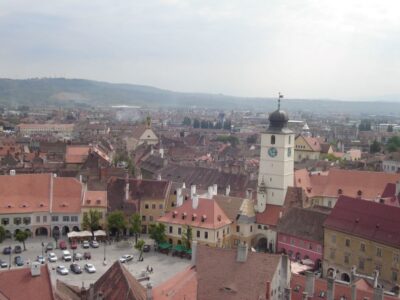 ★ 4.8SB01 – City Tour Sibiu: Exploring the Heart of TransylvaniaFrom $3599 reviews
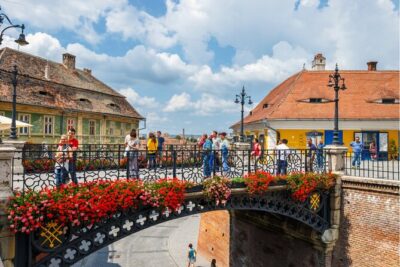 ★ 4.5Sibiu Old Town Exploration Game and Self-Guided TourFrom $682 reviews
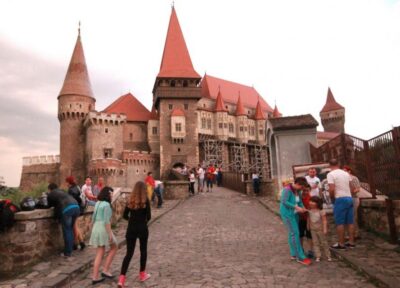 ★ 4.7Sibiu: Alba Iulia and Corvin Castle Guided TourFrom $10066 reviews
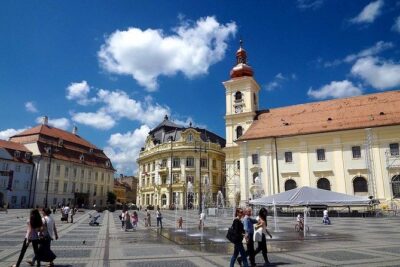 ★ 5.0Secrets of the Citadels: Brașov, Viscri, Sighișoara and SibiuFrom $12052 reviews
 ★ 5.0Exclusive Tour: Corvin Castle, Alba Iulia and traditional villages from SibiuFrom $15633 reviews
 ★ 5.0Day trip to Corvin Castle and Sibiu (and back) from TimisoaraFrom $18530 reviews
Browse the lists this tour appears in