
REVIEW · WALKING TOURS
Bucharest Highlights Walking Tour
Cold streets, good stories. This Bucharest walking highlights tour is built for quick orientation, with a local guide guiding you through old inns, Orthodox architecture, and the city’s major civic landmarks in about 2 hours 30 minutes. You’ll end near the massive Parliament area, so by the time you’re done, the layout of central Bucharest makes a lot more sense.
I particularly like the easy-to-follow pacing. You’re not pushed along like a stampede, and the guides often make time for questions and small breaks when needed. I also like the way the walk combines Bucharest’s different “eras” in a single loop, from trading roots to finance-era palaces and then to Stalin-era and modern state power.
One drawback to plan around is the weather. This is an outdoor walk and it can be cold or unpleasant in winter, so bring real layers and expect to stand around while the guide explains what you’re seeing, including at spots that are outdoors.
In This Review
- Key highlights worth your time
- A 2.5-hour loop that gives you bearings fast
- Manuc’s Inn (Hanul lui Manuc): where the “oldest” chapter begins
- Hanul Gabroveni: the caravan-serai idea still in the city
- BNR Palace: the financial district explained without the boring parts
- Stavropoleos Monastery: Orthodox architecture you can actually feel
- Palatul CEC: when “old architecture” looks new in context
- Macca Villacrosse Passage: the money district, but with style
- Palatul Regal (Royal Palace): monarchy to communism to democracy
- Sala Palatului: the Stalin-era architectural angle
- Cismigiu Park: the oldest park break that resets your legs
- Palace of Parliament: the giant you understand more after the walk
- Price and what you actually get for $21.77
- Pacing, groups, and why the guide matters
- Winter reality: dress like you plan to stand still
- Should you book the Bucharest Highlights Walking Tour?
- FAQ
- What is the duration of the Bucharest Highlights Walking Tour?
- How much does the tour cost?
- Is the tour offered in English?
- Do I need to print anything, or do I use a mobile ticket?
- Where do I meet the guide?
- Where does the tour end?
- Are admission tickets included for every stop?
- Is this tour suitable for first-time visitors?
- What group size should I expect?
- What is the cancellation policy?
Key highlights worth your time
- A short loop for first-timers, designed to give you bearings fast without exhausting you
- Stop mix that actually tells a story, from Ottoman-era trading inns to Orthodox monuments
- Most admission stops are free, so your money stays in your pocket
- Guides with strong English and lots of answering, with a relaxed feel and time for questions
- A financial district run, where the city’s “money” past shows up in architecture
- Central ending near Parliament, which is helpful for planning the rest of your day
A 2.5-hour loop that gives you bearings fast
If you only have a limited amount of time in Bucharest, this is the kind of tour that helps you stop guessing. You start in central Bucharest, you walk a clear route, and you finish at Piața Constituției, in front of the Palace of Parliament. That matters because Parliament is such a huge reference point that it reshapes how you later understand the rest of the Old Town and central districts.
This also works well because the group size is capped at 25 people. Smaller groups tend to feel calmer, and it’s easier to hear your guide and keep track of where you’re heading next. Add in the fact that the tour uses a mobile ticket and runs in English, and it’s simple to join even if you’re not traveling with Romanian friends.
The big value here is that you’re not just looking at buildings, you’re learning how the city got from point A to point B. Bucharest has layered history, including periods of monarchy, communism, and democracy, and this walk threads those changes together without turning it into a lecture marathon.
Manuc’s Inn (Hanul lui Manuc): where the “oldest” chapter begins
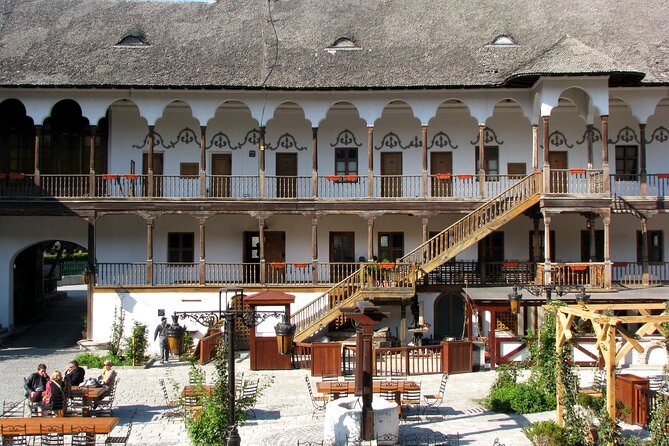
You start at Manuc’s Inn (Hanul lui Manuc), one of the oldest buildings in Bucharest. Expect the guide to set the stage with how the city began and what daily life and trade looked like when this part of town was forming. Inns like this weren’t just lodging spots, they were meeting points for merchants and travelers, and the building gives you a tangible sense of that era.
What I like about starting here is that you get context early. You’re not wandering through random landmarks, you’re getting a baseline story first, then everything you see later clicks into place. Also, the stop includes free admission, so you’re not paying extra just to stand in front of something important.
A practical note: this is a moment where you’re likely standing and listening more than walking. If you’re sensitive to cold, plan to dress for it, even if the afternoon looks sunny when you leave your hotel.
More Bucharest on foot
Hanul Gabroveni: the caravan-serai idea still in the city
Next up is Hanul Gabroveni. This is where the tour leans into Bucharest’s trading roots. The idea is simple: long ago, caravan-serais helped merchants store goods and shelter people tied to trade routes. Even though not many of these structures remain, this one helps you picture what commerce meant before modern streets and warehouses took over.
The special part here is how the guide links form to function. You’re not just admiring an old courtyard building. You’re understanding why it was built, why it mattered, and why these trading hubs shaped the Old Town. Like the previous stop, admission is free, which makes it a solid stop to include in your budget day.
One small caution: places like this can feel tight depending on crowd movement. If your group needs extra space for photos, you’ll want to move slightly aside and let the main flow of people pass first.
BNR Palace: the financial district explained without the boring parts
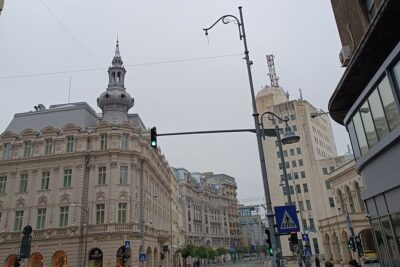
Then you move into the orbit of BNR Palace, which the tour frames as the financial district of Bucharest a century ago. Here you’re surrounded by major banking and commerce institutions, and the guide helps you see the area as a system, not isolated buildings.
Even if you’re not a finance nerd, this stop is valuable because it shows how power expresses itself in architecture. Big banks, trading buildings, and official institutions often share design habits that communicate stability and importance. The walk is teaching you to read the city like a map of priorities.
This stop is short, about 10 minutes, and there’s free admission. That’s a plus if you like your tours efficient. The only drawback is that it can feel a bit like a quick “taste,” so if you want deeper detail, keep an eye out for the guide’s best explanations and jot down what interests you for later.
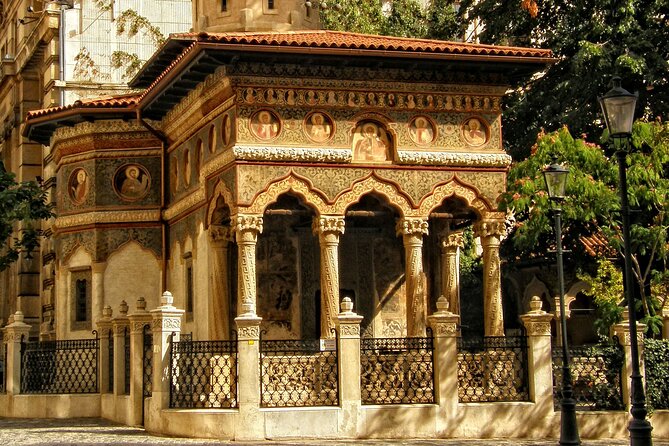
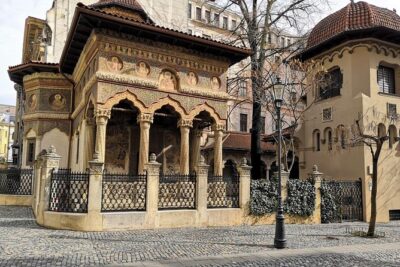
Stavropoleos Monastery: Orthodox architecture you can actually feel
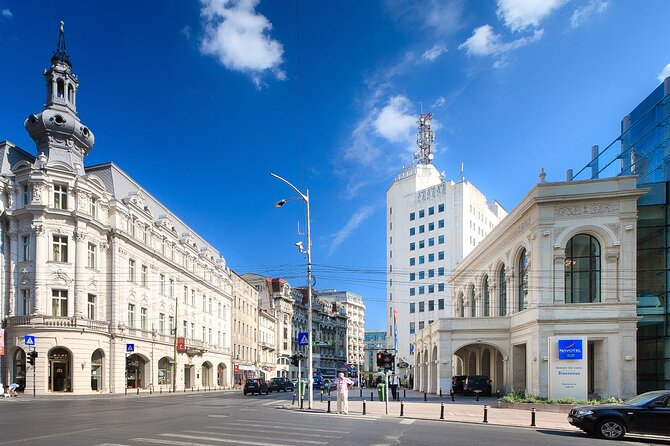
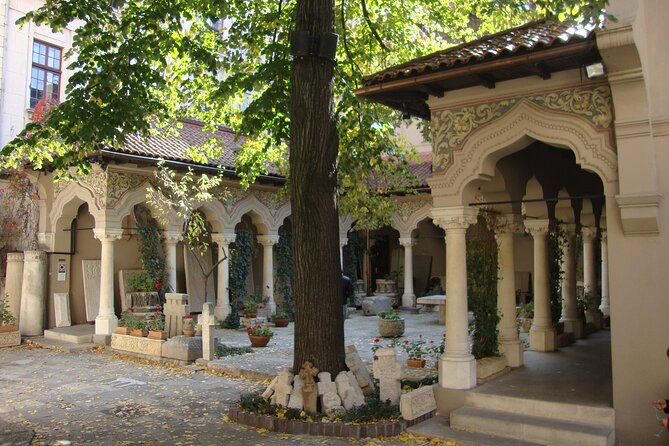
After the money buildings, the tour turns to something more spiritual at Stavropoleos Monastery. The guide uses the monastery to explain how Romanian life is strongly shaped by Christian Orthodox heritage and distinctive architecture.
What makes this stop work on a walking tour is the contrast. You go from formal state and finance power to a religious site with a different mood, materials, and design language. That shift helps your brain reset, and it also makes the stories more memorable.
This is also free to enter, with a short time window of about 10 minutes. For most people, that’s enough to see why it’s considered iconic, and to understand what elements the guide highlights.
If you’re visiting during a religious service or the rules inside are strict, you may need to follow local guidance on behavior and photography. The tour duration is limited, so don’t plan on long lingering unless you’re sure you’ll be allowed.
Palatul CEC: when “old architecture” looks new in context
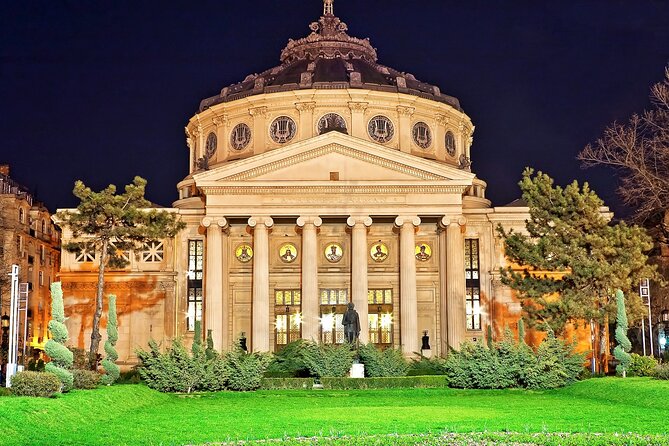
One of the stops I found especially interesting conceptually is Palatul CEC. The guide frames it as some of the best old architecture in Bucharest, then adds the twist: many of the oldest-looking buildings may feel newer because of how the city got remodeled across roughly 600 years of existence.
That angle matters. Cities don’t preserve everything the way we imagine from photos. Bucharest’s look today is a mix of continuity and change, and the tour gives you the reasoning. Even if you only catch a few details, you’ll come away with a better sense of why Bucharest looks like it does.
A practical consideration: admission here is not included. That doesn’t mean it’s a bad stop, but it does mean you should be prepared for possible extra cost or extra time constraints depending on what you want to do inside. If you prefer purely outdoor viewing, you can still enjoy the exterior and architectural features.
Macca Villacrosse Passage: the money district, but with style
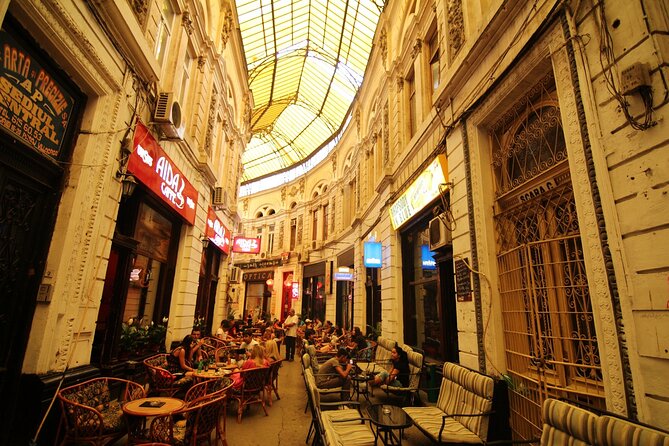
Next, you’ll pass through Macca Villacrosse Passage, another stop tied to the city’s financial district. This is where the tour leans into consumer culture, the kind that grows where money is concentrated. The passage is described as a place where galleries became the standard, and you can see why those covered, pedestrian-friendly spaces are so attractive in cities with real weather swings.
This stop is quick, around 5 minutes, and admission is free. That brevity can be a plus if you want to keep the walk moving. If you love architectural details, you’ll probably want to take a slow look while the group is regrouping, since it’s easy to rush through a passage.
Tip: wear comfortable shoes. Passages are short, but you’ll likely be walking again before your brain has caught up.
Palatul Regal (Royal Palace): monarchy to communism to democracy
Now the tour pivots into the political timeline at Palatul Regal (Royal Palace). The guide connects this area to Romania’s big transitions: monarchy, communism, and democracy. You’re not expected to memorize dates here. Instead, you’re shown how one location can carry multiple layers of meaning across time.
This stop is about 10 minutes, and admission is not included. That means it can feel like a “see it from outside, learn the context” moment. If you love museums and interiors, you might want to plan a separate visit later. If you like history explained through place, you’ll still get a lot out of the stop.
What I like about this portion is how it explains why Bucharest feels like it has a pulse even in older buildings. The city’s modern identity is tied to these earlier political shifts, and the guide helps you connect the dots.
Sala Palatului: the Stalin-era architectural angle
Next comes Sala Palatului, where the tour points you toward the Stalin-era architectural perspective. This is one of those stops where the building style is the lesson. Even if you don’t know what every design element means, you can usually sense the intentions behind it: grandeur, authority, and scale.
The stop lasts about 10 minutes, and admission is free. Since it’s free and short, it’s an efficient way to add architectural variety to the walk. It also keeps the tour from becoming a one-note “old town only” experience.
If you’re photographing, watch how people move in and out of the main areas around the hall. This part can attract attention, and the guide will likely keep the group moving so you don’t get stuck waiting.
Cismigiu Park: the oldest park break that resets your legs
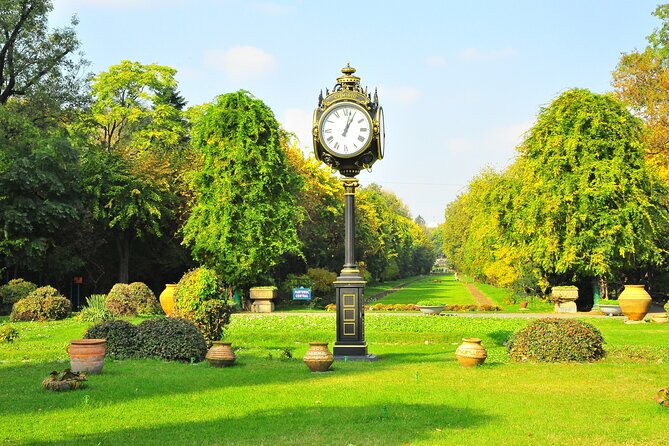
After the major buildings, you get a breather at Cismigiu Park, described as the oldest park in Bucharest. Expect a relaxing interlude for both your body and your attention. The walk becomes more pleasant when you’re not stuck between formal facades and busy streets.
The time here is around 10 minutes, and admission is free. Don’t expect this to be a full park stroll. It’s more like a pause that gives the guide space to place the park into the city’s story and lets you look at the green spaces Bucharest offers.
This is also a good moment to refill your energy and decide what you want to do next around Parliament. If you later plan a longer walk, knowing where the park sits in relation to the rest of your route is handy.
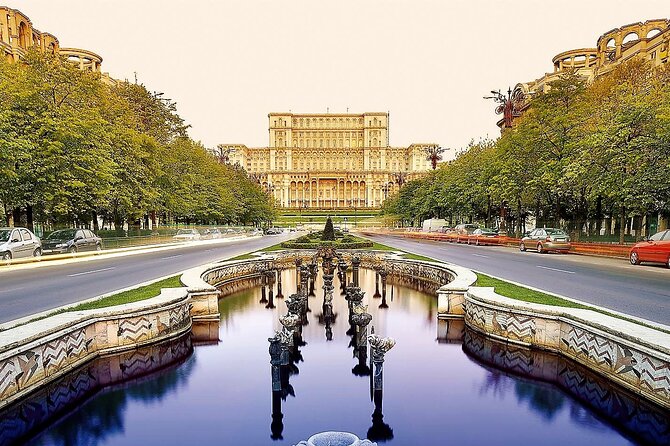
Palace of Parliament: the giant you understand more after the walk
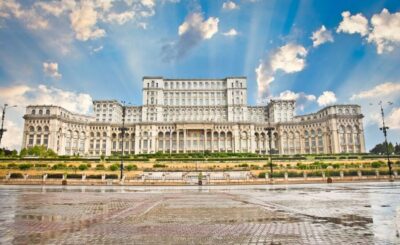
Finally, you reach the big one, the Palace of Parliament. The tour frames it as the second largest administrative building in the world after the Pentagon, while also being heavier. That scale is hard to process until you’re actually near it.
Your time at this stop is about 20 minutes, and admission is not included. That’s fine for many visitors because even seeing the outside and hearing the context can dramatically improve how you interpret what you’re looking at. If you want an interior visit, you’ll need to plan that separately.
This ending works because the guide’s earlier stops prepare you for the political meaning of such a structure. Bucharest has layers, and Parliament is the layer that reflects the state at its most imposing. By the time you get there, you won’t just think big building. You’ll think about history and intent.
Price and what you actually get for $21.77
At $21.77 per person for about 2.5 hours, this tour sits in the “good value” range, especially because most stops include free admission. When admission is included at multiple sites, you’re not paying double for the pleasure of learning where to look.
What you’re really buying is time with a local guide plus orientation you can use right away. A tour like this is worth it when you want to reduce decision fatigue. You show up, you follow the route, and you leave with a mental map.
One more value point: the reviews and guide style suggest a pace that avoids feeling rushed. That matters because short tours can easily feel like a checklist. Here, the guide approach is described as relaxed, with room to ask questions and take small breaks, which makes the tour feel more like a guided walk with context than a sprint.
Pacing, groups, and why the guide matters
The guides linked to this tour are repeatedly praised for doing two key things well. First, they explain what you’re seeing in a way that stays clear even when you’re outside in wind or cold. Second, they answer questions and adjust so you don’t feel left behind.
Names you’ll hear associated with strong guiding on this route include Dan, Ed, Alex, Andrei, Lucia, and Eduard. Some guide moments described include humor, music shared during the walk, and extra time for needs like bathroom breaks or warming up with coffee or hot chocolate in colder weather.
One thing to expect: since this is a walking highlights route, you’ll spend more time standing at stops than you might on a purely “walking-only” tour. That’s normal. It’s also why how well the guide speaks matters.
Winter reality: dress like you plan to stand still
A bunch of people call out the cold, and I agree with the takeaway. In winter, you can walk for a while and still get chilled while you stand at each location listening. If you only pack city-warm layers, you might feel it halfway through.
My practical advice:
- Wear real thermal layers, not just a light sweater
- Bring gloves, even if you think you won’t need them
- Pack a hat, because it helps more than you expect
- Keep water in mind, since cold weather can trick you into forgetting hydration
Good news: the guides often build in time for breaks. That doesn’t change the need to dress properly, but it does make the tour more tolerable when the temperature drops.
Also note that the experience is described as requiring good weather. If conditions are bad, you may be offered a different date or a refund.
Should you book the Bucharest Highlights Walking Tour?
Book this tour if you want a clear, central overview of Bucharest in a short window. It’s a strong first step for newcomers because the stops cover the city’s identity through trading, Orthodox heritage, finance-era architecture, and the scale of modern governance near Parliament.
Skip it or consider a different option if you only care about museum interiors, because a few of the notable stops have admission not included. You’ll still get context from the outside, but it’s not a guaranteed “go inside everything” day.
If you’re the type who likes asking questions and prefers a relaxed pace, this is also a great fit. Just plan for the weather, and you’ll leave with a much clearer sense of where things are and why Bucharest looks the way it does.
FAQ
What is the duration of the Bucharest Highlights Walking Tour?
The tour runs for about 2 hours 30 minutes.
How much does the tour cost?
It costs $21.77 per person.
Is the tour offered in English?
Yes, it is offered in English.
Do I need to print anything, or do I use a mobile ticket?
You’ll have a mobile ticket.
Where do I meet the guide?
You meet at Piața Sfântul Anton 64, București 030167, Romania.
Where does the tour end?
The tour ends at Piața Constituției, in front of the Palace of Parliament.
Are admission tickets included for every stop?
Not all stops include admission. Some stops are listed as free, while others are marked as admission not included.
Is this tour suitable for first-time visitors?
Yes, it is described as ideal for first-time visitors and those with limited time.
What group size should I expect?
The maximum group size is 25 travelers.
What is the cancellation policy?
You can cancel for free up to 24 hours in advance for a full refund. If the tour is canceled due to poor weather, you’ll be offered a different date or a full refund.
Walking Bucharest, Continued
- Bucharest: City Highlights Guided Walking Tour
★ 4.9 · 1,482 reviews - Bucharest: Ghost Stories & Romanian Mythology Walking Tour
★ 4.9 · 287 reviews - Bucharest: Guided Walking Tour with Romanian Snack
★ 4.9 · 228 reviews - Best of Bucharest | Private Walking Tour
★ 5.0 · 199 reviews - Walking Tour- Delightful Bucharest (Highlights, Stories, Sights)
★ 5.0 · 145 reviews
Whatever Else Bucharest Is Selling
- Bucharest to Dracula Castle, Peles Castle and Brasov Guided Tour
★ 4.5 · 2,933 reviews - Bucharest: Palace of Parliament Tickets and Guided Tour
★ 4.4 · 1,877 reviews - Transylvania and Dracula Castle Full Day Tour from Bucharest
★ 4.5 · 1,589 reviews - Bucharest: City Highlights Guided Walking Tour
★ 4.9 · 1,482 reviews - From Bucharest: Brasov Peles & Dracula’s Castle Day Tour
★ 4.5 · 1,244 reviews
Everything Else We Reviewed In Bucharest
- Bucharest: Dracula’s Castle, Peles Castle, & Brasov Old Town
★ 4.5 · 17,858 reviews - Bucharest: Dracula Castle, Peles Castle & Brasov Old Town
★ 4.6 · 10,891 reviews - Bucharest: Dracula’s Castle, Peleș Castle & Brașov Day Trip
★ 4.5 · 5,919 reviews - Bucharest: Palace of Parliament Tickets and Guide
★ 4.3 · 3,182 reviews - Bucharest: Day Trip to Dracula Castle, Peles Castle & Brașov
★ 4.4 · 3,049 reviews
Recently added around Bucharest
- Private Tasting Expedition Along Romania’s Most Famous Wine Route★ 5.0 · 3 reviews
- Private Guided Tour of Peles Castle and Bran Castle from Bucharest★ 5.0 · 3 reviews
- Private Sightseeing Tour of Bucharest★ 4.5 · 3 reviews
- Discover Europe’s Deepest Mines & Peles Castle’s Royal Charm★ 5.0 · 3 reviews
- Bucharest City Tour and Wine Tasting★ 5.0 · 3 reviews
Walking Tours, compared.
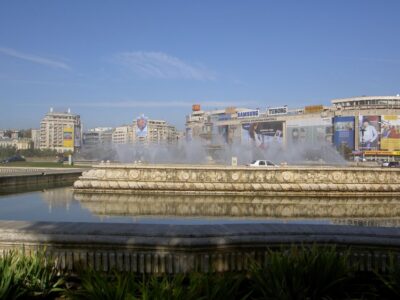 ★ 4.9Bucharest: City Highlights Guided Walking TourFrom $211,482 reviews
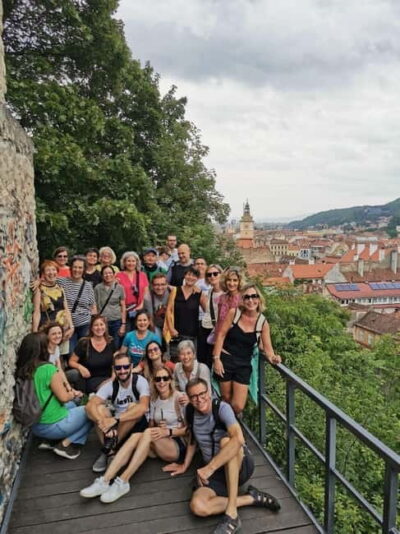 ★ 4.9Free walking tour of Brasov in EnglishFrom $0302 reviews
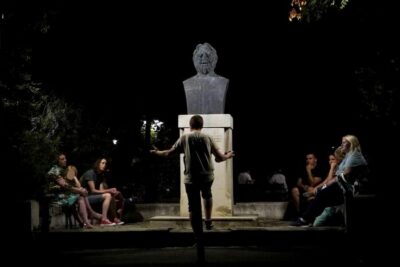 ★ 4.9Bucharest: Ghost Stories & Romanian Mythology Walking TourFrom $35287 reviews
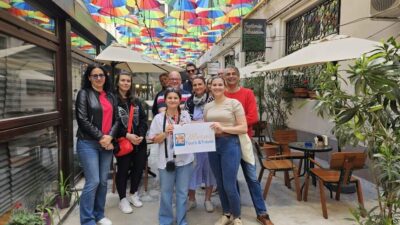 ★ 4.9Bucharest: Guided Walking Tour with Romanian SnackFrom $45228 reviews
 ★ 5.0Best of Bucharest | Private Walking TourFrom $314199 reviews
 ★ 5.0Walking Tour- Delightful Bucharest (Highlights, Stories, Sights)From $22145 reviews
 ★ 4.8Cluj-Napoca: 2.5-Hour Guided Walking TourFrom $34104 reviews
 ★ 5.04h Bucharest Private Tour (2h by Car and 2h Walking in Old Town)From $10090 reviews
Browse the lists this tour appears in