
REVIEW · CLUJ-NAPOCA
Cluj-Napoca: 2.5-Hour Guided Walking Tour
Cluj-Napoca can surprise you fast. I like how this 2.5-hour route threads German, Hungarian, and Romanian stories through real streets and landmarks. I especially love the stop at the birth house of Matthias Corvinus, because it gives you a clear anchor for everything that follows. One thing to consider: this is a walking-focused tour, and it is not a good fit if you have limited mobility.
I also appreciate that the guide sets a timeline for you first, so the city stops make sense. You start with the deep backstory of Cluj, then you walk to the big sights like St. Michael’s Church and Avram Iancu Square, with context along the way. The guides run in English and German, and the pace can include short moments to catch your breath.
For value, the $34 price works well if you want meaning, not just photos. In my view, the real win is the guide turning architecture and street names into something you can actually remember, including the medieval legends and the city’s changing culture.
In This Review
- Key highlights you will feel right away
- Why Cluj-Napoca on foot makes sense
- Corvinus origins: Matthias Birth House and wine talk that sticks
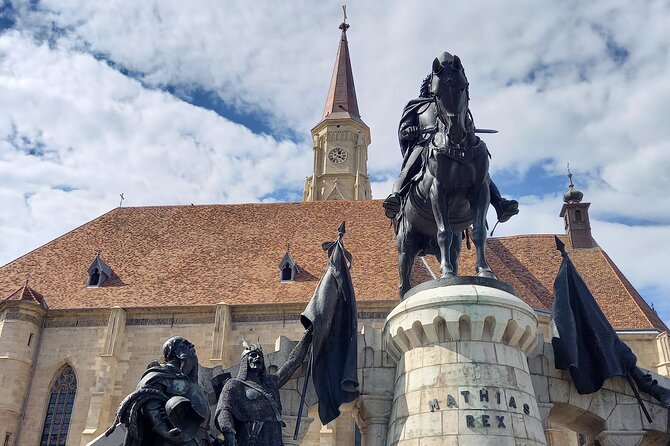
- Union Square and St. Michael’s Gothic Church, plus Corvinus up close
- Street of the Intellectuals: Babes-Bolyai, education vibes, and medieval legends
- Defensive walls, guilds, and the city’s shifting layers
- Avram Iancu Square: Orthodox Cathedral in the 1930s and the National Theatre from Vienna
- Price, pace, and what you really get in 2.5 hours
- Should you book this Cluj-Napoca guided walking tour?
- FAQ
- How long is the Cluj-Napoca guided walking tour?
- How much does the tour cost?
- What languages are the live guides available in?
- Where do we meet?
- Is the tour wheelchair accessible?
- Is it suitable for people with limited mobility?
- What should I bring?
- Are pets allowed on the tour?
- What is the cancellation policy and can I pay later?
Key highlights you will feel right away
- Matthias Corvinus’s birth house as your launch pad for Cluj’s Hungarian ties
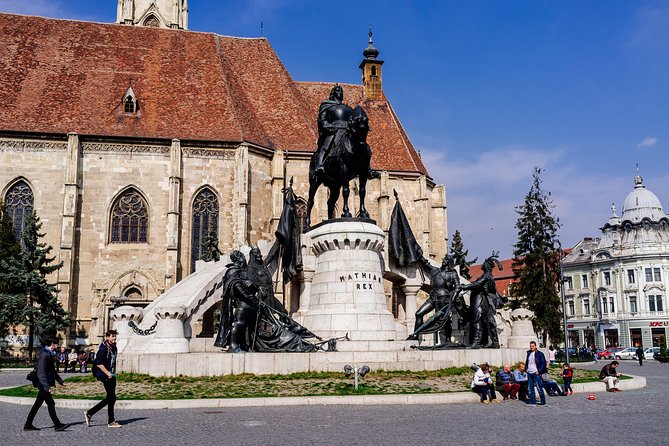
- Gothic St. Michael’s Church and the equestrian Corvinus statue in Union Square
- Street of the Intellectuals and the education-heavy feel around Babes-Bolyai University
- Medieval Cluj stories, including witches and how guilds formed
- Avram Iancu Square landmarks, especially the Orthodox Cathedral and the National Theatre
- A guide-led pace that can include brief seating breaks
Why Cluj-Napoca on foot makes sense
Cluj-Napoca is a city where the old parts and the big civic buildings sit close enough to connect in one loop. A guided walk helps because you are not just seeing structures, you are learning what changed and why it matters. In a short 2.5 hours, that kind of structure saves you time later when you wander on your own.
This tour also hits the right mix of themes. You get religion and architecture (hello, Gothic church), city planning and defense (old walls), and the political and cultural shifts that shaped everyday life. That blend is what makes it useful for first-time visitors who want a map in their head, not just a list of stops.
Corvinus origins: Matthias Birth House and wine talk that sticks
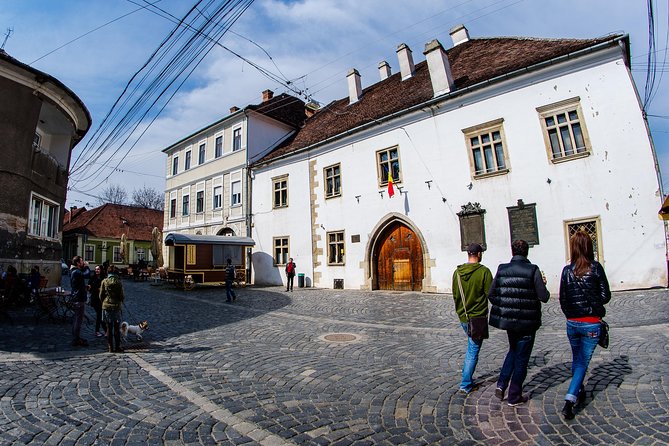
The tour’s first big anchor is the birth house of Matthias Corvinus, Hungary’s famed 15th-century king. This is a smart start because it frames Cluj as more than a modern university town. It connects the city to a specific person with a specific era, which makes later references far easier to follow.
You also get stories tied to life in the region, including the importance of wine. That sounds small, but it helps you understand the local economy and culture. If you later try Romanian and Hungarian wines in town, you will have better context for why the region treats wine like part of identity, not just a drink.
Practical note: this is history told while walking, so you get “what to look for” at the same time as the story. The best kind of tour for this is the one where you are not watching the guide talk from one corner. You are moving, stopping, and adjusting your attention to details like street layout and building style.
What else Cluj puts on
Union Square and St. Michael’s Gothic Church, plus Corvinus up close
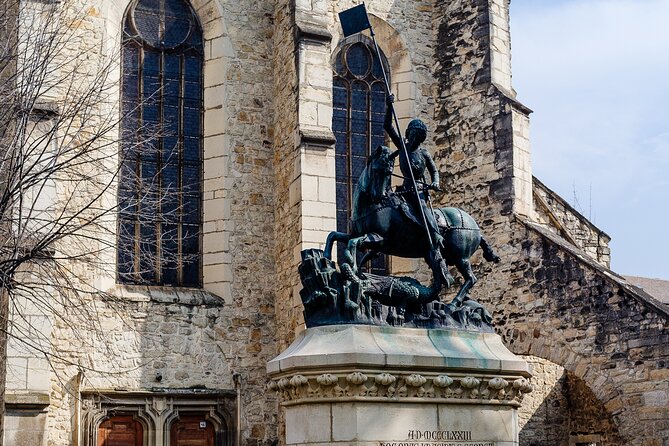
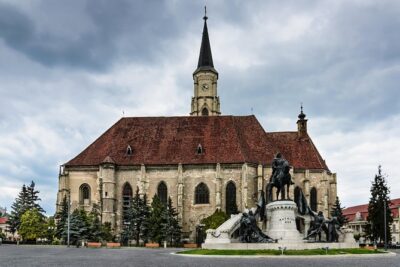
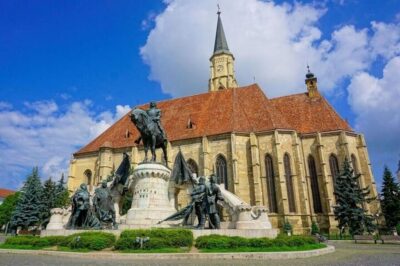
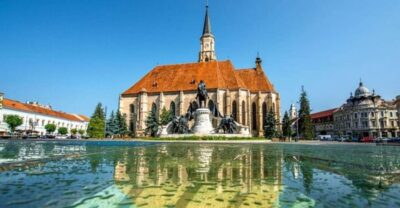
Union Square is where the tour leans into the classic visual payoff: St. Michael’s Church. This is described as Gothic from the 14th century, and you can see why. Even from outside, the church gives you those sharp lines and vertical emphasis that scream medieval craft and civic pride.
In front of the church, you also get the large equestrian statue of Corvinus. That statue matters because it is not just decoration. It is a public statement of identity, placing a king associated with Cluj’s Hungarian connections right in the heart of the historic center. When you understand that placement, the square feels like a story you can read.
One small drawback to keep in mind: if you are hoping for lots of interior time, this may not be your perfect match. The tour is built around outdoor sights and quick interpretations, so you may spend less time inside churches and theaters than you want. If your priority is standing in quiet rooms and looking up close at artwork, plan one extra independent visit to the places that interest you most.
Street of the Intellectuals: Babes-Bolyai, education vibes, and medieval legends
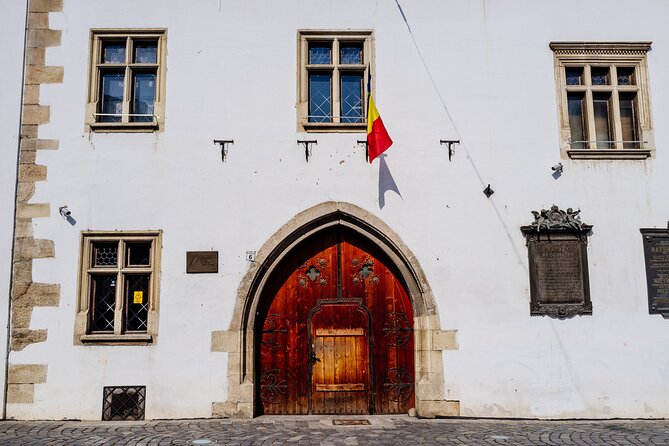
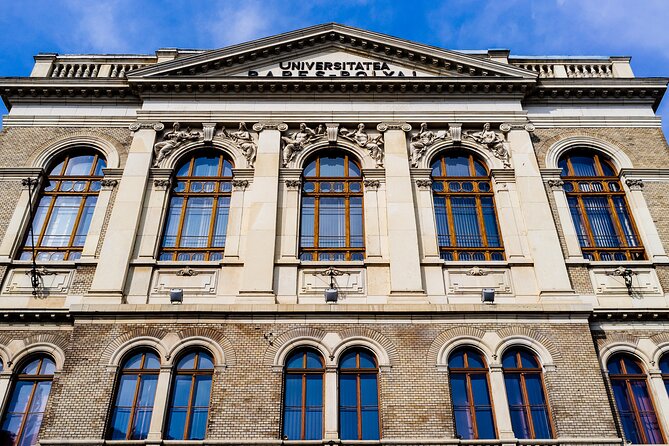
After the major landmark squares, the walk shifts to the city’s brainy side, literally. You reach the Street of the Intellectuals, a famous stretch lined with schools and educational institutions, including Babes-Bolyai University. This shift is useful because it shows Cluj’s modern identity, not just its medieval and early modern image.
What I like about this part of the route is how it changes your pace mentally. When you move from Gothic architecture and royal symbolism to a street known for learning, it reminds you Cluj keeps reinventing itself. The “why” is part of the guide’s job here, and it helps you see education as a city force, not background scenery.
This section also includes the more unusual stories that make the tour memorable. You get tales about the witches living in Cluj in the Middle Ages, plus how guilds formed. Those topics might sound niche, but they actually help explain how communities worked when most people’s lives were shaped by religion, crafts, and local rules.
A practical tip: bring your comfortable shoes and keep your phone charged. You will likely want to snap photos of street viewpoints and signage while you still have the context from the guide. The guide’s narration makes later independent wandering way more rewarding.
Defensive walls, guilds, and the city’s shifting layers
Along the way, you pass the remains of defensive walls. Even when only portions survive, the idea is clear: Cluj needed protection, and the city organized itself around safety and control. This is where a guided walk adds value, because the guide can point out what might look like “just an old wall fragment” and explain why it mattered.
You also hear about guilds. Guilds help explain the mix of trades and services that keep a city alive. When you understand the guild system, the medieval city stops feeling like a set dressing. You start thinking in terms of workshops, rules, and the way money circulated through neighborhoods.
This is also where the tour’s timeline becomes useful. The guide sets up a longer historical arc, reaching from early periods like the Dacians and Romans through later upheavals such as World War I, World War II, communism, and into the present. That kind of sweep gives you context for why a Gothic church sits near more modern civic buildings, and why public spaces are arranged the way they are.
Avram Iancu Square: Orthodox Cathedral in the 1930s and the National Theatre from Vienna
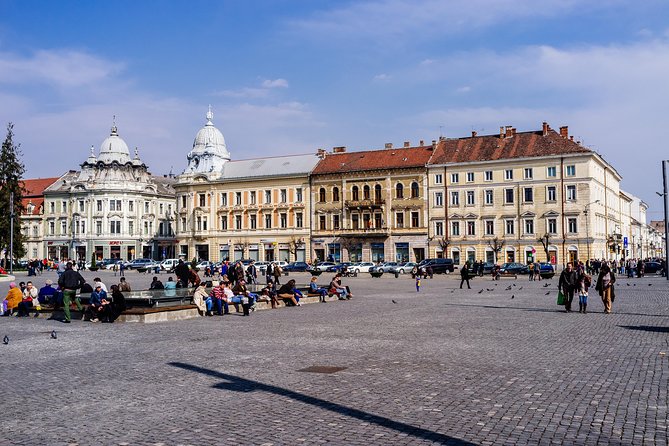
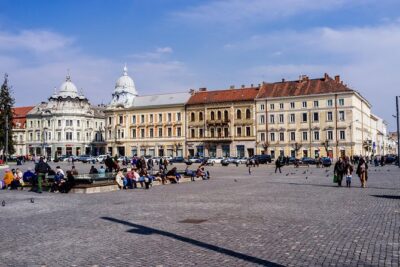
Avram Iancu Square is a key turning point on the route. It is the zone where Cluj looks less medieval and more official, modern, and cultural. The Orthodox Cathedral here was built in the 1930s, and it brings a different architectural mood to the tour compared with the Gothic style of St. Michael’s Church.
Then the walk continues to the National Theatre, built in 1906 by a team of Viennese architects. That detail is worth paying attention to because it shows cross-border influence. Cluj did not develop in isolation, and the architecture reflects how ideas traveled. When you know the Viennese connection, the building reads less like a random landmark and more like a statement of cultural ambition.
This part of the tour is also a good time to look up. The National Theatre is a “stop and observe” building, even if you do not go inside. If your camera roll is currently full of street shots, this is the moment for more deliberate framing.
More Cluj Napoca on foot
Price, pace, and what you really get in 2.5 hours
The price is $34 per person for a 2.5-hour guided walking tour. For me, that feels fair when the guide is doing the heavy lifting: explaining what you see, tying it to a timeline, and keeping the stops connected. A self-guided stroll can get you photos, but it rarely gives you the same cause-and-effect understanding of why Cluj looks the way it does.
The pace is typically manageable. One recurring theme from guides who lead this walk is that they can adjust to the group and include short seating breaks. Still, do not treat that as a guarantee. You are on your feet for most of the route, and you will want to plan your day so you are not already tired.
What to bring is simple and practical:
- Comfortable shoes for a city walking route
- A sun hat, especially on bright days
- A face mask or protective covering, since you are asked to have one
Accessibility has a bit of a contradiction to be aware of. The tour is listed as wheelchair accessible, but it is also not recommended for people with limited mobility, and it is not suitable for people with mobility impairments. If you rely on mobility aids, I would treat this as a “check carefully” situation rather than a safe bet.
Should you book this Cluj-Napoca guided walking tour?
I think you should book if you want an efficient, story-driven introduction to Cluj-Napoca. This tour is a strong choice for first-time visitors who want to understand the city’s cultural mix and major landmarks in one shot, including Corvinus, Gothic church architecture, and the civic punch of Avram Iancu Square.
You might skip or pair it with other plans if your top priority is interior visits and long time inside major buildings. The tour is built for walking, stopping, and learning, so you may want to schedule extra independent time at places that call to you after the guide points them out.
If you like your travel like a good guidebook with legs, this is a great place to start. It gives you the context you need to explore Cluj on your own next day, and that is where a short guided tour really pays off.
FAQ
How long is the Cluj-Napoca guided walking tour?
The duration is 2.5 hours.
How much does the tour cost?
The price is $34 per person.
What languages are the live guides available in?
The live tour guide offers English and German.
Where do we meet?
The meeting point may vary depending on the option booked.
Is the tour wheelchair accessible?
The tour is listed as wheelchair accessible.
Is it suitable for people with limited mobility?
It is not recommended for people with limited mobility, and it is not suitable for people with mobility impairments.
What should I bring?
Bring comfortable shoes and a sun hat. You should also have a face mask or protective covering.
Are pets allowed on the tour?
No, pets are not allowed.
What is the cancellation policy and can I pay later?
You can cancel up to 24 hours in advance for a full refund, and the option includes reserve now & pay later.
Whatever Else Cluj Napoca Is Selling
- Curly Tour – Day trip from Cluj 🙂
★ 5.0 · 330 reviews - Cluj: Turda Salt Mine, Corvin Castle, Alba Carolina Tour
★ 4.8 · 184 reviews - Turda salt mine 4h tour from Cluj
★ 5.0 · 73 reviews - Turda Salt Mine 4h guided tour from Cluj
★ 4.9 · 45 reviews - Night Tour in Hoia Baciu Forest
★ 5.0 · 40 reviews
Everything Else We Reviewed In Cluj Napoca
- Curly Tour – Day trip from Cluj 🙂
★ 5.0 · 330 reviews - Cluj: Turda Salt Mine, Corvin Castle, Alba Carolina Tour
★ 4.8 · 184 reviews - Turda salt mine 4h tour from Cluj
★ 5.0 · 73 reviews - Turda Salt Mine, Corvin Castle and Alba Fortress from Cluj
★ 5.0 · 65 reviews - Turda Salt Mine 4h guided tour from Cluj
★ 4.9 · 45 reviews
What Cluj Does Next
- Curly Tour – Day trip from Cluj 🙂
★ 5.0 · 330 reviews - Cluj: Turda Salt Mine, Corvin Castle, Alba Carolina Tour
★ 4.8 · 184 reviews - Turda salt mine 4h tour from Cluj
★ 5.0 · 73 reviews - Turda Salt Mine, Corvin Castle and Alba Fortress from Cluj
★ 5.0 · 65 reviews - Turda Salt Mine 4h guided tour from Cluj
★ 4.9 · 45 reviews
Recently added around Cluj Napoca
- Transylvania’s Trail: Sibiu, Bran Castle, Brasov, Sighisoara★ 4.6 · 3 reviews
- CJ05 – Mysteries of Transylvania: Bran Castle & Sighisoara★ 4.8 · 3 reviews
- Two days tour to Bucovina & UNESCO Painted Monasteries★ 5.0 · 3 reviews
- Cluj – walking city tour★ 5.0 · 3 reviews
- Sighisoara & wine tasting (from Cluj)★ 5.0 · 4 reviews
Cluj-Napoca Tours, compared.
 ★ 5.0Curly Tour – Day trip from Cluj 🙂From $107330 reviews
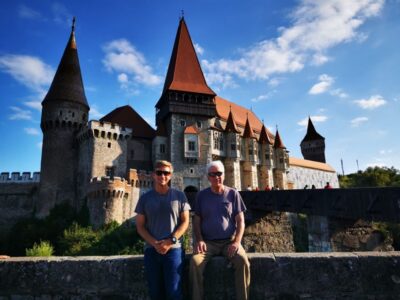 ★ 4.8Cluj: Turda Salt Mine, Corvin Castle, Alba Carolina TourFrom $140184 reviews
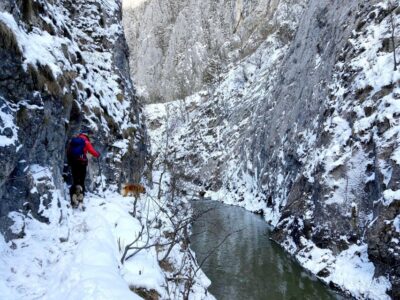 ★ 5.0From Cluj: Turda Salt Mine, Gorge, and Remetea Full-Day TripFrom $13184 reviews
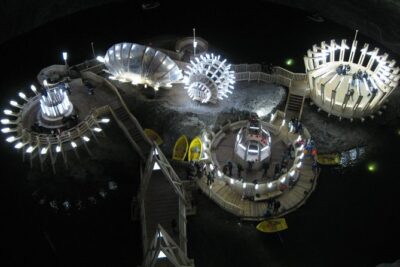 ★ 5.0Turda salt mine 4h tour from ClujFrom $6073 reviews
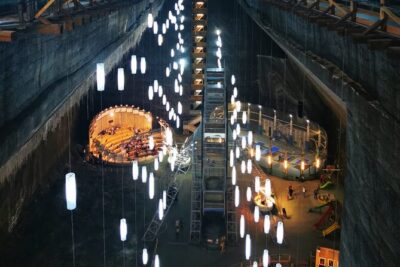 ★ 5.0Turda Salt Mine, Corvin Castle and Alba Fortress from ClujFrom $14365 reviews
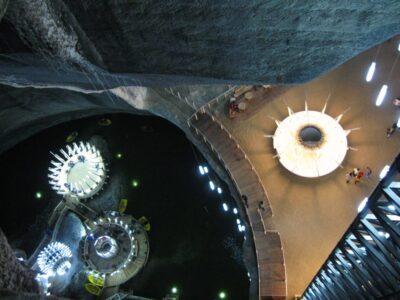 ★ 4.9Turda Salt Mine 4h guided tour from ClujFrom $7645 reviews
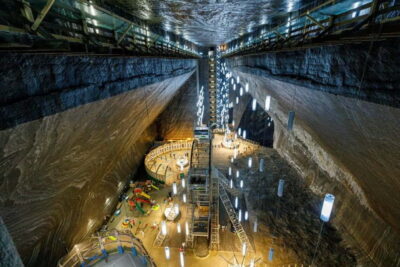 ★ 4.9Cluj: Turda Salt Mines, Rimetea, and Coltesti Fortress TourFrom $10142 reviews
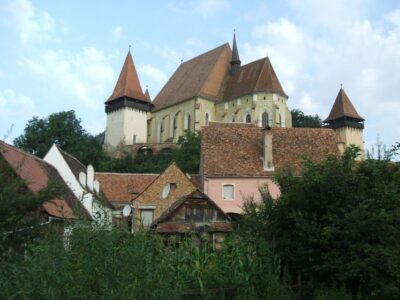 ★ 4.8From Cluj: Sighișoara and Church of Biertan Guided TourFrom $11536 reviews
Browse the lists this tour appears in