
REVIEW · HISTORICAL TOURS
Bucharest: Small Group History, Art & Secrets Tour
Bucharest hits you with big contrasts. This 3-hour small-group tour pairs the Romanian Athenaeum with the Palace of the Parliament, plus stops like street art scenes and quiet monasteries. I especially like the way the guide connects architecture to politics, and how the route hits landmarks without feeling rushed. The only real drawback is the walking, so if you have mobility limits, this one may be a rough fit.
What makes it work is the guide. I’ve seen names like Elena, Helen, Stefan, Elena (Elena/Helen), Alessandro, Alexandra, and Elvis pop up in feedback, and the common thread is clear, story-led teaching that keeps moving. There’s also a planned break at a local café, which is handy on rainy days, and your guide will often point you toward a good next meal after the tour.
In This Review
- Key points to know before you go
- Start at the Romanian Athenaeum, where Bucharest sounds cultured
- Royal Palace photo stop and Revolution Square: the city’s power vibe
- Kretzulescu Church and the quiet shock of older Bucharest
- Pasajul Englez and Macca-Vilacrosse Passage: Bucharest’s indoor shortcuts
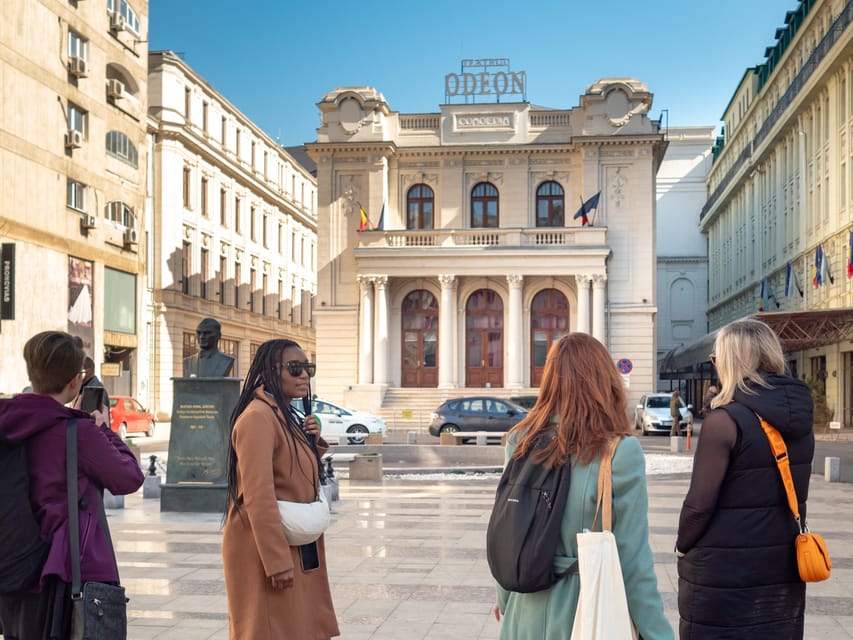
- Umbrellas Street and Odeon Theatre: street art meets grand performance
- National Military Circle, National Bank, and CEC Palace: institutions that still matter
- Café break and Manuc’s Inn pause: the small reset that keeps the tour fun
- Stavropoleos Monastery and Antim Monastery: the calm before the biggest building
- Caru’ cu bere and the National Museum stop: old-school Bucharest and big exhibits
- Palace of the Parliament at the end: why this building still splits opinions
- Price and what you really get for $22
- Who should book this Bucharest history, art, and secrets tour
- Booking decision: should you book?
- FAQ
- How long is the Bucharest small group history, art and secrets tour?
- What is the price per person?
- Where do we meet the guide?
- Where does the tour finish?
- What languages are offered for the live guide?
- Is the tour wheelchair accessible?
- Is it suitable for people with mobility impairments?
- What should I bring, and what is not allowed?
- Are entrance fees included?
Key points to know before you go
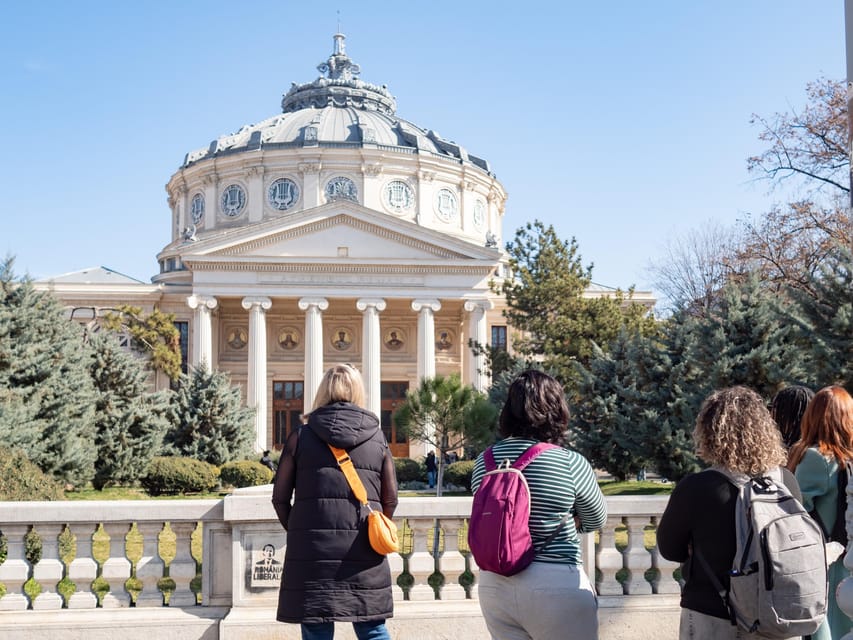
- Ateneul start with culture built in: you begin at the Romanian Athenaeum, home to the George Enescu Philharmonic Orchestra.
- Parliament coverage that doesn’t skim: you learn about the Palace of the Parliament and why it’s both massive and controversial.
- Photo-stop pacing with real city texture: you see major buildings and quick looks that still add up.
- Old places and modern color: Kretzulescu Church, Stavropoleos and Antim Monastery, then street scenes like Umbrellas Street.
- Indoor passages in the mix: Pasajul Englez and Macca-Vilacrosse Passage add variety beyond the big plazas.
- A 25-minute café break: coffee or tea time helps you reset for the final push to Parliament.
Start at the Romanian Athenaeum, where Bucharest sounds cultured
Most Bucharest “first look” tours start with churches or plazas. This one starts with the Romanian Athenaeum, and that sets the tone fast. The Ateneul Român is grand, neoclassical, and it’s tied to music through its connection with the George Enescu Philharmonic Orchestra. Even if you just glance up at the façade, you’re already seeing Bucharest trying to project taste, order, and ambition.
The practical upside for you is simple. Starting there means you’re oriented in a memorable landmark area, so later stops feel connected instead of random. The practical downside is also obvious: it’s a walking tour, so plan comfortable shoes and keep a bottle of water handy. You’ll be moving for the full three hours.
Royal Palace photo stop and Revolution Square: the city’s power vibe
From the Athenaeum area, you make your way toward the Royal Palace of Bucharest. It’s a photo stop with a guided look, so you get just enough time to absorb proportions and details without it turning into a long detour. For many visitors, this is the easiest way to register the “official” face of the city.
Then comes Revolution Square. It’s another quick stop, but it’s the kind of place where a guide’s context matters. You’re not just taking a picture. You’re learning how Bucharest’s public spaces tie into Romania’s political turning points, including the tensions that still show up in how people read buildings and monuments.
If you like history but don’t want your entire day consumed by museums, this format works well. You get multiple context anchors without heavy ticket time.
More history, shorter queue
Kretzulescu Church and the quiet shock of older Bucharest
Kretzulescu Church is one of those stops that gives you a different tempo. After the big civic energy of squares and palaces, the church brings you back to texture: stone, faith, and a slower, older kind of importance.
What I like for you here is contrast. Bucharest can feel like it’s split into eras, and church stops help you feel the timeline, not just read it. If you’re the type who enjoys noticing how design signals values, pay attention to shape and setting, even if the stop is brief.
A small caution: because this is mostly photo-stop style, you shouldn’t count on time for long interior exploring. If you’re the “linger everywhere” type, plan to add on extra time after the tour.
Pasajul Englez and Macca-Vilacrosse Passage: Bucharest’s indoor shortcuts
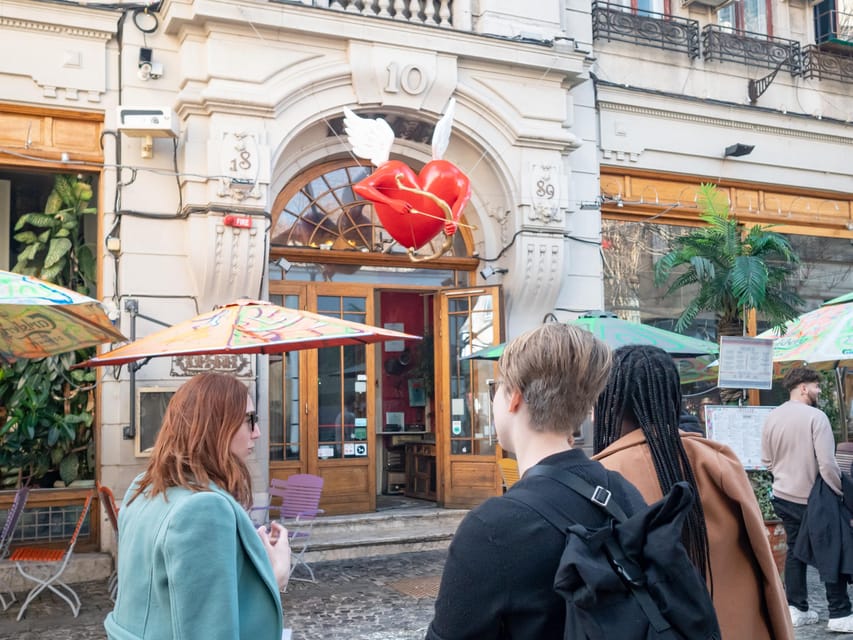
Bucharest has more than one way to move through time, and indoor passages are a strong example. You’ll see Pasajul Englez and later the Macca-Vilacrosse Passage. These spots are practical too. They break up the street walking and give you a different kind of architectural viewing angle.
For your photos, look for the way these passages frame light and storefront detail. For your understanding, this is where the city’s mix of old commercial life and European-style architecture becomes visible without needing a full day of museum hopping.
Also, passages tend to change the pace. The tour is only three hours, but stops like these make it feel less like a straight line across the city.
Umbrellas Street and Odeon Theatre: street art meets grand performance
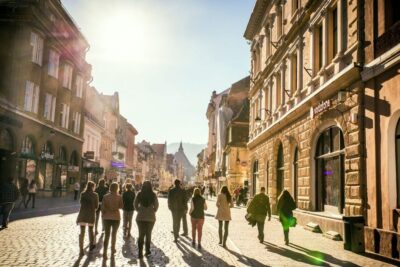
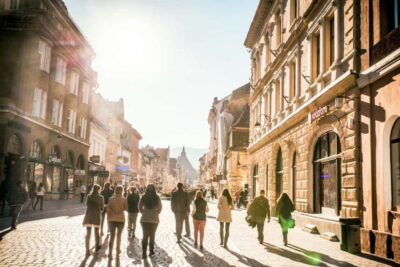
Then you reach The Umbrellas Street. It’s described as vibrant street art, and that’s the right expectation. This is the side of Bucharest that feels playful and visual, and it gives your eyes a break from formal façades.
Close by, you also stop at Odeon Theatre. This is the other half of the story. If Umbrellas Street is about pop color and everyday creativity, the theatre is about staging, performance, and the city’s desire to be seen as cultured.
I like this pairing because it teaches you how Bucharest’s “art” isn’t only inside galleries. Art shows up in public color and in institutions. You come away with a wider sense of what locals mean when they talk about culture.
National Military Circle, National Bank, and CEC Palace: institutions that still matter
As you continue, you’ll see several major buildings that act like cultural signposts: the National Military Circle, the National Bank of Romania, and the CEC Palace. These are photo stops with guided commentary, so the goal is to help you read what you’re looking at.
If you care about design, note how these buildings tend to signal stability and authority. If you care about politics, pay attention to what the guide says about how institutions reflect power structures, especially in a country with a complicated 20th-century past.
This part of the route can feel more “city official” than “city charming,” so it helps if you like a bit of analytical storytelling. Based on feedback I’ve seen, the guide’s job here is to keep it human, not just technical, and to connect buildings to real decisions and real consequences.
Café break and Manuc’s Inn pause: the small reset that keeps the tour fun
About two-thirds in, you get a break at a local café for coffee or tea, timed at 25 minutes. That matters more than you’d think. Even a short pause keeps energy up, and on a rainy day it’s a lifesaver.
A later stop at Manuc’s Inn also includes a break and a guided look. Manuc’s Inn is one of those places that feels made for slowing down. You’re not just walking now, you’re absorbing and recharging before the final stretch toward Parliament.
If you want to make the day even better, use these breaks to ask your guide for one or two practical suggestions for later in Bucharest. In past tours, guides have pointed people to specific food stops, including an In House pastrami recommendation that got very positive reactions.
Stavropoleos Monastery and Antim Monastery: the calm before the biggest building
Stavropoleos Monastery is a key moment in the route because it adds spiritual depth without turning the tour into a long religious visit. You’ll also see Antim Monastery later, again as a photo stop with guided context.
For me, the value is how these monasteries interrupt the “speed” of seeing landmarks. They’re older spaces that help you understand why people still treat certain streets and buildings as places of meaning, not just scenery.
If you enjoy atmosphere, keep your camera ready, but also look with your eyes. Monasteries give you cues about the city’s layers. You notice that not everything in Bucharest was designed for ceremonies and parades. Some things were built for devotion, community, and continuity.
Caru’ cu bere and the National Museum stop: old-school Bucharest and big exhibits
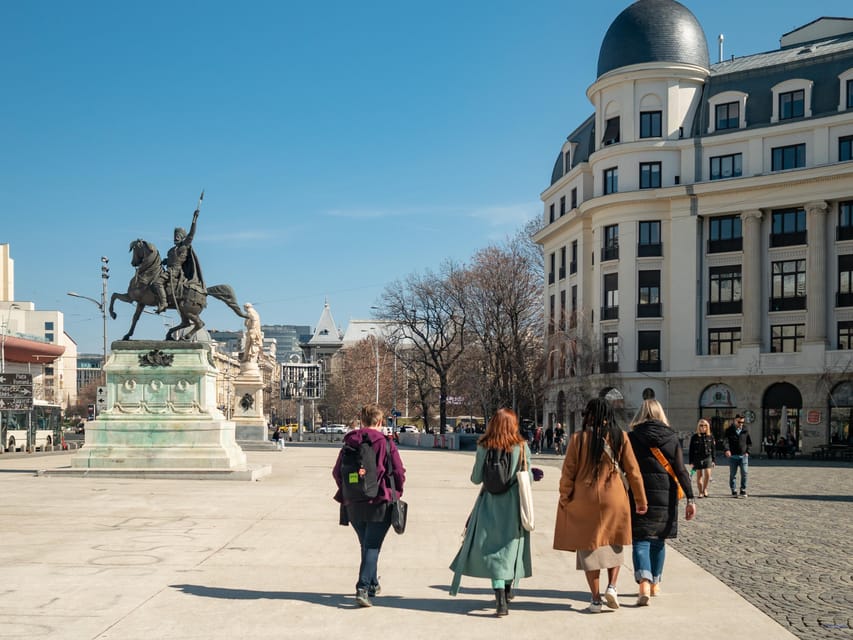
You’ll also pass through Caru’ cu bere with a photo-stop guided view. It’s a familiar name and a classic stop because it represents a kind of Bucharest that many visitors want: old-school dining culture and architectural personality.
Next, there’s a photo-stop guided look at the National Museum of Romanian History. Since entrance fees are not included, think of this as orientation rather than a full museum visit. You’ll get enough to understand what you’re looking at and why it’s important, so you can decide later if you want to spend paid time inside.
If you’re trying to plan your whole trip, this is useful. In three hours, you can’t do everything. The museum photo stop helps you choose what to follow up on once you’re back on your own time.
Palace of the Parliament at the end: why this building still splits opinions
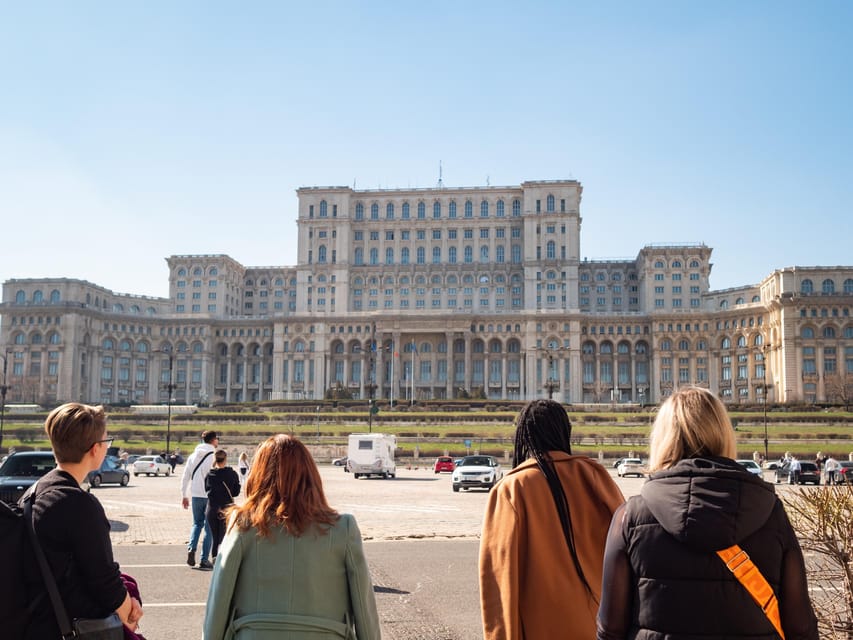
Every Bucharest itinerary has the Palace of the Parliament on it somewhere. This tour places it as your finish, and that choice feels smart. By the time you reach it, you’ve already seen neoclassical culture at the Athenaeum, older religious sites, and the institutional power buildings. Then the Parliament shows up like a final argument in concrete.
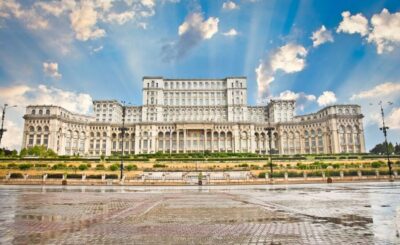
You’ll learn about the Palace of the Parliament, including that it’s the second-largest administrative building in the world. More importantly, you’ll hear why it’s controversial and how its presence reshapes the city. The commentary is the point, because this building isn’t just about size. It’s about what that size represents, what it took to build, and how people interpret it now.
Practical note for you: it’s also a photo stop with guided time, so come with comfortable stamina. You don’t want to arrive at Parliament tired and miss the final explanation.
Price and what you really get for $22
At $22 per person for a three-hour guided walk, you’re paying for two things: expert interpretation and a structured route.
The guide is listed as a local professional artist guide, and the tour explicitly includes expert insights into history and architecture. You’re also getting a small-group format, which usually means more chances to ask questions and more attention from the guide than on big bus style tours.
What you do not get is paid entry to attractions or meals. Entrance fees and meals and drinks aren’t included, so if you plan to go inside later, budget separately. Still, the tour is good value for getting oriented and for learning the meaning behind what you’re photographing.
If you only do one Bucharest “see the city, understand it” activity, this is a strong contender because $22 buys you a lot of stops without making you feel like you’re rushing through one single monument.
Who should book this Bucharest history, art, and secrets tour
This tour fits best if you like:
- A guided walk that mixes major landmarks with smaller street level stops
- Architecture and art stories, not just dates and facts
- A route that gives you photo-ready moments and context in the same package
It’s also a good match for history buffs who want political and social framing without a heavy museum day. If your goal is to get your bearings fast and then build your own schedule afterward, this format makes that easier.
One caution from the tour info: it’s listed as wheelchair accessible, but it’s also flagged as not suitable for people with mobility impairments. If mobility is a concern, it’s worth thinking hard about your own comfort with standing and uneven walking, even if access is described as wheelchair friendly.
Booking decision: should you book?
Yes, I’d book it if you want Bucharest explained in a way that connects places to stories you can remember. The combination of major highlights like the Romanian Athenaeum and the Palace of the Parliament, plus everyday details like Umbrellas Street and the monastery stops, gives you variety in just three hours.
Skip it only if you hate walking photo-stop style routes, or if you need a slower, less physical pace than a guided three-hour route typically allows. If you’re comfortable on your feet and you like learning from a strong local guide, this is one of those “buy it once, use it to steer the rest of your trip” activities.
FAQ
How long is the Bucharest small group history, art and secrets tour?
The tour duration is 3 hours.
What is the price per person?
The price is $22 per person.
Where do we meet the guide?
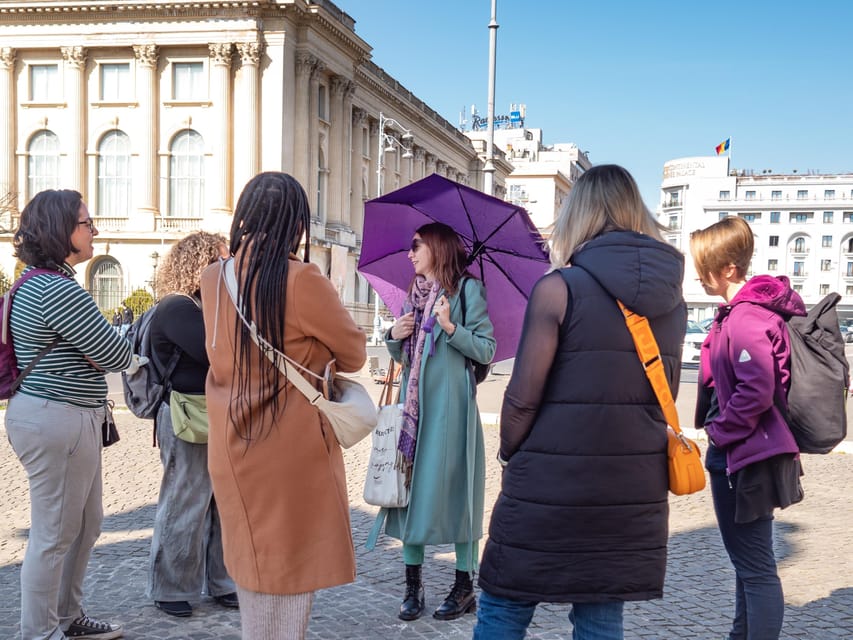
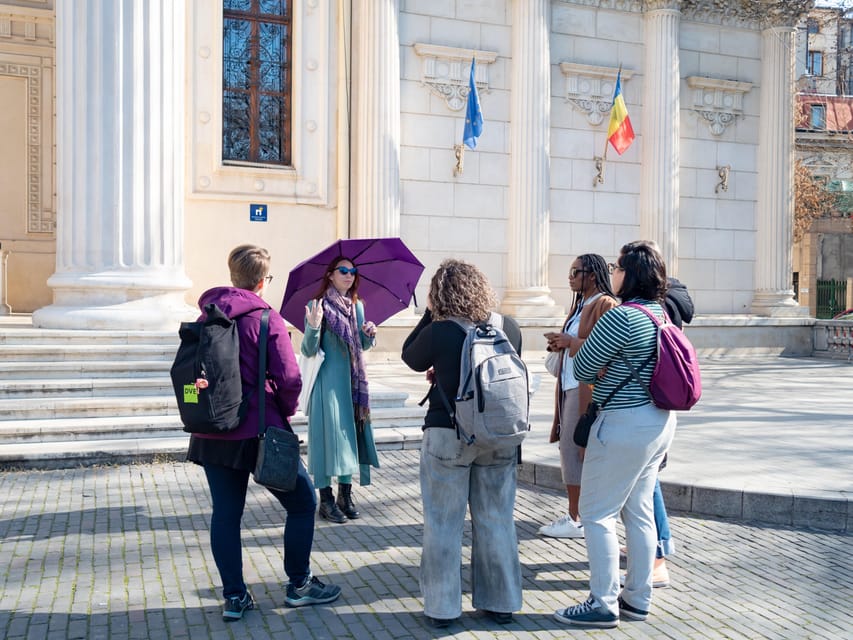
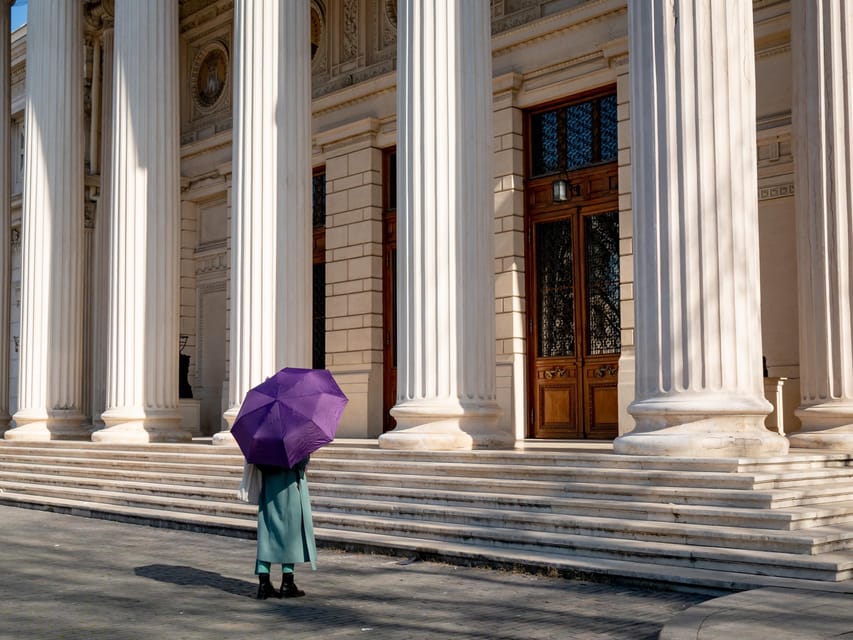
You meet in front of the Romanian Athenaeum by the columns with a purple umbrella.
Where does the tour finish?
The tour finishes at the Palace of Parliament.
What languages are offered for the live guide?
The live tour guide is available in Italian, Spanish, French, and English.
Is the tour wheelchair accessible?
The activity is listed as wheelchair accessible.
Is it suitable for people with mobility impairments?
It is not suitable for people with mobility impairments, even though it is listed as wheelchair accessible.
What should I bring, and what is not allowed?
Bring comfortable shoes and water. Luggage or large bags are not allowed.
Are entrance fees included?
Entrance fees to attractions are not included. Meals and drinks are also not included.
More History, Shorter Queue
- Bucharest: 3-Hour Dark History Tour with a Local
★ 4.9 · 301 reviews - Guided Walking Tour of Historical Bucharest
★ 5.0 · 84 reviews - Bucharest Jewish Heritage | Holocaust Memorial | Private Car Tour
★ 5.0 · 38 reviews - Private Bucharest: History & Food with Traditional Meal
★ 5.0 · 34 reviews - Bucharest Historical Food Tour in Old Center
★ 5.0 · 21 reviews
Whatever Else Bucharest Is Selling
- Bucharest to Dracula Castle, Peles Castle and Brasov Guided Tour
★ 4.5 · 2,933 reviews - Bucharest: Palace of Parliament Tickets and Guided Tour
★ 4.4 · 1,877 reviews - Transylvania and Dracula Castle Full Day Tour from Bucharest
★ 4.5 · 1,589 reviews - Bucharest: City Highlights Guided Walking Tour
★ 4.9 · 1,482 reviews - From Bucharest: Brasov Peles & Dracula’s Castle Day Tour
★ 4.5 · 1,244 reviews
Everything Else We Reviewed In Bucharest
- Bucharest: Dracula’s Castle, Peles Castle, & Brasov Old Town
★ 4.5 · 17,858 reviews - Bucharest: Dracula Castle, Peles Castle & Brasov Old Town
★ 4.6 · 10,891 reviews - Bucharest: Dracula’s Castle, Peleș Castle & Brașov Day Trip
★ 4.5 · 5,919 reviews - Bucharest: Palace of Parliament Tickets and Guide
★ 4.3 · 3,182 reviews - Bucharest: Day Trip to Dracula Castle, Peles Castle & Brașov
★ 4.4 · 3,049 reviews
Recently added around Bucharest
- Private Tasting Expedition Along Romania’s Most Famous Wine Route★ 5.0 · 3 reviews
- Private Guided Tour of Peles Castle and Bran Castle from Bucharest★ 5.0 · 3 reviews
- Private Sightseeing Tour of Bucharest★ 4.5 · 3 reviews
- Discover Europe’s Deepest Mines & Peles Castle’s Royal Charm★ 5.0 · 3 reviews
- Bucharest City Tour and Wine Tasting★ 5.0 · 3 reviews
Historical Tours, compared.
 ★ 4.9Bucharest: 3-Hour Dark History Tour with a LocalFrom $55301 reviews
 ★ 5.0Guided Walking Tour of Historical BucharestFrom $3084 reviews
 ★ 5.0Bucharest Jewish Heritage | Holocaust Memorial | Private Car TourFrom $11338 reviews
 ★ 5.0Private Bucharest: History & Food with Traditional MealFrom $14034 reviews
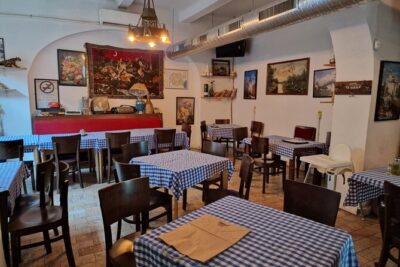 ★ 5.0Bucharest Historical Food Tour in Old CenterFrom $10821 reviews
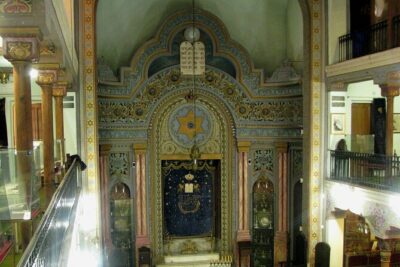 ★ 5.0Half-Day Jewish Heritage Walking Tour in BucharestFrom $31820 reviews
 ★ 4.6Discover Romania’s Wine Heritage in Brasov’s Historic CenterFrom $6919 reviews
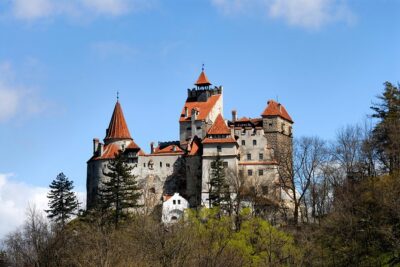 ★ 5.0Experience the History of Bran Castle and Saxon Fortifications in BurzenlandFrom $7019 reviews
Browse the lists this tour appears in