
REVIEW · BUCHAREST
Bucharest: 3-Hour Dark History Tour with a Local
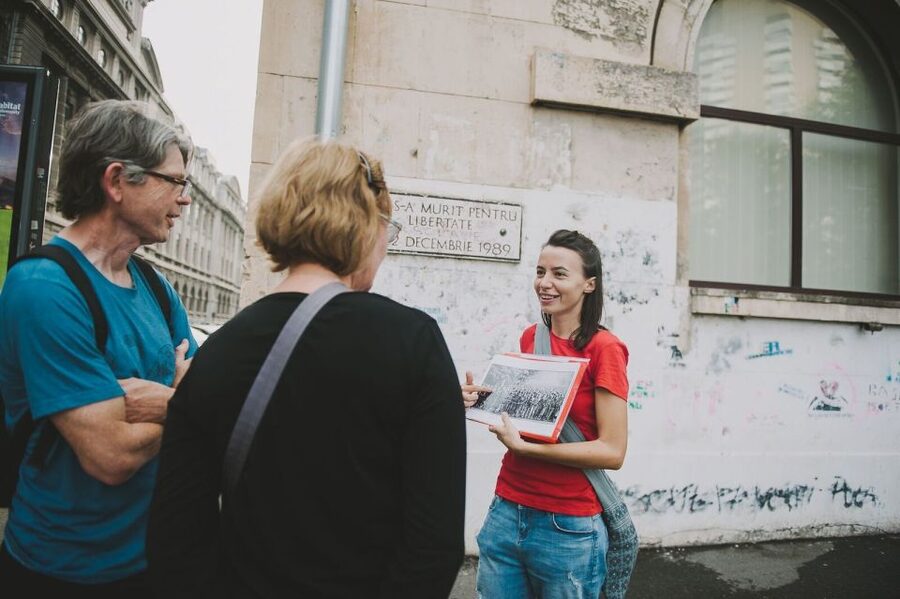
Bucharest’s shadows are walking-distance away. This 3-hour dark history tour strings together the city’s hardest chapters, from Bellu Cemetery to the revolution streets that shaped modern Romania. You’ll hear what happened, but also what it felt like to live through it, guided by locals who know how Bucharest leaves marks on buildings and people.
I love how the tour keeps it human, not just dates and plaques. Two things in particular stand out to me: the small group size (max 12) and the way the guide uses city details to make the story stick, from architecture to street-level clues.
One consideration: this is still a walking tour, and it moves through multiple major areas. If you come in thin shoes or forget a warm layer for cold weather, Bellu Cemetery and the squares can wear you out fast.
In This Review
- Key highlights I’d prioritize
- Following the clues: why Bucharest feels so different on this tour
- Where you meet, and how the tour actually gets you around
- The cemetery street near the center: five meanings in one block
- Bellu Cemetery: architecture, emotion, and the strange comfort of artful grief
- A local touch you might catch here
- University Square: the revolution’s spine, and why students mattered after 1989
- Little Paris and the interwar brothel remnants
- The Vampire of Bucharest: a serial killer case from the early 1970s
- Revolution Square and the mechanisms of communist control
- Small-group energy: why max 12 people matters on a heavy tour
- Price and value: what you get for $55 per person
- Comfort, walking pace, and what to bring
- Who this tour suits best, and who should skip it
- Should you book this Bucharest dark history tour?
- FAQ
- Is this tour suitable for children?
- How long is the tour?
- How much does it cost?
- Where do I meet the guide?
- What is included in the price?
- Are food and drinks included?
- What should I bring?
- How big is the group?
- What language is the tour in?
- What if I need to cancel?
Key highlights I’d prioritize
- Bellu Cemetery as a national historical monument with funerary architecture and unforgettable stories
- A cemetery street circuit that connects the 1989 Revolution victims, Jewish burial grounds, and Russian soldiers’ cemeteries
- University Square and Revolution Square focused on 1989 and the anti-communist student protests that followed
- Little Paris interwar stories about sex work and what remains of older brothel life
- The Vampire of Bucharest serial killer narrative from the early 1970s
- Metro rides plus a traditional street snack included, which makes the route smoother
Following the clues: why Bucharest feels so different on this tour
Bucharest can look elegant on a postcard, then get very real in person. This tour leans into that tension, showing you how cemeteries, squares, and ordinary streets became stages for tragedy, resistance, and fear.
What makes it work is the pacing and the focus. You’re not just looking at landmarks, you’re learning how different eras overlap in the same neighborhoods, even when only fragments remain.
And yes, this is a darker route. If you want sunshine-only sightseeing, pick a lighter day. If you want context for why Romania’s recent history still echoes in the city, this is a strong match.
Where you meet, and how the tour actually gets you around
You meet at the main entrance of Ion Luca Caragiale National Theatre, on Bulevardul Nicolae Bălcescu 2. It’s a handy location if you’re already spending time in central Bucharest, and it keeps the start point easy to find.
From there, the guide takes you between stops using public transport. Metro tickets are included, so you are not doing extra math or hunting for rides mid-walk.
Also, the experience is designed for comfort within a short window. It’s only 3 hours, so the route is paced tightly, with short transitions that keep you moving but not confused.
If you want it darker
The cemetery street near the center: five meanings in one block
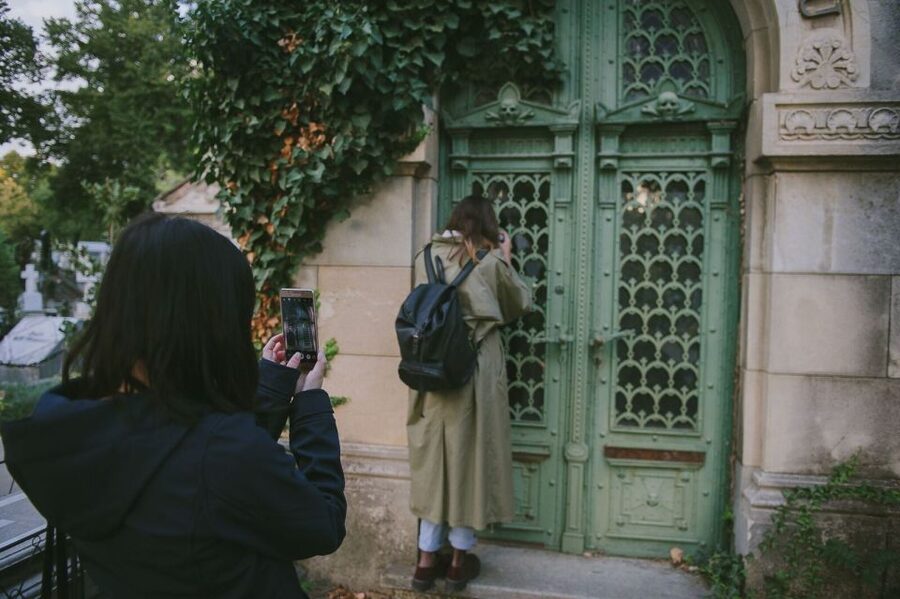
One of the most striking elements is the cemetery cluster on a single street. The tour area includes several burial grounds that reflect different communities and different moments in Romanian history, all within walking distance of each other.
You’ll hear about the Cemetery of the Victims of the Revolution in 1989, plus the Jewish Cemetery, the Cemetery of the Russian Soldiers, and the older historical Bellu Cemetery you’ll visit together. The point is not to rush through names, it’s to understand how Bucharest stores memory in stone and layout.
This stop also helps you read the city differently afterward. Once you see how many histories share the same geographic space, you’ll spot how Bucharest treats the past like something you can walk into.
Bellu Cemetery: architecture, emotion, and the strange comfort of artful grief
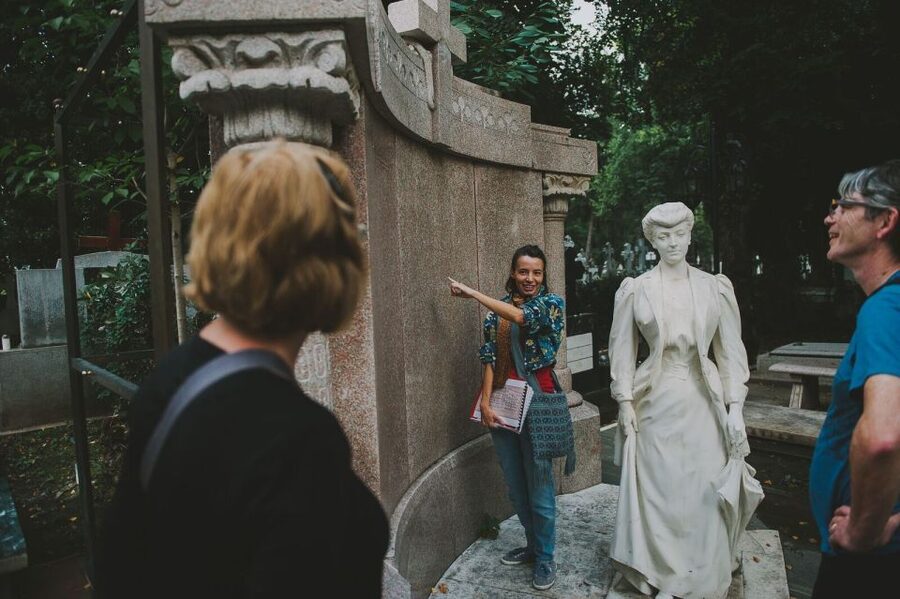
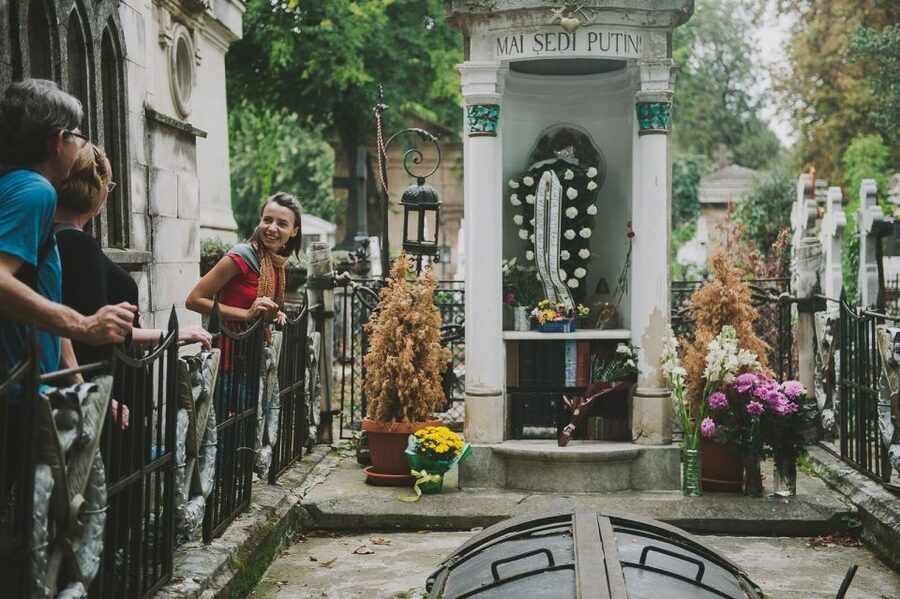
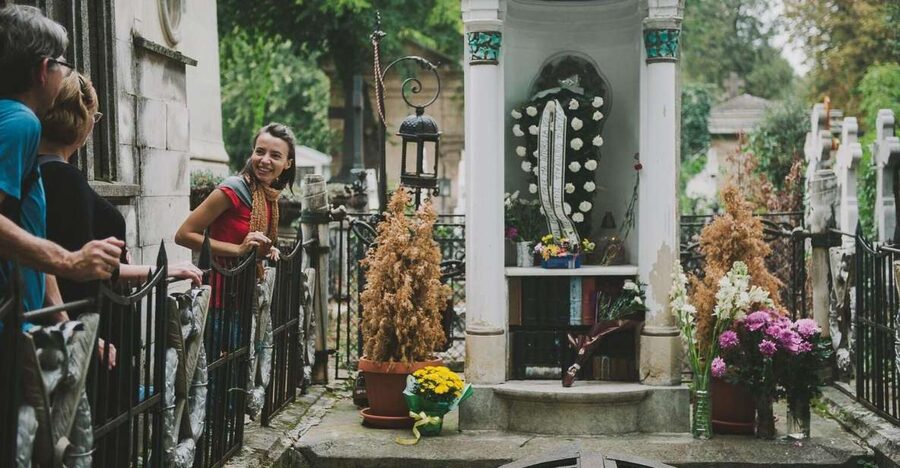
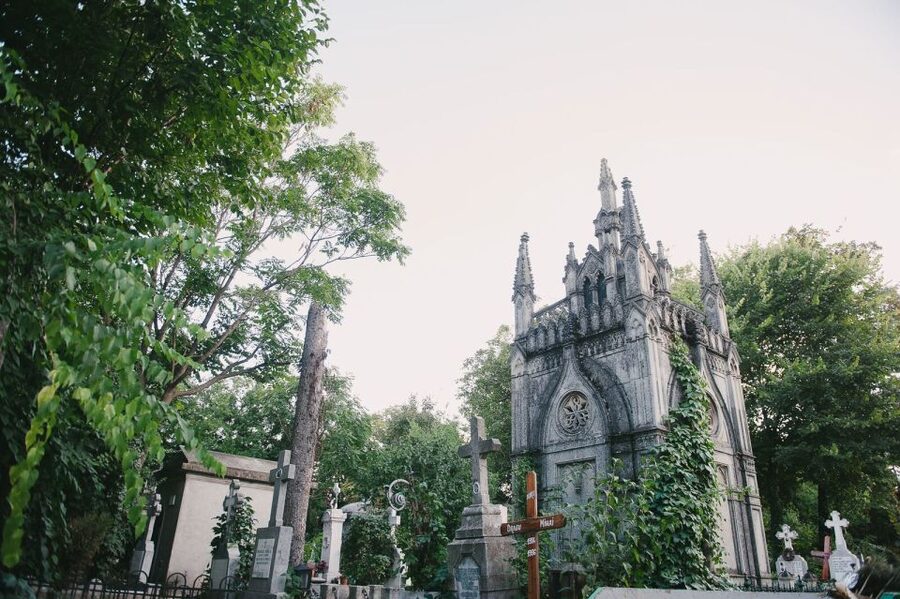
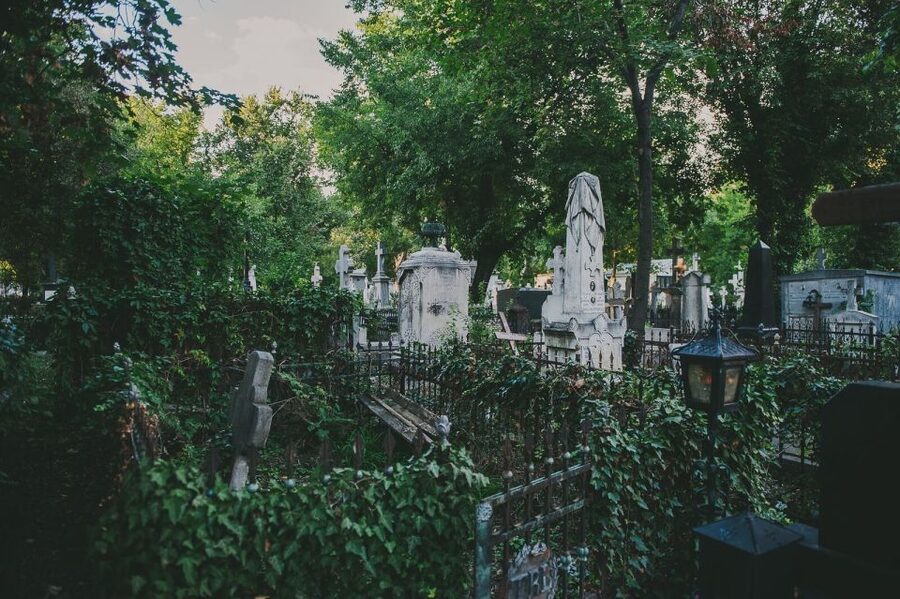
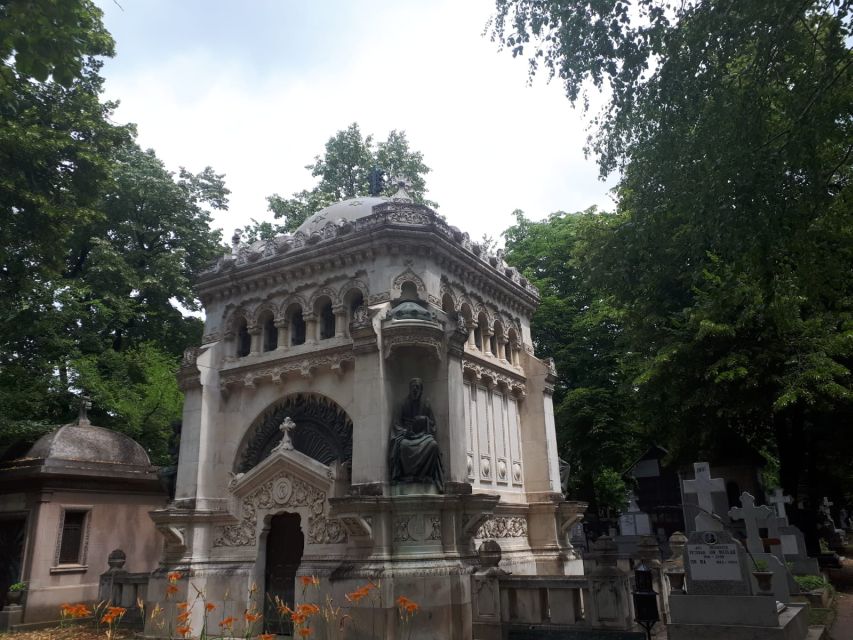
Bellu Cemetery is a national historical monument, and it shows. Even if you’re not usually a cemetery person, this is more like an outdoor architectural museum with stories threaded through it.
The guides often point out funerary architectural jewels and explain why different monuments look the way they do. You’ll also get a range of stories, from sad love narratives to darker mysteries, which is exactly the contrast that fits the tour title.
If you’ve only seen one side of Romanian history before, Bellu gives you another lens. It’s not about ideology. It’s about people, status, faith, and grief, all carved into design choices.
A practical note: Bellu Cemetery is where the walking can feel most atmospheric and most physical. Take your time with the monuments, but also pace yourself so you don’t burn all your energy before the squares.
A local touch you might catch here
Some guides add extra warmth to the visit, including time for cemetery cats and dogs. For example, I’ve seen mention of guides feeding cats and interacting with the cemetery dogs, which makes the stop feel less like a strict museum rulebook and more like a living neighborhood tradition.
University Square: the revolution’s spine, and why students mattered after 1989
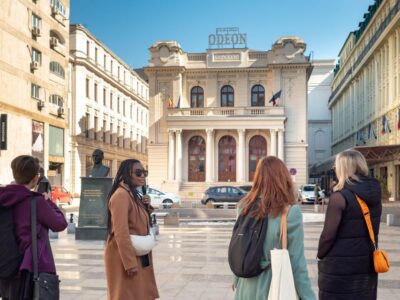
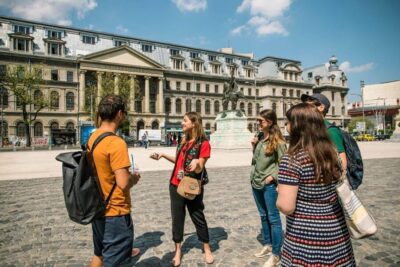
After Bellu, you head toward University Square, one of Bucharest’s key locations. It’s famous for its role in the Revolution in 1989 and for the anti-communist students’ protests in the 1990s, both described as violent and blood-soaked turning points.
This stop matters because it connects the revolution narrative to what came next. 1989 wasn’t a finish line. It was a disruption, and students kept pushing when freedom still wasn’t fully safe.
Your guide should help you connect what you see now with what happened then. Even if the city has changed, the square’s importance makes it feel like a stage where modern Romania tried to rewrite its rules.
If you like symbolism, this is where it gets real. The square becomes a map, showing you how Bucharest moves people toward or away from power.
More history, shorter queue

Little Paris and the interwar brothel remnants
Then the tour shifts back in time to the “Little Paris” era, when parts of Bucharest carried a sophisticated, foreign-styled atmosphere. This is where the tour covers the practice of sex trade in interwar Bucharest and points out what remains of an older brothel.
This topic can feel uncomfortable, but the value here is context. You learn how social systems, poverty, and opportunity intersected, and how the city’s reputation formed long before the communist period ever began.
The guide’s job is to keep the story grounded in place, not gossip. If the tour is done well, you’ll come away understanding the city’s street-level economy and social pressure, not just scandal.
If you are sensitive to this section, it helps to say so early. Since the tour is only 3 hours and groups are small, a good guide can calibrate how fast and how explicitly the topic is discussed.
The Vampire of Bucharest: a serial killer case from the early 1970s
Another memorable thread is the serial killer story nicknamed the Vampire of Bucharest, active in the early 1970s. This isn’t just a spooky add-on. It’s another way the guide shows how fear spreads through a city during tense times.
Why it fits this tour: the same social climate that shaped the communist regime also shaped daily life and how people coped with danger. Even when the crimes are the focus, the real story is how a whole city responds under uncertainty.
If you like crime history, you’ll likely enjoy how the guide ties the narrative to specific Bucharest locations. And even if you do not, it gives variety so the tour does not feel like one long lecture.
This portion is also a good reminder: Bucharest’s dark history is not only political. It includes personal violence, public rumor, and the ripple effects on community trust.
Revolution Square and the mechanisms of communist control
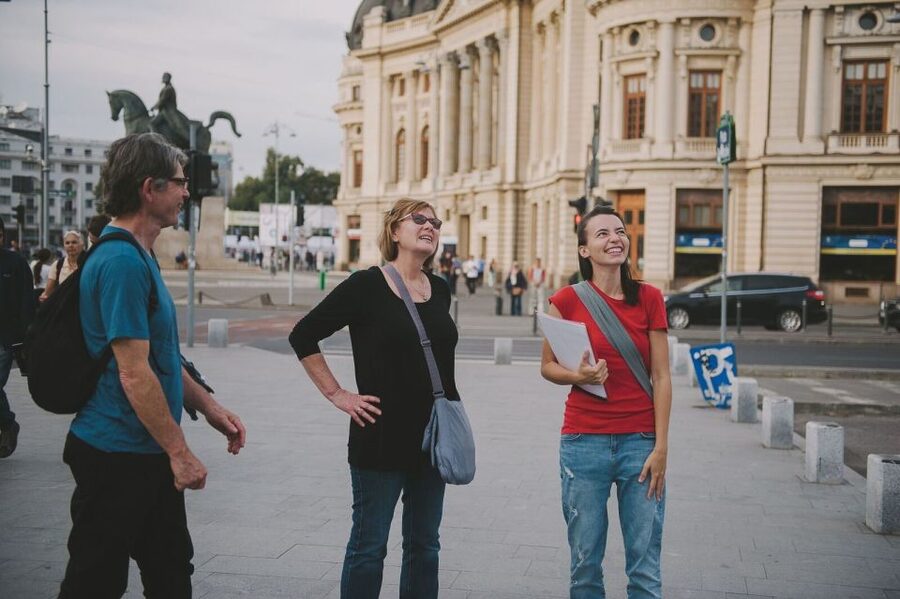
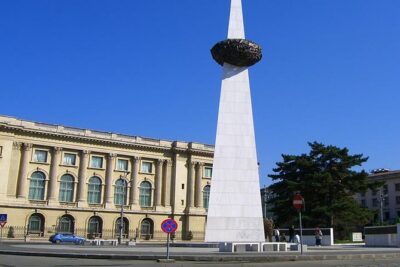
Finally, you reach Revolution Square, where the 1989 revolution started in Bucharest. This is where the tour’s political weight lands hardest.
You’ll talk about prisons, labor camps, and torture methods used by the communist regime to silence critics. The guide also covers Ceaușescu’s dictatorship and the terror instilled in people by the Securitate, described as Romania’s own version of the KGB.
It’s heavy material, and it can be tempting to treat it like distant history. The best guides avoid that by explaining how the system worked in daily life, the kind of caution people had to adopt, and why fear became routine.
This stop is also the payoff for the whole route. You’ve seen cemeteries tied to the Revolution, you’ve tracked how the squares function as memory points, and then you get the full explanation of how the regime kept control and why change finally ignited.
Small-group energy: why max 12 people matters on a heavy tour
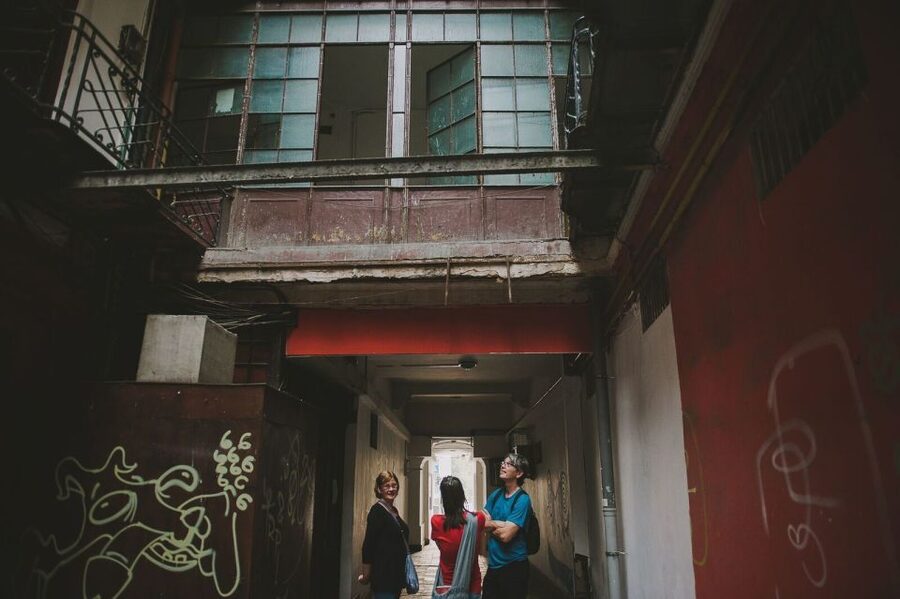
With a maximum group size of 12, the tour has a different feel than large bus groups. You can ask questions without feeling like you’re interrupting a machine.
In practice, this often means the guide can tailor the pace. Some guides have also shared extra photos or follow-up research links after the tour, sometimes through WhatsApp, which helps you keep learning after you leave the street corner behind.
You’ll also notice how guides keep control of the emotional tone. A dark history tour needs clarity, not chaos, and small groups help the guide keep that balance.
Price and value: what you get for $55 per person
At $55 for 3 hours, this tour is not a budget spritz through tourist sites. You’re paying for guided access to multiple major locations, plus interpretation that connects them.
The included perks matter for value:
- Local English-speaking guide
- Metro tickets
- Traditional street snack
In other words, you are not paying extra just to move between stops, and you get a small taste of local street food rhythm. Many guides also include small “local life” touches that make the history feel less like a classroom.
Is it worth it? If you want Bucharest beyond viewpoints and photo stops, yes. The route focuses on the city’s hardest chapters and gives you a lens you can carry into museums, neighborhoods, and conversations.
If you hate walking, or you only want light entertainment, then the cost will feel high compared to easier tours. This route is for people who want meaning, not just motion.
Comfort, walking pace, and what to bring
This tour includes multiple city blocks and at least one cemetery stop where time can slow down. Comfortable shoes are required, and I strongly suggest a warm layer if you’re going in colder months, since the stops include open squares and outdoor monument areas.
Bring:
- Comfortable shoes
- A jacket or warm layer for cold weather
Think about how you handle winter weather and long standing times. You’ll be listening a lot, so you want your body to be calm enough to take it all in.
Who this tour suits best, and who should skip it
This is ideal if you:
- Want a darker, history-forward Bucharest experience that includes Revolution-era context
- Like guided interpretation at a human scale
- Are curious about how cemeteries and squares function as memory systems in cities
It may not be ideal if you:
- Prefer only upbeat or casual sightseeing
- Want minimal walking
- Are traveling with children under 16, since the tour is not permitted for those under 16
If you’re okay with difficult topics, this tour offers a compact but strong education in why Bucharest’s recent story still matters.
Should you book this Bucharest dark history tour?
Book it if you want your time in Bucharest to mean something. The combination of Bellu Cemetery, University Square, and Revolution Square gives you both architecture and politics, plus a local narrative thread that helps the city feel coherent.
Skip it only if you’re looking for a light, casual afternoon with minimal emotional weight. This tour is built for people who can handle dark history and want it explained clearly, in context, with a guide who can answer questions as you go.
If you do book, show up ready to walk, ask questions, and come with an open mind. Bucharest changes when you understand what the city buried, what it fought for, and what it feared.
FAQ
Is this tour suitable for children?
No. Travelers under 16 years old are not permitted on this tour.
How long is the tour?
The tour lasts 3 hours.
How much does it cost?
It costs $55 per person.
Where do I meet the guide?
You meet at the main entrance of Ion Luca Caragiale National Theatre, Bulevardul Nicolae Bălcescu 2, București 010051, Romania.
What is included in the price?
A local English-speaking guide, a traditional street snack, and metro tickets are included.
Are food and drinks included?
No. Additional food and drinks are not included.
What should I bring?
Wear comfortable shoes.
How big is the group?
The tour operates with a maximum group size of 12 people.
What language is the tour in?
The tour is guided in English.
What if I need to cancel?
You can cancel up to 24 hours in advance for a full refund.
Whatever Else Bucharest Is Selling
- Bucharest to Dracula Castle, Peles Castle and Brasov Guided Tour
★ 4.5 · 2,933 reviews - Bucharest: Palace of Parliament Tickets and Guided Tour
★ 4.4 · 1,877 reviews - Transylvania and Dracula Castle Full Day Tour from Bucharest
★ 4.5 · 1,589 reviews - Bucharest: City Highlights Guided Walking Tour
★ 4.9 · 1,482 reviews - From Bucharest: Brasov Peles & Dracula’s Castle Day Tour
★ 4.5 · 1,244 reviews
Everything Else We Reviewed In Bucharest
- Bucharest: Dracula’s Castle, Peles Castle, & Brasov Old Town
★ 4.5 · 17,858 reviews - Bucharest: Dracula Castle, Peles Castle & Brasov Old Town
★ 4.6 · 10,891 reviews - Bucharest: Dracula’s Castle, Peleș Castle & Brașov Day Trip
★ 4.5 · 5,919 reviews - Bucharest: Palace of Parliament Tickets and Guide
★ 4.3 · 3,182 reviews - Bucharest: Day Trip to Dracula Castle, Peles Castle & Brașov
★ 4.4 · 3,049 reviews
If You Want It Darker
- Bucharest Ghosts Stories and Mythology
★ 5.0 · 292 reviews - Bucharest: Ghost Stories & Romanian Mythology Walking Tour
★ 4.9 · 287 reviews - Bucharest Under Communism: Life, Terror & Hope
★ 5.0 · 76 reviews - Slavery in Romania,Myths and Truths on Gypsies, Walking Tour
★ 4.9 · 42 reviews - Bucharest: Ghost Hunt Quest Experience
★ 4.5 · 34 reviews
Recently added around Bucharest
- Private Tasting Expedition Along Romania’s Most Famous Wine Route★ 5.0 · 3 reviews
- Private Guided Tour of Peles Castle and Bran Castle from Bucharest★ 5.0 · 3 reviews
- Private Sightseeing Tour of Bucharest★ 4.5 · 3 reviews
- Discover Europe’s Deepest Mines & Peles Castle’s Royal Charm★ 5.0 · 3 reviews
- Bucharest City Tour and Wine Tasting★ 5.0 · 3 reviews
Ghost, Legend and Halloween Tours, compared.
 ★ 5.0Bucharest Ghosts Stories and MythologyFrom $33292 reviews
 ★ 4.9Bucharest: Ghost Stories & Romanian Mythology Walking TourFrom $35287 reviews
 ★ 4.9City Tour Sighisoara Legends & Landmarks A Walk Through TimeFrom $4583 reviews
 ★ 5.0Bucharest Under Communism: Life, Terror & HopeFrom $2376 reviews
 ★ 4.9Slavery in Romania,Myths and Truths on Gypsies, Walking TourFrom $2942 reviews
 ★ 5.0Night Tour in Hoia Baciu ForestFrom $16040 reviews
 ★ 4.5Bucharest: Ghost Hunt Quest ExperienceFrom $434 reviews
 ★ 4.5Quest Experience in Bellu Cemetery BucharestFrom $718 reviews
Browse the lists this tour appears in