
REVIEW · WALKING TOURS
Bucharest Unveiled: A Private Walking Journey
Bucharest gets clearer fast. This private walking journey helps you build real orientation in a short window, with a certified guide narrating the story behind major landmarks, from the Romanian Atheneum to Old Town and the Parliament’s exterior. I especially like the guide-led pacing, plus the way the route blends big-picture political change with architecture you can actually see with your own eyes. The main thing to keep in mind is that it is still a walking tour, so you’ll want comfortable shoes and good weather, and you should plan for any optional on-site costs since entrance fees are not included.
What makes this tour feel worth it is the private format. You get a group limited to just your party, so you can ask questions without waiting your turn, and the guide can tailor what you focus on. Pickup is offered, and the starting point is clearly set (Strada Benjamin Franklin 4), but the walk ends at a different location, so check the final drop-off details when you book.
In This Review
- Key things to know before you walk
- The practical value: why 2 to 3 hours works in Bucharest
- Stop-by-stop: how the route tells one connected Bucharest story
- Ateneul Roman: your first landmark and your first clue
- Piata Revolutiei: where the 1989 story becomes real
- Calea Victoriei: the elegant boulevard that straightens your sense of space
- Biblioteca Centrala Universitara and King Carol I’s presence
- Palatul Regal: the royal winter residence, 1937 edition
- Old Town: cafes, pubs, and the 19th-century texture
- Stavropoleos Monastery: calm, old stone, and a break from the main streets
- The Palace of the Parliament exterior: scale that makes you pause
- A major city square: statues and built-in drama
- National Theatre in Bucharest: the arts angle to close the loop
- What a private walking tour changes for you
- Timing, pickup, and the walking reality
- Price and value: is $57.67 per person a smart spend?
- Who should book this, and who might prefer something else
- If you book: small things that make the day smoother
- Should you book Bucharest Unveiled?
Key things to know before you walk
- Private, guide-led format: Only your group goes along, with professional narration and time to ask questions.
- Day or evening timing: You can choose a start that fits your Bucharest rhythm.
- Free-to-see stops most of the time: The listed sights have free admission, though the tour itself notes entrance fees are not included.
- Revolution history meets architecture: You move from 1989 landmarks to royal and civic buildings in a single loop.
- Old Town built for wandering: You’ll finish with a feel for the cafes, pubs, and 19th-century streets.
- Mobile ticket available: Handy if you prefer to travel light with your phone.
The practical value: why 2 to 3 hours works in Bucharest
Bucharest can feel like it has layers stacked on layers. One moment you’re looking at ornate facades, the next you’re staring at the scale of communist-era construction, and then you turn a corner and the city looks almost peaceful again. This tour gives you a clean mental map early, without turning your day into a full-day marathon.
At about 2 to 3 hours, you get enough time to absorb details while still keeping energy for later plans. And because it’s private, the guide can slow down for questions or speed up if you’re eager to keep walking. You’re paying for that time and for the storytelling, not just for a list of photo stops.
Stop-by-stop: how the route tells one connected Bucharest story
More Bucharest on foot
Ateneul Roman: your first landmark and your first clue
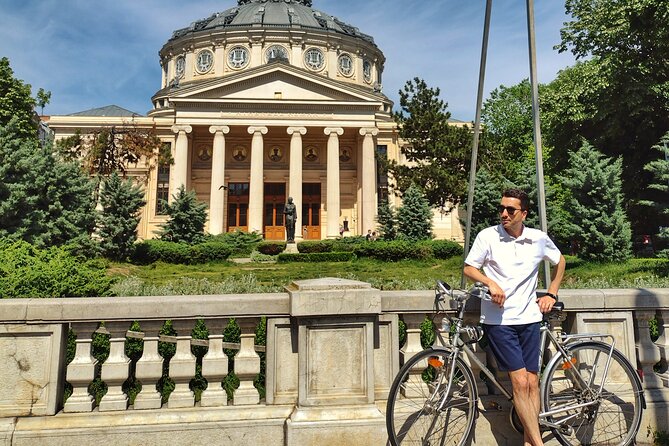
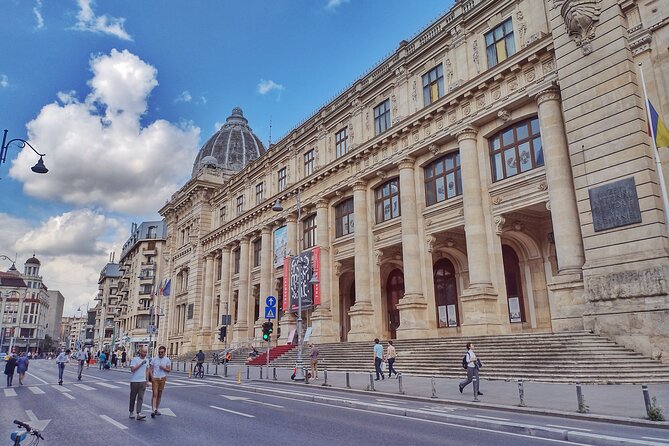
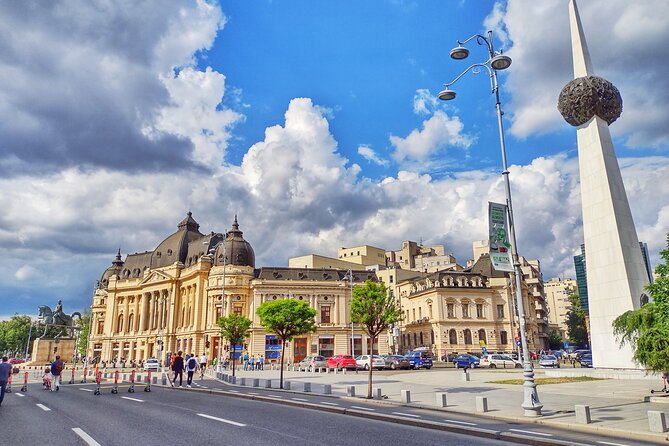
The walk starts at Ateneul Roman, an emblematic Bucharest building designed to resemble an ancient Greek temple. Even in a short stop, you’re learning a key theme: Bucharest has always borrowed symbols of culture and legitimacy. The exterior alone gives you a strong sense of why people call this city elegant in moments.
I like that the stop is short, about 15 minutes, so you’re not stuck staring while everyone else waits. It’s also the kind of building where a guide’s framing matters, because it helps you notice shapes and influences instead of just snapping a picture.
Piata Revolutiei: where the 1989 story becomes real
Next is Piaka Revolukiei, the square tied to the final speech of Nicolae Ceausescu in 1989. This is where Bucharest’s modern identity gets anchored to a specific moment in time. The guide uses pictures and video presentations from the Revolution days, which helps you connect what you see outside with what happened here.
The practical benefit is that you won’t just hear generalities about the communist period. You’re looking at the place and then seeing visual material that gives the context teeth. One consideration: if you prefer quieter, less emotionally heavy material, you might want to mentally pace yourself during this part.
Calea Victoriei: the elegant boulevard that straightens your sense of space
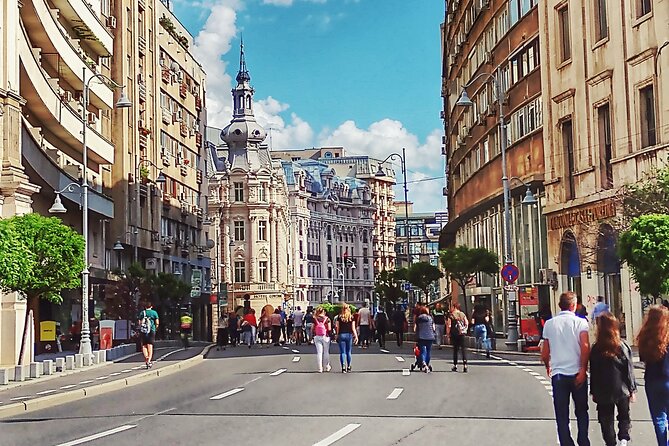
Calea Victoriei is the city’s most elegant avenue, lined with major buildings and monuments. This stop works because it’s not only about individual sights, it’s about orientation. Boulevards teach you how a city planned itself, where power and money tended to cluster, and how movement used to feel.
A 30-minute stretch is long enough to take in the rhythm, yet short enough to keep the tour from dragging. For you, it also sets up an easy next step: after you learn the layout, you can decide which nearby streets to explore on your own.
Biblioteca Centrala Universitara and King Carol I’s presence
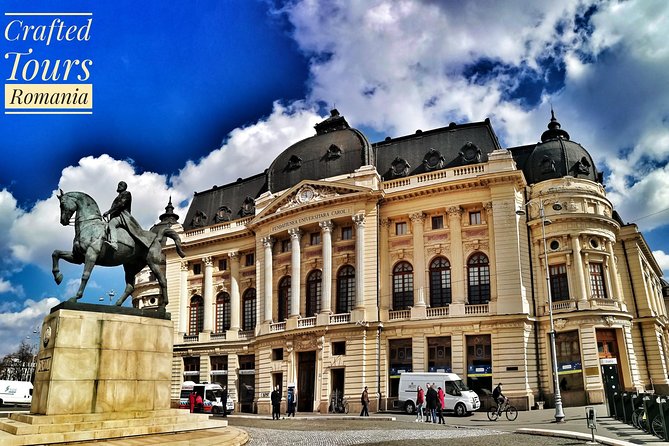
At Biblioteca Centrala Universitara, you’ll see an eclectic building designed by French architect Paul Gottereau, with sponsorship from King Carol I. In front of the library, you can also spot the equestrian statue of Carol I, which turns a random square into a recognizable historical axis.
This part of the tour is useful if you’re trying to understand Bucharest beyond the big headlines. The monarchy era isn’t always easy to picture from travel guides, but seeing the architect and the associated royal symbol helps it click.
The private end of Bucharest

Palatul Regal: the royal winter residence, 1937 edition
Then comes Palatul Regal, the winter royal residence of Romanian kings, dated to 1937. The building was supervised directly by Queen Maria and her son, King Carol II. The point here is not just royal trivia. It shows you how the city’s “center of gravity” shifted over time, from different rulers, different visions, and different ideas of what Bucharest should project.
This stop is around 10 minutes, so you’re not going for deep interior detail. Instead, you get the exterior story that ties to the earlier library and avenue stops. If you like architecture, this is the kind of short stop that actually adds up.
Old Town: cafes, pubs, and the 19th-century texture
The walk moves into the Old Town, a lively central area with cafes, pubs, and restaurants, plus plenty of 19th-century architecture. This is where the tour stops feeling like a museum and starts feeling like a neighborhood.
For me, this is one of the most practical parts of the itinerary. You’re not only learning where things are, you’re learning where you might actually want to spend time later. Since food isn’t included, you can use this stop to scout where you’d like to grab dinner after the walk, and your guide can help point you toward options that match your taste and schedule.
Stavropoleos Monastery: calm, old stone, and a break from the main streets
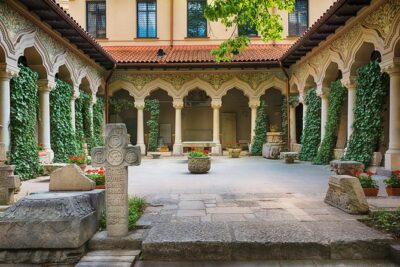
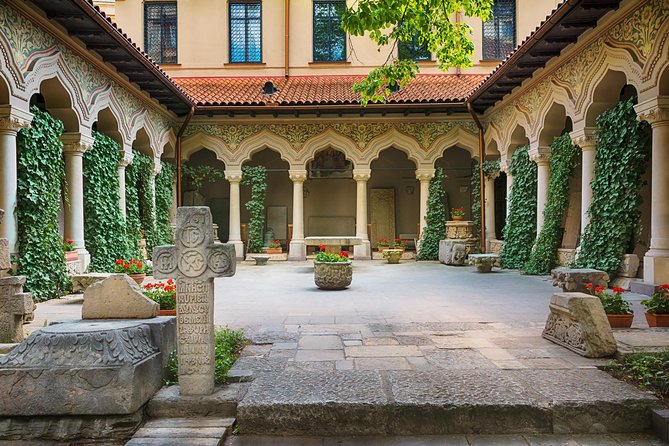
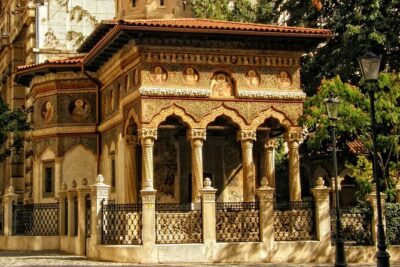
Next is Stavropoleos Monastery, a tucked-away feel in Old Town dating from 1724. It’s one of the oldest churches in Bucharest, and the “hidden pocket” feeling is part of why this stop works. You get a quick reset after boulevards and squares.
The drawback is simple: the stop is only about 15 minutes, so if you want extended time for reading, photos, or slow reflection, this might feel a little quick. Still, it’s a great “taste” that helps you decide whether to return later.
The Palace of the Parliament exterior: scale that makes you pause
After the Old Town texture, the tour makes a sharp shift to the Palace of the Parliament. Construction began in 1984, and the building is described as the heaviest building in the world and the world’s third-largest administrative building. The exterior is meant to be seen with awe, especially because the scale is compared to the Great Pyramid of Giza, exceeding its volume by 2%, hence the “pharaonic” framing.
Here’s what this stop does for you: it explains why Bucharest is so unusual. You’re seeing how different regimes and ambitions created different kinds of monuments, and you’re learning to read those choices in concrete terms. It’s one of those places where even a short exterior viewing can leave an impression.
A major city square: statues and built-in drama
The route then includes one of the main squares in the city, surrounded by imposing statues and buildings. You don’t stay long, but you get the sense of a civic “stage” for public life.
Because the tour does not pin this square to a named landmark in the details you have, treat this stop as a visual and contextual marker, a place where the guide ties together themes you’ve already seen.
National Theatre in Bucharest: the arts angle to close the loop
The final planned stop is the National Theatre in Bucharest. It’s a fitting ending because after architecture, revolution, monarchy, and monumental construction, you land on cultural identity again. Even just seeing the facade and hearing the guide’s context can help you connect Bucharest’s past to its present-day public life.
If you want a clean finale, this works. You end with a place that suggests what you might do next, especially if you’re planning dinner or a show later.
What a private walking tour changes for you
I like tours where the guide can respond to you, not just deliver a script. That’s exactly what the private setup enables. If you’re curious about why certain buildings were built, or you want help sorting out the city’s political timeline into something you can actually remember, you’ll benefit.
The reviews also point to guides who do more than point and talk. For example, Manuela is praised for comprehensive knowledge of Romanian history and architecture, plus useful guidance on restaurants, sights, and activities. Another guide, Toni, is credited with making the tour enjoyable while answering questions. That combo matters because it turns the walk into planning time, not just sightseeing time.
Timing, pickup, and the walking reality
You’ll choose day or evening timings. That’s more than a scheduling detail in Bucharest, because light and foot traffic can change the mood of the stops, especially at the grand boulevards and monumental areas.
Pickup is offered, which can be helpful if you’re staying a bit outside the central zone. Still, your main anchor is the meeting point at Strada Benjamin Franklin 4, București 030167. And one practical note: the tour ends in a different location. It’s not a loop back to the exact starting corner, so glance at the drop-off instructions so you’re not scrambling to get back to your hotel.
This experience also says it’s near public transportation and that most travelers can participate. Service animals are allowed too.
Price and value: is $57.67 per person a smart spend?
At $57.67 per person, you’re paying for a certified guide and a private route built around key Bucharest landmarks. For a city like Bucharest, where the architecture and political story can feel hard to decode quickly, paying for interpretation is often worth it.
Here’s how I’d think about value for you:
- If you’re traveling with someone you can share the experience with, the private format often feels more reasonable because you’re not splitting costs with strangers.
- If you want early orientation, the tour saves time you would otherwise spend trying to piece together where everything fits.
- You’re not paying for food or entry fees as part of the package. That means you’ll still decide on meals yourself, but you can also budget for any optional paid experiences you choose later.
Also, group discounts are mentioned. If you’re booking with friends or family, that can improve the value even more.
Who should book this, and who might prefer something else
This tour is a strong fit if you:
- Want a first-time introduction that connects history and architecture
- Like getting practical suggestions from your guide, especially around where to eat and what to do next
- Prefer private pacing and fewer people around you while you ask questions
It might be less ideal if you:
- Hate walking for a few hours and would rather do a mostly seated option
- Only care about a single theme and want an ultra-focused, one-subject tour
- Are planning to do many paid museum interiors, since entrance fees are not included and the stops are largely designed around exterior viewing and short orientation time
If you book: small things that make the day smoother
- Wear comfortable shoes. The stops are short, but the walking adds up.
- Bring a phone battery if you want to review the Revolution visuals afterward.
- Have flexible plans for the end location since the tour ends elsewhere.
- Dress for the weather. The experience notes it works best in good conditions.
And if you’re the type who likes to ask questions, this is the moment. A private guide is your fastest path to turning random landmarks into something you can explain to friends later.
Should you book Bucharest Unveiled?
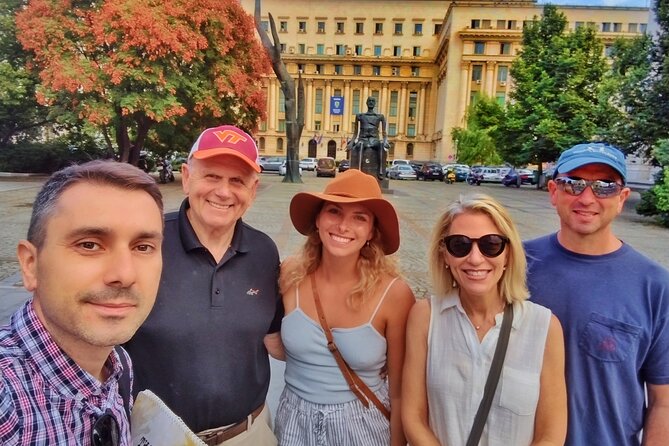
If you’re trying to get your bearings quickly, I’d book it. The big advantage is the private guide narration paired with a route that moves through major eras, so you leave with a coherent mental picture of Bucharest. At $57.67 per person, you’re paying for time, interpretation, and focus, not for a long list of activities.
If you’re the kind of traveler who enjoys architecture, wants context about the 1989 Revolution site, and likes to finish with Old Town streets you can use for dinner plans, this tour fits well. Just come prepared for a solid walking stretch, and check the final meeting details so you know exactly where you’ll end up.
The Private End Of Bucharest
- Castles of Transylvania: Private Day Trip from Bucharest
★ 4.5 · 248 reviews - Dracula’s Castle, Peles Castle and Brasov – Private Day Trip from Bucharest
★ 5.0 · 211 reviews - Best of Bucharest | Private Walking Tour
★ 5.0 · 199 reviews - Bucharest Panoramic Sightseeing – Private City Tour
★ 5.0 · 128 reviews - THERME “Take It Easy” Pack: Full Spa Access + Private Transfers
★ 4.0 · 117 reviews
Walking Bucharest, Continued
- Bucharest: City Highlights Guided Walking Tour
★ 4.9 · 1,482 reviews - Bucharest Highlights Walking Tour
★ 5.0 · 469 reviews - Bucharest: Ghost Stories & Romanian Mythology Walking Tour
★ 4.9 · 287 reviews - Bucharest: Guided Walking Tour with Romanian Snack
★ 4.9 · 228 reviews - Best of Bucharest | Private Walking Tour
★ 5.0 · 199 reviews
Everything Else We Reviewed In Bucharest
- Bucharest: Dracula’s Castle, Peles Castle, & Brasov Old Town
★ 4.5 · 17,858 reviews - Bucharest: Dracula Castle, Peles Castle & Brasov Old Town
★ 4.6 · 10,891 reviews - Bucharest: Dracula’s Castle, Peleș Castle & Brașov Day Trip
★ 4.5 · 5,919 reviews - Bucharest: Palace of Parliament Tickets and Guide
★ 4.3 · 3,182 reviews - Bucharest: Day Trip to Dracula Castle, Peles Castle & Brașov
★ 4.4 · 3,049 reviews
Recently added around Bucharest
- Private Tasting Expedition Along Romania’s Most Famous Wine Route★ 5.0 · 3 reviews
- Private Guided Tour of Peles Castle and Bran Castle from Bucharest★ 5.0 · 3 reviews
- Private Sightseeing Tour of Bucharest★ 4.5 · 3 reviews
- Discover Europe’s Deepest Mines & Peles Castle’s Royal Charm★ 5.0 · 3 reviews
- Bucharest City Tour and Wine Tasting★ 5.0 · 3 reviews
Walking Tours, compared.
 ★ 4.9Bucharest: City Highlights Guided Walking TourFrom $211,482 reviews
 ★ 5.0Bucharest Highlights Walking TourFrom $21469 reviews
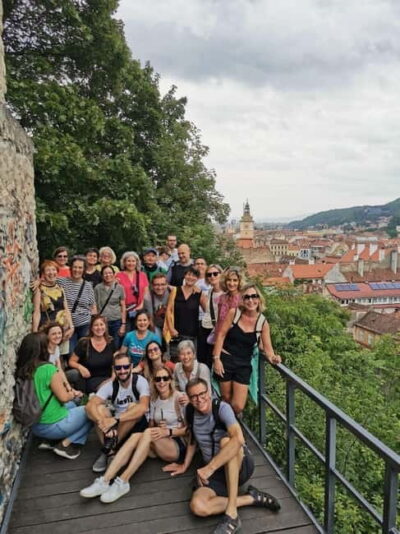 ★ 4.9Free walking tour of Brasov in EnglishFrom $0302 reviews
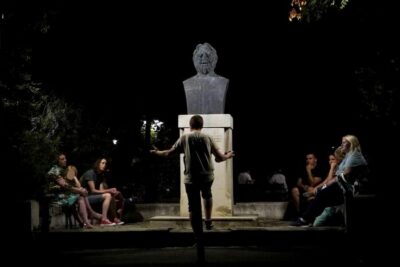 ★ 4.9Bucharest: Ghost Stories & Romanian Mythology Walking TourFrom $35287 reviews
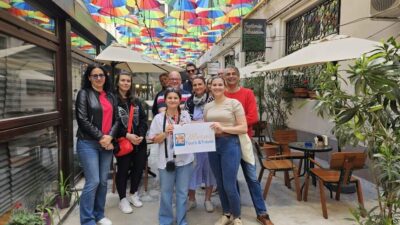 ★ 4.9Bucharest: Guided Walking Tour with Romanian SnackFrom $45228 reviews
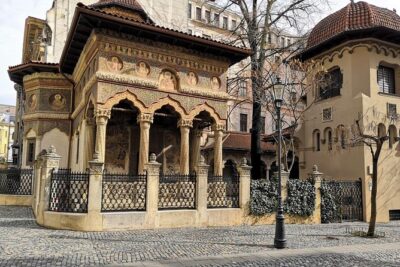 ★ 5.0Best of Bucharest | Private Walking TourFrom $314199 reviews
 ★ 5.0Walking Tour- Delightful Bucharest (Highlights, Stories, Sights)From $22145 reviews
 ★ 4.8Cluj-Napoca: 2.5-Hour Guided Walking TourFrom $34104 reviews
Browse the lists this tour appears in