
REVIEW · CLUJ-NAPOCA
Cluj – walking city tour
Cluj makes more sense on foot. This guided walking tour turns Cluj-Napoca’s Old Town landmarks into real stories, with a licensed English or French speaking guide leading you between squares, churches, and medieval walls.
I like two things a lot: you get local context at each stop (not just dates), and you can keep asking questions and steering the pace because the tour feels private and customizable. Also, with a maximum of 15 people, it stays easy to hear the guide and actually look at what you’re standing in front of.
One thing to consider before you go: entry tickets are generally not included for paid interiors, so you should expect mostly exterior time and viewpoints, with ticket-free stops making up the core of the walk.
In This Review
- Key things to know before you walk
- Cluj on foot: getting your bearings in two hours
- Why this $28.94 guided walk is good value
- Start at Museum Square: Carolina Obelisk and Franciscan details
- Matia Corvin House and the king story you can see
- St Michael’s Catholic Church and the Piarist Baroque church
- Cluj City Walls and Turnul Croitorilor, guild walls in practice
- Universitatea Babeș-Bolyai and the Reformed Church organ hall
- Avram Iancu Square to the Orthodox Cathedral finish
- Should you book this Cluj walking city tour?
- FAQ
- How long is the Cluj-Napoca walking city tour?
- What is the starting meeting point for the tour?
- Where does the tour end?
- What time does the tour begin?
- What languages is the guide available in?
- Is the tour private or group-based?
- Are entry tickets included?
- Can I cancel and get a refund?
- What happens if the weather is bad?
Key things to know before you walk
- Small group size (up to 15) keeps the tour conversational instead of lecture-y
- Licensed guide in English or French means you get the stories behind St Michael, the walls, and more
- Most stops have free admission (with one notable exception) so you can spend time sightseeing, not ticket hunting
- A flexible end point lets you stop at the Orthodox Cathedral or adjust where the walk finishes
- Two hours in the Old Town is long enough for real orientation, short enough to fit a busy day
Cluj on foot: getting your bearings in two hours
This is a morning-friendly, 2-hour walking route designed to help you understand Cluj-Napoca quickly. The tour starts at Carolina Obelisk in Piața Muzeului, then works across the Old Town in a way that connects monuments to the city’s layout. If you’ve ever wandered a new city and felt lost between “important buildings,” this type of route fixes that problem fast.
You’ll also appreciate that the walk is built around what you can see without a car. The route is in the city center, and it’s listed as near public transportation, so getting to the start point is usually straightforward. The tour uses a mobile ticket, which helps if you want to travel light.
The biggest perk is that it’s designed as a guided experience, not a self-guided checklist. The guide is there to explain why each place matters, what changed over time, and what details you might otherwise miss in passing. And since it’s private and customizable, the guide can adjust if something catches your attention more than the plan.
Why this $28.94 guided walk is good value
At $28.94 per person, this tour prices in the mid-range for a licensed city guide, but it earns its keep in how the time is structured. You’re paying for someone to connect the dots across multiple centuries, from medieval fortifications to 19th-century civic buildings.
The lineup is also practical for your wallet. Most of the stops you’ll hit have free admission, so your cost mostly goes to the guide and the walking time rather than adding ticket after ticket. One stop specifically notes admission is not included, so you can decide in advance how you want to handle that.
You also get group discounts listed, and while the tour caps at 15 people, it doesn’t feel like a crowded bus stop. In other words, you’re not just buying access to a map and a route, you’re buying explanation, pacing, and the ability to ask questions.
Finally, there’s a small but meaningful risk-management angle: the experience requires good weather. If conditions are poor, you should expect a different date or a full refund. That’s not a dealbreaker, but it is worth planning around if you’re traveling during uncertain weather.
What else Cluj puts on
Start at Museum Square: Carolina Obelisk and Franciscan details
Your first major moment is Museum Square (Piața Muzeului), with Carolina Obelisk as the visual anchor. This is the kind of start that makes later stops click, because it gives you a sense of the oldest civic core of Cluj-Napoca. The tour time at this stop is about 20 minutes, which is enough to look, listen, and get oriented.
From the square, you’ll also admire the Franciscan church and the obelisk itself. What makes this stop more than “standing in a plaza” is the way a guide can frame the city’s layers. You’ll learn how older public spaces served as meeting points and symbols of authority, which helps you read the rest of the Old Town instead of treating it as a random string of sights.
Practical tip: arrive a few minutes early so you’re ready to begin. Starting on time keeps the tour length realistic, and it helps you avoid rushing through the first stop.
Matia Corvin House and the king story you can see
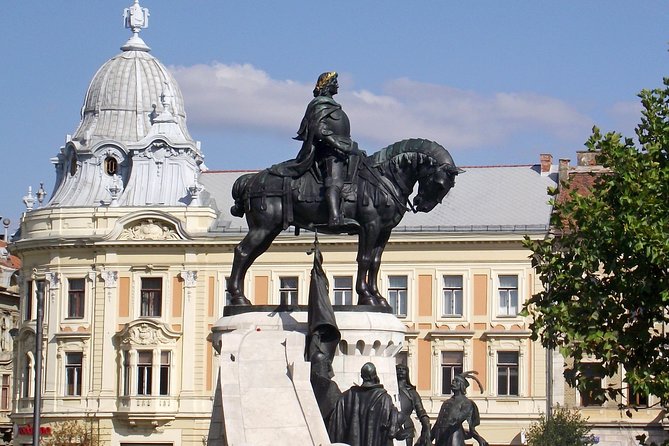
Next comes the Memorial Matia Corvin House, a stop that focuses on how people lived and displayed power. This is noted as the oldest civilian building in Cluj, and the guide brings it to life with a connection to one of the greatest kings Hungary ever had.
This stop is about 15 minutes, and admission is not included. So, expect the visit to be either exterior-based or limited to what you can see without paying an entry fee. If you’re the type who loves architecture and what buildings say about the past, this short stop is still worth it because it gives the context for later religious and civic sites.
The drawback here is also obvious: if you hoped to spend time inside, the tour notes that entry tickets are not included for paid interiors. If you want inside access, plan to pair this tour with a separate stop later if your schedule allows.
St Michael’s Catholic Church and the Piarist Baroque church
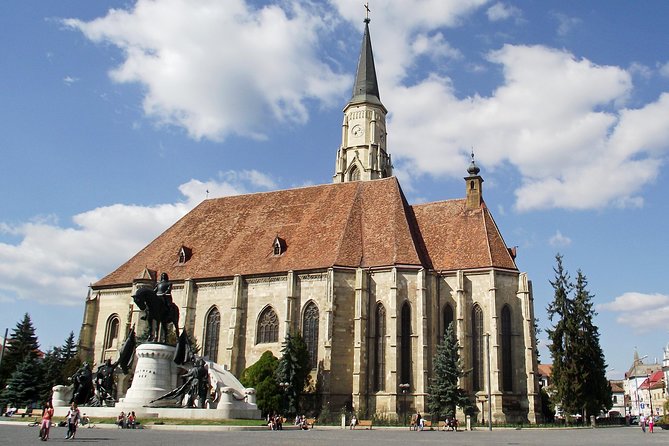
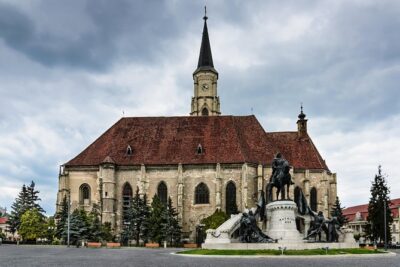
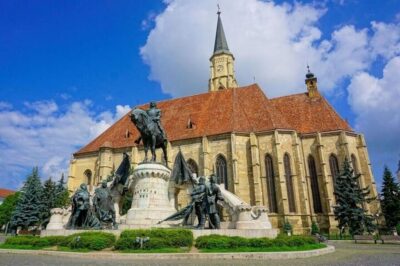
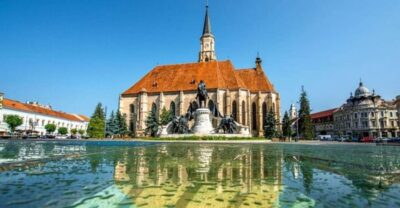
Then the tour turns fully toward the medieval and early-modern spiritual heart of the city. You’ll visit Catedrala Sfântul Mihail (St Michael’s Catholic Church). It’s described as one of the biggest medieval churches in Transylvania, and you’ll have around 20 minutes here.
This is where a good guide makes a difference. From the outside, it’s easy to admire size and style. With explanations, you start noticing things like why certain shapes and features were used, how churches functioned as community anchors, and how the city’s religious landscape evolved over time. Even if you don’t go inside, you should still leave with a clearer sense of what you’re looking at.
Right after, you’ll see Biserica Romano-Catolică Sfânta Treime Cluj-Napoca (Piaristă), noted as the first Baroque church built in what is now Romania. This stop is short, about 10 minutes, but it’s a smart pairing: you see medieval scale, then Baroque flair, and you start to feel the timeline of change.
If you enjoy comparing architectural styles, this section is one of the most satisfying parts of the walk because the transitions are close together. You’re not waiting hours to see the next “era.”
Cluj City Walls and Turnul Croitorilor, guild walls in practice
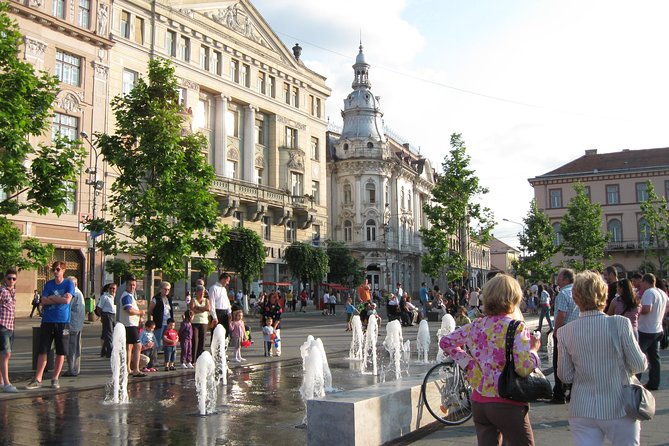
Now you get the defensive Cluj story, and it’s genuinely fun. You’ll walk toward the City Walls of Cluj, with a focus on hidden narrow streets and the 15th-century walls themselves. Expect about 15 minutes here, and the guide will point out features that are easy to miss when you’re simply passing through.
This is the stop where you really get a sense of how the city grew and how protection shaped daily movement. Medieval walls were not just barriers. They affected trade routes, neighborhood boundaries, and who could travel where.
Next comes Turnul Croitorilor, one of the very few defense towers preserved from medieval fortifications. It’s about a 5-minute stop, but don’t treat it like a quick photo moment. The guide ties the tower to the importance of guilds in the city’s development, so the architecture becomes part of the social story.
If you like places that connect stone to people, this is a strong stretch. You’ll leave with a better understanding of how trades and civic life influenced what survived into modern times.
More Cluj Napoca on foot
Universitatea Babeș-Bolyai and the Reformed Church organ hall
After the medieval wall story, you shift toward education and music. The tour passes Universitatea Babeș-Bolyai din Cluj-Napoca, the headquarters of what’s described as the second most important university in Romania. This stop is brief, around 5 minutes.
You might think this would feel like a drive-by, but it’s useful because it shows how Cluj is not only a historic city. Even while the tour stays in the Old Town, the presence of the university reminds you the city’s identity includes scholarship and modern life, not just monuments.
Then you’ll stop at the Reformed Church, a 15th-century church where organ concerts are organized. You’ll also see a note about one of the biggest coat of arms collections in this part of Europe. You’ll have about 10 minutes here, and this is another case where listening matters. Coat of arms displays can look like decorative filler if you don’t get the background, but with the guide’s framing you’ll understand how symbolism worked in local power and community identity.
If you’re a music lover, keep it in mind that the church is specifically tied to organ concerts. Even if there’s no concert during your visit, the fact that the building still serves that purpose helps it feel like a living part of the city.
Avram Iancu Square to the Orthodox Cathedral finish
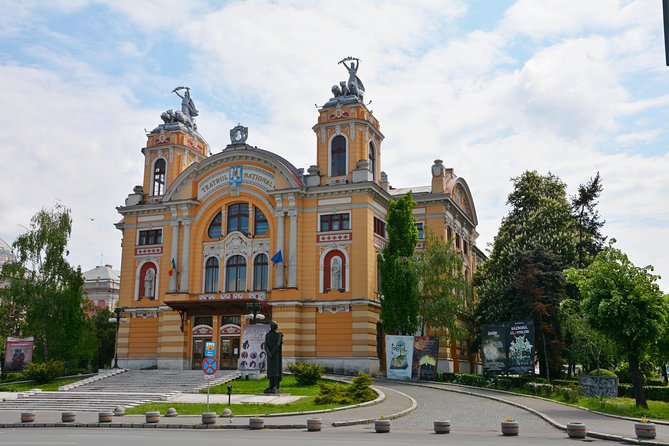
The walk then moves to Avram Iancu Square, where many of the prominent buildings, including the National Theatre, were built starting at the end of the 19th century. This is a good pivot moment. Medieval walls and church towers give you depth, and then the square shows a more modern civic plan.
Finally, the tour ends at the Dormition of the Mother of God Metropolitan Cathedral, with around 15 minutes there. This is described as an Orthodox church, and the focus is on discovering the interior decoration. Admission is listed as free for this stop, and that’s a big win because it means you can often spend real time seeing the interior rather than just photographing the facade.
One of the nice details is that the end point is flexible. You normally finish at the cathedral, but the tour notes it’s not a must and the guide can decide where the walk ends together with you. That flexibility matters if you want to connect immediately to another attraction, a café, or a museum without backtracking.
Should you book this Cluj walking city tour?
If you want a structured way to understand Cluj-Napoca in a short time, this is an easy yes. The tour is built for orientation, with a licensed guide sharing stories that make landmarks feel connected instead of random. The small group size helps, and the ability to customize the route gives you a little control.
I’d especially recommend it if you:
- want help noticing details on churches, walls, and towers
- prefer guided explanations over wandering with a map
- enjoy asking questions and getting answers on the spot
- like tours that mix different eras, from medieval fortifications to 19th-century civic sites
I’d skip it or plan differently if:
- you mainly want paid interior visits, because entry tickets are not included for places that require them
- your schedule is so tight that a 2-hour walking window is hard to protect
If you’re deciding based on guide style, here’s what I’d watch for when you book: a guide who can explain how dates, events, and famous personalities connect to the buildings you’re seeing. That’s the difference between taking photos and really getting the city.
Overall, this is the kind of Cluj walk that helps you feel like you know where you are and why the landmarks matter, even if it’s your first time in town.
FAQ
How long is the Cluj-Napoca walking city tour?
It lasts about 2 hours.
What is the starting meeting point for the tour?
The start is at Carolina Obelisk, Piața Muzeului 2, Cluj-Napoca 400394, Romania.
Where does the tour end?
It normally ends at the Dormition of the Mother of God Metropolitan Cathedral at Piața Avram Iancu, Cluj-Napoca, but the end point is flexible and can be decided together with you.
What time does the tour begin?
The start time is 10:00 am.
What languages is the guide available in?
The tour includes a professional English or French speaking guide.
Is the tour private or group-based?
It is described as private and customizable, with a maximum of 15 travelers.
Are entry tickets included?
Entry tickets are not included. The tour notes that there are no interior visits that require a ticket to be previewed, and it lists which stops have free admission versus a stop where admission is not included.
Can I cancel and get a refund?
Yes. You can cancel up to 24 hours in advance for a full refund.
What happens if the weather is bad?
The experience requires good weather. If it is canceled due to poor weather, you will be offered a different date or a full refund.
Whatever Else Cluj Napoca Is Selling
- Curly Tour – Day trip from Cluj 🙂
★ 5.0 · 330 reviews - Cluj: Turda Salt Mine, Corvin Castle, Alba Carolina Tour
★ 4.8 · 184 reviews - Cluj-Napoca: 2.5-Hour Guided Walking Tour
★ 4.8 · 104 reviews - Turda salt mine 4h tour from Cluj
★ 5.0 · 73 reviews - Turda Salt Mine 4h guided tour from Cluj
★ 4.9 · 45 reviews
Everything Else We Reviewed In Cluj Napoca
- Curly Tour – Day trip from Cluj 🙂
★ 5.0 · 330 reviews - Cluj: Turda Salt Mine, Corvin Castle, Alba Carolina Tour
★ 4.8 · 184 reviews - Cluj-Napoca: 2.5-Hour Guided Walking Tour
★ 4.8 · 104 reviews - Turda salt mine 4h tour from Cluj
★ 5.0 · 73 reviews - Turda Salt Mine, Corvin Castle and Alba Fortress from Cluj
★ 5.0 · 65 reviews
What Cluj Does Next
- Curly Tour – Day trip from Cluj 🙂
★ 5.0 · 330 reviews - Cluj: Turda Salt Mine, Corvin Castle, Alba Carolina Tour
★ 4.8 · 184 reviews - Cluj-Napoca: 2.5-Hour Guided Walking Tour
★ 4.8 · 104 reviews - Turda salt mine 4h tour from Cluj
★ 5.0 · 73 reviews - Turda Salt Mine, Corvin Castle and Alba Fortress from Cluj
★ 5.0 · 65 reviews
Recently added around Cluj Napoca
- Transylvania’s Trail: Sibiu, Bran Castle, Brasov, Sighisoara★ 4.6 · 3 reviews
- CJ05 – Mysteries of Transylvania: Bran Castle & Sighisoara★ 4.8 · 3 reviews
- Two days tour to Bucovina & UNESCO Painted Monasteries★ 5.0 · 3 reviews
- Cluj – walking city tour★ 5.0 · 3 reviews
- Sighisoara & wine tasting (from Cluj)★ 5.0 · 4 reviews
Cluj-Napoca Tours, compared.
 ★ 5.0Curly Tour – Day trip from Cluj 🙂From $107330 reviews
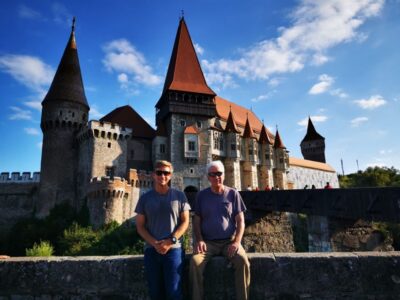 ★ 4.8Cluj: Turda Salt Mine, Corvin Castle, Alba Carolina TourFrom $140184 reviews
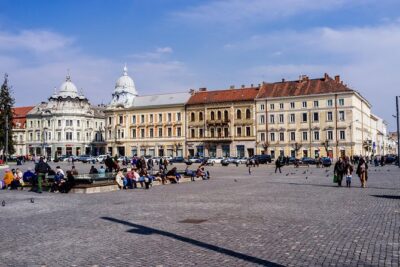 ★ 4.8Cluj-Napoca: 2.5-Hour Guided Walking TourFrom $34104 reviews
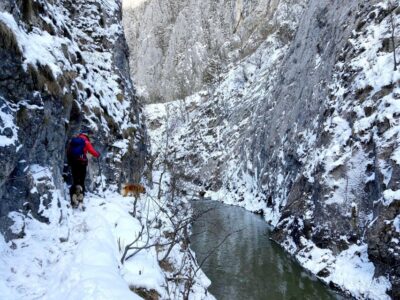 ★ 5.0From Cluj: Turda Salt Mine, Gorge, and Remetea Full-Day TripFrom $13184 reviews
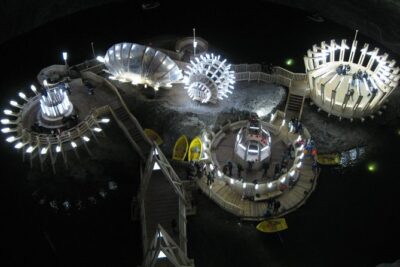 ★ 5.0Turda salt mine 4h tour from ClujFrom $6073 reviews
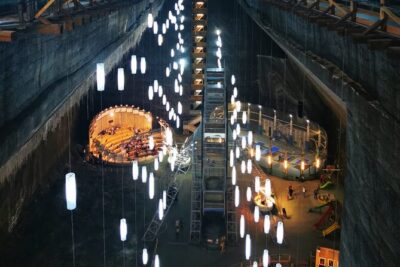 ★ 5.0Turda Salt Mine, Corvin Castle and Alba Fortress from ClujFrom $14365 reviews
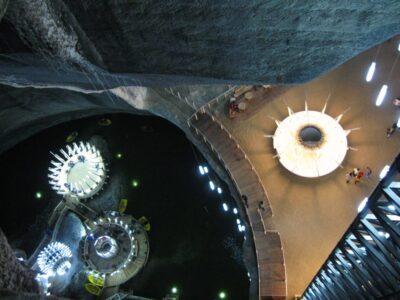 ★ 4.9Turda Salt Mine 4h guided tour from ClujFrom $7645 reviews
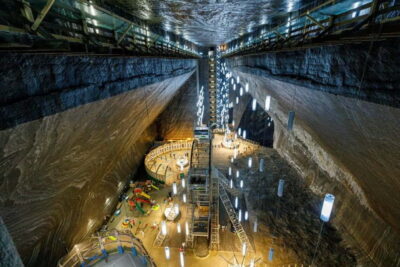 ★ 4.9Cluj: Turda Salt Mines, Rimetea, and Coltesti Fortress TourFrom $10142 reviews
Browse the lists this tour appears in