
REVIEW · RURAL ROMANIA
Private Tour – Food, Culture, History & Traditions
A walking tour that feeds you and teaches you. This private loop through Bucharest connects street food origins to the city’s big political swings and architectural styles. I especially like the way the route keeps you moving from one meaningful landmark to the next, and how the meal at the end is built into the experience instead of feeling like an afterthought. One thing to consider, it is still a solid city walk of about 6 km, so good shoes matter.
What helps is the pace and the format. You get a private group (just your party), guidance in English, and audio devices if your group grows beyond 4 people so you can actually hear. The tour runs about 4 to 5 hours, it uses a mobile ticket, and all listed stops are free to enter, so you are not budgeting time for ticket lines.
In This Review
- Key highlights before you lace up
- How this Bucharest walk stays interesting all afternoon
- Old Town first: trading streets and the origin story behind mici
- Stavropoleos Monastery, CEC Palace, and quick hits that set the tone
- Macca Villacrosse Passage and the money-and-design story
- Calea Victoriei and Pasajul Victoriei: glamour meets a darker past
- Revolution Square, Ateneul Român, and the Royal Palace connection
- Bulevardul Dacia villas, Central School stories, and the Armenian quarter
- Gradina Icoanei: the witchy edge of Bucharest
- Lunch that matters: two courses plus Romanian starters
- Guides, pacing, and how to hear the story clearly
- Price and value: is $114.14 per person a fair deal?
- Who should book, and who should skip it
- Should you book this Private Tour?
- FAQ
- How long is the Private Tour – Food, Culture, History & Traditions?
- What does it cost per person?
- Is this tour private?
- What language is the tour offered in?
- What is included with the tour besides the walking?
- How far do you walk, and is it physically demanding?
- Where does the tour start and where does it end?
- Are service animals allowed?
Key highlights before you lace up
- Food history you can picture, starting with the story behind mici and where Bucharest’s trading culture took shape
- Architectural variety in walking distance, from a monastery to major palaces and banking buildings
- Avenue-to-passage contrasts, including the famous passages that show off Bucharest’s design flair
- Three big eras in one morning, old trade streets, royal institutions, and the shock of the 1989 revolution
- A real included lunch, with a starter platter plus a two-course main meal, and no need to hunt for a place
How this Bucharest walk stays interesting all afternoon
Bucharest is the kind of city where you can get lost quickly if you only chase famous sights. This tour gives you a structure. You start in the Old Town area, then widen out to major civic landmarks, famous boulevards, and neighborhoods with a different feel and a different story.
The value is not just that there are many stops. It is that the stops are chosen to explain the city. Buildings show you power, trade, and shifting taste. Food shows you daily life and local identity. And the long boulevard sections help you understand how Bucharest grew and where people wanted to be seen.
Because the tour is private, you can move at a pace that fits you. If you like photos, there are natural pause points. If you like asking questions, this format is better than a loud group where you cannot hear the guide.
Old Town first: trading streets and the origin story behind mici
The walk begins in the Old Town area, where the local story starts with commerce. This is where trading goods business flourished, and it is also tied to the legend of where mici was invented. Whether you treat that as origin fact or folklore, it works as a perfect opener. Food history lands faster when you are standing near the street-style setting that created it.
This part is short, about 30 minutes, and the entry is free. That means you are not bogged down early. You also learn how to read the neighborhood quickly: look for the street rhythm and the mix of old and newer details, then think of it as a place that fed daily life as much as it hosted big events.
One practical tip: in this area, give yourself a couple of extra moments to slow down and look up. Older centers often reward you more for what you notice at eye level and higher than for what is happening at ground level.
Village days, other versions
Stavropoleos Monastery, CEC Palace, and quick hits that set the tone
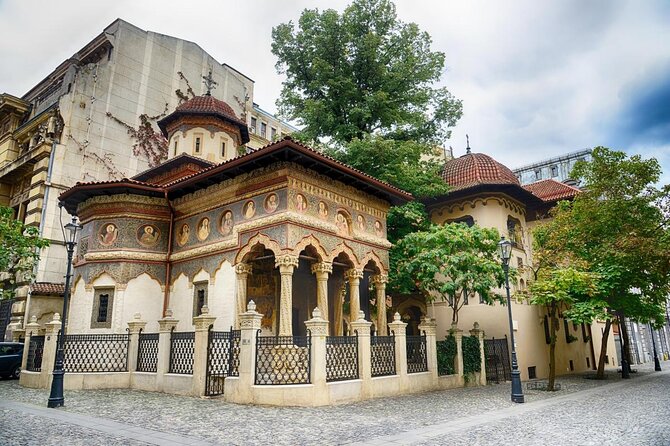
Next you stop at Stavropoleos Monastery, described as an 18th century Romanian Renaissance monastery. Even though your time here is just a few minutes, this is a strong reset. After the Old Town’s food and street logic, the monastery gives you a different scale and a different kind of Bucharest identity.
The stop count stays low at several landmarks, which is ideal if you have limited time. You are getting snapshots, not a rushed marathon where you cannot absorb anything.
Then you glide past the Palatul CEC, the late 19th century eclectic building tied to CEC Bank. A bank palace might sound like a detour, but it is a useful reminder that institutions shaped the city’s look just like churches and royal buildings did. You get a quick way to connect finance, architecture, and social status in one glance.
A quick drawback to note: because these are brief stops, you will want to stay engaged and ask questions if you want more detail. If you tend to drift, you might wish there were longer pauses.
Macca Villacrosse Passage and the money-and-design story
Bucharest’s passages are some of the best places to understand how the city once worked. Macca Villacrosse Passage is often singled out for being the most beautiful passage of the city, and this stop lasts about 5 minutes. In that short window, focus on two things: the ceiling and the street connection. Passages like this are a lesson in how people moved and shopped before cars became the center of city life.
After that comes the BNR Palace. This is the national bank of Romania, and the tour also points out the Marmorsch Blank Bank building, now turned into a hotel. That reuse matters. It tells you the city keeps rewriting its own story, sometimes by giving old structures a new job.
If you like architecture, this is a sweet spot in the route. You see design choices connected to real institutions, not just decorative facades.
Calea Victoriei and Pasajul Victoriei: glamour meets a darker past
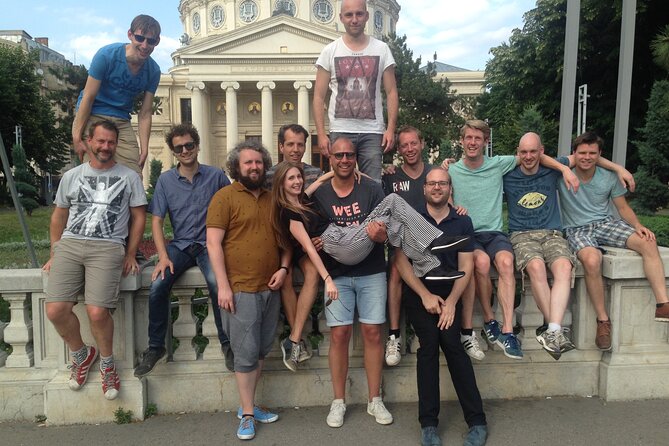
Calea Victoriei is described as the heart of Bucharest since the 19th century, and the tour gives you about 30 minutes here. That time is long enough to feel the boulevard as a concept. This is where the city shows its ambition: wide streets, showy architecture, and the sense that Bucharest wanted to look modern.
Then you head to Pasajul Victoriei, paired with Pasjul Englez. The tour frames this area with a reminder that it used to be a former brothel located on the main avenue, with a convenient back entrance. It also notes that the king and higher class used to party there. That subject matter is not everyone’s comfort zone, but it is part of the full picture.
If you prefer tours that stay light, you can still enjoy the architecture and the social history as long as you are okay with the fact that cities had hidden corners. If you are not comfortable with that theme, ask your guide to steer the explanation more toward the buildings and less toward the explicit details.
Revolution Square, Ateneul Român, and the Royal Palace connection
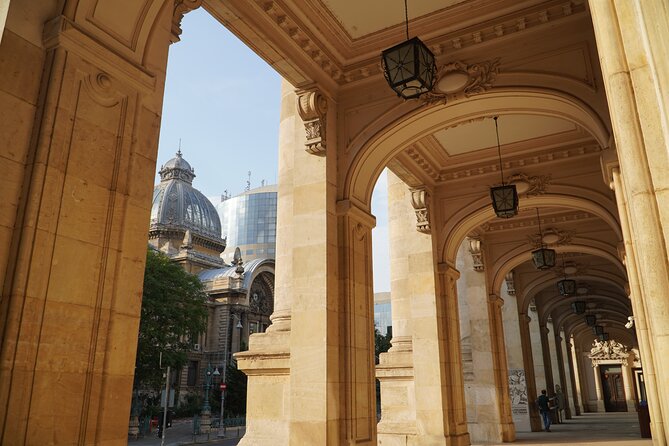
Piaka Revolukiei is your revolution moment, and it is tied directly to where Ceausescu held his last speech at the start of the bloody 1989 revolution. Your time here is about 10 minutes. This stop matters because it makes the political story feel specific. You are not just hearing dates. You are seeing the setting linked to the turning point.
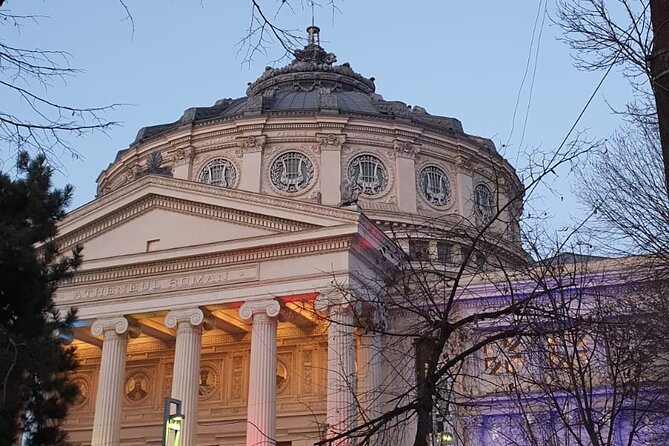
A short walk later is Ateneul Roman, where you get to admire one of the most beautiful buildings in Bucharest. The time is about 5 minutes, but this is another instance of smart scheduling. You are shifting from politics to culture: from crisis to art, from public speech to a famous cultural landmark.
Then you reach Palatul Regal, also known as the Royal Palace, which now houses the national art museum. Even if you are only stopping briefly at the exterior, the point is clear. Bucharest’s power shifted from monarchy to modern state culture, and the same bones of the city were repurposed.
If you like a logical arc, this section is it: regime change, then cultural identity, then a museum that keeps the story in the present.
Eat your way further into Bucharest


Bulevardul Dacia villas, Central School stories, and the Armenian quarter
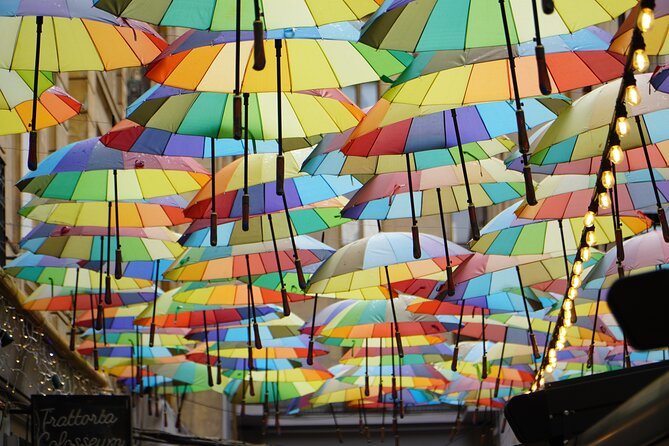
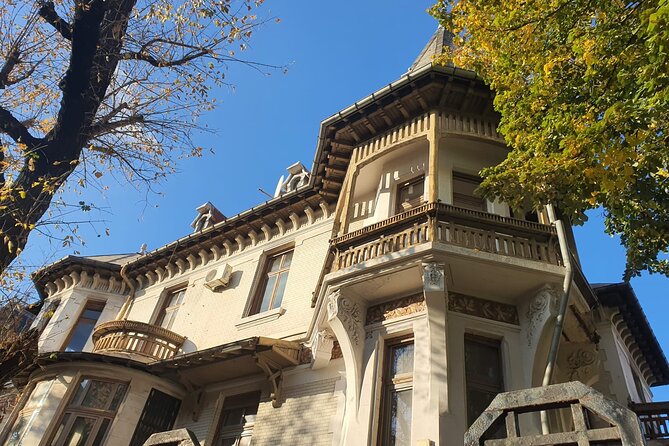
Now the tour turns more residential and neighborhood-based. On Bulevardul Dacia, you see magnificent villas and examples of neo-Romanian architectural style. You get about 20 minutes here, long enough to notice that this is not just one building, it is a mood. The style is tied to national identity, and the villas help you understand what the city looked like when it wanted to project confidence.
Next comes Colegiul Național Școala Centrală, described as a 19th-century boarding school for girls with an eerie story atmosphere. Your time is about 5 minutes, so again, you are getting impressions. But a school is an underrated landmark type. Education shapes society, and in Bucharest, those historic institutions are woven into the built environment.
Then you move to Cartierul Armenesc, the Armenian neighborhood, with a focus on history, hidden gems, and mystery. This part lasts about 30 minutes. Neighborhood time is where the tour earns its credibility, because you feel the day-to-day texture rather than only seeing big formal monuments.
If you like wandering with a purpose, this is the section to pay attention in. Look for side streets and small architectural details. That is where the charm lives.
Gradina Icoanei: the witchy edge of Bucharest

The last stop is Gradina Icoanei, where the tour notes that not far in the past, witches were believed to cast spells. The time is about 10 minutes, and this is more of a flavor stop than a must-see museum moment.
But that makes it memorable. Bucharest is not only about kings, bankers, and revolution dates. It also includes superstition, folklore, and the way people made sense of fear and uncertainty. A stop like this gives you a more human view of the city, even if you treat the witch stories as folklore.
If it is cloudy or late in the day, this is also a good place to ask your guide to wrap up themes. You can connect how daily life and beliefs fit into the bigger history you have been walking through.
Lunch that matters: two courses plus Romanian starters
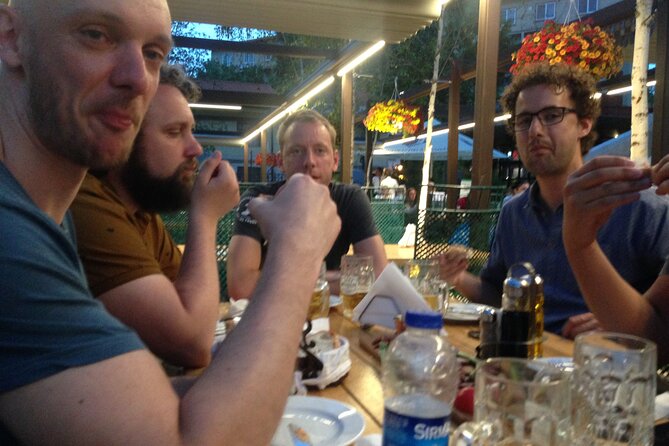
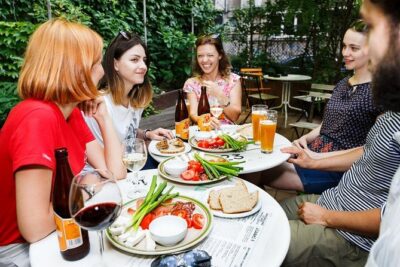
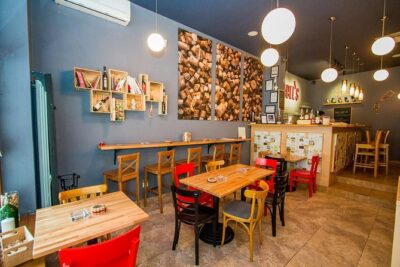
The included meal is a full lunch (or dinner) with two courses. You also start with a platter featuring cheeses and charcuterie, plus other Romanian starters. That matters for value because it keeps the experience cohesive. You are not paying for a separate meal later, and you are not stuck improvising lunch while you are tired from walking.
Alcoholic beverages and soda are not included, so plan to budget for drinks if you want them. If you prefer keeping costs predictable, stick to water or choose a drink only if it fits the meal and you are in the mood.
One practical thought: because the tour is about 4 to 5 hours, a real meal at the end helps you avoid the classic tourist mistake of under-eating, then paying too much for convenience. This itinerary takes care of the timing for you.
Guides, pacing, and how to hear the story clearly
The tour is English-language, and audio devices are provided if the group exceeds 4 people. That is a smart fix in a city with lots of street noise. Even in a private setting, you still want to be in the best spot to hear.
In feedback, a guide named Bianca is praised for balancing the keynotes of Romanian history with specific building details. That storytelling approach is what turns landmarks into something you can remember. There is also mention of her being soft spoken at times, so if you want the fullest experience, stay close and ask questions when you stop walking.
If you care about photos, you will also appreciate that the guide helps with photo opportunities and you can adjust the route based on what you find interesting. That flexibility is one of the best perks of a private format.
Price and value: is $114.14 per person a fair deal?
At $114.14 per person for about 4 to 5 hours, you are paying for a guided walk with a full meal included, plus all fees and taxes. That is not cheap, but it is not overpriced either given what is included.
Here is how I think about the value:
- You get free entry at the listed stops, so you are not stacking extra admission costs.
- The meal is a two-course lunch or dinner with starter platters, which is often the biggest cost for a short city morning.
- You avoid decision fatigue. You do not have to plan the sequence of neighborhoods, palaces, passages, and revolution sites yourself.
It can be a less good deal if you only want to casually stroll and do not care about history or food. But if you want a guided framework and you plan to eat a proper Romanian meal anyway, this becomes a solid spend.
Who should book, and who should skip it
This tour fits best if you want:
- A structured introduction to Bucharest in one morning or afternoon
- Food culture and architecture tied together
- A private pace, with a guide who can explain what you are seeing
It might not fit if:
- You dislike walking and standing, since the route is about 6 km and requires a minimum physical fitness level
- You prefer strictly cheerful themes, because the route includes the revolution story and a darker historical context around Pasajul Victoriei
Weather matters too. Since it is an outdoor walking tour, poor weather can lead to changes or a refund or a different date offer.
Should you book this Private Tour?
Yes, if you want a first taste of Bucharest that is more than a highlights list. The big reason is the balance: you get food story context, you see meaningful architecture, and you end with an included two-course Romanian meal. That combo makes the money feel grounded.
Skip it only if your priority is a slower, minimal-walking day, or if you would rather spend your time on a single major museum rather than moving through 14 stops with lots of social and political context.
If you are here for a short stay, this is the kind of guided loop that helps you understand what you will notice later on your own.
FAQ
How long is the Private Tour – Food, Culture, History & Traditions?
It runs about 4 to 5 hours, approximately.
What does it cost per person?
The price is $114.14 per person.
Is this tour private?
Yes. It is private, so only your group participates.
What language is the tour offered in?
The tour is offered in English.
What is included with the tour besides the walking?
You get an included lunch full meal with 2 courses, plus a platter with Romanian starters such as cheeses and charcuterie. All fees and taxes are included. Alcoholic beverages and soda are not included.
How far do you walk, and is it physically demanding?
The route is approximately 6 km, and it requires a minimum physical fitness level.
Where does the tour start and where does it end?
The start is Bulevardul Ion C. Brătianu 36, 030167 București, Romania. The end is at University Square, Bulevardul Regina Elisabeta, București 030167, Romania.
Are service animals allowed?
Yes, service animals are allowed.
Whatever Else Bucharest Is Selling
- Bucharest to Dracula Castle, Peles Castle and Brasov Guided Tour
★ 4.5 · 2,933 reviews - Bucharest: Palace of Parliament Tickets and Guided Tour
★ 4.4 · 1,877 reviews - Transylvania and Dracula Castle Full Day Tour from Bucharest
★ 4.5 · 1,589 reviews - Bucharest: City Highlights Guided Walking Tour
★ 4.9 · 1,482 reviews - From Bucharest: Brasov Peles & Dracula’s Castle Day Tour
★ 4.5 · 1,244 reviews
Everything Else We Reviewed In Bucharest
- Bucharest: Dracula’s Castle, Peles Castle, & Brasov Old Town
★ 4.5 · 17,858 reviews - Bucharest: Dracula Castle, Peles Castle & Brasov Old Town
★ 4.6 · 10,891 reviews - Bucharest: Dracula’s Castle, Peleș Castle & Brașov Day Trip
★ 4.5 · 5,919 reviews - Bucharest: Palace of Parliament Tickets and Guide
★ 4.3 · 3,182 reviews - Bucharest: Day Trip to Dracula Castle, Peles Castle & Brașov
★ 4.4 · 3,049 reviews
Village Romania, Other Days
- Slavery in Romania,Myths and Truths on Gypsies, Walking Tour
★ 4.9 · 42 reviews - Original Carpathian Village Experience and Sinaia in one day tour
★ 5.0 · 40 reviews - Palace of the Parliament, Village Museum & Ceaușescu Mansion
★ 4.9 · 31 reviews - Traditions in Bucharest: Village Museum and Wine Tasting Tour
★ 5.0 · 27 reviews - Private Bucharest city tour visit the Palace of the Parliament & Village Museum
★ 4.5 · 21 reviews
Recently added around Bucharest
- Private Tasting Expedition Along Romania’s Most Famous Wine Route★ 5.0 · 3 reviews
- Private Guided Tour of Peles Castle and Bran Castle from Bucharest★ 5.0 · 3 reviews
- Private Sightseeing Tour of Bucharest★ 4.5 · 3 reviews
- Discover Europe’s Deepest Mines & Peles Castle’s Royal Charm★ 5.0 · 3 reviews
- Bucharest City Tour and Wine Tasting★ 5.0 · 3 reviews
Village Life and Rural Traditions, compared.
 ★ 5.0Small-Group Day Trip in Romanian Authentic Mountain Villages from BrasovFrom $11978 reviews
 ★ 4.8From Brasov: Romanian Mountain Villages Day TourFrom $11656 reviews
 ★ 4.9Slavery in Romania,Myths and Truths on Gypsies, Walking TourFrom $2942 reviews
 ★ 5.0Original Carpathian Village Experience and Sinaia in one day tourFrom $17840 reviews
 ★ 5.0Exclusive Tour: Corvin Castle, Alba Iulia and traditional villages from SibiuFrom $15633 reviews
 ★ 4.9Palace of the Parliament, Village Museum & Ceaușescu MansionFrom $4531 reviews
 ★ 4.9Transylvania Gems: Sighisoara, Medias, Biertan & Gypsy lifeFrom $20229 reviews
 ★ 5.0Traditions in Bucharest: Village Museum and Wine Tasting TourFrom $14827 reviews
Browse the lists this tour appears in