
REVIEW · RURAL ROMANIA
Slavery in Romania Myths and Truths About Gypsies
Bucharest tells Roma history through real streets. This 3-hour walk is built around names and places, so the themes of Slavery in Romania myths and truths about Gypsies feel grounded, not like abstract lecturing. I like that it moves at a human pace, with art, politics, and memory tied together in a simple route.
I love how the guide, Mihai, uses Bucharest landmarks to explain what people get wrong about Roma history, especially when stereotypes blur the story. I also love the emotional weight handled in a respectful way, with stops like the Holocaust Memorial that make the topic feel real and local, not distant.
One drawback to plan for: you are walking most of the 3 hours, and the Holocaust content is heavy. If you want only light sightseeing today, this might feel like too much.
In This Review
- Key points you should know before you go
- Why this tour works: myths get tested against real places
- Meeting at Teatrul Ion Creangă and the simple plan for your 3 hours
- Romanian Athenaeum: art and power in the same building
- Iuliu Maniu statue: when politics meets the Roma narrative
- Palatul Stirbei: a quick 19th-century setting you can feel
- Cismigiu Park and the school corridor: education as a theme
- Holocaust Memorial: handling the Roma story with the attention it deserves
- Piața Mihail Kogalniceanu: first writing on Romanian Gypsies
- Ending at Mesteshukar ButiQ (MBQ): crafts, identity, and respectful shopping
- Price and value: what you get for about $127
- Who this tour fits best
- Should you book? My take
- FAQ
- How long is the tour?
- What language is the tour in?
- Where do I meet, and where does the tour end?
- What is included in the price?
- Are admissions included or free at the stops?
- Is the tour walking-heavy and how big are the groups?
Key points you should know before you go
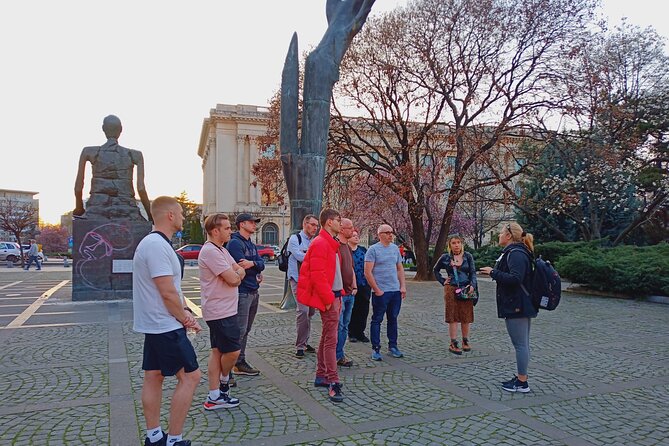
Small group size (max 15) keeps the discussion practical and easy to follow
Stops include named historical figures, including Iuliu Maniu and Mihail Kogalniceanu
The route blends culture and context, from the Romanian Athenaeum to Cismigiu Park
A Holocaust Memorial stop focuses on the Roma story in World War II and the idea of the forgotten Holocaust
You end in Mesteshukar ButiQ (MBQ) for handmade crafts and a chance to shop thoughtfully
A cake snack is included, and coffee or tea is an extra cost
Why this tour works: myths get tested against real places
This is the kind of history tour that helps you form opinions you can actually back up. Instead of asking you to memorize slogans, you walk through Bucharest and meet the people and institutions that shaped modern Romania and the Roma story in the same frame.
The tour is also designed for pacing. You get a quick sequence of stops, each one adding a new layer. That matters, because “myths and truths” can go off the rails if you only hear one side. Here, you get multiple entry points: art and public buildings, education, political figures, and a major memorial.
You should also know what you are walking into emotionally. The tour addresses Roma during World War II and a monument connected with the name The Forgotten Holocaust. That stop deserves your full attention. Bring the mindset that today is about understanding, not just ticking boxes.
Meeting at Teatrul Ion Creangă and the simple plan for your 3 hours
The tour starts at Teatrul Ion Creangă, Sala Mare, on Strada Piata Amzei 13 in Bucharest, with a start time of 10:00 am. It ends at Mesteshukar ButiQ, MBQ, on Bulevardul Mihail Kogalniceanu 12.
You will spend the remaining time walking between stops. The tour is listed for moderate physical fitness, which usually means you should wear comfortable shoes and expect city sidewalks and some standing time. The group stays small, with a maximum of 15 people, and it runs in English with a professional guide.
A practical detail that makes the day easier: you get a cake snack included. Coffee or tea is not included, though there is a short stop where you can cover that cost yourself.
If you like tours that respect your time, this one does. The schedule is built around short visits, about 10 to 30 minutes per stop, so you keep moving and the story stays tight.
Village days, other versions
Romanian Athenaeum: art and power in the same building
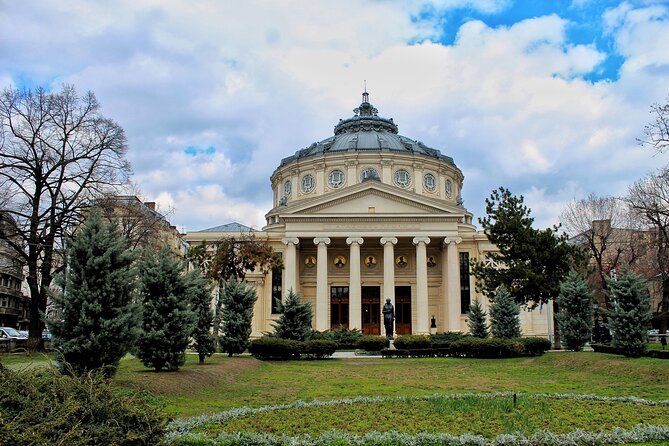
Your first stop is the Romanian Athenaeum, a landmark tied to Romania’s House of Art. This matters because you are not starting in a memorial context. You are starting with culture, with a major performance and music institution, and that sets the tone that public life in Romania has many layers.
Even if you only spend about 20 minutes here, it is a powerful opening because it gives you an anchor point in Bucharest. You see how art and national identity intertwine. And in a tour like this, that is not fluff. The way nations present themselves in art, architecture, and institutions shapes how stories get accepted, repeated, or erased.
One practical plus: the tour flags the stop as admission ticket free. If you are trying to keep costs down without sacrificing important stops, that helps.
If you dislike crowds inside popular venues, you might want to time your quick look and stick to what the guide points out first. But overall, it is an effective start.
Iuliu Maniu statue: when politics meets the Roma narrative
Next you meet the Iuliu Maniu statue, also with about a 20-minute stop. The key reason this matters is the connection your guide makes between Romania’s political development and the Roma story.
Iuliu Maniu is presented as an important historical figure in Romania’s political life, and the tour ties him into the wider narrative, including the story of Roma and the building of modern Romania. That is useful because it links policy and power to real outcomes, rather than treating Roma history as separate from “mainstream” national history.
You also get a reminder that political figures leave marks in public space, and those marks become teaching tools. A statue can be a shortcut to bigger questions: who wrote the rules, who enforced them, and whose voices got amplified.
As with other stops, this one is listed as free admission. Your time here stays focused, and the short duration means you are not stuck in one place too long.
Palatul Stirbei: a quick 19th-century setting you can feel
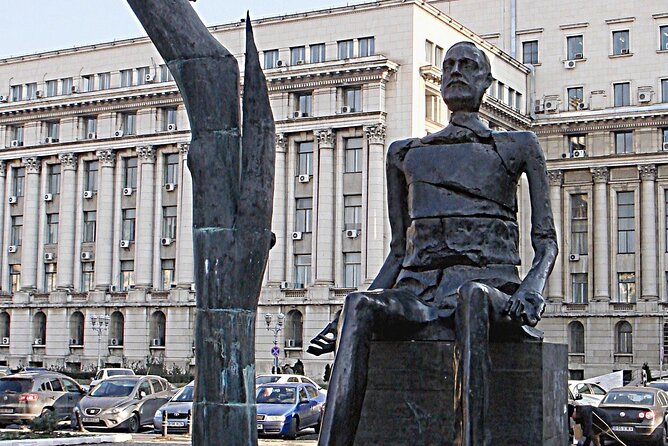
You then get Palatul Stirbei, about a 20-minute stop. This is framed as a short dive into the 19th century, specifically the home of Barbu Stirbey, a ruler of Valachia tied to the tour’s story.
This kind of architectural stop can either be boring or useful, and here it is positioned as context. Big houses and elite residences are the physical proof of social structure. They help you understand how hierarchy worked in earlier eras and why certain narratives were easier to control than others.
You are not spending all day in a museum. You are getting just enough setting so the rest of the route feels less random. The tour’s pacing helps: you leave one named story, move to another, and keep building a picture.
Again, the stop is listed with free admission. So you get the benefit of place-based context without extra ticket friction.
Cismigiu Park and the school corridor: education as a theme
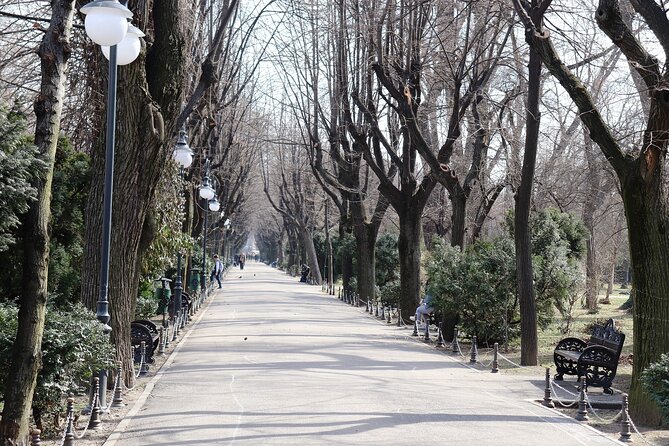
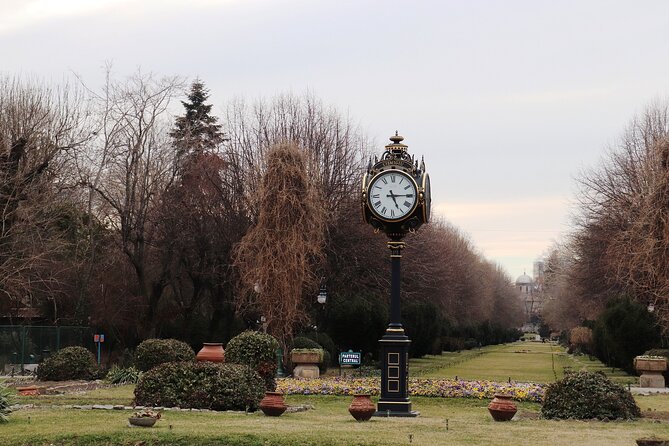
Cismigiu Park is one of those places where you can breathe for a bit. The tour gives you about 30 minutes here, and it is described as the largest and most beautiful garden in the city. But the park is not only scenic. It is connected to the story with several “on the way” stops and small surprises.
You can expect a walk through the park with points that the guide uses to connect education and social life. One named landmark is Gheorghe Lazar National College, placed at about the entrance to Cismigiu Park. You spend around 15 minutes there.
Education is stated as the key to everything, and the way this is used in the tour makes sense. Roma stereotypes often reduce people to one story, but education changes how communities grow, how policies impact lives, and how future generations access opportunity. Even if you only get short stops, the guide uses the symbolism of schools and schooling to push that theme forward.
Practical tip for this portion: the park walk is part of your walking time. If you have limited stamina, keep your pace steady but do not race. You want to stay with the group so you do not miss the guide’s connections.
This portion also helps break up the heavier moments later. It gives you a mental reset before you step into the memorial segment.
If you want it darker

Holocaust Memorial: handling the Roma story with the attention it deserves
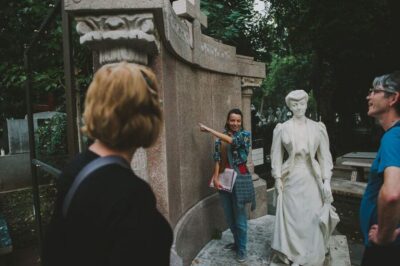
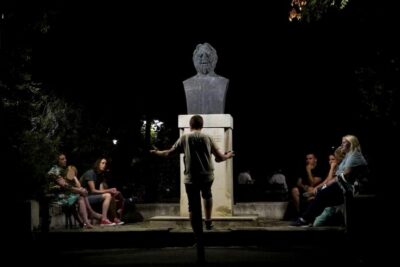
The most emotionally heavy stop is the Holocaust Memorial, about 15 minutes. Here the tour focuses on the rough story of Roma during World War II and what is known as The Forgotten Holocaust.
This is not a generic “Holocaust overview.” The tour specifically keeps the attention on Roma victims and memory, and that focus is exactly why it stands out. When a story is forgotten or under-taught, it often feels like it happened somewhere else, to someone else. A memorial in Bucharest changes that. It anchors the topic in a local geography.
If you are sensitive to difficult history, this is the part where you should slow down mentally and let it land. You do not need to force yourself to “move on quickly.” The stop is short, but your attention can be full.
The stop is listed with free admission. That means you get access without paying extra, which is a real value point for a tour that already includes a snack and a professional guide.
Piața Mihail Kogalniceanu: first writing on Romanian Gypsies
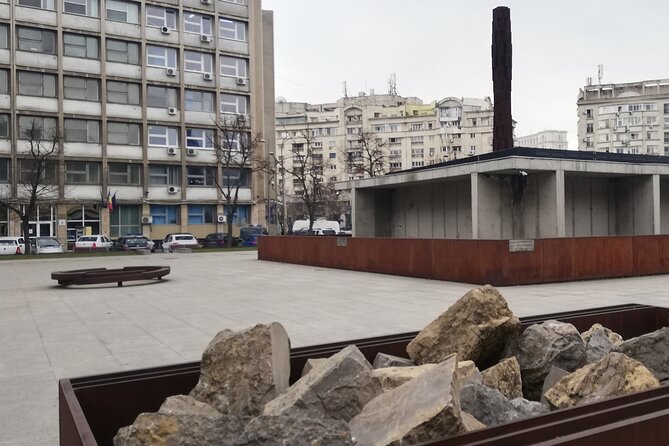
At Piața Mihail Kogalniceanu, about 10 minutes, you meet Kogalniceanu in the context of the tour. He is described as a famous politician and writer, and the tour highlights him as the first one to write about Romanian Gypsies.
This stop is a reminder that written words matter. The first time someone puts a group into print, it can shape how readers define people for generations. In a “myths and truths” tour, that is a critical idea. Your guide uses this place to talk about how early writing can become the seed for stereotypes, or the beginning of more accurate understanding, depending on how it is handled.
Even though the stop is brief, it is conceptually strong. You get a way to connect literature and politics to lived consequences.
As with the other major stops, the tour flags admission ticket free here as well, so there is no extra ticket barrier to the story.
Ending at Mesteshukar ButiQ (MBQ): crafts, identity, and respectful shopping
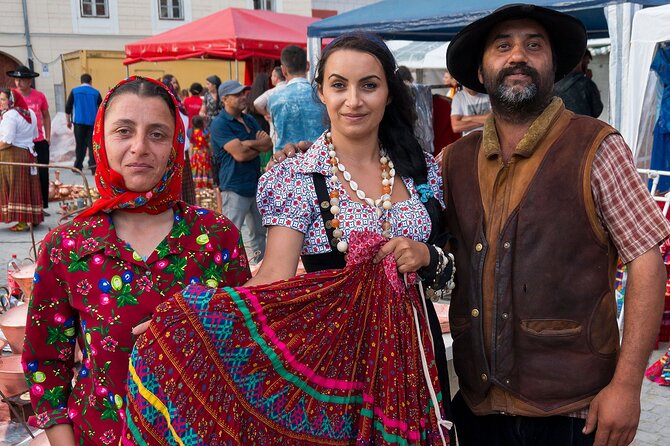
The tour ends at Mesteshukar ButiQ [MBQ], a small shop that your route builds into the story. You spend about 20 minutes here, and the description is clear: it is a wonderful little shop with authentic pieces hand-crafted by Roma artisans.
This ending is more than a souvenir stop. It is a practical way to keep the day from becoming only about trauma and politics. You also get to see skill, design, and the reality of cultural tradition in objects people actually use and share.
If you like to shop with intention, this is a better setup than random mall browsing. You can look at handmade jewelry and crafts and ask questions in the moment. You are still in the context of the tour, which usually makes conversations feel more grounded.
One value note: since the tour ends here, you do not have to backtrack to finish your day. It is also located on Bulevardul Mihail Kogalniceanu, which is convenient for continuing sightseeing or heading back toward transit.
Price and value: what you get for about $127
The tour price is listed at $127.37 per person. For a 3-hour guided walking experience in English with a professional guide, that can feel like a lot at first glance. But you should weigh it against what is included and what you avoid paying for.
Here is the practical value math: you get a professional English guide, a cake snack, and a route of multiple major city landmarks. The stops are listed as admission ticket free, which reduces the usual “hidden costs” of attraction-heavy itineraries. The tour also caps the group size at 15, which improves the odds you get real answers instead of passive listening.
Also, the ending at MBQ can turn into a bonus rather than a burden. It is not mandatory to buy anything, but having the option is useful if you want a meaningful craft item instead of a generic souvenir.
The biggest consideration is time and topic. If you are paying for a history experience, you should be ready for the Holocaust memorial content and the serious parts of Roma history. This is not a casual “chatty highlights” walk.
Who this tour fits best
This is a strong match if you:
- Want a guided walk that connects culture, politics, and memory across central Bucharest
- Care about understanding myths and stereotypes using named places and people
- Prefer small groups and a manageable pace
- Like history that is tied to real buildings you can see and later revisit on your own
It may not be ideal if you only want light sightseeing, or if you know you struggle with Holocaust-related content. It is also best for people who are comfortable with moderate walking.
Should you book? My take
If you want an honest, place-based way to understand Roma history in Romania, book it. The route is structured around specific figures like Iuliu Maniu and Mihail Kogalniceanu, and it finishes with a craft stop at Mesteshukar ButiQ (MBQ) that adds cultural continuity. Most importantly, the guide, Mihai, is presented as strong on the subject, and the tour format keeps you moving through the story without feeling lost.
If you are hoping for only upbeat sights or you are not ready for heavy history, you might choose a different walk that skips the memorial.
FAQ
How long is the tour?
The tour lasts about 3 hours.
What language is the tour in?
It is offered in English.
Where do I meet, and where does the tour end?
You start at Teatrul Ion Creangă, Sala Mare, Strada Piata Amzei 13, Bucharest, and end at Mesteshukar ButiQ [MBQ], Bulevardul Mihail Kogalniceanu 12, Bucharest.
What is included in the price?
A professional English speaking guide is included, plus a cake snack.
Are admissions included or free at the stops?
The stops listed on the route are marked as admission ticket free.
Is the tour walking-heavy and how big are the groups?
It includes walking between stops, with the remaining time used for walking, and it has a maximum group size of 15 travelers.
Everything Else We Reviewed In Bucharest
- Bucharest: Dracula’s Castle, Peles Castle, & Brasov Old Town
★ 4.5 · 17,858 reviews - Bucharest: Dracula Castle, Peles Castle & Brasov Old Town
★ 4.6 · 10,891 reviews - Bucharest: Dracula’s Castle, Peleș Castle & Brașov Day Trip
★ 4.5 · 5,919 reviews - Bucharest: Palace of Parliament Tickets and Guide
★ 4.3 · 3,182 reviews - Bucharest: Day Trip to Dracula Castle, Peles Castle & Brașov
★ 4.4 · 3,049 reviews
If You Want It Darker
- Bucharest: 3-Hour Dark History Tour with a Local
★ 4.9 · 301 reviews - Bucharest Ghosts Stories and Mythology
★ 5.0 · 292 reviews - Bucharest: Ghost Stories & Romanian Mythology Walking Tour
★ 4.9 · 287 reviews - Bucharest Under Communism: Life, Terror & Hope
★ 5.0 · 76 reviews - Slavery in Romania,Myths and Truths on Gypsies, Walking Tour
★ 4.9 · 42 reviews
Village Romania, Other Days
- Slavery in Romania,Myths and Truths on Gypsies, Walking Tour
★ 4.9 · 42 reviews - Original Carpathian Village Experience and Sinaia in one day tour
★ 5.0 · 40 reviews - Palace of the Parliament, Village Museum & Ceaușescu Mansion
★ 4.9 · 31 reviews - Traditions in Bucharest: Village Museum and Wine Tasting Tour
★ 5.0 · 27 reviews - Private Bucharest city tour visit the Palace of the Parliament & Village Museum
★ 4.5 · 21 reviews
Recently added around Bucharest
- Private Tasting Expedition Along Romania’s Most Famous Wine Route★ 5.0 · 3 reviews
- Private Guided Tour of Peles Castle and Bran Castle from Bucharest★ 5.0 · 3 reviews
- Private Sightseeing Tour of Bucharest★ 4.5 · 3 reviews
- Discover Europe’s Deepest Mines & Peles Castle’s Royal Charm★ 5.0 · 3 reviews
- Bucharest City Tour and Wine Tasting★ 5.0 · 3 reviews
Village Life and Rural Traditions, compared.
 ★ 5.0Small-Group Day Trip in Romanian Authentic Mountain Villages from BrasovFrom $11978 reviews
 ★ 4.8From Brasov: Romanian Mountain Villages Day TourFrom $11656 reviews
 ★ 4.9Slavery in Romania,Myths and Truths on Gypsies, Walking TourFrom $2942 reviews
 ★ 5.0Original Carpathian Village Experience and Sinaia in one day tourFrom $17840 reviews
 ★ 5.0Exclusive Tour: Corvin Castle, Alba Iulia and traditional villages from SibiuFrom $15633 reviews
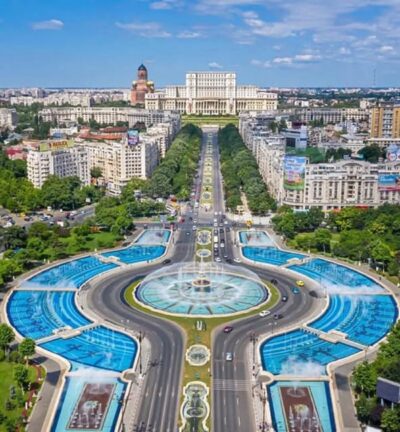 ★ 4.9Palace of the Parliament, Village Museum & Ceaușescu MansionFrom $4531 reviews
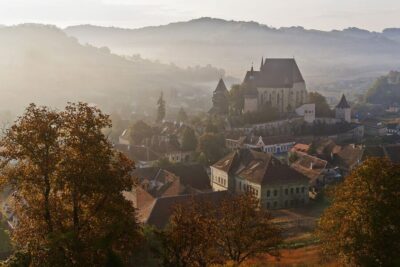 ★ 4.9Transylvania Gems: Sighisoara, Medias, Biertan & Gypsy lifeFrom $20229 reviews
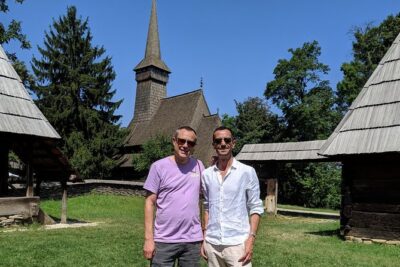 ★ 5.0Traditions in Bucharest: Village Museum and Wine Tasting TourFrom $14827 reviews
Browse the lists this tour appears in