
REVIEW · BUCHAREST
Bucharest Under Communism: Life, Terror & Hope
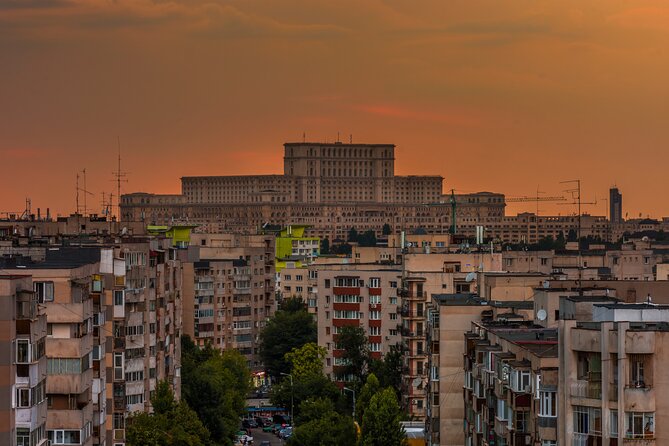
Communism leaves fingerprints on Bucharest. This walking tour takes you through key sites tied to 45 years of communist rule, from the grand planning of the late regime to the street-level protests of 1989, with context you can actually use when you look at the buildings around you. You’ll also hear how Romania moved from socialism to democracy, and why Nicolae Ceaușescu still shapes the city’s look and mood.
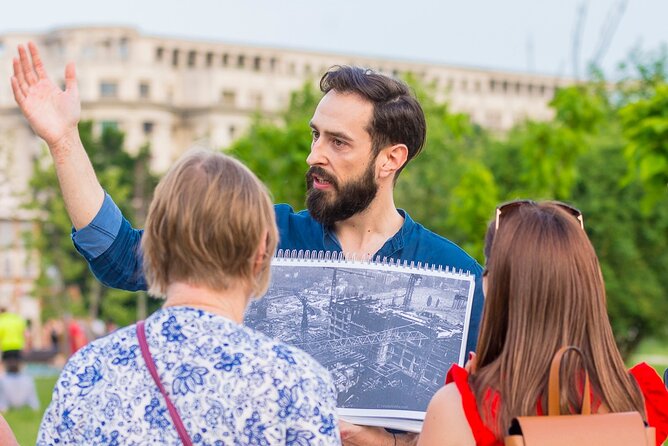
I love how the tour balances big ideas with real street scenes, especially at Unirii Square and the Revolution Square area, where history isn’t trapped in a textbook. I also like the small-group feel, with a private guide and a practical walking pace, plus the way guides such as Laura and Tamar use extra historical photos to connect the dots as you go.
One possible drawback: parts of the route focus on heavy themes and intense symbolism, so it can feel emotionally weighty if you prefer lighter city stories, and the Palace of Parliament entry is not included in the tour price.
In This Review
- Key Takeaways Before You Go
- Where Communism Shows Up in Plain Sight
- Price and Logistics for a 3.5-Hour Walking Tour
- Unirii Square: Fountains and the Victory of Socialism Boulevard
- The Palace of the Parliament: How Scale Hides Suffering
- Mihai Voda Monastery: When Churches Survived the Block
- Revolution Square: The Balcony, the Office, and the Aftermath
- University Square: The Protests and the Cost of Belief
- Why the Guide Matters More Than Most People Think
- What to Expect on the Walk (And How to Prep)
- Who This Tour Suits Best
- Should You Book Bucharest Under Communism: Life, Terror & Hope?
- FAQ
- How long is the Bucharest communist walking tour?
- How much does the tour cost?
- Is this tour private or group-based?
- Where does the tour start and end?
- What landmarks are included?
- Is admission included for all stops?
- What happens if the weather is bad?
- Is there free cancellation?
Key Takeaways Before You Go
- Small group with a private guide (maximum 15), so questions actually get answered.
- 5-stop route that hits both the late-communist showpieces and the 1989 protest squares.
- Unirii Square and the Victory of Socialism Boulevard help you see the regime’s megalomania in real space.
- Palace of the Parliament explained as a monument built with 1980s shortages.
- Mihai Voda Monastery shows the odd survival story of religion amid demolition pressures.
- Revolution Square and University Square put the end of the regime into a clear, guided timeline.
Where Communism Shows Up in Plain Sight
Bucharest is not just pretty. It is political architecture, urban planning, and memory stacked on top of memory. What makes this tour click is that it keeps your eyes moving, not your imagination. You walk through the same squares and boulevards that helped shape how people lived, what the state wanted, and how dissent finally erupted.
You start in the city center and end at Revolution Square, which also puts you in a useful spot for later wandering. Even if you only have a half day, you get a coherent arc: the regime’s big plan, the building it bankrupted and celebrated at the same time, and the protests that signaled its collapse.
Price and Logistics for a 3.5-Hour Walking Tour
The tour costs $23.22 per person, lasts about 3 hours 30 minutes, and uses a mobile ticket. That price lands in a sweet spot for this kind of theme, because you’re not just sightseeing. You’re paying for guided historical context at multiple stops, including areas that can be confusing on your own.
The group size matters. With a maximum of 15 people, you’ll generally have an easier time keeping up, hearing explanations, and asking questions without feeling rushed. The tour also is described as a private guide experience, so you’re not stuck in a huge herd.
Do note one practical thing: Palace of the Parliament admission is not included. If you want to see inside, plan on an extra ticket expense there. Some other stops are listed as free, and one site includes its ticket, so your spending will be uneven in a normal way.
The Ceausescu years, told other ways
Unirii Square: Fountains and the Victory of Socialism Boulevard
Your first stop is Piața Unirii, a central square designed during the last phase of Romanian communism. The fountains give the space a polished, planned feel, but the real story comes from what the square connects to.
This is where the former Victory of Socialism Boulevard runs. When you stroll along it, you get the scale of the regime’s ambition. The boulevard’s layout, the sightlines, and the sheer sense of command help you understand how the dictatorship imagined Bucharest should look, and how that vision favored monument over human scale.
Why I like this start: it gives you a visual vocabulary. Before you reach the most famous building, you understand the planning logic behind it, so later stops do not feel random.
The Palace of the Parliament: How Scale Hides Suffering
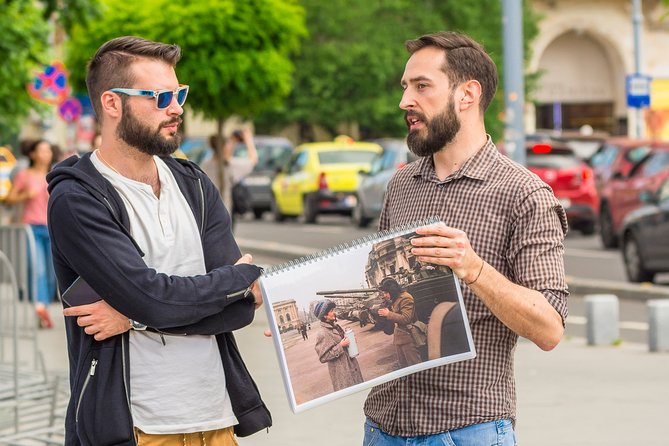
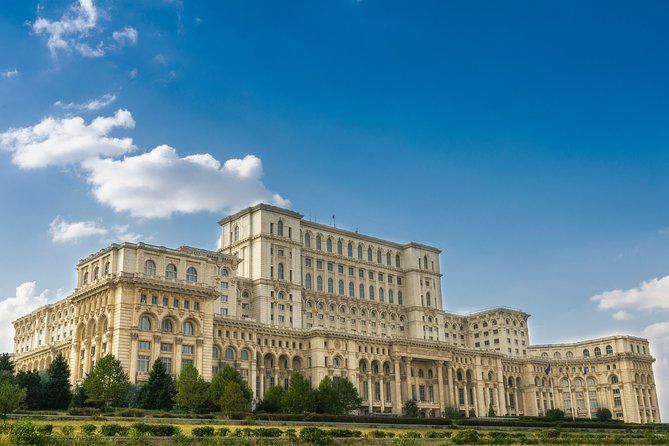
Then comes the star of the show: the Palace of the Parliament. This building is described as the second largest in the world after the Pentagon, and as the most expensive administrative building. Those superlatives are impressive, but the tour makes the point that size is not the whole message.
You learn how vast sums of money, materials, and labor went into it. More importantly, the tour frames the palace as a product of the 1980s reality, when Romanian people faced shortages of all kinds. In other words, this is not just a grand structure. It’s a monument that carries a cost.
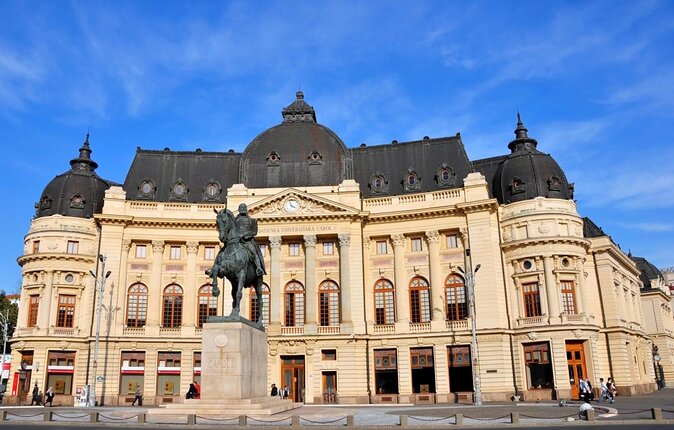
There’s also a helpful perspective trick built into the walk. You view the palace from different angles and hear what locals think about it, which helps you balance awe with discomfort. Across the palace, you also see the Academia Română building, in a similar style, which the tour notes was intended for Elena Ceaușescu. That detail matters because it shows how the regime extended luxury into the urban fabric.
If you care about architecture, you’ll love the way the guide ties form to function and politics to stone.
Mihai Voda Monastery: When Churches Survived the Block
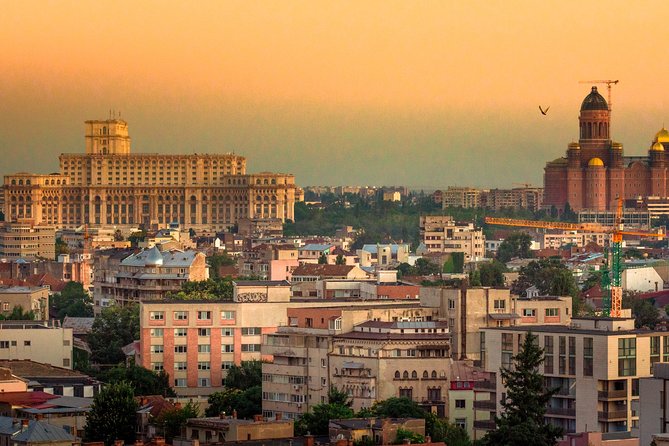
After the palace scale, the tour shifts gears to something quieter: Mihai Voda Monastery and its church. The contrast is the point. During the communist period, some churches were destroyed, while others survived in a surprising way.
What you’re looking at is the kind of visual contradiction that’s hard to explain on a postcard. Churches can seem tucked away behind utilitarian buildings, and that arrangement shows how the Communist Party dealt with religion, not just through official policy but through city planning and everyday visibility.
Mihai Voda Church is presented as a Middle Ages religious place that survived the demolition frenzy. That alone can make your eyes feel different as you look around. You start to notice what stayed, what was hidden, and what was erased.
The stop is listed as free time with 30 minutes on site, which makes it easy to fit emotionally heavy content into a manageable schedule.
Revolution Square: The Balcony, the Office, and the Aftermath
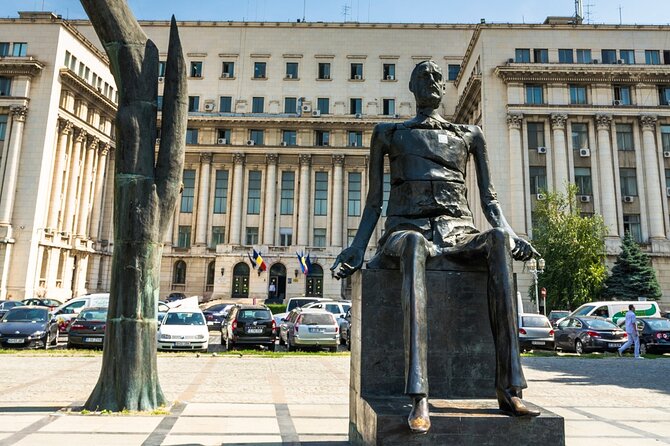
Next is Piața Revoluției, a square where the communist regime began and where it ended with protests in 1989. This is the kind of place where history is tied directly to specific corners. The tour points out multiple landmarks tied to Nicolae Ceaușescu, including the building that housed his office and the balcony from which he had his last speech.
You also learn where the first mass demonstration in Bucharest took place. That’s crucial because it changes how you read the space. You’re not just looking at a monument. You’re placing events into a timeline and then checking whether the location supports the narrative.
A good walking tour here does not treat the revolution like a single moment. The guide explains what happened to those who demonstrated against totalitarianism and discusses the story behind the monument dedicated to them, plus what came after.
This stop runs about 1 hour with free admission noted, but it can feel longer because you’re absorbing details. If you’re the kind of person who hates standing still, take solace. You’ll keep moving.
If you want it darker
University Square: The Protests and the Cost of Belief
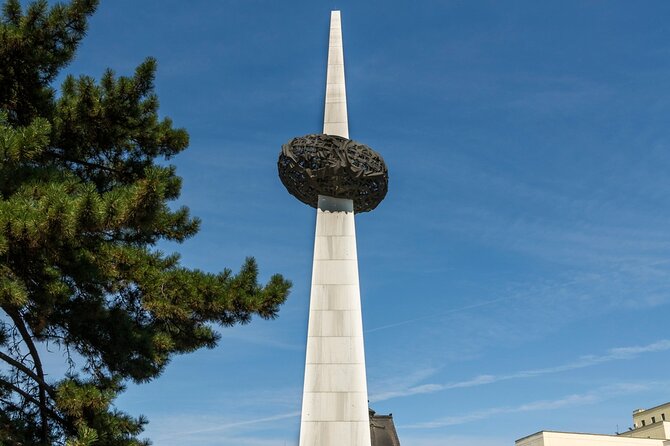
The last stop is Universității Square (listed as stop 5), where the main protests against communism happened in 1989. The tour’s description includes a tragic detail: hundreds were massacred for their belief in a free society. That makes this stop the emotional gravity point of the walk.
This stop is listed as 30 minutes and includes admission. Since the tour marks it as admission included, you should not need extra ticket purchasing for this specific location. Still, give yourself room to slow down mentally here. The square is open, and you’ll likely feel the urge to stand and take it in, even while the tour keeps you moving.
Practical tip: if you’re taking photos, watch your footing and keep your phone brightness reasonable. Emotionally charged places can also be visually intense, especially with bright sky or wind.
Why the Guide Matters More Than Most People Think
At tours like this, the guide is everything. You’re walking through architecture, but you’re really learning how the same structures can mean different things depending on who suffered under them.
Guides in this tour have been praised for staying funny while staying serious. You get history with stories, plus a steady stream of explanations at each stop about architecture, politics, and symbolism. In past departures, guides such as Laura and Tamar have been specifically noted for clear English, quick answers, and a degree-level education in history in at least one case. That sort of preparation shows in how the tour keeps your attention without turning into a lecture.
If you like when a guide asks you to look again, not just listen, you’ll appreciate how the tour uses viewpoint changes. Palace from one angle, then from another. A square first as a beautiful space, then as a political tool. That back-and-forth is what makes the message stick.
What to Expect on the Walk (And How to Prep)
This is a walking tour, so your comfort affects your understanding. Plan for about 3.5 hours of moving between central sites. In Bucharest, weather can change fast, and the tour says it requires good weather. If it’s canceled due to poor weather, you’ll be offered a different date or a full refund.
For clothing, aim for sturdy shoes. You’ll be on outdoor sidewalks and near large open spaces. If it’s hot, bring water. If it’s cool, a light layer helps because squares and boulevards can feel breezy.
Also, bring your curiosity. Some of these buildings can look like generic civic architecture until someone tells you what the regime wanted you to feel. By the time you reach Revolution Square, you’ll have the context to read the city differently, and that is the real payoff.
Who This Tour Suits Best
This tour is a great fit if:
- You want a first-time orientation to Bucharest that goes beyond old streets and into political design.
- You like stories that connect architecture to everyday life, including shortages and the pressure around religion.
- You prefer a clear, guided timeline of communist rule, dictatorship, the Revolution of 1989, and the shift toward democracy.
- You enjoy asking questions, and you like small-group pacing.
It might not be your best choice if you want a purely light, casual stroll. Even though the guide approach aims to keep things engaging, the topic includes mass protests and massacres. Think of it as history you can see, not just history you read.
Should You Book Bucharest Under Communism: Life, Terror & Hope?
I’d book it if you want to understand why Bucharest looks the way it does. The tour gives you a route that makes the city’s communist era legible, from Unirii Square and the boulevard’s scale to the Palace of the Parliament and the 1989 protest squares where the regime collapsed.
The value is strongest when you care about context. For $23.22, you’re paying for a guide-led thread through multiple landmarks, plus a small-group setting that keeps the experience personal. Just go in with two expectations: you’ll likely spend extra for Palace of the Parliament entry, and the emotional tone becomes heavier at the end.
FAQ
How long is the Bucharest communist walking tour?
It lasts about 3 hours 30 minutes.
How much does the tour cost?
The price is listed as $23.22 per person.
Is this tour private or group-based?
You have a private guide, and the maximum group size is 15 travelers.
Where does the tour start and end?
It starts at Piața Sfântul Anton 64, București 030167, Romania, and ends at Revolution Square, Piața Revoluției, București.
What landmarks are included?
Key stops include Piața Unirii, the Palace of the Parliament, Mihai Voda Monastery, Revolution Square, and Universității Square.
Is admission included for all stops?
Admission is free for some stops, the Palace of the Parliament is not included, and Universității Square has admission included.
What happens if the weather is bad?
The tour requires good weather. If canceled due to poor weather, you will be offered a different date or a full refund.
Is there free cancellation?
Yes. Free cancellation is available up to 24 hours in advance of the experience for a full refund.
Everything Else We Reviewed In Bucharest
- Bucharest: Dracula’s Castle, Peles Castle, & Brasov Old Town
★ 4.5 · 17,858 reviews - Bucharest: Dracula Castle, Peles Castle & Brasov Old Town
★ 4.6 · 10,891 reviews - Bucharest: Dracula’s Castle, Peleș Castle & Brașov Day Trip
★ 4.5 · 5,919 reviews - Bucharest: Palace of Parliament Tickets and Guide
★ 4.3 · 3,182 reviews - Bucharest: Day Trip to Dracula Castle, Peles Castle & Brașov
★ 4.4 · 3,049 reviews
If You Want It Darker
- Bucharest: 3-Hour Dark History Tour with a Local
★ 4.9 · 301 reviews - Bucharest Ghosts Stories and Mythology
★ 5.0 · 292 reviews - Bucharest: Ghost Stories & Romanian Mythology Walking Tour
★ 4.9 · 287 reviews - Slavery in Romania,Myths and Truths on Gypsies, Walking Tour
★ 4.9 · 42 reviews - Bucharest: Ghost Hunt Quest Experience
★ 4.5 · 34 reviews
The Communist Years, Retold
- The Real tour of Communism
★ 5.0 · 666 reviews - Life under Communism
★ 5.0 · 358 reviews - 3-Hour Guided Tour of Communist Bucharest
★ 4.9 · 303 reviews - Bucharest Essential Tour: Old Town, Calea Victoriei & Communism
★ 5.0 · 142 reviews - Communism in Bucharest – Landmarks, Museum & Communist Appetizers
★ 5.0 · 111 reviews
Recently added around Bucharest
- Private Tasting Expedition Along Romania’s Most Famous Wine Route★ 5.0 · 3 reviews
- Private Guided Tour of Peles Castle and Bran Castle from Bucharest★ 5.0 · 3 reviews
- Private Sightseeing Tour of Bucharest★ 4.5 · 3 reviews
- Discover Europe’s Deepest Mines & Peles Castle’s Royal Charm★ 5.0 · 3 reviews
- Bucharest City Tour and Wine Tasting★ 5.0 · 3 reviews
Ghost, Legend and Halloween Tours, compared.
 ★ 4.9Bucharest: 3-Hour Dark History Tour with a LocalFrom $55301 reviews
 ★ 5.0Bucharest Ghosts Stories and MythologyFrom $33292 reviews
 ★ 4.9Bucharest: Ghost Stories & Romanian Mythology Walking TourFrom $35287 reviews
 ★ 4.9City Tour Sighisoara Legends & Landmarks A Walk Through TimeFrom $4583 reviews
 ★ 4.9Slavery in Romania,Myths and Truths on Gypsies, Walking TourFrom $2942 reviews
 ★ 5.0Night Tour in Hoia Baciu ForestFrom $16040 reviews
 ★ 4.5Bucharest: Ghost Hunt Quest ExperienceFrom $434 reviews
 ★ 4.5Quest Experience in Bellu Cemetery BucharestFrom $718 reviews
Browse the lists this tour appears in