
REVIEW · SNAGOV
Snagov Monastery, Ceaușescu Mansion, & Village Museum – 6h
Romania’s past can feel like a plot twist. This 6-hour private tour strings together Snagov Monastery on an island near Bucharest, the Ceaușescu Mansion, and the Village Museum so you see how daily life, politics, and myth collide in one tight loop. I love that the tour mixes story-driven stops with real places you can read with your own eyes, plus a licensed guide who keeps things clear. One thing to consider: entrance fees are extra (about 17 euro per person), and food and drinks are not included.
If you like contrasts, this route delivers them fast. One moment you’re in a Romanian village setting with houses, a wooden church, and symbols of tradition, then you’re walking through the former private world of Nicolae and Elena Ceaușescu and their children at the Spring Palace, later called a mansion. You also get a guided walk on Calea Victoriei, plus key sights around Revolution Square, where the communist era snaps into the story of December 1989.
Time is the tradeoff. The schedule fits a lot into 6 hours, including a countryside island stop and multiple central-city landmarks, so wear comfortable shoes and expect steady pacing.
In This Review
- Key things that make this tour worth your time
- Snagov Monastery: island calm, Dracula-style curiosity
- Dimitrie Gusti National Village Museum: Romanian life, built with purpose
- Ceaușescu Mansion, the Spring Palace: private power made physical
- Victory Avenue on Calea Victoriei: churches, casinos, and political shadows
- Revolution Square and December 1989: the moment the story turns
- Romanian Athenaeum, CEC Palace, and the bookend of scale
- Palace of the Parliament: when “huge” becomes the point
- Price and value: what you’re paying for in a 6-hour private format
- Who this tour fits best (and who should choose something else)
- Should you book this tour?
- FAQ
- How long is the Snagov Monastery, Ceaușescu Mansion, and Village Museum tour?
- Where does pickup happen?
- Is this a private group tour?
- What languages is the guide available in?
- Are entrance fees included in the price?
- What about food and drinks during the tour?
- Where is Snagov Monastery located?
- Can I cancel for a refund?
Key things that make this tour worth your time
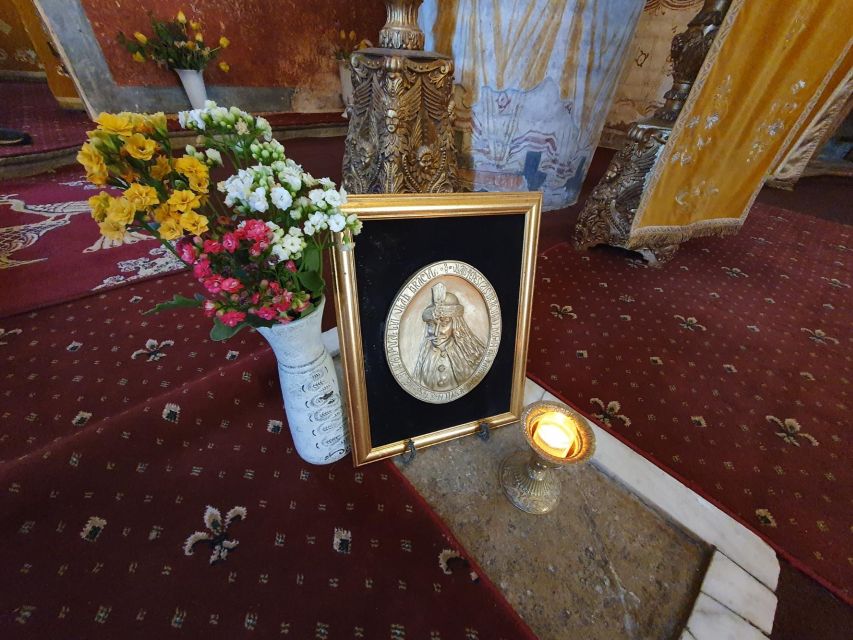
- Snagov Monastery on an island about 40 minutes from Bucharest, famous for the tomb connection with Dracula
- Dimitrie Gusti National Village Museum where you see traditional Romanian houses in one place
- Ceaușescu Mansion details tied to the Spring Palace era and designers like Aron Grimberg-Solari and Robert Woll
- Calea Victoriei contrasts with churches, museums, theaters, shops, and the shadow of communist power
- Revolution Square context showing where Romania’s 1989 revolution began and the escape story from helicopter
- Central architecture stops including the Romanian Athenaeum, CEC Palace, and the Palace of the Parliament for scale
Snagov Monastery: island calm, Dracula-style curiosity
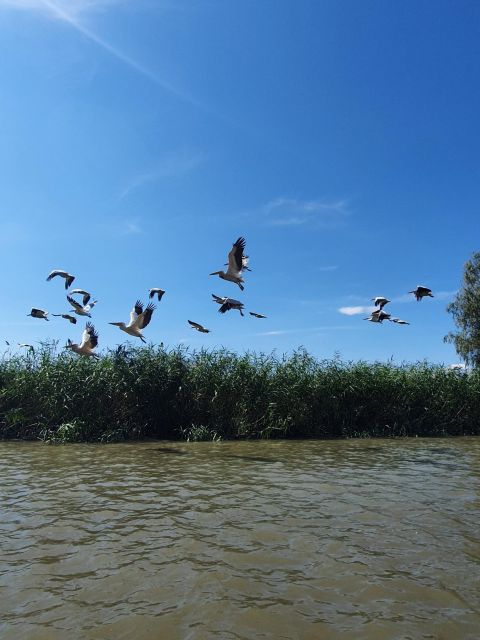
The day starts by leaving the city behind, heading roughly 40 minutes out to Snagov Monastery. What makes this stop feel different right away is the setting: it’s on an island. That means you get that quick mental shift from Bucharest traffic to water views, and it becomes easy to take photos without feeling like you’re just rushing through a checklist.
The monastery visit is guided, and you also get a photo stop and time for sightseeing. The big draw is the Dracula connection. The tour frames Snagov as the place linked to the tomb of Dracula, and even if you come with questions about myth versus fact, the guide’s job is to put the story in context. Either way, it’s a strong opening because it’s atmospheric and away from crowds.
Practical tip: you’ll likely want layers. Even on mild days, water-adjacent locations can feel cooler than the city.
Dimitrie Gusti National Village Museum: Romanian life, built with purpose
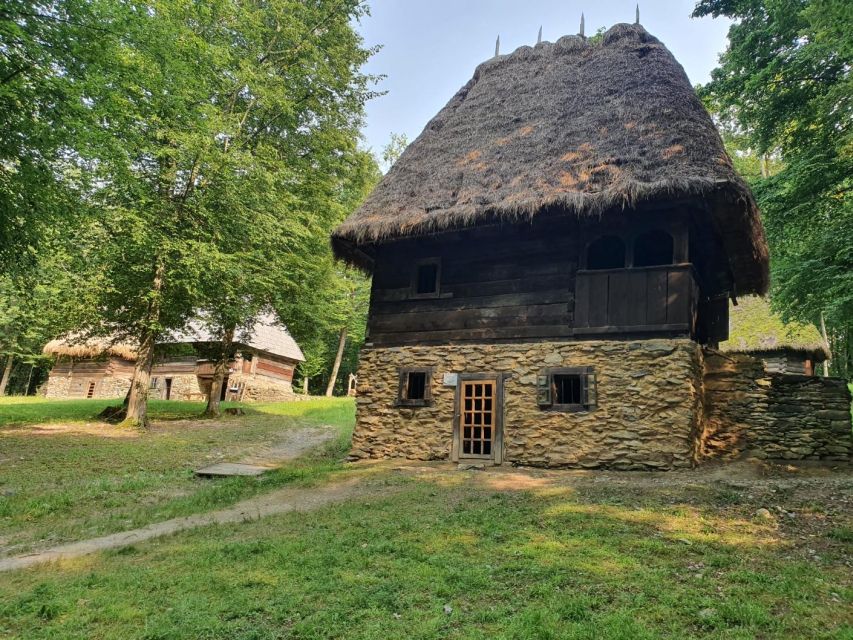
Back in Bucharest, the tour heads to the Dimitrie Gusti National Village Museum. This stop is not just pretty houses. It’s designed to show what traditional Romanian village life meant, and how communities built their spaces in harmony with their surroundings.
You’ll see traditional homes made from materials like wood and adobe, plus stone buildings and examples from different regions. The museum experience focuses on how these structures supported everyday needs, but it also leans into spiritual and social life. You’ll come away understanding why elements like a wooden church, symbols like a mill, and the layout of the village matter in the story of Romanian identity.
What I like here is the lesson you get without it feeling like a lecture. The guide ties the buildings to the idea of unity across time and place, and you can walk from one style to another and see how “tradition” has real differences.
One consideration: it’s an outdoor-and-semi-outdoor museum feel. If it’s sunny, great for photos. If it’s rainy, you’ll want shoes that handle wet paths.
The Ceausescu years, told other ways
Ceaușescu Mansion, the Spring Palace: private power made physical
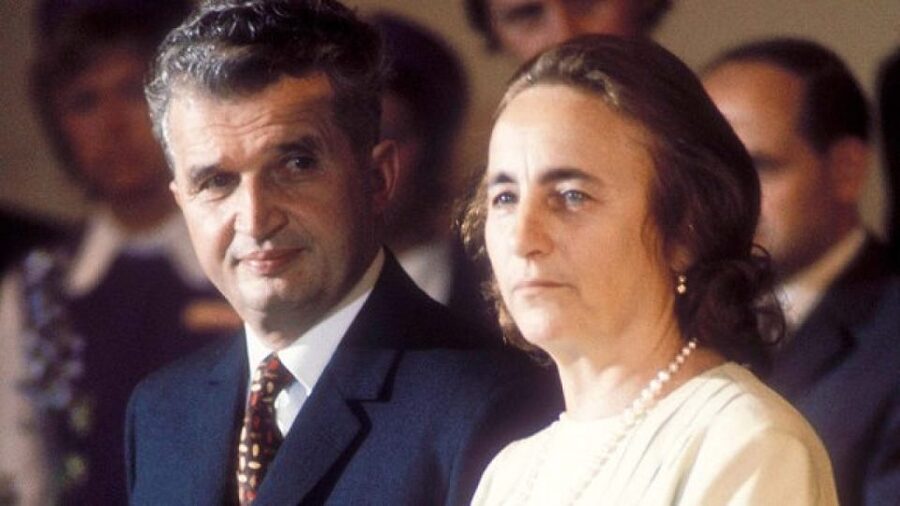
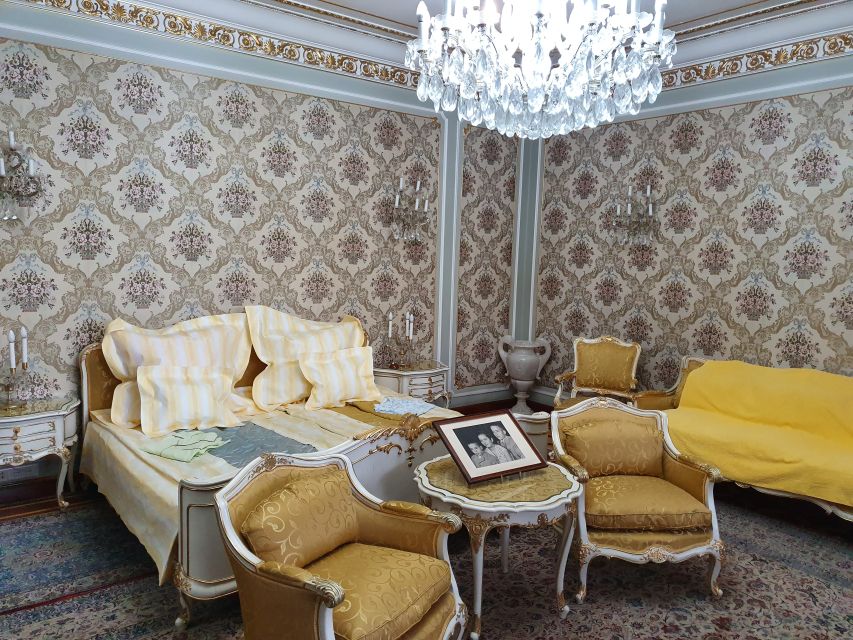
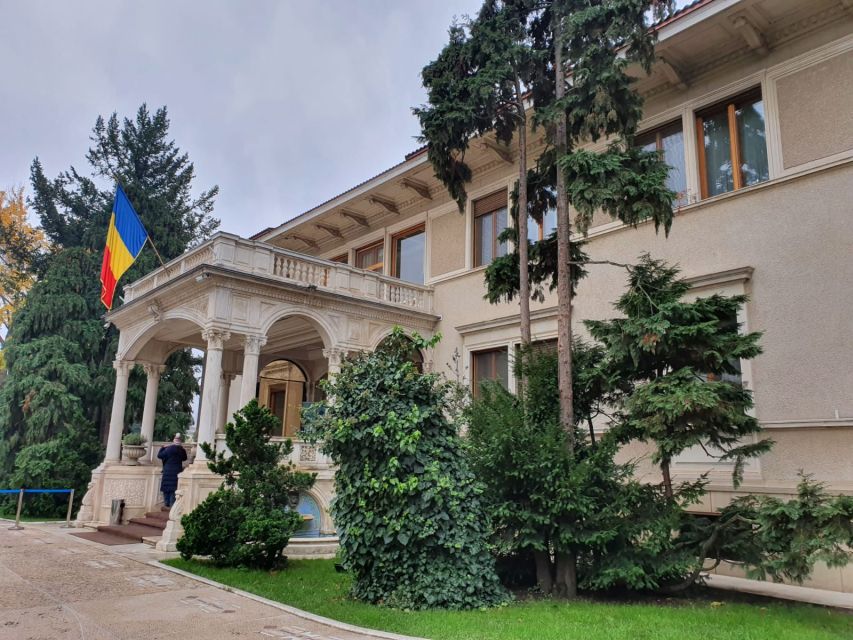
Then comes the turn in the story. The House of Ceaușescu is the former private residence of Nicolae and Elena Ceaușescu and their children, Nicu, Zoia, and Valentin. This is where the tour’s contrasts stop being abstract.
You’ll visit with a guide and have time for walking and sightseeing around the property. It’s described as built in the mid-1960s and originally known as the Spring Palace. Later, between 1970 and 1972, it was enlarged. That timing matters, because it places the mansion in a period when the regime’s self-image and comfort were growing more pronounced.
The tour also gives you design specifics, which I always appreciate because it keeps the visit from being just emotional. You’ll hear about Aron Grimberg-Solari as a preferred architect choice for the residence, and you’ll learn how Robert Woll worked not only on the design but also as a main furniture designer. The grounds were conceived by another professional, Teodosiu, which adds a layer of “this was planned,” not improvised.
What you learn from this stop is less about gossip and more about how power takes form. When you step through spaces that were private family ground, you can see how a political system can translate into architecture, access, and comfort.
Practical tip: this stop is often where people slow down to take photos and absorb details. Give yourself a little extra mental patience, because the rest of the tour continues in the city.
Victory Avenue on Calea Victoriei: churches, casinos, and political shadows

After the mansion, the tour shifts back to the center along Calea Victoriei (Victory Avenue). This stretch is where Bucharest’s layers show up fast. The guide points out the contradictions: on one side you have royal-era monuments and on the other you have the central communist party structure. You also reach Revolution Square later, but here the avenue acts like a hinge between eras.
You’ll have guided time plus free time for shopping and sightseeing. The tour frames the area with a mix of places: old orthodox churches with a sense of mystery, a music store with a wide selection, and a range of entertainment and civic buildings like museums and theaters. Even if you don’t shop, it helps to walk this avenue because you can feel how ordinary life continued to occupy the same geography as power.
This part works especially well with a guide because the city is full of landmarks, and without context you can end up treating it like a photo walk. With context, you start to read streets like history, not just buildings.
Revolution Square and December 1989: the moment the story turns
Next is Revolution Square, with guided touring and sightseeing, plus scenic views on the way. This stop is where the political narrative becomes specific.
You’re taken back to the moment when Nicolae Ceaușescu was ousted, with the story connected to leaving behind secrets of fortune and controversies around the state security service and offshore accounts. The tour also includes a very visual detail: the Romanian revolution of December 1989 is tied to the place where the beginning took shape, and it notes Ceaaușescu’s flight by helicopter.
If the name and date mean little to you, the guide’s job is to connect the dots. If the name and date mean a lot, this is still valuable because it gives you a physical location where the story happened.
One consideration: this stop is not about lingering. It’s a key scene, and then the route keeps moving toward other landmarks.
Romanian Athenaeum, CEC Palace, and the bookend of scale
The itinerary brings you to the Romanian Athenaeum, again with guided time, sightseeing, and a short walk. Even if you don’t know the building already, it helps to have a guide point out what it represents in Romania’s architecture and culture. It’s the kind of stop that makes you look up.
Then you get the CEC Palace stop with a break time, photo stop, guided visit, and a little free time for walking. The tour treats CEC Palace as one more landmark in the center that helps you see how the city’s style and institutions evolved. It also gives you a breather before the final big-scale site.
What I like about this section is pacing. You get culture stops mixed with quick recharges, and you’re not forced to stare at one theme the whole time.
Snagov, Mogosoaia and the rest of the loop
Palace of the Parliament: when “huge” becomes the point
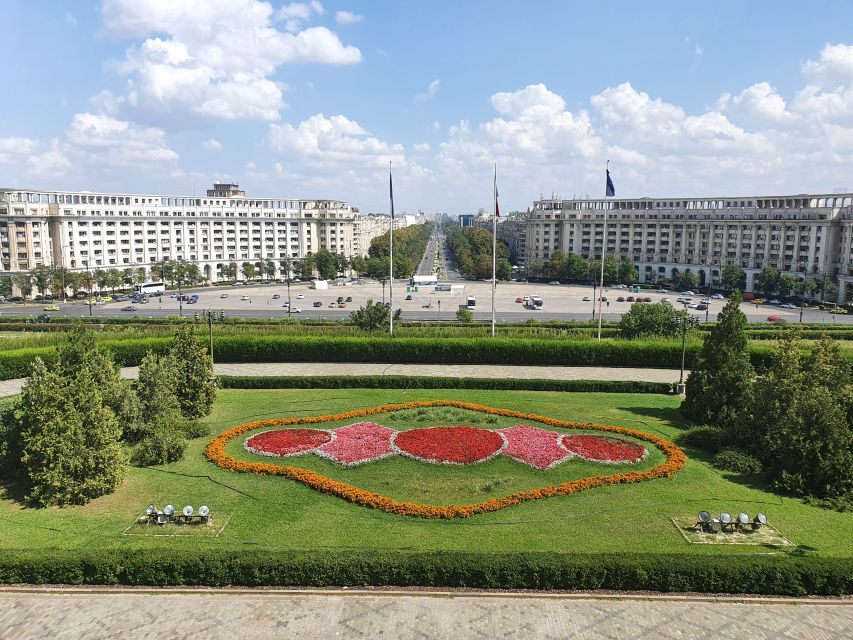
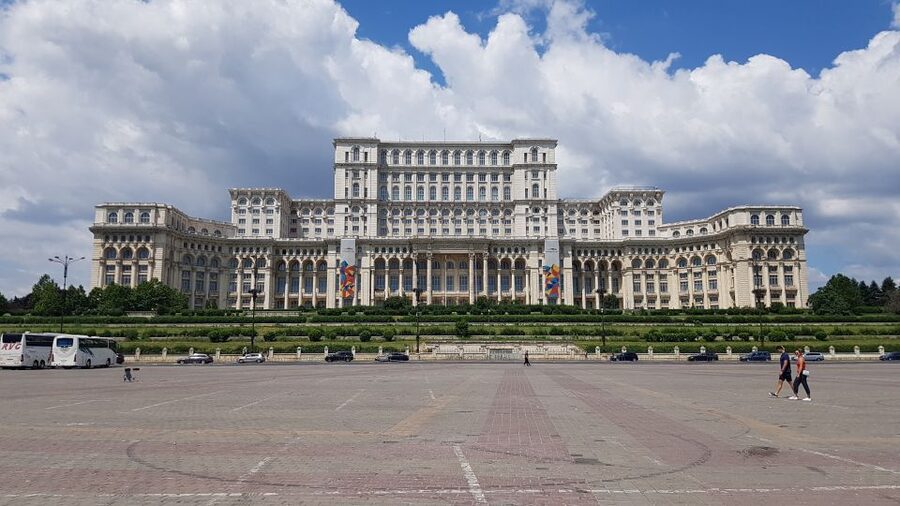
The tour includes the Palace of the Parliament as a major final architectural sight. You’ll have guided sightseeing, a walk, and photo time, plus breaks.
This is one of those monuments you understand only after you see it in person. The reason it fits in this tour is clear: it anchors the communist-era scale in the same day as Snagov’s island monastery mood, the village museum’s “how people lived,” and the Ceaușescu family residence’s private power. The contrast is sharp. It also makes the history feel tangible, because you can physically compare scale and intention across the day.
Practical tip: if it’s hot, this is where you’ll feel it. Bring water with you from elsewhere since food and drinks are not included.
Price and value: what you’re paying for in a 6-hour private format
This experience costs $254 per person for a 6-hour private tour in the Bucharest-Ilfov area. Entrance fees are not included, about 17 euro per person, and you’ll need to handle food and drinks on your own.
So what makes the price feel reasonable?
You’re paying for:
- a private car or minibus for just you and your friends or family
- a licensed guide and driver available throughout the tour
- car expenses like gasoline, parking, and road tolls
- flexibility if you want small changes
- a setup that includes pickup in Bucharest and a driver holding a sign with your last name
- skip-the-ticket-line access as part of the experience
In other words, you’re not paying just for the sights. You’re paying for speed, direction, and context. The countryside hop to Snagov also benefits a lot from a private setup, because getting the timing right matters.
Who gets the best value? If you want the full contrast story without building your own itinerary, this is a time-efficient way to do it. If you’re traveling solo and comfortable using public transit, the cost may feel high. But if you want comfort, clarity, and a guided thread connecting everything, the price starts making sense.
Who this tour fits best (and who should choose something else)
This tour is a strong match if you:
- want the biggest contrast day in and around Bucharest without multiple tickets and planning
- enjoy guided explanation, especially when history involves complicated shifts
- like mixing culture, architecture, and place-based storytelling
- travel with someone who prefers seeing a lot but not independently navigating every step
It may feel less ideal if you:
- dislike fast pacing and prefer long museum time
- want a relaxed food-focused itinerary, because food and drinks are not included
- have limited tolerance for lots of walking between city landmarks
The day is built for efficient sightseeing, not for lingering.
Should you book this tour?
I’d book it if you want one guide-led day that ties together village life, communist-era power, and Bucharest’s central landmarks into one coherent route. Snagov Monastery on an island, the Ceaușescu Mansion with real architecture details, and the mix of Calea Victoriei and Revolution Square give you more than a typical “see famous spots” plan.
Pass if you mainly care about only one theme, like Romanian churches, or if you want a slow-paced day with plenty of stops that last longer than an hour.
If you do book, come ready for contrasts. This is the kind of day where you’ll keep switching gears, and that is exactly the point.
FAQ
How long is the Snagov Monastery, Ceaușescu Mansion, and Village Museum tour?
The tour lasts 6 hours.
Where does pickup happen?
Pickup is included in Bucharest. The driver will hold a sign with your last name.
Is this a private group tour?
Yes. It’s a private group for you and your friends or family, using a private car or minibus.
What languages is the guide available in?
The guide is available in Romanian, English, Italian, French, Spanish, and German.
Are entrance fees included in the price?
No. Entrance fees are not included and are listed as about 17 euro per person.
What about food and drinks during the tour?
Food and drinks are not included.
Where is Snagov Monastery located?
Snagov Monastery is about 40 minutes outside Bucharest and is on an island.
Can I cancel for a refund?
Yes. Free cancellation is available up to 24 hours in advance for a full refund.
More Monasteries And Churches
- Princely Court of Târgoviște and Curtea de Argeș Monastery
★ 4.5 · 50 reviews - Small Group Tour to Mogosoaia Palace & Snagov Monastery
★ 4.4 · 41 reviews - Sacred Monasteries Private Tour: Snagov, Țigănești & Căldărușani
★ 5.0 · 32 reviews - Private Half Day Trip to Snagov Monastery & Mogosoaia
★ 4.1 · 29 reviews - Hike to Poenari Fortress, Vidraru Dam, Argeș Monastery – Private
★ 5.0 · 26 reviews
Snagov, Mogosoaia And The Tomb
- Private Tour to Salt Mine, Lunch at Winery and Dracula Grave
★ 5.0 · 60 reviews - Princely Court of Târgoviște and Curtea de Argeș Monastery
★ 4.5 · 50 reviews - Small Group Tour to Mogosoaia Palace & Snagov Monastery
★ 4.4 · 41 reviews - Sacred Monasteries Private Tour: Snagov, Țigănești & Căldărușani
★ 5.0 · 32 reviews - Private Half Day Trip to Snagov Monastery & Mogosoaia
★ 4.1 · 29 reviews
The Communist Years, Retold
- The Real tour of Communism
★ 5.0 · 666 reviews - Life under Communism
★ 5.0 · 358 reviews - 3-Hour Guided Tour of Communist Bucharest
★ 4.9 · 303 reviews - Bucharest Essential Tour: Old Town, Calea Victoriei & Communism
★ 5.0 · 142 reviews - Communism in Bucharest – Landmarks, Museum & Communist Appetizers
★ 5.0 · 111 reviews
Recently added around Bucharest
- Private Tasting Expedition Along Romania’s Most Famous Wine Route★ 5.0 · 3 reviews
- Private Guided Tour of Peles Castle and Bran Castle from Bucharest★ 5.0 · 3 reviews
- Private Sightseeing Tour of Bucharest★ 4.5 · 3 reviews
- Discover Europe’s Deepest Mines & Peles Castle’s Royal Charm★ 5.0 · 3 reviews
- Bucharest City Tour and Wine Tasting★ 5.0 · 3 reviews
Dracula Tomb and Palace Trips, compared.
 ★ 5.0Private Tour to Salt Mine, Lunch at Winery and Dracula GraveFrom $16760 reviews
 ★ 4.5Princely Court of Târgoviște and Curtea de Argeș MonasteryFrom $21050 reviews
 ★ 4.4Small Group Tour to Mogosoaia Palace & Snagov MonasteryFrom $6741 reviews
 ★ 5.0Sacred Monasteries Private Tour: Snagov, Țigănești & CăldărușaniFrom $11032 reviews
 ★ 4.1Private Half Day Trip to Snagov Monastery & MogosoaiaFrom $17629 reviews
 ★ 5.0Small Group Tour to Mogosoaia Palace and Snagov MonasteryFrom $8223 reviews
 ★ 5.0Mystical Monasteries, Dracula’s Tomb and Mogosoaia Lake Palace – Private TourFrom $13220 reviews
 ★ 5.05h Abandoned Fort, Dracula’s Grave and Mogoșoaia Palace, PrivateFrom $14220 reviews
Browse the lists this tour appears in