
REVIEW · BUCHAREST
The Real tour of Communism
Bucharest has another history layer. This 3-hour walking tour stitches daily life under communism to the big landmarks you see today, from Ceaușescu-era power shows to the drama of 1989.
I especially like the small group size (max 15 people), which makes it easier to ask questions and keep your footing. I also like the storytelling approach, where guides connect buildings, streets, and even food habits to how the system worked in real life.
One thing to consider: it is an outdoor walking route. If cold rain or wind gets to you, dress for it and plan on standing and walking on city sidewalks and stairs.
In This Review
- Quick hits
- Price and value: what you get for $32.65 in 3 hours
- Meeting point: starting at Patriarhal Cathedral and heading into the era
- Stop 1 at Catedrala Patriarhala: the Great National Assembly’s former headquarters
- Palace of Parliament: the story behind the second-largest building
- Mihai Voda Monastery: churches saved by being moved
- Old Town walk: communist leadership favorites in everyday streets
- Revolution Square: 1989’s final days and the first days of freedom
- The guide matters: what you can expect from real personalities
- Weather, walking pace, and group size: how to plan your day
- Included snack and mid-tour break: small, smart, and timed well
- What makes this tour worth your time versus doing it solo
- Who should book this, and who might want a different style
- Should you book The Real tour of Communism?
- FAQ
- How long is the tour?
- Where does the tour start and end?
- Is the tour in English?
- Is the tour suitable for people with limited mobility?
- How big is the group?
- What does the ticket price include?
- Are food and drinks included?
- Is entry included for every stop?
- Does the tour run in bad weather?
- What is the cancellation policy?
Quick hits
- Small-group format keeps the pace human and question-friendly (up to 15 people)
- Key communist-era stops include the Palace of Parliament and Revolution Square
- Mix of architecture and everyday life, not just dates and names
- Included snack plus a practical mid-tour break for warmth and energy
- Different ticket rules: several stops are free, but the Palace of Parliament entry is not included
Price and value: what you get for $32.65 in 3 hours
At $32.65 per person for about 3 hours, this tour is priced like a solid “history hour” bargain rather than a premium museum add-on. You are paying for guide time plus a route that hits major sights without you needing to figure out what connects to what.
Here’s the value math that matters on the ground:
- You get a guided walk that explains why specific places were used during communism, not just where they are.
- You get a snack included, which helps on a city walk when meals can feel far apart.
- You get an efficient route ending at Revolution Square, so the story lands where the 1989 revolution becomes visible in public space.
Also, the tour runs in English and tends to book ahead (about 22 days on average). If your dates are flexible, you can often find a slot. If they are not, booking earlier can save you stress.
Meeting point: starting at Patriarhal Cathedral and heading into the era
The tour meets at the Patriarchal Cathedral area at Aleea Dealul Mitropoliei 25. That location matters because it frames the first part of the story around institutions and authority, not just street scenes.
You’ll start near the Patriarchal Palace complex, then move through Bucharest’s communist footprints. The route is designed so you can keep looking up at monumental buildings while also hearing how ordinary people experienced the same system day to day.
You should also plan for a moderate walking pace. The tour keeps you moving through multiple stops in a short time window, so comfortable shoes are not optional, especially if the weather turns.
The Ceausescu years, told other ways
Stop 1 at Catedrala Patriarhala: the Great National Assembly’s former headquarters
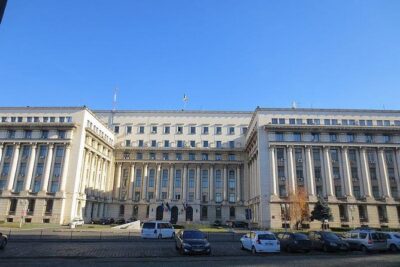
Your first stop is Catedrala Patriarhala, where the Patriarchal Palace once served as the former headquarters of the Great National Assembly during the communist era. This is a great start because it puts you in the mindset of power and decision-making.
What makes this stop useful is how it sets expectations for the rest of the tour:
- You see how government architecture can signal control.
- You learn how institutions shaped what people could access, where money and supplies went, and how public life was regulated.
Admission here is free, and the time is short, so treat it like a strong “hook” before the route gets more dramatic.
Palace of Parliament: the story behind the second-largest building
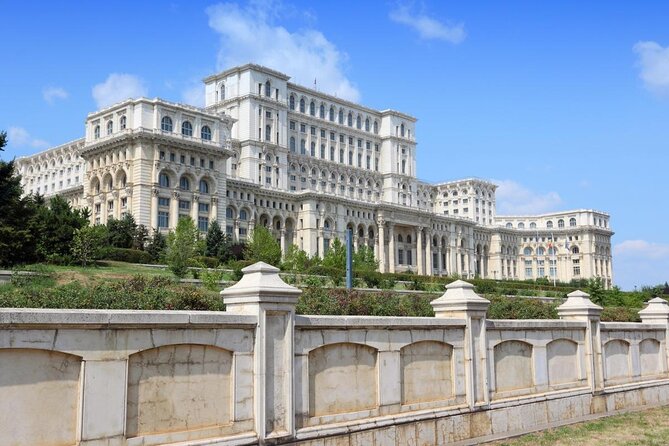
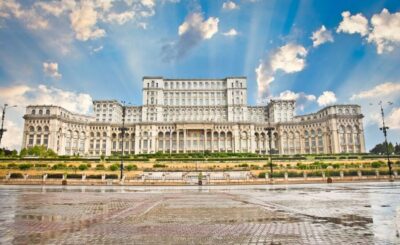
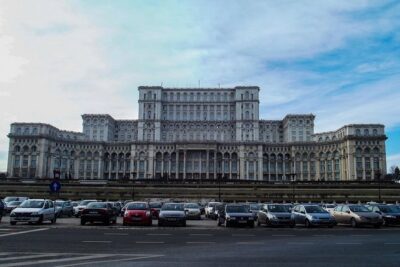
Next comes the Palace of Parliament, one of the most imposing structures in Bucharest. The tour focuses on why it is famous, but also on what it represented in communist Romania, including how power built itself into stone.
A key practical note: admission ticket is not included for this stop. If you want to go inside, plan for the extra cost and arrive with time for ticketing. If you choose to stay outside, you’ll still get the political and architectural context you came for, but inside access can change what you notice.
This stop is the one where the tour’s approach really clicks. Your guide should connect:
- the sheer scale of the building,
- the time and effort it took to create,
- and the social meaning behind that kind of public monument.
If you like your history grounded in the physical world, you’ll enjoy how this place is treated as a symbol, not just a photo spot.
Mihai Voda Monastery: churches saved by being moved
Then you shift tone with Mihai Voda Monastery. The focus here is an eye-opening detail: some churches from the 16th and 17th centuries were literally moved or translated, rather than demolished.
That sounds like a trivia point until you hear the bigger lesson. This stop shows how regimes can reshape a city, but also how something older can survive through effort, negotiation, or timing. It is a reminder that not every story is only loss.
Admission is free and the visit is brief. Still, it’s an excellent counterweight to the monumental scale of the Palace of Parliament. You get to compare two kinds of “power over space”: the drive to build new authority versus the preservation that happens when history refuses to vanish.
Old Town walk: communist leadership favorites in everyday streets
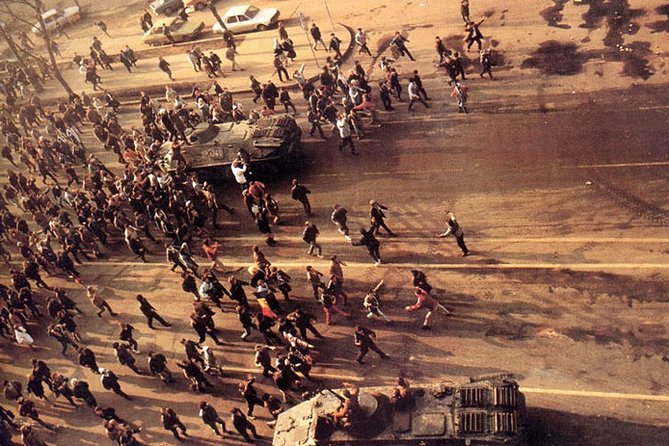
After the monastery, the route heads into the Old Town area. Here the tour leans into a more human question: where did the communist leadership prefer to eat and socialize?
The value of this stop is that it helps you picture communism not only as a political system, but as a lived routine. When you understand who had access to comfort and how everyday choices were limited for everyone else, the politics stop feeling abstract.
You also start to notice a pattern that guides tend to emphasize:
- power concentrates in certain places,
- leisure and indulgence cluster near influence,
- and the city’s geography tells you who mattered.
This stop is also free admission and short, but it’s often one of the most memorable parts for people who like history through food culture and daily life details.
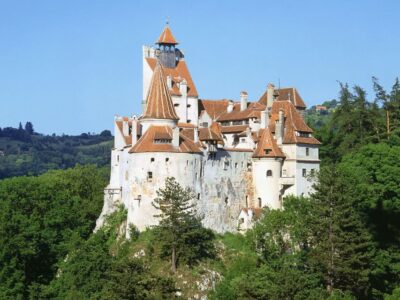
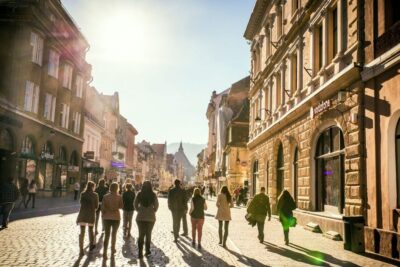
Revolution Square: 1989’s final days and the first days of freedom
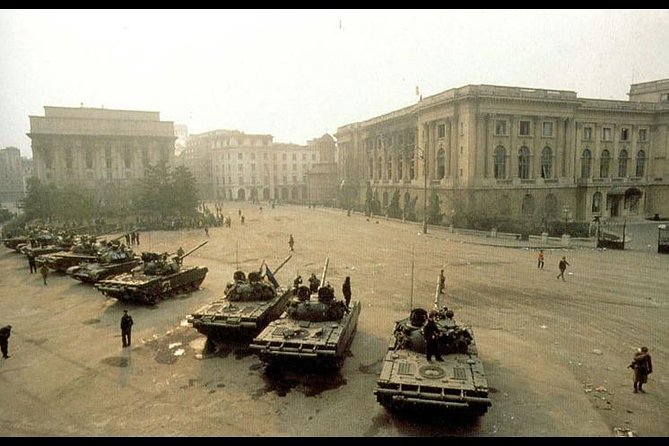
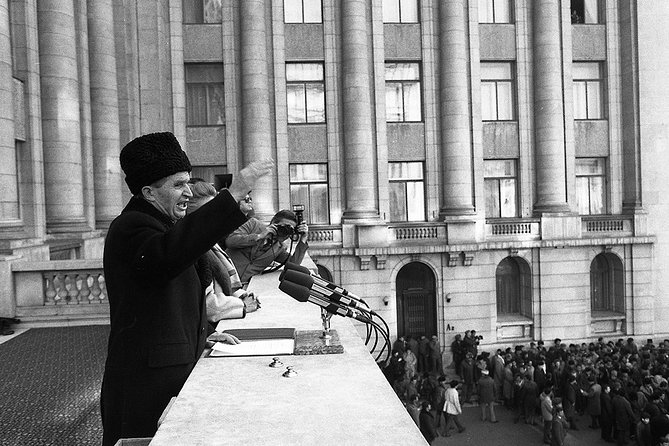
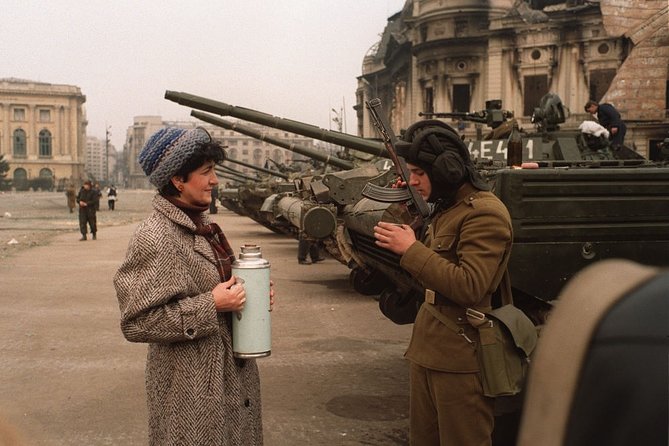
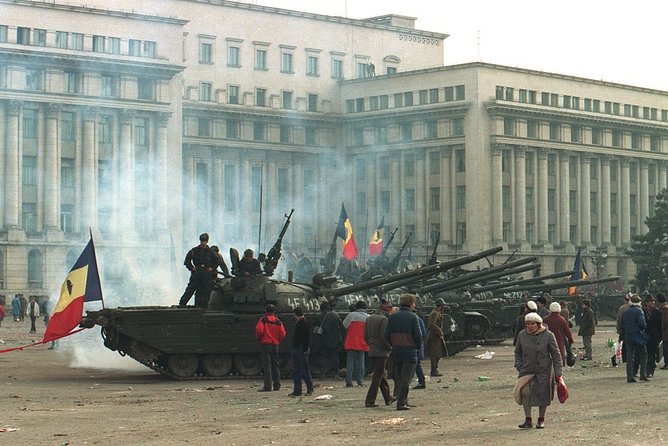
The last stop is Piata Revolukiei (Revolution Square), where the story shifts from systems to rupture. The tour frames it as the only bloody revolution against the Romanian communist party in the former Iron Curtain, and it focuses on the last days of Nicolae Ceaușescu and the first days after 40+ years of communism.
This is where your walking tour becomes more than background. Revolution Square is a real public stage, so your guide can point to how political change played out in space people could actually see.
Time at this stop is about 15 minutes, with free admission. Even in that short window, you should leave with clearer context about:
- what people were reacting to,
- why the fall happened when it did,
- and how quickly the mood of a city can shift once fear breaks.
If you’re the type who likes your history to end with a feeling, this is the stop that delivers.
The guide matters: what you can expect from real personalities
Across multiple runs, guides such as Octavian, Oktavian, Daniela, Andrea, Mihai, and John Sever have led this route. The common thread in their style is practical storytelling.
In plain terms, you can expect:
- context that explains why communist rule worked the way it did,
- real-life vignettes (including rationing experiences) that make the period feel less like a textbook,
- and answers to questions instead of a rigid script.
One helpful touch is that guides often connect the communist era to what came after, and some also compare how Romania’s experience differed from other Eastern European countries. If you plan to visit nearby countries too, this sort of framing helps you keep the patterns straight.
Weather, walking pace, and group size: how to plan your day
This is a walking tour in all weather conditions, so bring layers. The route is outdoors and you will be on sidewalks, near monuments, and around short stair or slope sections depending on the meeting point access. One review highlighted that the Cathedral meeting area involves walking up a slope, so it’s smart to arrive prepared.
The tour is also capped at 15 people, which helps a lot when the guide needs to gather the group at each stop. With a smaller group, you can usually get unstuck quicker if someone needs a moment to catch up.
Practical tip: if you hate getting cold, do not treat this as a “quick stroll.” People reported that even in freezing January weather, the tour stayed enjoyable because there is a built-in rhythm. You typically get a break mid-way, often at a coffee shop, plus the included snack. That warm-up moment can be the difference between power through and misery.
Included snack and mid-tour break: small, smart, and timed well
The tour includes snacks, and that matters more than you might think. A 3-hour walk in central Bucharest can put a dent in your energy, especially if you start earlier in the day or you had a light breakfast.
In real-world terms, you can expect a mid-tour pause to re-energize. Some guides include coffee as part of the warm-up stop, and there is also a chance to use facilities during that break. Even if you are not a coffee person, the pacing break helps you reset so the history still lands, not just gets heard.
This is also one of those details that makes the tour feel like it was built for actual bodies, not just a schedule.
What makes this tour worth your time versus doing it solo
If you like DIY travel, you can of course read up and walk the sights yourself. But this route is designed so the connections happen while you are standing in front of the evidence.
Without a guide, it’s easy to see:
- a massive parliament building,
- a dramatic square,
- and a handful of old streets,
but miss why they were important or how they connect to the everyday lived experience of communism.
With a guide, those same places become a narrative. You stop looking at individual sites and start seeing a system, including how architecture, daily life, and political control reinforced each other.
Who should book this, and who might want a different style
This tour fits best if you:
- want a quick, focused overview of Bucharest under communism,
- like history that includes everyday details such as rationing and personal stories,
- and enjoy walking between major landmarks without planning each leg.
It may be less ideal if you:
- want a long sit-down museum experience,
- dislike walking outdoors,
- or need lots of indoor time when it rains.
Still, the time structure and the mid-way break make it a good fit for many people who want more than a photo stop but less than a full day commitment.
Should you book The Real tour of Communism?
I think you should book this if you want the shortest path to understanding how communist power shaped Bucharest’s streets, buildings, and daily routines. For the price, the combination of major landmarks plus human-scale stories is the winning formula.
Book it sooner rather than later if you have fixed dates, since it books well ahead and the group is limited. And when you arrive, come ready with at least one question, like how life changed day to day or why Romania’s 1989 moment unfolded the way it did. A good guide will turn that into a much richer tour than just listening.
If you’re looking for a compact, high-impact way to read Bucharest through the communist era, this one is an easy yes.
FAQ
How long is the tour?
It runs for about 3 hours.
Where does the tour start and end?
It starts at Catedrala Patriarhala, Aleea Dealul Mitropoliei 25, Bucharest, and ends at Revolution Square, Piata Revolukiei.
Is the tour in English?
Yes, it is offered in English.
Is the tour suitable for people with limited mobility?
The tour requires moderate physical fitness, since it is a walking tour. Service animals are allowed.
How big is the group?
The tour has a maximum of 15 travelers.
What does the ticket price include?
The price includes the 3-hour walking tour and snacks.
Are food and drinks included?
No. Food and drinks are not included unless specified.
Is entry included for every stop?
No. Admission is free for some stops (like Catedrala Patriarhala, Mihai Voda Monastery, Old Town, and Revolution Square). The Palace of Parliament admission ticket is not included.
Does the tour run in bad weather?
The tour operates in all weather conditions. If it is canceled due to poor weather, you will be offered another date or a full refund.
What is the cancellation policy?
You can cancel for free up to 24 hours in advance for a full refund. If you cancel less than 24 hours before the start time, the amount paid will not be refunded.
Whatever Else Bucharest Is Selling
- Bucharest to Dracula Castle, Peles Castle and Brasov Guided Tour
★ 4.5 · 2,933 reviews - Bucharest: Palace of Parliament Tickets and Guided Tour
★ 4.4 · 1,877 reviews - Transylvania and Dracula Castle Full Day Tour from Bucharest
★ 4.5 · 1,589 reviews - Bucharest: City Highlights Guided Walking Tour
★ 4.9 · 1,482 reviews - From Bucharest: Brasov Peles & Dracula’s Castle Day Tour
★ 4.5 · 1,244 reviews
Everything Else We Reviewed In Bucharest
- Bucharest: Dracula’s Castle, Peles Castle, & Brasov Old Town
★ 4.5 · 17,858 reviews - Bucharest: Dracula Castle, Peles Castle & Brasov Old Town
★ 4.6 · 10,891 reviews - Bucharest: Dracula’s Castle, Peleș Castle & Brașov Day Trip
★ 4.5 · 5,919 reviews - Bucharest: Palace of Parliament Tickets and Guide
★ 4.3 · 3,182 reviews - Bucharest: Day Trip to Dracula Castle, Peles Castle & Brașov
★ 4.4 · 3,049 reviews
The Communist Years, Retold
- Life under Communism
★ 5.0 · 358 reviews - 3-Hour Guided Tour of Communist Bucharest
★ 4.9 · 303 reviews - Bucharest Essential Tour: Old Town, Calea Victoriei & Communism
★ 5.0 · 142 reviews - Communism in Bucharest – Landmarks, Museum & Communist Appetizers
★ 5.0 · 111 reviews - Bucharest: Relics of Communism 3-Hour Walking Tour
★ 4.9 · 77 reviews
Recently added around Bucharest
- Private Tasting Expedition Along Romania’s Most Famous Wine Route★ 5.0 · 3 reviews
- Private Guided Tour of Peles Castle and Bran Castle from Bucharest★ 5.0 · 3 reviews
- Private Sightseeing Tour of Bucharest★ 4.5 · 3 reviews
- Discover Europe’s Deepest Mines & Peles Castle’s Royal Charm★ 5.0 · 3 reviews
- Bucharest City Tour and Wine Tasting★ 5.0 · 3 reviews
Communism and Ceausescu Tours, compared.
 ★ 5.0Life under CommunismFrom $42358 reviews
 ★ 4.93-Hour Guided Tour of Communist BucharestFrom $29303 reviews
 ★ 5.0Bucharest Essential Tour: Old Town, Calea Victoriei & CommunismFrom $24142 reviews
 ★ 5.0Communism in Bucharest – Landmarks, Museum & Communist AppetizersFrom $48111 reviews
 ★ 4.9Bucharest: Relics of Communism 3-Hour Walking TourFrom $4477 reviews
 ★ 5.0Bucharest Under Communism: Life, Terror & HopeFrom $2376 reviews
 ★ 4.6Bucharest: Entry ticket at the Museum of CommunismFrom $957 reviews
 ★ 4.6Bucharest: Museum of Communism Ticket with Communist CoffeeFrom $1052 reviews
Browse the lists this tour appears in