
REVIEW · BUCHAREST
The Jewish heritage of Bucharest – half day walking tour
Bucharest’s Jewish past is right on the street. This half-day walk helps you connect the remaining synagogue landmarks, former Jewish-quarter streets, and the contrast with Communist apartment blocks. I especially love how the tour pairs synagogue visits with the Holocaust story, and how the Holocaust Memorial lands the message with quiet weight. One drawback to plan around, religious closures can shut the Coral Temple and Great Synagogue during major Jewish holidays, and sometimes other sites adjust access for safety.
The guide also makes a difference. When Razvan Trancu is leading, the storytelling is sharp and human, with jokes, and even photo help on an iPad to keep the history clear and visual. Still, this is a walking, indoor-and-outdoor mix, so bring cash for tickets when sites are open and be ready for occasional schedule changes in hot weather.
In This Review
- Key points before you lace up your shoes
- Why this Bucharest walk hits harder than a museum day
- Getting oriented: Starbucks as your smart starting point
- The former Jewish quarter: narrow streets next to Communist apartment blocks
- Jewish Museum Bucharest: community memory inside an ex-temple
- Great Synagogue and its Holocaust connection
- Teatrul Evreiesc de Stat: Jewish theater as cultural proof
- Laude-Reut and Jerusalem Lion Square: quick passes with a purpose
- Avraham Kosher snack break: practical fuel, local feel
- Coral Temple: Neo-Mudejar style and a recently restored landmark
- The Holocaust Memorial in Bucharest: ending with weight, not speed
- The guide makes the whole thing click, Razvan Trancu especially
- Price and what you actually get for it
- Timing, closures, and heat: the three things that can change your day
- Who this tour is best for
- Should you book? My take
- FAQ
- Which sites does the tour include?
- How long is the Jewish heritage walking tour in Bucharest?
- Are there entrance fees?
- What should I bring with me?
- Are any locations closed on certain days or holidays?
- What languages is the guide available in?
Key points before you lace up your shoes
- Aformer Jewish quarter you can still read on the ground, with narrow streets and a few surviving architectural anchors.
- Church-free? Not the point. You’ll see Jewish institutions up close, including a community museum housed in an old temple space.
- Holocaust education that stays local, tying Romanian Jewish history to what happened under Nazi rule and after, including the Communist period.
- Two big synagogue stops plus a second temple landmark, including the restored Coral Temple in Neo-Mudejar style.
- A practical snack break at Avraham Kosher, so you can keep going after the morning walk.
- Your calendar matters, because closures hit major holidays and the museum is closed on Fridays.
Why this Bucharest walk hits harder than a museum day
Bucharest can feel like a city of layers, and this tour is built to show you how those layers overlap. You start in lively Old Town energy, but the route pulls you toward a part of the city where the Jewish community shaped daily life, commerce, education, and worship, then later faced destruction and displacement. The pace is meant to be manageable, but the emotional arc is not light.
What I like most is the way the stops talk to each other. You see architecture, then context. You look at a synagogue, then you understand why it mattered. You reach Holocaust memorial ground, then the story becomes more than dates and names. That structure helps you make sense of a city that has changed its skin, even when the street plan still remembers.
Getting oriented: Starbucks as your smart starting point
You meet at the Starbucks entrance door, and that sounds ordinary until you use it. Starbucks is easy to find, and it gives you a clean, public place to meet without fuss. In about twenty minutes you move through Old Town, where you get bearings fast and a sense of how Bucharest’s center works on a walking route.
This short intro matters because it sets expectations. This tour is not just about big monuments. It’s also about narrow streets, old communal spaces, and how Communist-era apartment blocs sit close to older religious and community sites. Once you understand that contrast early, the rest feels less like random stops and more like one story told in steps.
The Jewish Bucharest routes we walked
The former Jewish quarter: narrow streets next to Communist apartment blocks
The core of the experience is walking through today’s streets where the Jewish quarter used to be. A few architectural elements remain, and that’s exactly the point. You’re not trying to pretend the old neighborhood is frozen in time. Instead, you’re learning how a city keeps traces even after big changes.
On the ground, you’ll notice how Communist apartment blocks frame the area. That’s not just scenery. It’s a visible reminder of how the community was reshaped, displaced, and replaced in daily life. When you pair that street view with the tour’s historical context, the contrast becomes meaningful.
Jewish Museum Bucharest: community memory inside an ex-temple
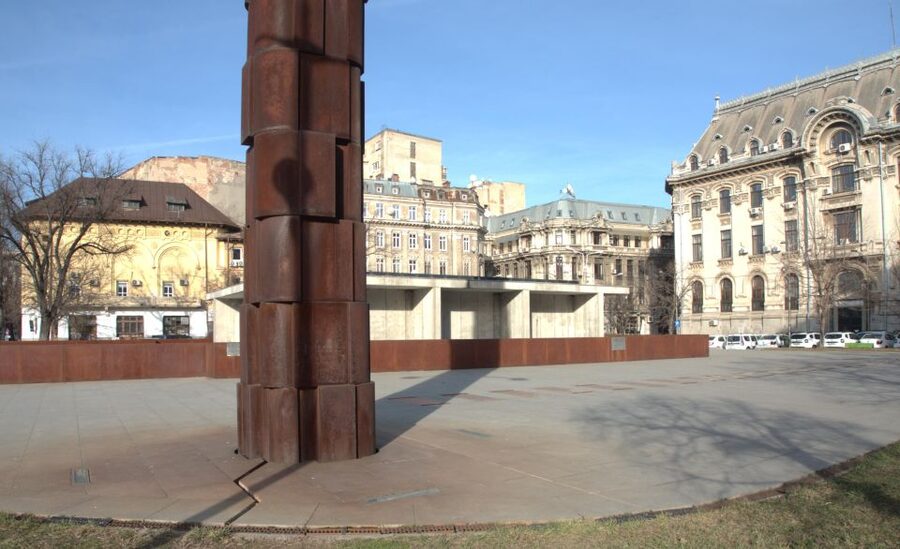
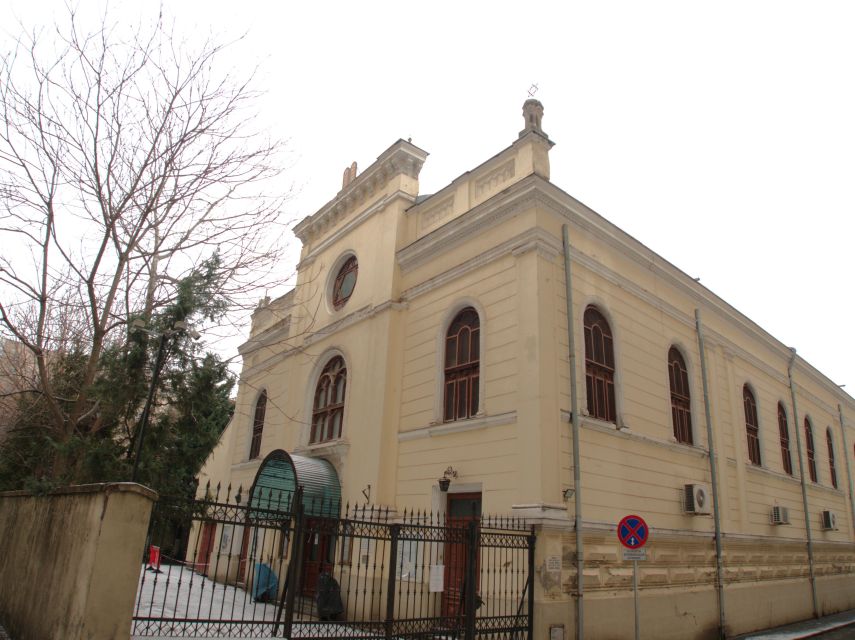
Next you head to the Jewish Museum in Bucharest. The museum is hosted in an ex-temple, which gives the visit a built-in emotional and practical advantage. You’re not seeing the past in a generic box. You’re seeing it inside a space that once served a Jewish community purpose.
Plan for a guided visit of around thirty minutes. The time is long enough to get key themes across without turning it into a lecture marathon. If you want to understand what life looked like before the catastrophe, this is where the tour gives you that foundation.
One practical note: the museum is closed on Fridays, so if you’re planning a Shabbat-weekend schedule, you’ll want to adjust your day. Also, given safety-related programming changes that can happen, it’s smart to ask before booking if your dates are around sensitive periods.
Great Synagogue and its Holocaust connection
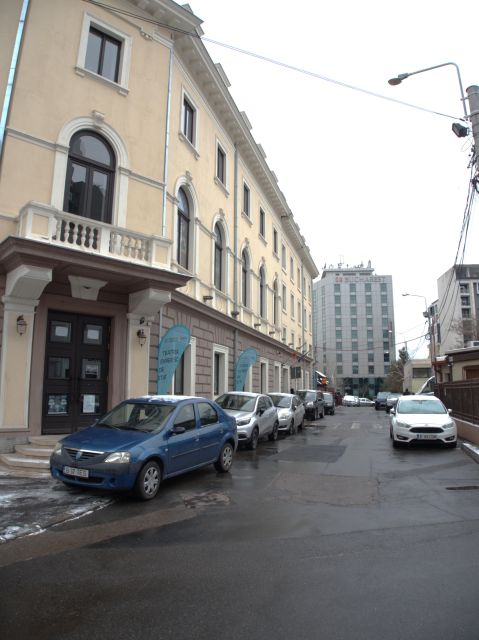
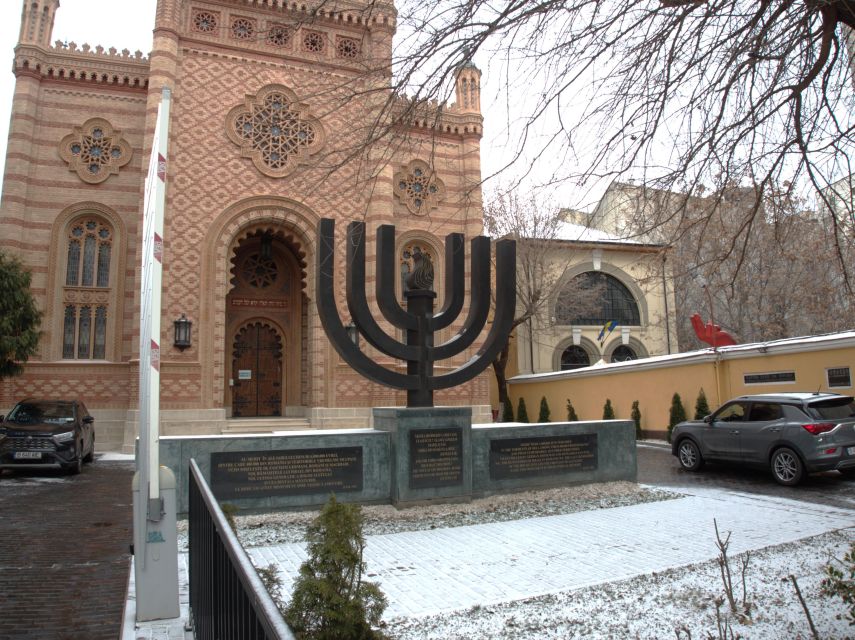
The Great Synagogue is a main stop, and it’s one of the easiest places to understand why the tour centers the Holocaust story. This synagogue isn’t just a religious landmark. It also carries Romanian Holocaust history, which you’ll connect to the wider narrative the guide shares as you get there.
You’ll have time to visit for about thirty minutes. That’s enough for a focused look, but don’t treat it as a quick photo stop only. The value comes when you slow down and use the guide’s context to read what you see.
Important planning detail: during Rosh Hashana, Pesach, Shavuot, Yom Kippur, and Sukkot, the Great Synagogue is closed. Even if your interest is purely historical, those dates can change what you can access.
Hours to remember are Mon-Thu 9:00 to 14:00 and Fri 9:00 to 12:00 when open. If you’re traveling in hot months, opening hours can be affected, so check ahead.
Teatrul Evreiesc de Stat: Jewish theater as cultural proof
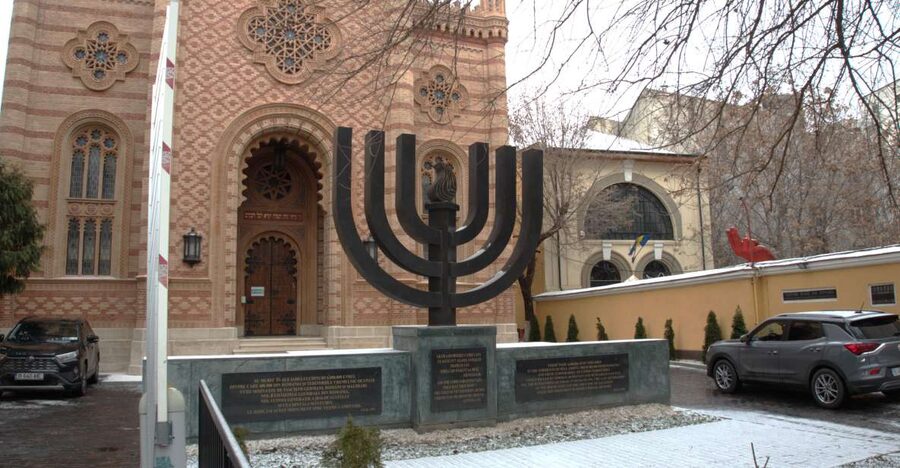
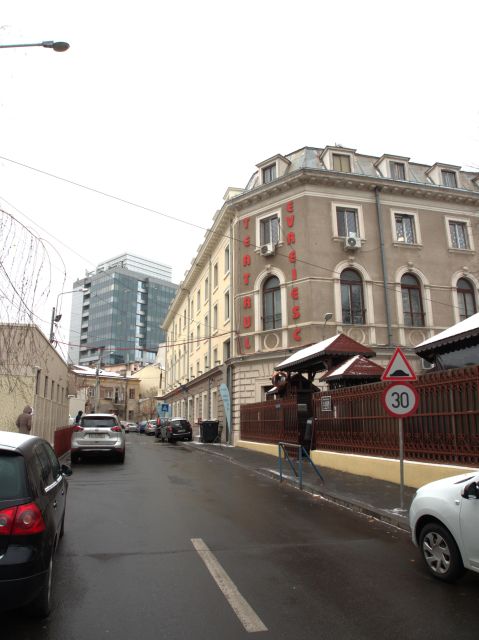
After the synagogue, you pass by the Jewish State Theater, Teatrul Evreiesc de Stat, with a visit time of about thirty minutes. This stop is easy to undervalue if you only expect religious sites, but it’s one of the tour’s smartest balancing moves.
A community is more than worship spaces. Theater tells you about language, humor, social life, and identity. It shows how Jewish culture operated in public, not just behind closed doors. On this tour, it works as a reminder that Jewish life in Bucharest wasn’t only defined by tragedy. It also included art, performance, and community dialogue.
As with other indoor sites, the tour’s guide makes the time count with context. It helps you leave with an understanding of what the building represents, not only what it looks like.
More Bucharest on foot
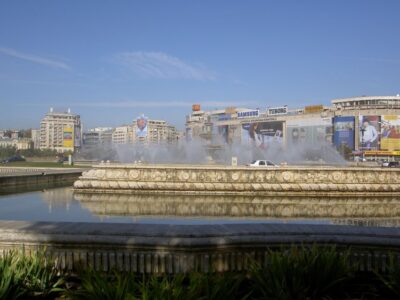
Laude-Reut and Jerusalem Lion Square: quick passes with a purpose
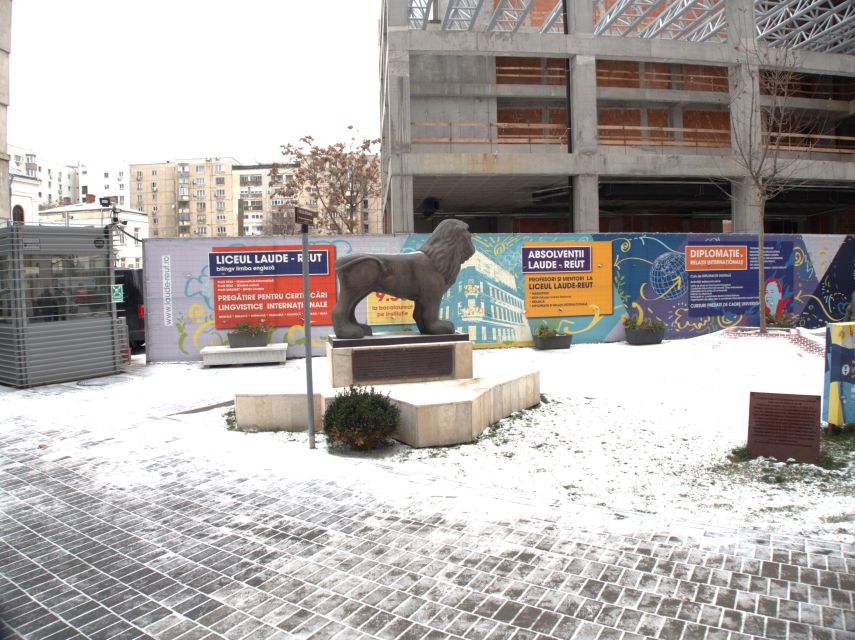
You’ll also pass by Laude-Reut Educational Complex and Jerusalem Lion Square. These are shorter stops, about ten minutes and five minutes respectively. They don’t need long visits to matter, because they’re there to round out the bigger picture of public education and communal anchors.
Think of these as signposts. They show you that Jewish presence in Bucharest included schooling and civic spaces, not just temples and memorials. Even a quick pass becomes useful if you’re mentally collecting themes: worship, culture, education, and then the break that the Holocaust created.
Avraham Kosher snack break: practical fuel, local feel
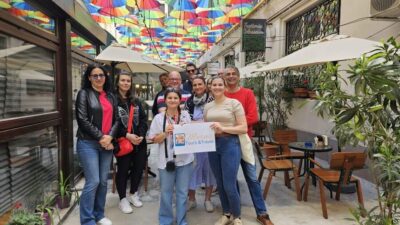
Halfway through, you get a break for local snacks at Avraham Kosher, about thirty minutes. This is the part where your feet get a breather and you get a taste of local Jewish food culture.
Snacks aren’t included, so budget for your purchase. The good news is that this isn’t tacked on as an afterthought. It’s timed so you can recharge before the final, more emotionally heavy segment.
Bring cash, too. The tour asks for cash, and you’ll likely want it for both snacks and entrance fees when sites are open.
Coral Temple: Neo-Mudejar style and a recently restored landmark
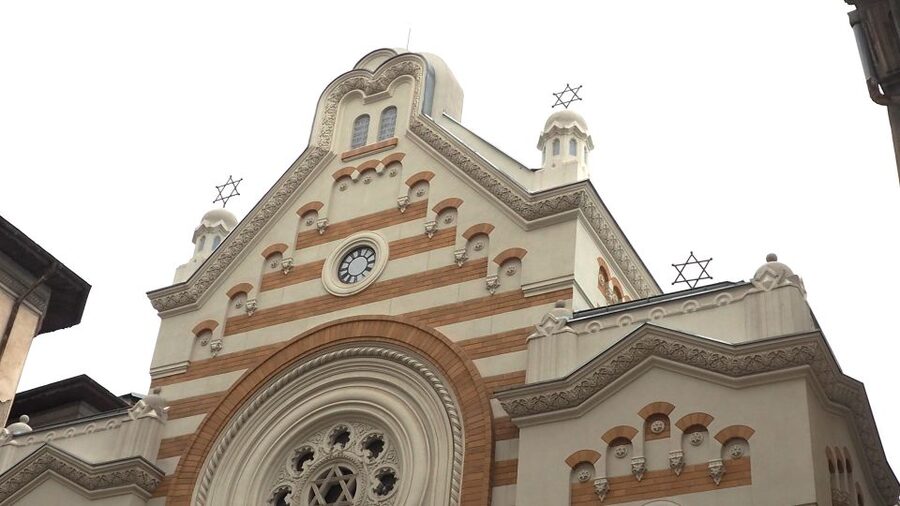
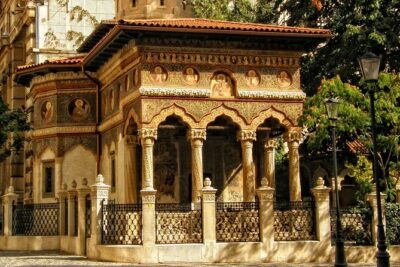
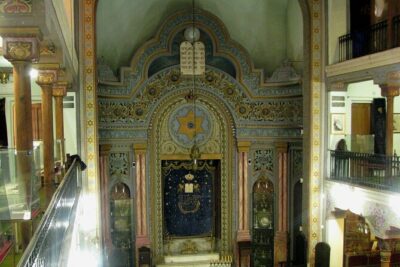
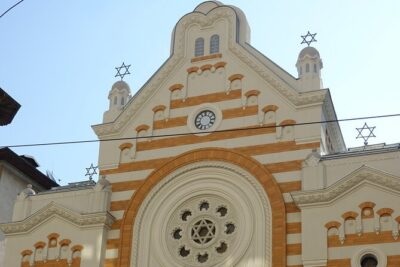
Then comes the Coral Temple, and it’s a standout for visual reasons. It’s described as Neo-Mudejar style and recently restored, with 150+ years of history. That combination matters. Neo-Mudejar style can look striking, but the value here comes from pairing the aesthetics with the story behind the building.
You’ll visit for about twenty minutes. That’s enough to see key exterior features and take in the atmosphere without feeling rushed. The tour frames it as part of the continuing presence of Jewish architecture and community identity in Bucharest.
Here’s the major closure warning again: during Rosh Hashana, Pesach, Shavuot, Yom Kippur, and Sukkot, the Coral Temple is closed. Visiting hours follow Mon-Thu 9:00 to 14:00 and Fri 9:00 to 12:00 when open. If you’re traveling during holiday weeks, you should confirm access before you book.
The Holocaust Memorial in Bucharest: ending with weight, not speed
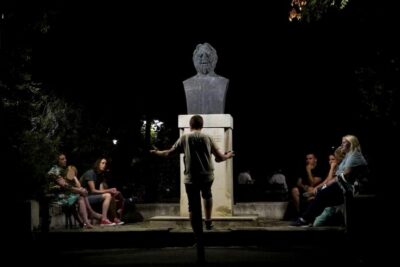
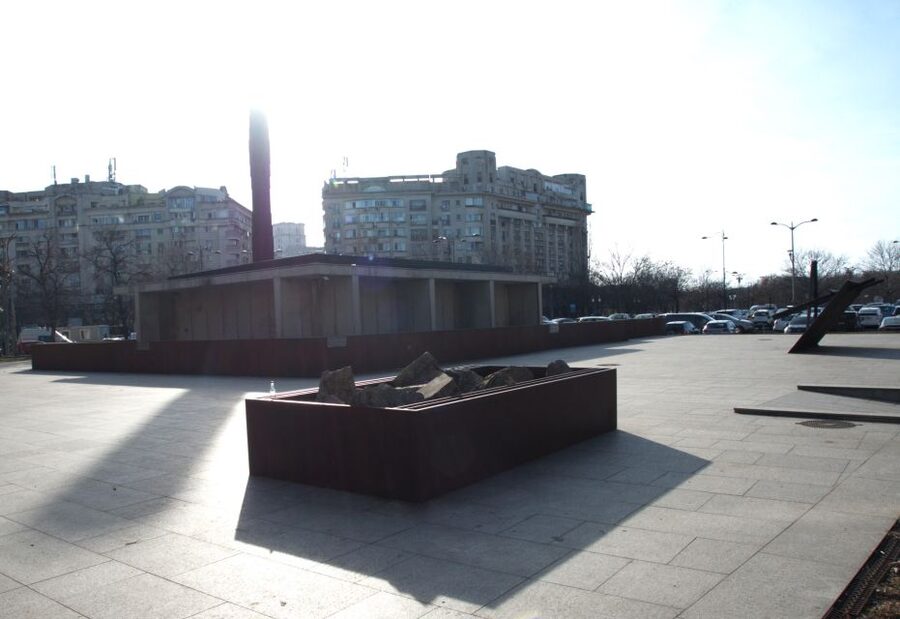
The tour ends at the Holocaust Memorial in Bucharest, with a visit of about twenty minutes. This is where the pacing shifts. Earlier stops can feel like a careful reconstruction of place and community life. At the memorial, the tone turns more direct and reflective.
You’ll take in the site and the guide’s context about the Romanian Holocaust and the long-term consequences that followed. The stop also ties in the history of the Jewish community during the Communist regime, which is a crucial thread if you want to understand what happened after the war, not just during it.
I like endings like this because they avoid the common trap of rushing from buildings to bus rides to the next attraction. Here, you finish on meaning, then you still have energy left to keep exploring Bucharest on your own.
The guide makes the whole thing click, Razvan Trancu especially
The most consistently praised ingredient is the guide. Razvan Trancu is mentioned again and again for a reason: he connects Romanian and Jewish history to geography, politics, and real context. He doesn’t just recite facts. He explains why events mattered, and he stays responsive to questions.
One practical bonus from how he teaches: he uses photos on an iPad to help you understand what you’re looking at. That matters when you’re standing in a city where some buildings are altered, rebuilt, or no longer exist. Visual support helps you map the past to the street you’re standing on.
If you’re the kind of traveler who likes to ask, this tour suits you. You’ll get answers in English or Italian, depending on the guide and language selection.
Price and what you actually get for it
The tour is priced at $318 per group, up to 12 people, with a small group limit of 7 participants. That combination can be a good value if you like a more human pace and a guide who can actually answer questions.
That said, you should factor in extras. There is an entrance fee of 30 lei per person (around $6) in each location when open, and these fees are not included. The tour’s total cost for you might be higher depending on how many sites are open on your specific day and what’s accessible during your dates.
So, is it worth it? If you want a guided route that connects architecture to Holocaust history and postwar realities, this is the kind of experience where the guide time is the product. If you’re only interested in quick photos of synagogue buildings with no historical framing, you might find the ticket fees and time investment less appealing.
Timing, closures, and heat: the three things that can change your day
This is one of those tours where timing isn’t a minor detail. Several key sites have predictable closure patterns.
- During major Jewish holidays, the Coral Temple and Great Synagogue close.
- The Jewish community museum is closed on Fridays.
- Standard visiting hours are Mon-Thu 9:00 to 14:00 and Fri 9:00 to 12:00.
- Safety-related closures can happen depending on events abroad.
- High temperatures might affect opening schedule, so check ahead.
You’ll also want to plan for money on the spot. The tour notes entrance fees and asks you to bring cash.
The upside is that the tour is designed to cover the main highlights even when you adjust. If a site is closed, the tour’s structure is built around keeping you on track with the story, not just hunting for doors.
Who this tour is best for
This tour is ideal if you want Jewish Bucharest history with on-the-ground context. It’s especially good for travelers who:
- want Holocaust education tied to specific Romanian places
- enjoy guided walking routes and short, focused visits
- appreciate culture beyond worship spaces, including theater and education
- like asking questions and receiving historical explanations that connect to modern urban life
It may not be the best choice if you need a purely celebratory, light itinerary. The emotional content is real, and the tour handles it through memorial grounding and historical framing.
Should you book? My take
Book this tour if you care about understanding Bucharest beyond its postcards. The mix of surviving synagogue architecture, a community museum in an ex-temple, cultural stops like the Jewish State Theater, and a final visit at the Holocaust Memorial gives you a full picture without turning the day into a marathon.
Skip or reschedule if your travel dates land on major holidays when the Coral Temple and Great Synagogue are closed, or if you know you’ll be uncomfortable with sites having adjustable access for safety or heat. When you do book, bring cash for entrance fees and snack purchases, and plan your morning so you arrive with time to settle in.
If you want a guided walk that respects the past and makes the city’s layers legible, this is a strong pick.
FAQ
Which sites does the tour include?
You’ll visit the Jewish Museum Bucharest, the Great Synagogue, the Jewish State Theater (Teatrul Evreiesc de Stat), the Coral Temple, and the Holocaust Memorial. You’ll also pass by Laude-Reut Educational Complex and Jerusalem Lion Square, with a snack break at Avraham Kosher.
How long is the Jewish heritage walking tour in Bucharest?
It lasts about 3 hours, with a guided walking route and time for visits at multiple stops.
Are there entrance fees?
Yes. When open, there is an entrance fee of 30 lei per person at each location. Entrance fees are not included in the tour price.
What should I bring with me?
Bring cash. The tour also notes that you may need cash for entrance fees and personal expenses like snacks.
Are any locations closed on certain days or holidays?
Yes. During Rosh Hashana, Pesach, Shavuot, Yom Kippur, and Sukkot, the Coral Temple and the Great Synagogue are closed. The Museum of the Jewish community is closed on Fridays. Schedules can also change for safety reasons or due to high temperatures.
What languages is the guide available in?
The live tour guide is available in English and Italian.
Whatever Else Bucharest Is Selling
- Bucharest to Dracula Castle, Peles Castle and Brasov Guided Tour
★ 4.5 · 2,933 reviews - Bucharest: Palace of Parliament Tickets and Guided Tour
★ 4.4 · 1,877 reviews - Transylvania and Dracula Castle Full Day Tour from Bucharest
★ 4.5 · 1,589 reviews - Bucharest: City Highlights Guided Walking Tour
★ 4.9 · 1,482 reviews - From Bucharest: Brasov Peles & Dracula’s Castle Day Tour
★ 4.5 · 1,244 reviews
Everything Else We Reviewed In Bucharest
- Bucharest: Dracula’s Castle, Peles Castle, & Brasov Old Town
★ 4.5 · 17,858 reviews - Bucharest: Dracula Castle, Peles Castle & Brasov Old Town
★ 4.6 · 10,891 reviews - Bucharest: Dracula’s Castle, Peleș Castle & Brașov Day Trip
★ 4.5 · 5,919 reviews - Bucharest: Palace of Parliament Tickets and Guide
★ 4.3 · 3,182 reviews - Bucharest: Day Trip to Dracula Castle, Peles Castle & Brașov
★ 4.4 · 3,049 reviews
Jewish Heritage, More Routes
- Bucharest Jewish Heritage | Holocaust Memorial | Private Car Tour
★ 5.0 · 38 reviews - Half-Day Jewish Heritage Walking Tour in Bucharest
★ 5.0 · 20 reviews - 4h Jewish Legacy in Bucharest – Private Tour by Car and Walking
★ 4.5 · 17 reviews - Bucharest Jewish Heritage | Private Walking Tour
★ 5.0 · 14 reviews - Bucharest Jewish Heritage Private Walking Tour
★ 5.0 · 8 reviews
Recently added around Bucharest
- Private Tasting Expedition Along Romania’s Most Famous Wine Route★ 5.0 · 3 reviews
- Private Guided Tour of Peles Castle and Bran Castle from Bucharest★ 5.0 · 3 reviews
- Private Sightseeing Tour of Bucharest★ 4.5 · 3 reviews
- Discover Europe’s Deepest Mines & Peles Castle’s Royal Charm★ 5.0 · 3 reviews
- Bucharest City Tour and Wine Tasting★ 5.0 · 3 reviews
Jewish Heritage Tours, compared.
 ★ 5.0Bucharest Jewish Heritage | Holocaust Memorial | Private Car TourFrom $11338 reviews
 ★ 5.0Half-Day Jewish Heritage Walking Tour in BucharestFrom $31820 reviews
 ★ 4.54h Jewish Legacy in Bucharest – Private Tour by Car and WalkingFrom $13017 reviews
 ★ 5.0Bucharest Jewish Heritage | Private Walking TourFrom $31214 reviews
 ★ 5.0The Jewish Heritage Tour of TimisoaraFrom $519 reviews
★ 5.0Bucharest Jewish Heritage Private Walking TourFrom $3068 reviews
 ★ 5.0Timisoara: Jewish Heritage Walking TourFrom $704 reviews
Browse the lists this tour appears in