
REVIEW · TIMIȘOARA
Timisoara: Jewish Heritage Walking Tour
Jewish heritage in Timisoara is personal and practical. I love seeing the Moorish synagogue and I like how the walk spotlights the city’s Jewish-built landmarks. I also appreciated the Stolperstein stop, because it turns a street corner into a real reminder of the Holocaust. One possible drawback: the tour is only 2.5 hours, so you may wish you had more time to linger in front of the buildings.
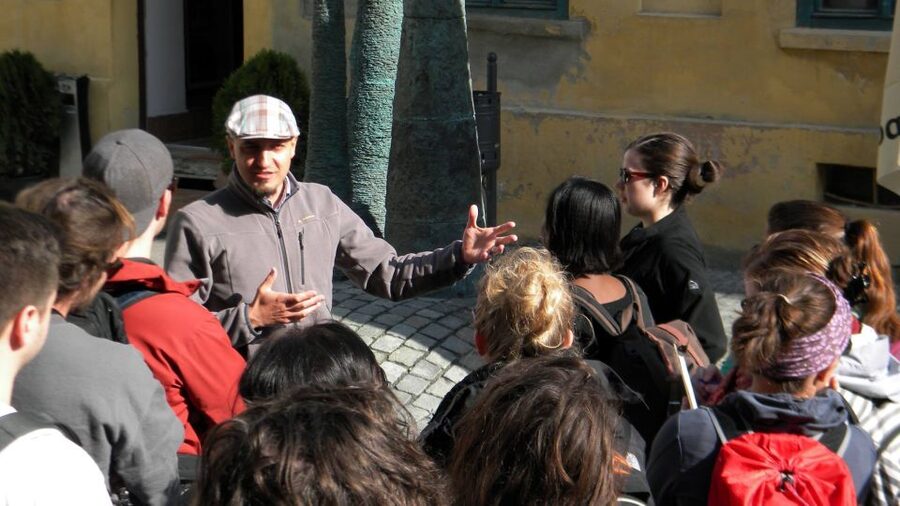
You’ll tour in a private group with a live guide in English or Romanian, which helps if you want questions answered in plain, direct terms. The route is focused, not scattershot, and it keeps the story tied to specific places you can actually stand in front of. Bring calm shoes and expect walking.
Meet your guide at the Tourist Information Center at Strada Alba Iulia 2. You’ll mostly cover Timisoara’s center and then head toward the Fabrikstadt neighborhood, where the architecture and local context matter. Comfortable shoes help here, because even a short tour can feel long at the end.
In This Review
- Key Highlights I’d Plan Around
- Timisoara’s Jewish Heritage, Walked One Block at a Time
- Getting Oriented: Meeting Point, Duration, and What You’ll Actually Do
- The Small Jewish Quarter in the City Center
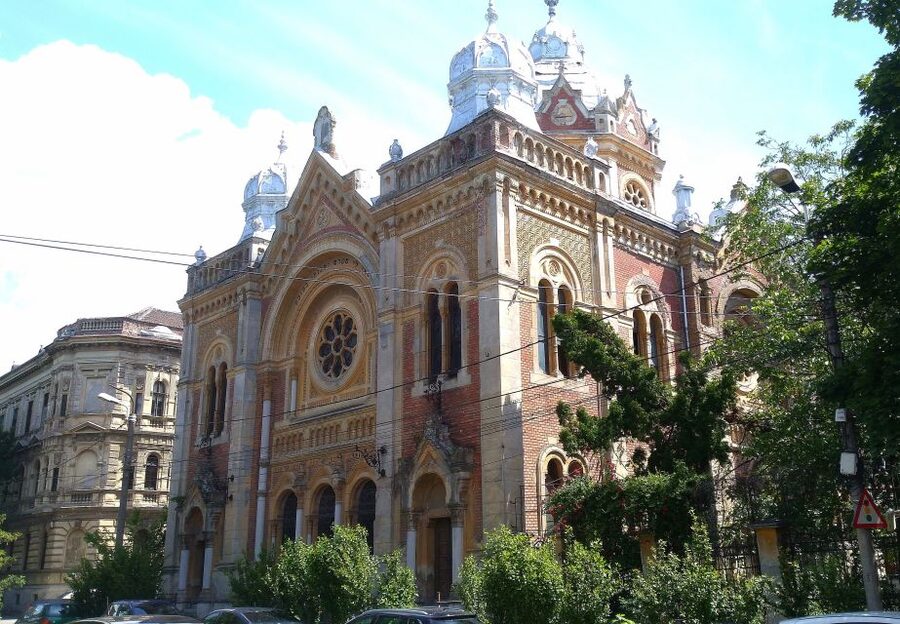
- The Moorish Synagogue: When Architecture Carries Meaning
- Fabrikstadt and the Status Quo Synagogue’s Architectural Story
- Jewish Townsmen and the Buildings They Financed
- The Stolperstein Stop: A Small Monument With Heavy Weight
- Optional Add-On: The Jewish Cemetery Visit at the End
- Price and Value: What $70 Gets You in 2.5 Hours
- Who This Tour Fits Best (And Who Might Want Something Different)
- My Booking Verdict: Should You Book This Timisoara Jewish Heritage Tour?
- FAQ
- How long is the Timisoara Jewish Heritage Walking Tour?
- What is the price per person?
- Where do I meet the guide?
- What is included in the tour price?
- Are admission tickets included?
- What languages is the live guide available in?
- Is this a private group?
- Should I expect a visit to the Jewish cemetery?
- What should I bring?
- Can I cancel and get a refund?
Key Highlights I’d Plan Around
- Moorish synagogue visit in the center, where style and community history meet
- Status Quo synagogue in Fabrikstadt, plus the story behind the synagogue and its architecture
- Small Jewish Quarter stroll, built around what you can see in a compact city area
- Jewish townsmen’s influence, including buildings financed and designed by Jewish locals
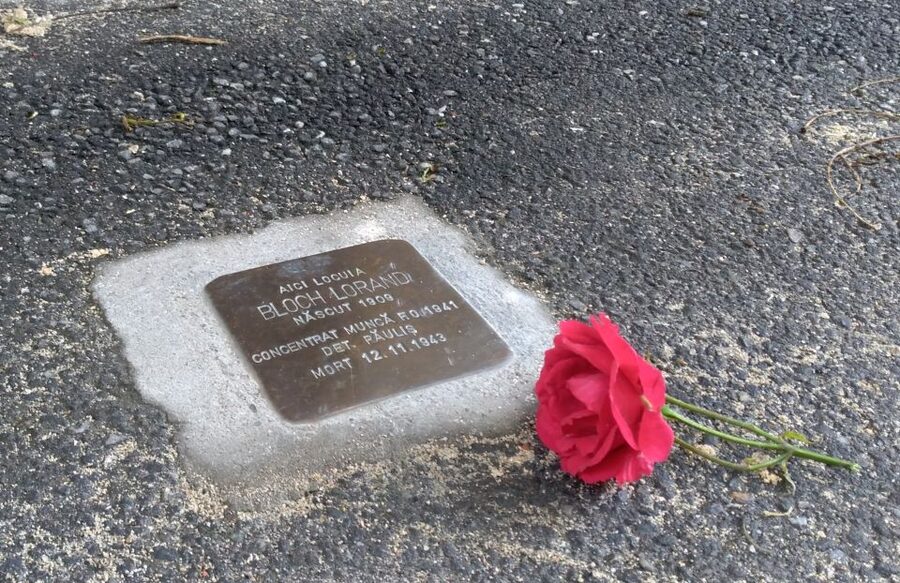
- Romania’s only Stolperstein, an on-street memorial tied to Holocaust victims
- Optional Jewish cemetery, depending on availability at the end of the tour
Timisoara’s Jewish Heritage, Walked One Block at a Time
Timisoara is the kind of city where walking gives you control. You are not stuck in a big bus seat waiting for the next stop. Instead, you can look at façades, notice the way neighborhoods change, and understand why certain places became meaningful to the Jewish community.
This tour is interesting because it is not only about big themes like Jewish life and the Holocaust. It stays grounded in physical locations you can point to. You learn about past and current events, then you match that information to the buildings themselves. That matters. Stories become easier to remember when they’re attached to a street, a style, and a specific place you can revisit later.
I also like the balance here: it covers religious landmarks like the synagogues, then widens to the broader imprint of Jewish townsmen who financed and designed stunning buildings. That gives you a fuller sense of how a community shaped a city, not just how it was affected by tragedy.
Getting Oriented: Meeting Point, Duration, and What You’ll Actually Do
The tour runs for 2.5 hours, which is a good length for first-timers. It’s long enough to cover both the city-center Jewish area and the Fabrikstadt neighborhood, and short enough that you won’t feel like your whole day is gone. Still, you will walk, and the comfortable-shoes note is not just a suggestion.
You meet at the Tourist Information Center on Strada Alba Iulia 2 (Timișoara 300077). That’s helpful because it reduces the stress of hunting for a starting point. The guide is with you for the whole experience, and you’ll have a live guide in English or Romanian, depending on what the group needs.
Also, this is a private group. That usually means the pace can feel more human. If you’re the type who likes asking small questions while walking, this format tends to work well.
Timisoara beyond the squares
The Small Jewish Quarter in the City Center
The first part focuses on Timisoara’s small Jewish Quarter in the city center. This is where the tour’s compact plan works in your favor. You are able to compare details between a few nearby sites without spending half your time on transfers.
What I find valuable about this section is the way it sets context. Instead of treating Jewish history as a single chapter in a book, the guide brings it back to streets and architecture you can see right now. You learn about both past and current events, which helps you connect the historic story to the present-day city you’re standing in.
Even if you are not a deep history nerd, the neighborhood itself gives you cues. Synagogues, communal spaces, and surrounding buildings often reflect how a community organized life. Watching that pattern unfold on foot makes the bigger story feel less abstract.
The Moorish Synagogue: When Architecture Carries Meaning

One of the most memorable stops is the Moorish synagogue. The label Moorish is not just decoration, it signals a distinct architectural style that would have helped make the synagogue recognizable as an important communal place.
On this tour, you don’t just see the building. You learn the story behind what you’re looking at, and the guide connects the synagogue to the broader Jewish community in Romania, with extra attention on Timisoara. That connection is the point. When you understand why a synagogue’s style mattered, the stop becomes more than a photo-op.
Practical tip: give yourself a few moments to look at the overall shape first, then come back for details. With synagogue architecture, the outward design usually tells you a lot about how the building wanted to be seen.
Fabrikstadt and the Status Quo Synagogue’s Architectural Story
Next comes Fabrikstadt, where the tour visits the impressive Status Quo synagogue. Fabrikstadt is specifically highlighted here, which is a clue that the community story moved across the city, not just within the earliest core areas.
The guide shares the story and architecture of this synagogue. That’s important because the “Status Quo” name hints at something beyond a simple building. It suggests identity, continuity, and difference within the community. You’ll leave the stop with a clearer sense of how Jewish communal life could be organized around distinct approaches, and how that shows up in places of worship.
What I like about visiting synagogues in person is how the buildings work as evidence. They show you choices made by real people: what to build, what styles to use, and how to express community values through architecture.
If you care about design, this part is a strong reason to book. If you prefer reflection over facts, the guided story still helps you read the building without needing to be an architectural expert.
Jewish Townsmen and the Buildings They Financed
Another stop in your walk looks at the fact that a number of Timisoara’s stunning buildings were financed and designed by Jewish townsmen. This detail is worth treating seriously because it shifts the focus.
Instead of the Jewish community only appearing in religious landmarks or in tragedies, you see how Jewish locals helped shape the city’s physical look. That is the kind of information that changes how you see everything afterward. You start noticing patterns, not only in synagogues but in the surrounding built environment too.
I find this section especially useful if you want an experience that feels grounded and local. When a guide explains who funded and designed what, you get a better sense of influence and agency, not only impact.
The Jewish Timisoara routes we walked
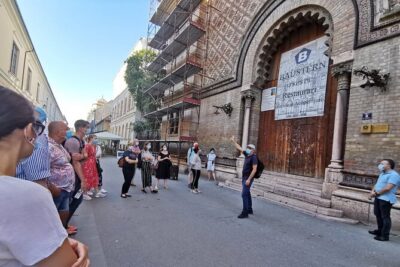
The Stolperstein Stop: A Small Monument With Heavy Weight
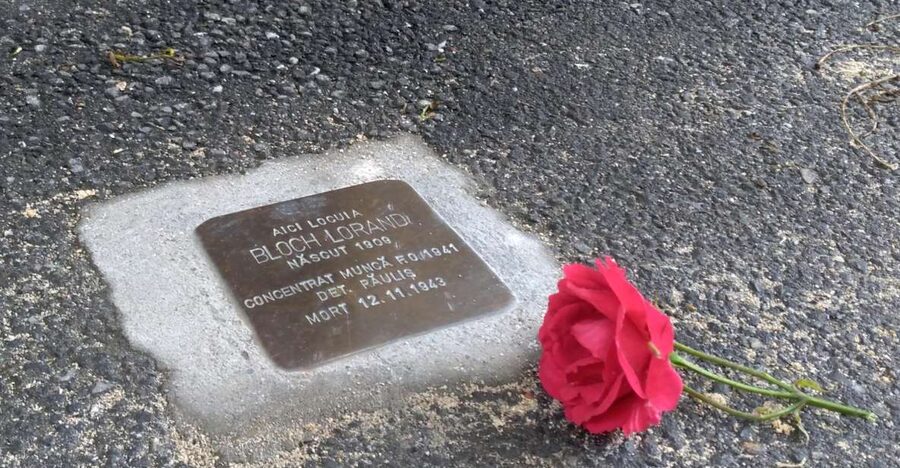
Then you reach the tour’s only Stolperstein in Romania. These stones are known as “stumbling stones” and are engraved with the name and life dates of Holocaust victims. On a walking tour, that detail hits in a different way than reading. You are physically on the street, so the memorial feels less like something stored behind glass and more like something placed into everyday life.
The stones are made of iron or copper, and the idea is simple, but powerful. You see the names and dates, and the guide ties it to the crimes committed under the Nazi regime during World War II. The stop works best if you slow down. Don’t rush past it.
This is also a moment where the tone matters. You’re dealing with atrocity and loss, so you’ll want to be mentally prepared for a more serious point in the tour. If you like history that is honest and specific, this stop is a central highlight.
Optional Add-On: The Jewish Cemetery Visit at the End
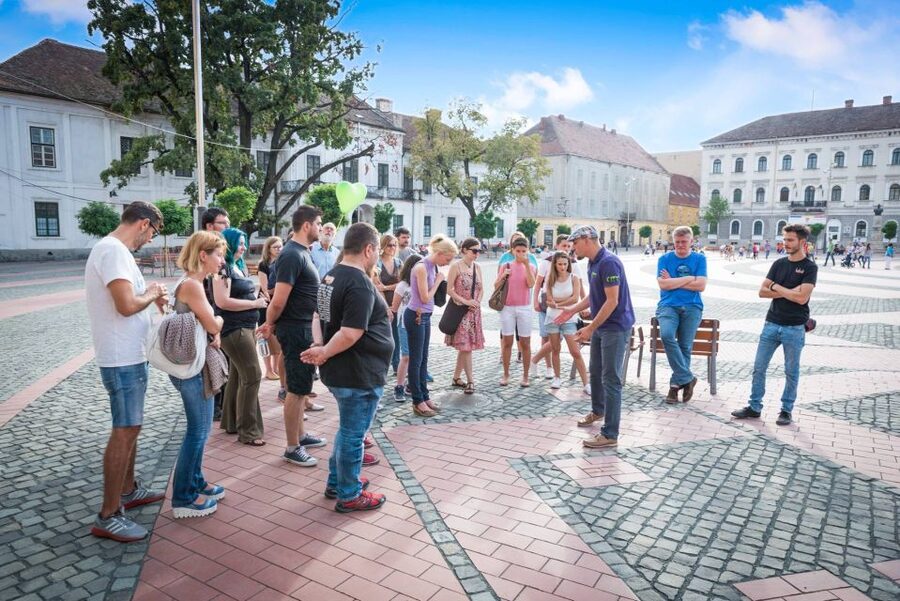
At the end of the tour, there may be an opportunity to visit the Jewish cemetery of Timisoara, but it is not guaranteed. The key word here is depending on availability.
If you’re the kind of traveler who appreciates quiet spaces and historical depth, it’s worth being open to this possibility. Just don’t build your schedule around it. Treat it like a bonus rather than a promised stop.
Also, because cemetery visits depend on conditions, you should keep your mindset flexible. Bring the same comfortable shoes you started with, and plan to keep the walk easy rather than rushing to hit other sights immediately afterward.
Price and Value: What $70 Gets You in 2.5 Hours

This tour costs $70 per person, which is not the cheapest option for a walking experience. But value here is tied to three things you cannot copy on your own easily.
First, you get a live guide for 2.5 hours, with the ability to ask questions in English or Romanian. Second, the tour focuses on specific places: the Moorish synagogue, the Status Quo synagogue, and the Stolperstein. Third, it offers guided context connecting Jewish community history and architecture, plus that serious Holocaust reminder.
One more practical value point: admission tickets are not included. That doesn’t mean you’ll pay for everything, but you should budget in case one or more stops require an entry ticket. For true value, think of the price as paying for guided storytelling and access logistics, then add any separate attraction costs if they apply.
Who This Tour Fits Best (And Who Might Want Something Different)
I’d especially recommend this tour if you want a city walk that is both informative and place-based. If you care about architecture, synagogue history, or how communities shaped cities, the stops in the center and Fabrikstadt make the route feel deliberate.
It’s also a good fit if you prefer a guided experience in a smaller setting. The tour is a private group, and that can make questions easier and the pace less rushed.
If you are looking for a super long, wide-ranging multi-neighborhood tour, 2.5 hours might feel short. And if you want guaranteed cemetery time, you’ll want to know that this part is conditional.
My Booking Verdict: Should You Book This Timisoara Jewish Heritage Tour?
Yes, I’d book it if you want a focused walking experience that ties Jewish history to real places: the Moorish synagogue, the Status Quo synagogue in Fabrikstadt, and Romania’s only Stolperstein. The route feels designed for comprehension, not just sightseeing.
You should book it especially if you like learning through buildings, not only through timelines. The detail about Jewish townsmen financing and designing landmarks adds a layer that many short heritage tours skip.
Just go in knowing the tour is short, some extra visits like the cemetery are not guaranteed, and attraction admission tickets are not included. If that matches your expectations, you’ll get a meaningful, well-structured walk.
FAQ
How long is the Timisoara Jewish Heritage Walking Tour?
The tour lasts 2.5 hours.
What is the price per person?
The price is $70 per person.
Where do I meet the guide?
Meet your guide in front of the Tourist Information Center at Strada Alba Iulia 2, Timișoara 300077.
What is included in the tour price?
The tour includes a tour guide.
Are admission tickets included?
No, admission tickets to attractions are not included.
What languages is the live guide available in?
The live tour guide is available in English and Romanian.
Is this a private group?
Yes, it is listed as a private group.
Should I expect a visit to the Jewish cemetery?
It may be possible depending on availability at the end of the tour, but it is not guaranteed.
What should I bring?
Wear comfortable shoes.
Can I cancel and get a refund?
Yes, you can cancel up to 24 hours in advance for a full refund.
Everything Else We Reviewed In Timisoara
- The Classic Tour of Timisoara
★ 5.0 · 154 reviews - Weekly Guided Tour in English – Tuesday, Thursday, Saturday
★ 5.0 · 84 reviews - Timisoara All in One – Walking and Tram Tour
★ 5.0 · 72 reviews - Timisoara: Guided Walking Tour
★ 4.9 · 38 reviews - Day trip to Corvin Castle and Sibiu (and back) from Timisoara
★ 5.0 · 30 reviews
Jewish Heritage, More Routes
- The Jewish Heritage Tour of Timisoara
★ 5.0 · 9 reviews
Timisoara On Foot And By Tram
- The Classic Tour of Timisoara
★ 5.0 · 154 reviews - Timisoara All in One – Walking and Tram Tour
★ 5.0 · 72 reviews - Timisoara: Guided Walking Tour
★ 4.9 · 38 reviews - Day trip to Corvin Castle and Sibiu (and back) from Timisoara
★ 5.0 · 30 reviews - Timișoara Highlights – Walking Tour
★ 5.0 · 28 reviews
Recently added around Timisoara
- Nera Gorge National Park – Private Day Tour from Timisoara★ 4.5 · 4 reviews
- Timisoara: Jewish Heritage Walking Tour★ 5.0 · 4 reviews
- Timisoara Downtown Dream Tour★ 5.0 · 5 reviews
- Timisoara: Private Walking Tour with a Local Guide★ 4.5 · 5 reviews
- The Jewish Heritage Tour of Timisoara★ 5.0 · 9 reviews
Timisoara Tours, compared.
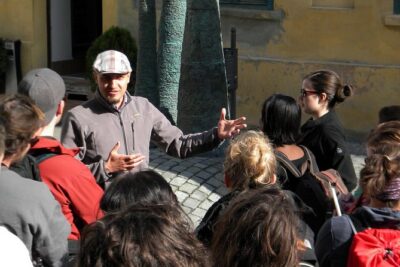 ★ 5.0The Classic Tour of TimisoaraFrom $48154 reviews
 ★ 5.0Timisoara All in One – Walking and Tram TourFrom $9272 reviews
 ★ 4.9Timisoara: Guided Walking TourFrom $2338 reviews
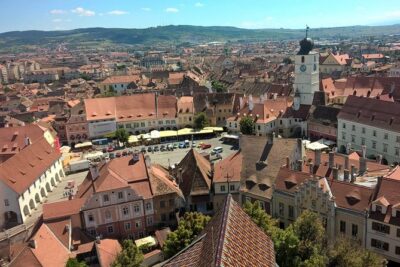 ★ 5.0Day trip to Corvin Castle and Sibiu (and back) from TimisoaraFrom $18530 reviews
 ★ 5.0Timișoara Highlights – Walking TourFrom $3528 reviews
 ★ 5.0Timisoara: Classic Walking TourFrom $4226 reviews
 ★ 5.0The Grand Tour of Communist Ages at TimisoaraFrom $6617 reviews
 ★ 5.0One Day in Transylvania – Departure from TimisoaraFrom $17016 reviews
Browse the lists this tour appears in