
REVIEW · GUIDED
Tour guide in Iasi, Romania
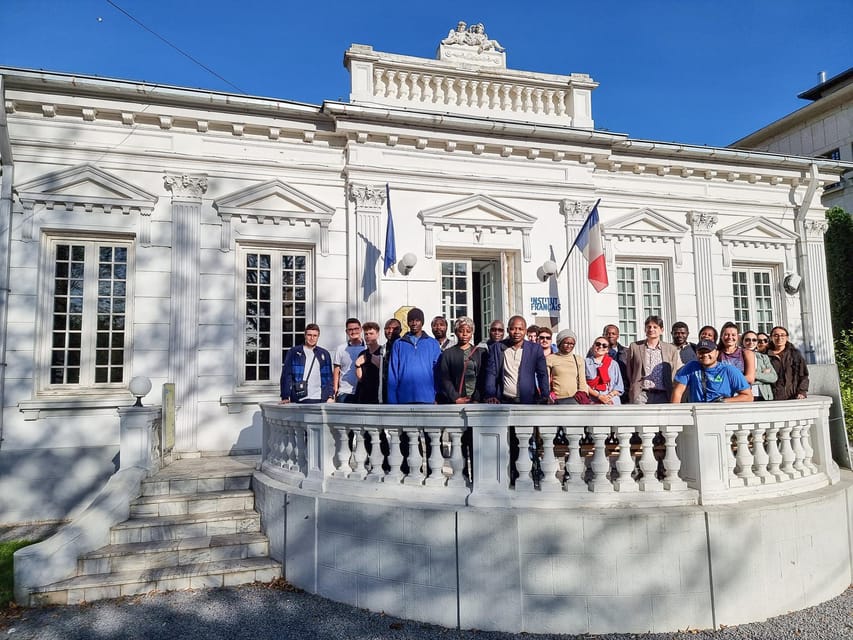
Iasi has a way of sounding like a storybook. This 3-hour walk starts in Piata Unirii and shows you how the city changed, using legends and real historical eras to connect the dots. I especially liked the way the guide turns ordinary streets into a clear timeline, so you leave with a sense of place, not just names.
Two things I’m really glad about: the guide’s storytelling and the small-group feel (max 4 people). That mix means you can ask questions, get explanations that fit your pace, and still enjoy photo moments without feeling rushed.
One drawback to consider: it’s not designed for everyone. The walk is not suitable for wheelchair users, and it also isn’t recommended for children under 7 or people over 70, so plan based on your mobility and stamina.
In This Review
- Key Takeaways
- Union Square Start: Your 3-Hour Timeline in Iasi
- How the Guide Builds Iasi in Last 250 Years
- Storytelling With Improvisation, Not a Script
- Getting the Most From Photo Stops and Free Time
- Walking Pace, Comfort, and Who Should Skip It
- Price and Value for a $70, 3-Hour Small-Group Tour
- Language Options: English, Romanian, and Real Understanding
- Who This Iasi Tour Fits Best
- Should You Book This Iasi Tour?
- FAQ
- Where does the tour start?
- How long is the tour?
- How much does it cost?
- How big is the group?
- What languages are available?
- What is included in the tour?
- What should I bring?
- Is the tour refundable if plans change?
- Who is this tour not suitable for?
Key Takeaways

- Small group, real interaction: Limited to 4 participants, so the guide can adapt to your questions and interests.
- Story-first timeline: You’ll hear when Iasi was first mentioned and how major events shaped the city up through the 17th to 18th centuries.
- Improvisation on the go: The tour isn’t read from a script, and the guide can adjust the flow as the group responds.
- Center-focused route: Most stops stay near the city center to reduce long walking detours.
- Photo opportunities + free time: You’ll get designated moments for photos, plus breathing room to explore.
- English and Romanian support: Live guidance in English and Romanian helps you follow comfortably.
Union Square Start: Your 3-Hour Timeline in Iasi
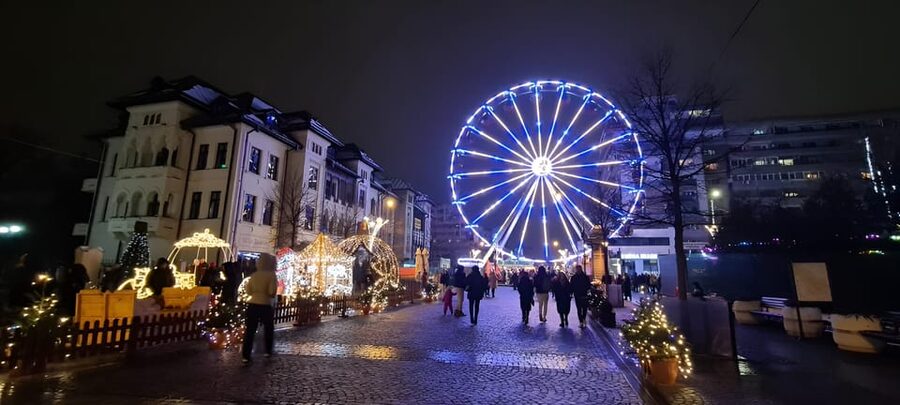
I like tours that begin where locals actually gather, and this one starts right by the Alexandru Ioan Cuza Statue in Piata Unirii (Union Square). It’s a smart launch point because the city’s “center of gravity” is all around you. You don’t waste time getting oriented, and the guide can set the tone immediately with what Iasi is and how it keeps changing.
From there, the plan is a walk through different parts of the city that show multiple faces of Iasi. You’re mostly staying near the center, so you’re not stuck on a long slog between far-flung sights. That matters if you only have half a day and you want your energy used for seeing and listening, not constantly relocating.
The tour lasts 3 hours. In that time, the guide aims to cover big historical movement up to the 17th-18th century period, then continues with more detail focused on the last 250 years. This structure is useful if you’ve ever felt that Eastern European city history is either too shallow or too heavy. Here, you get a manageable arc that helps you understand why certain neighborhoods and buildings feel the way they do.
Practical tip: wear comfortable shoes. The route is walk-heavy enough that footwear makes the difference between enjoying the streets and counting minutes.
How the Guide Builds Iasi in Last 250 Years
What makes this experience work is the way the guide explains evolution instead of treating the city like a frozen museum. The tour acknowledges that early proof can be limited, so the storytelling leans toward how Iasi evolved over the last 250 years, rather than pretending the earliest centuries have neat, documented timelines.
You’ll hear when Iasi was first mentioned, and then you’ll follow significant events through the 1600s and 1700s. After that point, the talk becomes more detailed. That shift is helpful. Before the 18th century, the big theme is how the city gets shaped. After, the details let you start connecting specific places to the forces that changed them.
Why I like that approach for visitors: it gives your brain something to organize. Instead of memorizing isolated facts, you start seeing patterns. For example, when the guide talks about periods up to the 17th-18th century and then focuses on the next 250 years, you get a stronger sense of cause and effect. This makes later stops feel less random and more like evidence.
Also, the guide keeps the walk near the center. So even when the story jumps across time, your feet stay in a familiar zone. That keeps the experience grounded. You’re listening to history, but you’re also physically tracking the city’s layout, which is one of the best ways to remember what you’re told.
Undecided? Here is what else Iasi had on the shelf when we last looked.
Storytelling With Improvisation, Not a Script
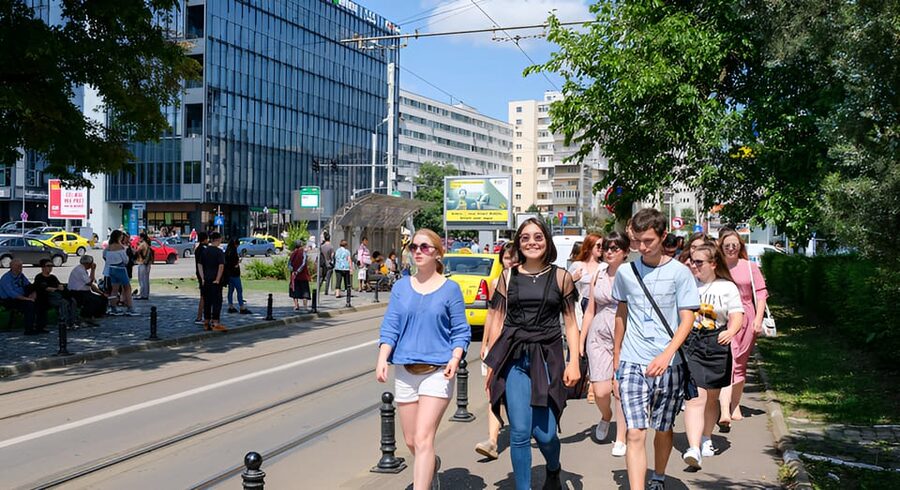
A lot of tours talk. Few can make you feel like the city is reacting back. The standout here is storytelling with improvisation. Based on the guide’s style, you can expect a lively flow where explanations can bend a bit depending on what the group reacts to.
The best part is how the guide uses communication and interpersonal skills to keep the energy steady. In small groups, that’s not just nice to have, it’s practical. It means you can get clarity when something is confusing, and you’re not left staring at a building while the guide moves on.
The humor and friendly tone also show up in the guide’s delivery. That matters more than you might think. Architectural details and historical references can feel abstract when the talk stays stiff. When the guide is comfortable enough to use light humor, you’re more likely to keep listening and catch the meaning behind the features.
You’ll also notice good time management. With a 3-hour window and a center-based route, the guide has to land key points without running late. That’s where improvisation actually helps. A scripted tour can fall apart if the group has questions or slow photo pauses. Here, the pacing is built to stay on track.
One more real-life plus: the guide may send recommendations after the tour. That can be handy because it helps you build your next steps in Iasi while the story is still fresh.
Getting the Most From Photo Stops and Free Time
This isn’t only talking and walking. The tour includes photo opportunities at key locations, plus free time for exploration. That blend is smart. If you only do a guided loop, you miss the chance to actually look around without someone’s voice filling every second. If you only wander, you risk missing the “why” behind what you see.
The photo moments are useful because they give you designated chances to stop. You’re not guessing where the best views might be, and you’re not stuck rushing your camera work while the group keeps moving. With small-group size, the guide can keep the photo breaks practical rather than chaotic.
Then comes the free time. I like that because it lets you test your new understanding immediately. You’ll be better at spotting patterns once you’ve heard the timeline. Walk a few blocks on your own and see how the streets and architecture feel in real life, not just in the guide’s explanation.
A gentle caution: free time can tempt you to sprint ahead. Don’t. Use it to slow down, choose one or two nearby streets to explore, and come back with questions you want answered. In a group of four, that kind of interaction is easy.
If you’re traveling with a busy schedule, this format also helps you plan your evening. After the tour, you’re not just hungry or tired, you’re oriented. That’s when you find better restaurants and easier routes.
Walking Pace, Comfort, and Who Should Skip It
The tour stays mostly near the center to avoid long walking. Still, it’s a walking experience for 3 hours. So you should treat it like a city walk, not a sit-and-scroll history lesson.
The requirements are clear about who it doesn’t suit. It’s not suitable for wheelchair users. It’s also listed as not recommended for people over 70 and not suitable for children under 7. If any of those categories apply to you, you’ll probably be happier choosing a different format or a shorter visit where you can rest more often.
If you’re in the “comfortable walking” zone, you’ll likely enjoy the flow. The route begins at Union Square, which is naturally central and easy to navigate, so you won’t feel lost. The guide’s time management also helps. When a guide keeps the pace steady, you don’t spend the last hour feeling like you’re dragging yourself to the finish.
My practical advice: bring water if you know you get thirsty, and keep your phone charged for photos and map use. The tour is English and Romanian guided, so having a translated notes app can be a backup if you want to look up a detail later, but you should be fine just listening if you’re comfortable with English.
Finally, consider your attention style. If you like history that links eras to actual street-level experience, this tour is a good match. If you only want modern highlights and quick photo stops, you might find the historical focus takes more of your time.
Price and Value for a $70, 3-Hour Small-Group Tour
$70 for 3 hours in a small group of up to 4 people feels fair, especially when you compare it to big-group walking tours where you get less interaction. Here, the value comes from two places: the guide quality and the format. A tour like this is built around storytelling, Q and A style communication, and improvisation, and those are easier in a tiny group.
The included elements also matter for value. You’re getting professional local guidance with historical insights, photo opportunities, and free time for exploration. Plus, you get detailed pre-tour information and tips, which can reduce your stress when you arrive.
What that means for you in real terms: you’re paying for guidance that helps you make sense of the city quickly. You’re not just seeing buildings, you’re learning how the city evolved across major periods, including the focus on roughly the last 250 years. That’s the kind of context that makes your self-guided wandering afterward more rewarding.
If you’re traveling solo, small-group tours can still be a good deal because you’re unlikely to be squeezed into a crowd. If you’re traveling as a pair or with a friend who likes history, it’s even better, since the guide can shape the pacing to match your interests.
One thing to keep expectations practical: the price is for a 3-hour experience, not a full day of sightseeing. So plan to extend your exploration after the tour in the center area you now understand better.
Language Options: English, Romanian, and Real Understanding
The tour is offered in English and Romanian, and it’s a live guided experience. That matters because the guide’s ability to communicate clearly is a core part of what people rate highly.
In the feedback you can see a consistent theme: the guide’s English is strong, and the delivery is engaging. That helps you follow along without feeling like you need to constantly catch up. You’ll also likely appreciate that the guide uses personable communication, not just historical facts.
If you’re multilingual or traveling with someone who understands Romanian, you can still get a smoother experience. If you only speak English, you’re not missing the structure. The tour is designed to be understandable in English while covering significant periods and city evolution.
Practical advice: if you tend to zone out when someone talks for too long, use the interactive moments. Ask about a building or a named figure you hear during the walk. In a group this small, the guide can usually respond directly without derailing the schedule.
Who This Iasi Tour Fits Best
This tour is a strong fit if you want a balanced mix of walking, photo chances, and story-led history in the center of Iasi. It’s especially good for people who like context: the why behind buildings, and the way a city changes across centuries.
You’ll also likely enjoy it if you like guides who can adapt. The improvisation element means the tour isn’t a rigid lecture. That can make the experience feel more human and less mechanical.
It’s also a good choice if you want to meet the city in a single session. Starting at Union Square gives you a foundation, and the guided route keeps you near the action so you can continue exploring afterward.
It’s not the best pick if you need wheelchair access, you have very limited mobility, or you’re traveling with kids under 7. And if you’re over 70, the route length and walking needs may be too much even if the pacing is managed well.
Should You Book This Iasi Tour?
Book it if you want to understand Iasi fast, through a guide who blends storytelling with real city context, and who keeps the group moving without rushing the important moments. The small-group limit makes the experience feel personal, and the structure gives you a clear timeline from earlier mentions through the 17th and 18th centuries, then more detail focused on the last 250 years.
Skip it if you want mostly modern sights with minimal history, or if walking for about 3 hours is tough for you or your group. Also, if mobility needs are part of your planning, choose an alternative that better matches accessibility needs.
If you’re on the fence, think of it like this: you’re paying to get your bearings quickly in Iasi, then leave ready to explore with a better sense of what you’re actually looking at.
FAQ
Where does the tour start?
The meeting point is in front of the Alexandru Ioan Cuza Statue, at Piata Unirii (Union Square).
How long is the tour?
The tour duration is 3 hours.
How much does it cost?
The price is $70 per person.
How big is the group?
It’s a small group limited to 4 participants.
What languages are available?
The live tour guide offers English and Romanian.
What is included in the tour?
It includes a professional local guide, engaging storytelling and historical insights, customized itineraries based on group interests, small group experience, photo opportunities at key locations, free time for exploration, and detailed pre-tour information and tips.
What should I bring?
Wear comfortable shoes.
Is the tour refundable if plans change?
Yes. There is free cancellation up to 24 hours in advance for a full refund.
Who is this tour not suitable for?
It is not suitable for children under 7 years, wheelchair users, and people over 70 years.
Whatever Else Iasi Is Selling
- Iasi City Tour
★ 5.0 · 12 reviews
Everything Else We Reviewed In Iasi
- Day trip to Republic of Moldova – visit Chisinau and Cricova Winery
★ 5.0 · 32 reviews - Day trip from Iasi to the UNESCO Painted Monasteries in Bucovina
★ 5.0 · 26 reviews - Iasi City Tour
★ 5.0 · 12 reviews - Adventure day trip from Iasi | Hiking in the Carpathian Mountains
★ 5.0 · 10 reviews
Recently added around Iasi
- Iasi City Tour★ 5.0 · 12 reviews
- Tour guide in Iasi, Romania★ 4.9 · 14 reviews
- Day trip to Republic of Moldova – visit Chisinau and Cricova Winery★ 5.0 · 32 reviews
- Day trip from Iasi to the UNESCO Painted Monasteries in Bucovina★ 5.0 · 26 reviews
Guided, compared.
 ★ 4.3Bucharest: Palace of Parliament Tickets and GuideFrom $383,182 reviews
 ★ 4.5Bucharest to Dracula Castle, Peles Castle and Brasov Guided TourFrom $332,933 reviews
 ★ 4.4Bucharest: Palace of Parliament Tickets and Guided TourFrom $281,877 reviews
 ★ 4.9Bucharest: City Highlights Guided Walking TourFrom $211,482 reviews
 ★ 4.6Bucharest: Salt Mine Guided Day Trip to SlănicFrom $56559 reviews
 ★ 4.4Bucharest: Dracula Castle, Peles Castle & Brasov Guided TourFrom $116323 reviews
 ★ 4.93-Hour Guided Tour of Communist BucharestFrom $29303 reviews
 ★ 4.7Sibiu: Daily Sightseeing Guided TourFrom $16247 reviews