
REVIEW · MARAMUREȘ
3 Day Tour of Maramures
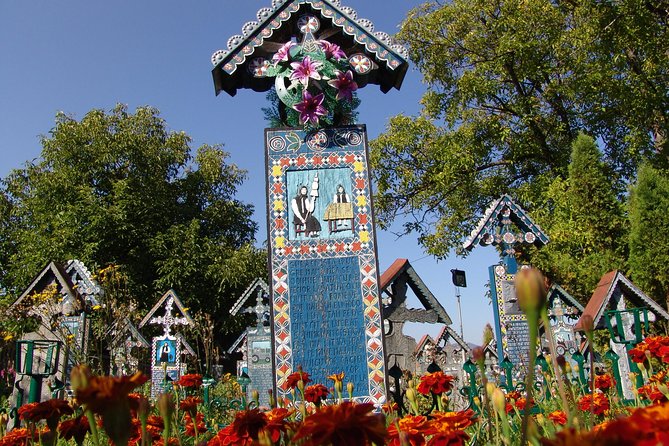
Wooden crosses tell stories in full color. This 3-day Maramures trip pairs the unforgettable Merry Cemetery with the weighty Memorial of the Victims of Communism and of the Resistance, so you get both pageantry and real-world history in the same loop.
I especially like how the schedule mixes short, focused visits with hands-on people time, like meeting artisans in their working lives. One thing to consider is that this is a site-heavy circuit with set time blocks, and meals are not included, so you’ll want to plan for lunch and snack stops on your own.
In This Review
- Key highlights worth packing for
- Why Maramures feels like meeting neighbors
- Day 1: From blue epitaphs to Sighet’s prison museum
- Stop 1: Merry Cemetery (about 1 hour 30 minutes)
- Stop 2: Sapănta-Peri Monastery (about 30 minutes)
- Stop 3: Memorial of the Victims of Communism and of the Resistance (about 1 hour 30 minutes)
- Stop 4: The Elie Wiesel Memorial House, plus Jewish culture add-ons (about 30 minutes)
- Day 2: Wooden Barsana, plant-dyed rugs, and pottery still made the old way
- Stop 1: Barsana Monastery and the wood carving workshop (about 1 hour 30 minutes)
- Stop 2: Botiza, wool rug weaving with plant dyes (about 1 hour)
- Stop 3: Sacel, Dacian-style pottery and sheepskin ritual masks (about 1 hour 30 minutes)
- Day 3: Crafts in Breb, water-powered farm machines in Sarbi, then Budesti’s optical illusion
- Stop 1: Breb and a village poet (about 1 hour 10 minutes)
- Stop 2: Sarbi, water-powered machines that still serve community needs (about 1 hour)
- Stop 3: Budesti, an optical illusion and a medieval wooden church (about 1 hour)
- Price and value: what $763.34 covers
- The practical stuff that affects your comfort
- Who this Maramures tour fits best
- Should you book this 3 Day Maramures tour?
- FAQ
- Where does the tour start and what time?
- How long is the Maramures tour?
- What is included in the price?
- Are admission tickets included?
- Are meals included?
- Is the tour private and in English?
- What is the cancellation policy?
Key highlights worth packing for
- Săpânța blue at Merry Cemetery, where painted wooden crosses and epitaphs turn grief into a community chronicle
- A real prison-turned museum in Sighet, using the cell setting to explain Romania’s 1945 to 1989 timeline
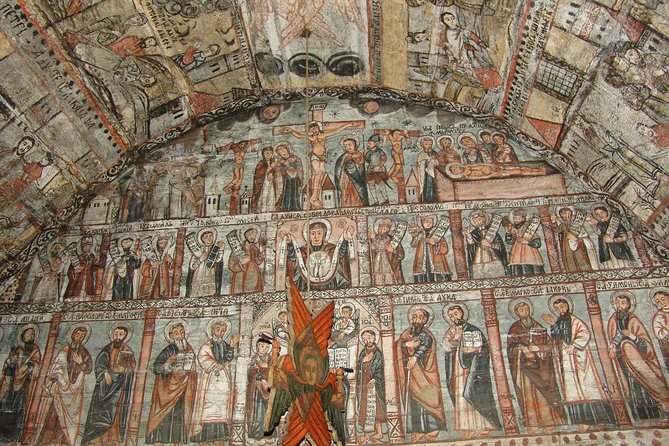
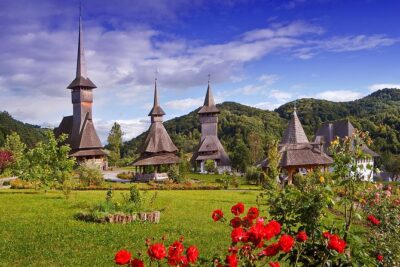
- Barsana Monastery and other wooden churches, including the tall Sapănta-Peri wooden church
- Living craft traditions, from plant-dyed wool rug weaving to unglazed Dacian-style pottery
- Meet-the-maker village stops, like wool and sheepskin ritual masks, wood carving, and village poets
- Water-powered farm machines in Sarbi, including a fulling mill, carding mill, whirlpool, and alcohol distillery
Why Maramures feels like meeting neighbors
Maramures can feel like two worlds at once. One world is careful craft work, woodwork, and textiles done by people who still make things the traditional way. The other world is harder to look at, like the Sighet prison museum and the Jewish heritage sites in the same broader region.
This is exactly why I think this tour is worth your time. You’re not just staring at buildings. You’re meeting the hands behind the work, hearing short stories, and connecting details to community life.
Also, you’ll get a professional local guide leading the day, in English, and for many visitors that makes a huge difference in how much meaning sticks. One guide named Teo is specifically mentioned for translating well and helping conversations feel almost direct, not like a scripted lecture.
Day 1: From blue epitaphs to Sighet’s prison museum
Day 1 has a strong emotional arc. It starts with art that comforts, then moves into memory and survival, and it finishes with Jewish cultural history tied to one notable life.
Maramures at a slower pace
Stop 1: Merry Cemetery (about 1 hour 30 minutes)
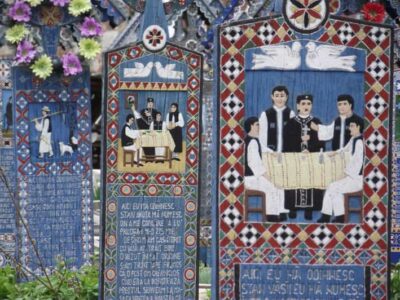
The Merry Cemetery is famous for a reason: the crosses are wooden, painted, and decorated with epitaphs and images of the deceased. Many epitaphs include humour, but they still read like a community timeline, praising virtues while also pointing out vices.
Plan to slow down here. Even if you only have 90 minutes, this stop rewards your attention to detail, and it’s the kind of place where you’ll keep noticing new carved lines long after you think you’re done looking. If you prefer quiet, reflective spaces, this one will give it to you without being bleak.
Stop 2: Sapănta-Peri Monastery (about 30 minutes)
Next you’ll see Sapănta-Peri Monastery, described as the tallest wooden church in the world at 75 metres high. That scale is the headline, but the point of stopping for only 30 minutes is to give you a quick, clear impression without turning it into a long slog.
If you like photos and wide angles, you’ll want to be ready early in the visit. Tight timing helps keep energy for the next stops.
Stop 3: Memorial of the Victims of Communism and of the Resistance (about 1 hour 30 minutes)
This museum is one of the most compelling parts of the entire experience. It is set in an old prison, and the cells have been turned into exhibits, which makes the 1945 to 1989 period feel immediate rather than abstract.
The museum is also framed as a way to understand totalitarian systems and the nature of Communism. That means it’s not only about dates. It’s about how power works, how ordinary people are affected, and how memory is preserved.
Practical note: this is one of those stops where you may feel heavy after. It’s fine to take your time, but remember the tour moves on.
Stop 4: The Elie Wiesel Memorial House, plus Jewish culture add-ons (about 30 minutes)
Day 1 ends at the Elie Wiesel Memorial House, which also hosts the Jewish Museum of Maramures in Sighet. The visit focuses on Holocaust-related displays, but the overall site connects to Jewish culture in the region.
If you wish, the tour notes you can also visit the Sephardic Synagogue, the Jewish Cemetery, and the Holocaust Monument. Since the standard time listed is 30 minutes, you’ll likely need to choose what matters most if you want extra sites within the same stop.
Day 2: Wooden Barsana, plant-dyed rugs, and pottery still made the old way
Day 2 is where the tour leans most into living traditions. You’ll see large wooden architecture, then shift into small, personal craft meetings. It’s a day that feels more like learning from people than touring objects.
Stop 1: Barsana Monastery and the wood carving workshop (about 1 hour 30 minutes)
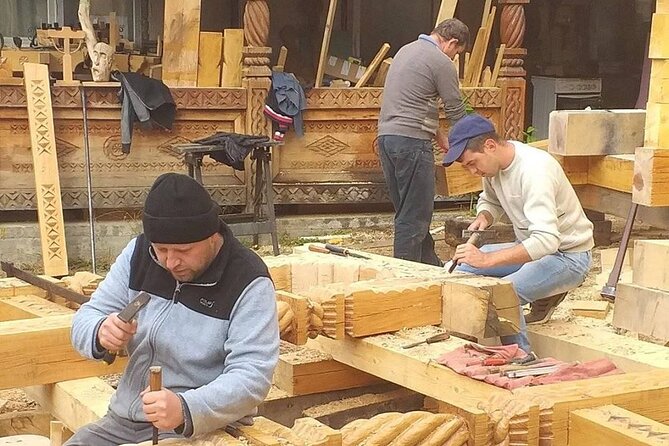
Barsana Monastery is described as the most impressive monastery of Northern Transylvania, and it’s built as a huge complex all in wood. After that, you’ll visit a large wood carving workshop in the same village.
This stop works well because it’s two-step. First you see the finished, dramatic church complex. Then you move to the workshop where the style has to be made by hand. Even with limited time, that pairing helps you connect what you’re seeing with how it happens.
Stop 2: Botiza, wool rug weaving with plant dyes (about 1 hour)
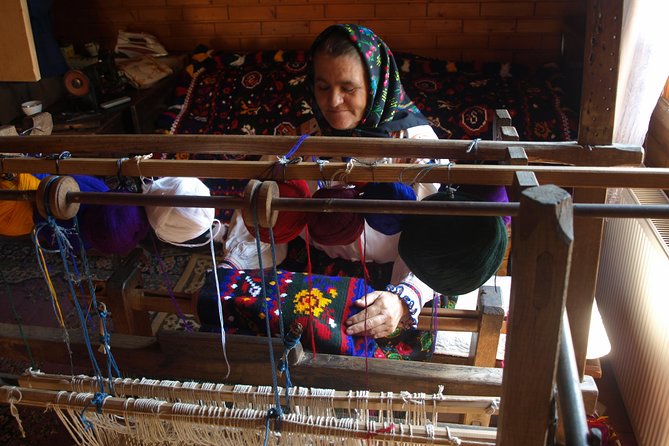
In Botiza, you’ll meet a lady who weaves woollen rugs. The colours come from dyes produced from plants, and the rugs use antique motifs. This craft is also recognized in 2016 as part of the Representative List of the Intangible Cultural Heritage of Humanity.
This is the kind of stop that sticks because it’s visual and specific. You’re not just hearing about tradition, you’re seeing the process tied to materials, patterns, and repetition.
There’s also a mineral spring and field life mentioned in the same village. You get the sense of everyday rhythms, not just production.
Stop 3: Sacel, Dacian-style pottery and sheepskin ritual masks (about 1 hour 30 minutes)
Sacel brings in an artisan mix: you’ll visit the only ceramist still making Dacian style unglazed pottery. In the same area, you might also meet someone who makes wool and sheepskin ritual masks, plus a wood carver. The tour also mentions meeting a lady living in her 100-year-old wooden house.
This is one of your best “people connection” blocks on the whole trip. The time is long enough to ask questions and short enough to keep the day moving.
One consideration: because these meetings depend on availability, you might not see every add-on person every time. Keep your expectations flexible, and focus on the craft work that you do get to witness.
Day 3: Crafts in Breb, water-powered farm machines in Sarbi, then Budesti’s optical illusion
Day 3 is lighter in terms of the emotional weight, but it’s still full of fascinating details. You’ll end with a memorable trick and a medieval wooden church, then return to Cluj-Napoca.
Stop 1: Breb and a village poet (about 1 hour 10 minutes)
In Breb, you’ll meet friendly locals, including the village poet, and you’ll visit a crafts workshop. This is a good early-day stop because it sets a warm, human tone.
If you like conversations, this is where you’ll get them. Even if your Romanian is limited, the presence of a guide and the village setting make it easier to connect than in a museum setting.
Stop 2: Sarbi, water-powered machines that still serve community needs (about 1 hour)
Sarbi focuses on farm machines pulled by water that still operate for community needs. The tour specifically lists a fulling mill, a carding mill, a whirlpool, and an alcohol distillery.
This is more than a curiosity. It shows how old technology can keep working when it’s tied to practical use. You’ll likely find it especially engaging if you like the nuts and bolts side of history.
Stop 3: Budesti, an optical illusion and a medieval wooden church (about 1 hour)
Budesti is your finale. You’ll see the Romania’s most weird optical illusion and then a fine medieval wooden church.
That optical illusion stop is a fun way to close a serious itinerary without ending on a heavy note. It also gives you a different kind of memory, one you can laugh about later.
After that, you return to Cluj-Napoca where the tour ends at the meeting point.
Price and value: what $763.34 covers
At $763.34 per person, you’re paying for more than transportation and a few tickets. The included package covers private transportation, all fees and taxes, 3-star accommodation for 2 nights, a professional local guide, and breakfast for 2 days.
Tickets are also included for the paid museum and church stops listed for each day, while some village or craft meeting stops are marked free.
What’s not included is also important: meals, drinks, and snacks are on you, and travel insurance and tips are also not included. Souvenirs are obviously extra too.
So the value question becomes simple: do you want a guided, structured circuit that handles most entrances and logistics? If yes, this price starts to make sense because it spares you the planning work. If you prefer total freedom and self-booked stays, you may feel the cost more sharply.
The practical stuff that affects your comfort

This tour is private, meaning it’s only for your group. That can make timing feel smoother because your guide can tailor pacing to your pace, within the scheduled stop windows.
The tour is also described as having a moderate physical fitness level. That doesn’t mean you need to be an athlete, but it does mean you should be comfortable moving through villages, walking short distances, and standing at sites during short visits.
You start at 9:30 am from Piața Unirii 15, Cluj-Napoca. That early start is great because it gives you full use of each day, but it also means you should plan your hotel location and waking routine carefully.
Finally, you get a mobile ticket, and confirmation happens unless you book within 2 days of travel, where it depends on availability.
Who this Maramures tour fits best

I’d point this tour toward you if you want a mix of art, architecture, and people-to-people craft meetings. It’s a strong match if you like places where you can see how a community remembers itself, whether through painted epitaphs, documentary-style prison museum exhibits, or workshops where textiles and pottery are still made.
It also suits travelers who enjoy structure. You get a guided sequence, clear stop times, and enough variety that the days don’t blur together.
On the other hand, if you hate fixed visit durations or want more time for independent meals, you might feel rushed. Because meals are not included, you’ll also want to be proactive about budgeting for lunch and snacks.
Should you book this 3 Day Maramures tour?
Book it if you want Maramures to feel human and specific, not generic. The pairing of Merry Cemetery, the Sighet prison museum experience, and multiple craft meetings gives you a full picture, not a one-note cultural stop.
Also book it if you’re the type who appreciates small details: epitaphs carved into wood, plant-dyed wool, unglazed Dacian-style pottery, water-powered mills, and an optical illusion to end the trip on a smile.
Skip or rethink if you’re mainly chasing free time, and you’d rather travel at your own pace between points. With set stop times and a price that includes accommodation and guide services, this tour is best when you’re ready to go all in for three days.
FAQ
Where does the tour start and what time?
The tour starts at Piața Unirii 15, Cluj-Napoca 400394, Romania, with a start time of 9:30 am.
How long is the Maramures tour?
It runs for 3 days, with the day-by-day schedule built around the listed stop durations.
What is included in the price?
The price includes private transportation, all fees and taxes, 2 nights of 3-star accommodation, a professional local guide, and breakfast for 2 mornings.
Are admission tickets included?
Admission tickets are included for the stops that list Admission Ticket Included, while some other village craft meetings are listed as Admission Ticket Free.
Are meals included?
No. Meals, drinks, and snacks are not included.
Is the tour private and in English?
Yes. It is a private tour for your group only, and it is offered in English.
What is the cancellation policy?
You can cancel up to 3 days in advance for a full refund. If you cancel less than 3 days before the experience starts, the amount paid is not refunded.
Whatever Else Cluj Napoca Is Selling
- Curly Tour – Day trip from Cluj 🙂
★ 5.0 · 330 reviews - Cluj: Turda Salt Mine, Corvin Castle, Alba Carolina Tour
★ 4.8 · 184 reviews - Cluj-Napoca: 2.5-Hour Guided Walking Tour
★ 4.8 · 104 reviews - Turda salt mine 4h tour from Cluj
★ 5.0 · 73 reviews - Turda Salt Mine 4h guided tour from Cluj
★ 4.9 · 45 reviews
Everything Else We Reviewed In Cluj Napoca
- Curly Tour – Day trip from Cluj 🙂
★ 5.0 · 330 reviews - Cluj: Turda Salt Mine, Corvin Castle, Alba Carolina Tour
★ 4.8 · 184 reviews - Cluj-Napoca: 2.5-Hour Guided Walking Tour
★ 4.8 · 104 reviews - Turda salt mine 4h tour from Cluj
★ 5.0 · 73 reviews - Turda Salt Mine, Corvin Castle and Alba Fortress from Cluj
★ 5.0 · 65 reviews
Maramures, The Slow Version
- Maramures best, full day tour from Cluj
★ 5.0 · 33 reviews - From Cluj-Napoca: Maramures Day Tour
★ 5.0 · 19 reviews - Two days tour to Maramures: local experiences and culture
★ 5.0 · 9 reviews - Maramures Activ Tour
★ 5.0 · 6 reviews - CJ03 – Day trip to Maramures Mocanita Train from Cluj Napoca
★ 3.6 · 5 reviews
Recently added around Cluj Napoca
- Transylvania’s Trail: Sibiu, Bran Castle, Brasov, Sighisoara★ 4.6 · 3 reviews
- CJ05 – Mysteries of Transylvania: Bran Castle & Sighisoara★ 4.8 · 3 reviews
- Two days tour to Bucovina & UNESCO Painted Monasteries★ 5.0 · 3 reviews
- Cluj – walking city tour★ 5.0 · 3 reviews
- Sighisoara & wine tasting (from Cluj)★ 5.0 · 4 reviews
Maramures Tours, compared.
 ★ 5.0Maramures best, full day tour from ClujFrom $17733 reviews
 ★ 5.0Classic Romania Tour – small group in 8 days: Transylvania and MaramuresFrom $2,33922 reviews
 ★ 5.0From Cluj-Napoca: Maramures Day TourFrom $18919 reviews
 ★ 5.0The Best of Maramures in One DayFrom $15616 reviews
 ★ 5.0Maramures in a nutshellFrom $18013 reviews
 ★ 5.0Two days tour to Maramures: local experiences and cultureFrom $6859 reviews
 ★ 5.0A Journey Back in Time: Countryside from Transylvania and Maramures – 15 DaysFrom $4,5857 reviews
 ★ 5.0Maramures Activ TourFrom $1,0726 reviews
Browse the lists this tour appears in