
REVIEW · BUCHAREST
Communist Era Bucharest Tour
Communist Bucharest makes more sense on foot. This private English tour stitches together big-name sites and smaller everyday details, so you understand not just what buildings look like, but how they shaped daily life under the Eastern Bloc. I love the story-first guide style and the way you get a walkable route through the city center landmarks, including Revolution Square and Parliament Palace. One heads-up, though: the tone can feel more interpretive than strictly one-note, so if you want a totally black-and-white take, plan to ask your guide how they frame the era.
I also like that the pace is realistic for a 3-hour outing. You move between clusters like Unirii, University Square, and the revolution sites, with short stops for photos and quick context. The main consideration is simple: it is still a walking tour, so wear comfortable shoes and expect to spend more time listening than museum-ing.
In This Review
- Key highlights you should know
- A 3-Hour Private Walk That Reads Like a Story
- Manucs Inn Meeting Point and Hotel Pickup in the Old Center
- Piaka Unirii: From Communist Planned Modernization to New City Energy
- Bulevardul Unirii: The Former Social Victory Avenue in Four Seasons
- Casa Poporului: Why Romania’s Heaviest Building Feels Like Power
- Victoria Avenue, CEC Bank, and the Money of the Regime
- University Square, the National Theatre, and the City’s Constant Reinvention
- Revolution Square: The 1989 Starting Point and the Balcony Moment
- Iuliu Maniu Statue and the Memorial of Rebirth
- What the Best Guides Add: Clear, Animated Context and Room for Questions
- Timing, Walking Pace, and What to Wear
- Is This Communist Era Bucharest Tour Worth $30.72?
- Who Should Book, and Who Might Skip It
- Should You Book This Tour?
- FAQ
- How long is the Communist Era Bucharest Tour?
- Is this a private tour?
- What language is the tour offered in?
- Is pickup available?
- Where is the meeting point?
- Do I need to buy tickets for the stops?
- Are there walking requirements?
- Is the tour near public transportation?
- Is cancellation free?
- Can I bring a service animal?
Key highlights you should know
- Private group, personal attention: only your group joins, so you can steer questions and interests.
- Ceaușescu-era landmarks in context: you do not just see Casa Poporului, you hear what it meant for power.
- Unirii Square and Bulevardul Unirii contrasts: old socialist planning meets newer city regeneration.
- Revolution Square photo moments: key sites tied to 1989, including the balcony focus.
- Free-access stops for major squares: some stops are marked as admission free, so you can spend time on the walk instead of tickets.
- Guides who adjust and explain: the tour style you’ll see described includes room for questions and follow-ups.
A 3-Hour Private Walk That Reads Like a Story
This tour is built for short stops and strong narration. You get enough time to see the sights, then enough time to understand why they are there. Expect steady walking through central Bucharest, with multiple “turn the corner and notice” moments, rather than a bus ride that drops you off and leaves you behind.
The value is that you are not just collecting photos. You’re building a mental map of Communist-era Bucharest, then connecting it to what is visible today. If you enjoy cities where the street layout matters, you’ll likely enjoy this.
It also helps that the tour can fit your day. You can pick a morning or afternoon slot, which is handy if you have other Bucharest plans (palaces, museums, or a late dinner).
Manucs Inn Meeting Point and Hotel Pickup in the Old Center
You start at Manuc’s Inn, Hanul lui Manuc, on Strada Franceză 62, in Bucharest’s Old Centre. If you booked pickup, you meet outside the main entrance of Manucs Inn, or your guide meets you at a centrally located hotel. The meeting point is easy to find in the historic area, and you end back where you started.
In practice, that means less hassle on arrival day. You can plan your morning or afternoon knowing you will be dropped back at the same point, instead of figuring out a second transfer.
The Ceausescu years, told other ways
Piaka Unirii: From Communist Planned Modernization to New City Energy
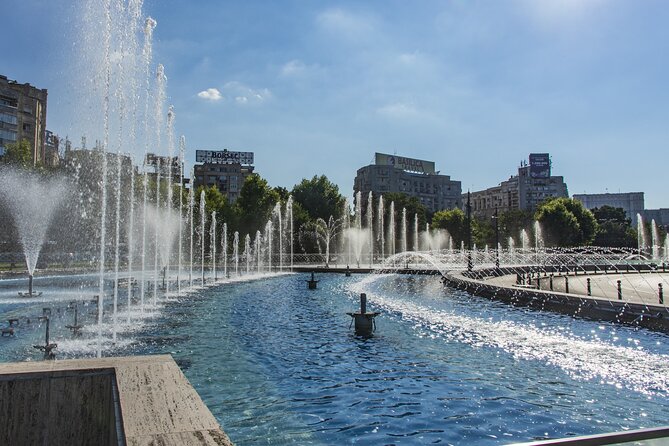
Your first big stop centers on Piața Unirii, the heart of Bucharest where Communist-era modernization plans shaped the city core, then regeneration reshaped it again. The star here is the Unirii fountains, described as newly restored and visually impressive.
What makes this stop work on the tour is the contrast. You see how a place designed for the ideology of the time became something people use now. That is a theme the guide keeps returning to throughout the walk.
Photo tip: if the fountains are active during your visit, linger a bit. This is one of the easiest places to pause without feeling like you are interrupting the flow of the route.
Bulevardul Unirii: The Former Social Victory Avenue in Four Seasons
Next you move along Bulevardul Unirii, once known as the Boulevard of Socialist Victory. It is often described like the Champs-Élysées of Bucharest, and the tour adds a very specific visual detail: 17 artesian fountains decorated to represent the four seasons.
This is where the tour’s approach shines. You look at something that looks decorative, then you learn the message behind it. Under Communist rule, public space carried meaning, and that meaning didn’t disappear when the aesthetics changed.
If you are sensitive to politicized symbolism, you may feel extra aware here. That is not a deal-breaker, but it is part of the point of the tour.
Casa Poporului: Why Romania’s Heaviest Building Feels Like Power
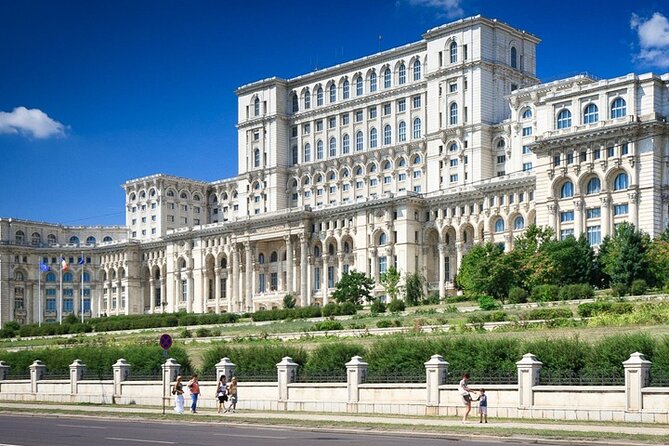
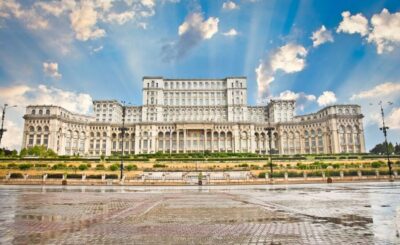
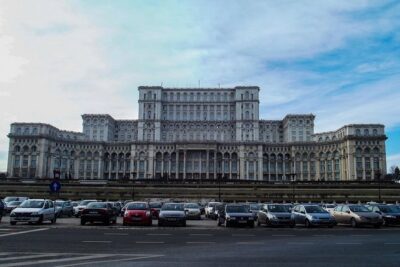
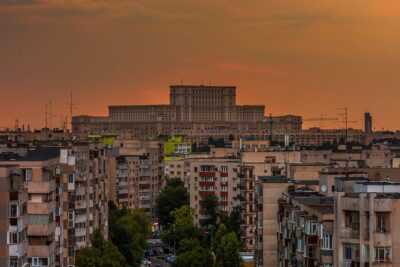
Then the tour turns to the centerpiece: Nicolae Ceaușescu’s massive Parliament building, also called Casa Poporului. You hear the idea behind it, built as a house of the people, while looming over the city center with a scale that forces you to look up.
Even if you have seen photos of the building before, this stop hits differently when you’re on the street. The emphasis is on how architecture becomes messaging. When a project is huge enough, you don’t just notice it, you feel its authority in the surrounding space.
Practical consideration: this stop is more about perspective and storytelling than about wandering. You are there to register the size and the history, then move on.
Victoria Avenue, CEC Bank, and the Money of the Regime
After the Parliament focus, the walk continues through the Central Bucharest power corridor.
On Victoria Avenue, you learn what it was like in the Communist era, while also seeing how it operates now as a retail and street-life area. This helps you connect the big political narrative to what people actually did day to day, like where they went and what they used.
You also stop at CEC Bank, described as the bank of the people during Communist years. Then there is a second banking stop focused on Romania’s National Bank, including its interesting history.
Why this section matters: propaganda and control often show up in practical places. Banks are where systems become real, not just slogans. If you like the “how power worked” angle, these stops usually land well.
University Square, the National Theatre, and the City’s Constant Reinvention
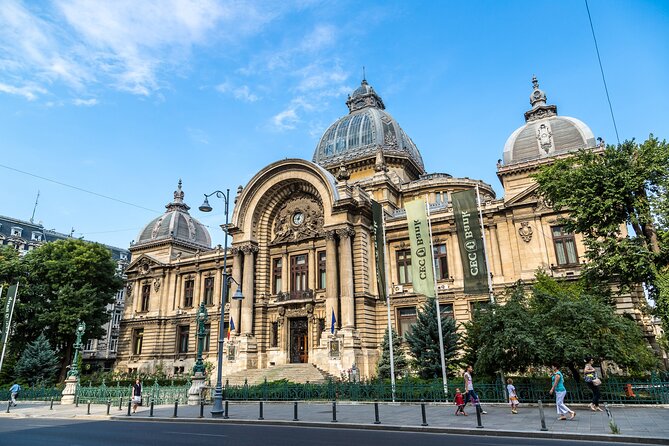
Next comes University Square, where you see the oldest and largest University in Bucharest. The tour also brings in the Intercontinental Hotel Bucharest, completed and opened in 1971, giving you another time marker for how Bucharest kept evolving under changing leadership and priorities.
Then you pass by the National Theatre of Bucharest, described as an iconic building with multiple design changes over its short history. The narration here tends to frame culture as part of the political ecosystem, not separate from it.
If you enjoy architecture, this section rewards your attention. Even when you are just passing the buildings, the guide helps you notice what changed and why. That is often the difference between a tour that feels like sightseeing and one that feels like understanding.
Revolution Square: The 1989 Starting Point and the Balcony Moment
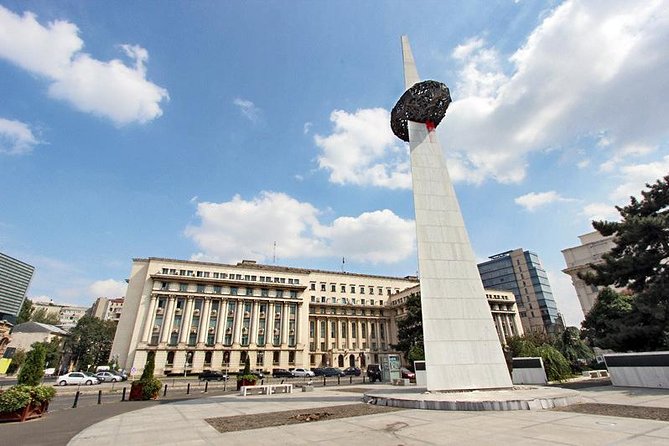
Then the mood shifts, and it gets very real. At Piața Revoluției (Revolution Square), you see the area where the famous 1989 revolution started and the memorials that commemorate the life-changing events.
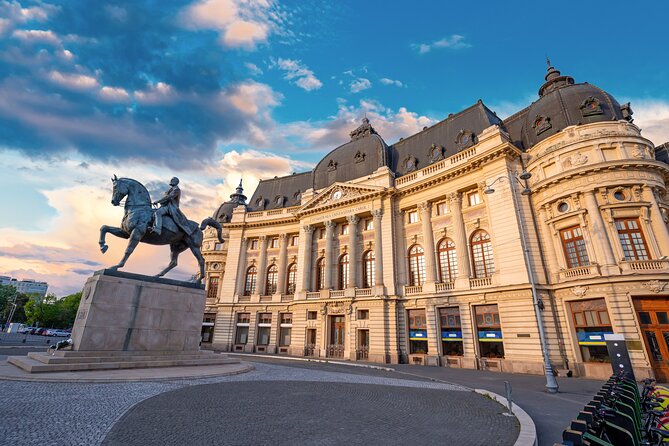
Key points mentioned in the tour description include the balcony where Nicolae Ceaușescu made his final speech, the former headquarters of the Communist party, the Monument of National Rebirth, King Carol I’s equestrian statue, and the University library. This is also described as an excellent place for photos.
What I like about how this stop is presented is the focus on specific locations. A revolution can feel abstract until you tie it to exact corners, buildings, and sightlines. Here you get that grounding.
Heads-up: expect it to feel busy at times, especially in better weather. Keep moving with the group so you do not miss the guide’s timed context.
Iuliu Maniu Statue and the Memorial of Rebirth
From the revolution square area, you continue to two shorter, but meaningful, stops.
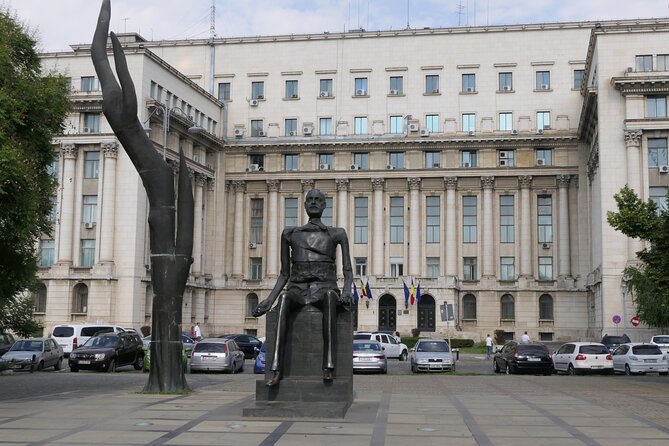
The first is the Iuliu Maniu statue, where you hear about the struggle of a three-time prime minister during the early years of Communism. This part helps broaden the story beyond Ceaușescu alone and into the earlier political battles that shaped the atmosphere leading to later events.
Then comes the Memorial of Rebirth, a 25-meter structure commemorating struggles and victims of the Romanian Revolution of Christmas 1989. The scale matters here. You are not just learning, you are standing in front of a physical marker of grief, memory, and national change.
What the Best Guides Add: Clear, Animated Context and Room for Questions
The tour experience is strongly shaped by the guide. In the feedback you can see a pattern: guides like Alina and Clare (names mentioned in different accounts) are described as animated, passionate, and willing to answer questions, including personal ones. Some guides are also described as giving a balanced sense of the good, bad, and ugly sides of Communist rule, not just one emotional pitch.
That balance is exactly what helps you learn something that stays with you. If you only hear slogans, it washes off later. If you hear comparisons, everyday constraints, and tradeoffs, the whole era becomes more understandable.
One caution based on the mix of feedback: a small number of people felt the tour’s interpretation of Ceaușescu and Communism was less negative than other guides’ takes. If you are coming in with a very specific expectation, ask your guide early how they frame the era. You’re the customer. Good guides will adapt to how you want to process the story.
Timing, Walking Pace, and What to Wear
This is approx. a 3-hour private tour, with multiple short stops and short photo breaks. Some stops are clearly timed in the tour info, including about 10 minutes at Piața Unirii and Revolution Square, plus short segments at other memorial points.
So plan for a walking rhythm, not a sitting-heavy one. The tour also notes that comfortable walking shoes are recommended, and it requests a moderate fitness level. If you have mobility limitations, this is a spot where you should confirm what walking looks like for your group before booking.
You will likely spend most of your time in the open air. That means dress for the weather, and if it’s hot, bring water. If it’s cold, the best tip is still simple, layers.
Is This Communist Era Bucharest Tour Worth $30.72?
At $30.72 per person for about 3 hours, the price is very reasonable for a private, English-language walking tour covering major landmarks. The value comes from focus: you get a curated route that hits both the symbolism (Parliament Palace, revolution sites) and the lived-in city details (banks, avenues, public squares).
You could spend the same time self-guiding with a map and some articles. You would still see the buildings. But you would miss the connective tissue: what each site meant, how it fit into the political machinery, and how Bucharest changed around it.
If you want a “see it, then explain it” experience, this tour fits that goal well. If you only want broad facts with no street-level context, you might prefer a different format.
Who Should Book, and Who Might Skip It
This tour is a strong fit if you:
- Want Communist-era Bucharest explained in plain, street-level terms.
- Enjoy walking city centers and picking up context as you go.
- Like getting guided perspective with time for questions.
- Plan to visit multiple Bucharest sights and want a framework first.
You might consider skipping (or pairing it with something else) if you:
- Prefer strictly factual museum-style information with minimal interpretation.
- Have trouble with listening-heavy tours.
- Want a long indoor experience, because this is primarily an outdoor walk with short stops.
In other words, this is for people who like to understand how a city works, not just how it looks.
Should You Book This Tour?
Yes, you should book it if you want to understand Bucharest’s Communist-era imprint in a way that clicks. The combination of major sites like Casa Poporului and Revolution Square, plus the supporting stops like Unirii fountains, Bulevardul Unirii, CEC Bank, and the Memorial of Rebirth, gives you a whole picture in a single outing.
Book it confidently if you like guided context, and especially if you value a guide who can tailor answers to your interests. I’d also say book it if you’re the type who stops mid-walk to ask why something is there.
Just go in with the mindset that interpretation matters. If you want a specific moral framing, ask your guide how they present it, and you’ll get more out of the walk.
FAQ
How long is the Communist Era Bucharest Tour?
The tour is approximately 3 hours.
Is this a private tour?
Yes. It is a private tour, and only your group participates.
What language is the tour offered in?
The tour is offered in English.
Is pickup available?
Yes. Pickup is offered. You meet at your centrally located hotel or at the meeting point outside the main entrance of Manucs Inn.
Where is the meeting point?
The meeting point is Manuc’s Inn, Hanul lui Manuc, Str. Franceză 62, Bucharest, Romania. The tour ends back at the meeting point.
Do I need to buy tickets for the stops?
Some stops are listed as free admission, including Piața Unirii and Piaka Revolukiei, but other stops do not list admission details in the provided information.
Are there walking requirements?
Comfortable walking shoes are recommended, and travelers should have a moderate physical fitness level.
Is the tour near public transportation?
Yes, it is near public transportation.
Is cancellation free?
Free cancellation is available. You can cancel up to 24 hours in advance for a full refund, based on local time.
Can I bring a service animal?
Yes. Service animals are allowed.
Whatever Else Bucharest Is Selling
- Bucharest to Dracula Castle, Peles Castle and Brasov Guided Tour
★ 4.5 · 2,933 reviews - Bucharest: Palace of Parliament Tickets and Guided Tour
★ 4.4 · 1,877 reviews - Transylvania and Dracula Castle Full Day Tour from Bucharest
★ 4.5 · 1,589 reviews - Bucharest: City Highlights Guided Walking Tour
★ 4.9 · 1,482 reviews - From Bucharest: Brasov Peles & Dracula’s Castle Day Tour
★ 4.5 · 1,244 reviews
Everything Else We Reviewed In Bucharest
- Bucharest: Dracula’s Castle, Peles Castle, & Brasov Old Town
★ 4.5 · 17,858 reviews - Bucharest: Dracula Castle, Peles Castle & Brasov Old Town
★ 4.6 · 10,891 reviews - Bucharest: Dracula’s Castle, Peleș Castle & Brașov Day Trip
★ 4.5 · 5,919 reviews - Bucharest: Palace of Parliament Tickets and Guide
★ 4.3 · 3,182 reviews - Bucharest: Day Trip to Dracula Castle, Peles Castle & Brașov
★ 4.4 · 3,049 reviews
The Communist Years, Retold
- The Real tour of Communism
★ 5.0 · 666 reviews - Life under Communism
★ 5.0 · 358 reviews - 3-Hour Guided Tour of Communist Bucharest
★ 4.9 · 303 reviews - Bucharest Essential Tour: Old Town, Calea Victoriei & Communism
★ 5.0 · 142 reviews - Communism in Bucharest – Landmarks, Museum & Communist Appetizers
★ 5.0 · 111 reviews
Recently added around Bucharest
- Private Tasting Expedition Along Romania’s Most Famous Wine Route★ 5.0 · 3 reviews
- Private Guided Tour of Peles Castle and Bran Castle from Bucharest★ 5.0 · 3 reviews
- Private Sightseeing Tour of Bucharest★ 4.5 · 3 reviews
- Discover Europe’s Deepest Mines & Peles Castle’s Royal Charm★ 5.0 · 3 reviews
- Bucharest City Tour and Wine Tasting★ 5.0 · 3 reviews
Communism and Ceausescu Tours, compared.
 ★ 5.0The Real tour of CommunismFrom $32666 reviews
 ★ 5.0Life under CommunismFrom $42358 reviews
 ★ 4.93-Hour Guided Tour of Communist BucharestFrom $29303 reviews
 ★ 5.0Bucharest Essential Tour: Old Town, Calea Victoriei & CommunismFrom $24142 reviews
 ★ 5.0Communism in Bucharest – Landmarks, Museum & Communist AppetizersFrom $48111 reviews
 ★ 4.9Bucharest: Relics of Communism 3-Hour Walking TourFrom $4477 reviews
 ★ 5.0Bucharest Under Communism: Life, Terror & HopeFrom $2376 reviews
 ★ 4.6Bucharest: Entry ticket at the Museum of CommunismFrom $957 reviews
Browse the lists this tour appears in