
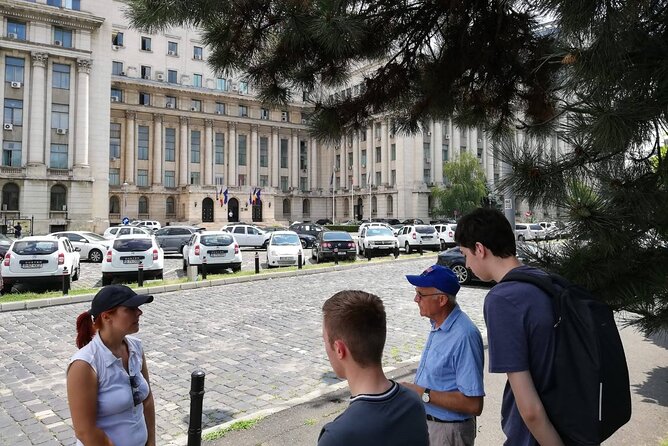
REVIEW · BUCHAREST
Life in Communism
One word, Bucharest. This walk through communist-era landmarks is a street-level way to understand how Romania’s past shaped the city you see today, with about 15 stops and guides like Daniela explaining it clearly. I especially like the small-group format that makes it easy to ask questions, and the practical context that ties architecture to real daily life. The one drawback to plan for is that it is a walking tour with moderate walking demands, so you’ll want decent shoes and weather-ready layers.
The route focuses on the big threads you hear about in books, then shows their fingerprints in the streets. You’ll connect themes like nationalization, the secret police, and major demolitions to specific places and the mood around them now. If you want names you might hear, guides such as Augustin, Andreea, Andrea, and John are known for turning history into an easy-to-follow story.
You’ll start at the Patriarchal Cathedral and finish back there, so the day stays simple. Expect around 3 hours of walking and a short mid-tour break, with included communist-type snacks but drinks on your own.
In This Review
- Key highlights worth centering
- Why this communist-era walk changes how you see Bucharest
- Price, timing, and what $31.24 really buys you
- Starting at the Patriarchal Cathedral, then walking the city’s power lines
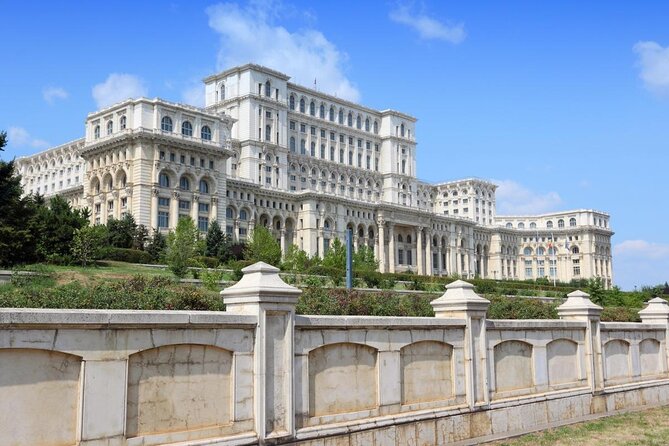
- Stop 1: Palace of Parliament, why it looms over everything
- Stop 2: Calea Victoriei, a grand avenue with a political memory
- Stop 3: Piaka Revolukiei, when the city remembers revolt
- The rest of the route: connecting nationalization, secret police, and demolitions
- The mid-tour break and included snacks, plus drink plans
- Guide style: why Daniela, Andreea, Augustin, Andrea, and John fit this story
- Who should book this tour, and who should skip it
- My call: should you book Life in Communism?
- FAQ
- What is the duration of the tour?
- How much does the tour cost?
- How many stops will we see?
- Is the tour offered in English?
- Is there a snack included?
- Are drinks included?
- What is the starting and ending point?
- How big is the group?
- Is there anything about mobility or fitness?
- Is free cancellation available?
Key highlights worth centering
- About 15 communist-era stops that map the timeline onto the city streets
- Maximum 15 travelers, which keeps the pacing human and questions welcome
- English narration that stays clear even when the topic gets heavy
- Included communist-type snacks, plus a mid-tour break to reset
- Guides with strong personal storytelling, often drawing from real experience to add texture
- A route that helps you explore on your own afterward, because you’ll know what you are looking at
Why this communist-era walk changes how you see Bucharest

Bucharest can feel like a mix of grand and strange at the same time. This tour helps you sort out why, by connecting the city’s heavy political era to the buildings, street scale, and even the vibe of certain neighborhoods.
What I like most is the way the story is practical, not just dramatic. You get a sense of how communist policies didn’t stay in paperwork. They showed up in housing, public spaces, and the built environment you still move through today.
The tour also does something important for modern visitors: it links the past to the present. When you later wander independently, you tend to notice patterns instead of random sights. That is a big value add for a half-day visit.
Price, timing, and what $31.24 really buys you
This tour runs about 3 hours and costs $31.24 per person. For Bucharest, that is the kind of price that works even if you are doing a tight schedule, as long as you value guided context.
You also get a few things that make the price feel more fair. There are group discounts, you receive a mobile ticket, and snacks are included. The tour caps at 15 travelers, which usually matters more than people expect, because it helps the guide keep control of pacing and discussion.
One small planning detail: on average it is booked about 22 days in advance, so if you are traveling in peak periods, it is smart to reserve early. You’ll be in English, so it is a good fit if you want history explained without needing translation help.
The Ceausescu years, told other ways
Starting at the Patriarchal Cathedral, then walking the city’s power lines

You meet at Aleea Dealul Mitropoliei 25, Bucharest, at the Patriarchal Cathedral. The tour ends back at the same meeting point, so you avoid that annoying end-of-tour scramble where you have to hunt transport.
Because it is a walking tour, the route is built for movement and street views, not museum halls. You’ll be out in the open for stretches, so dress for the weather. If it is chilly, this matters more, and the tour includes a mid-point break to warm up.
The itinerary rhythm is also worth knowing. After the first big statement building, the tour shifts into city arteries and key squares, then circles back into the timeline with thematic stops. That structure keeps you from feeling like you are just collecting landmarks.
Stop 1: Palace of Parliament, why it looms over everything
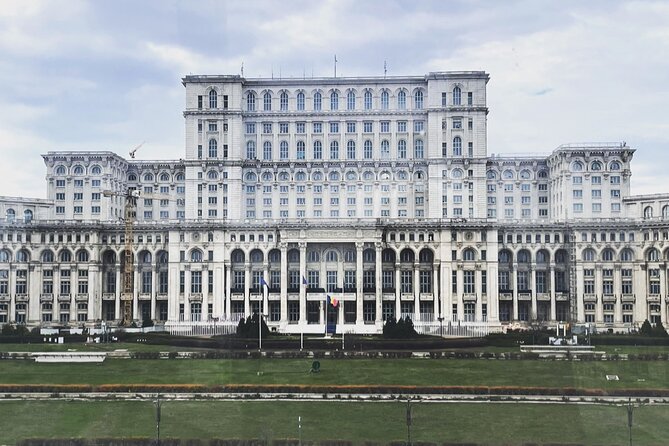
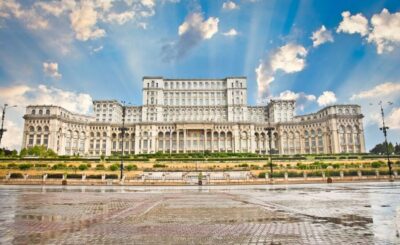
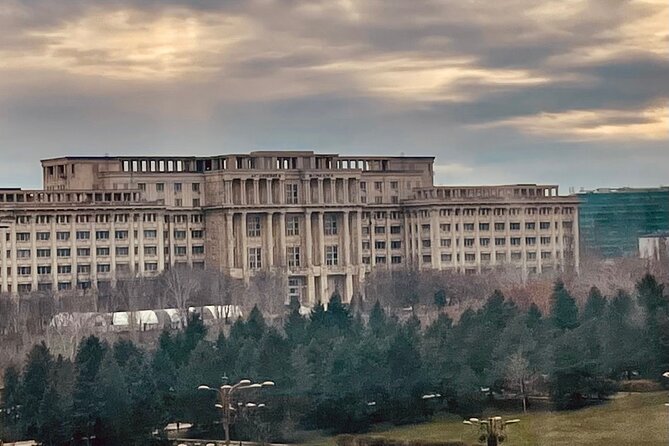
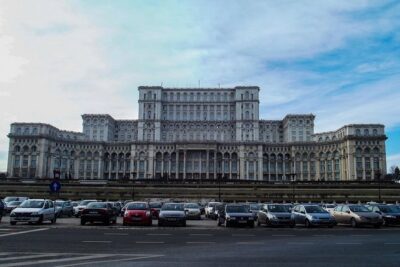
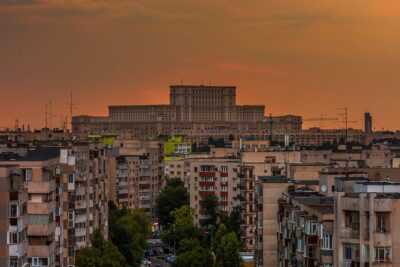
The Palace of Parliament is your first major stop, and that choice sets the tone fast. This is one of those places that instantly makes the communist era feel physical, not abstract. Even if you already know it exists, seeing it at the start helps your brain lock onto the theme of power and scale.
In the context of this tour, the palace is not just about architecture. It represents the kind of state ambition that leaves a long shadow. You’ll hear it tied to the larger era themes, including how the regime shaped space and resources.
What to watch for as you arrive is perspective. The building’s size can make it easy to think you are simply looking at one object. The guide’s job is to show how that object connects to the rest of the city, including what had to change for it to exist.
Potential drawback: it is a heavy starting point. If you prefer light and airy history first, you might feel the tone shift a lot. Still, it is a smart move for anyone who wants the rest of the walk to land with meaning.
Stop 2: Calea Victoriei, a grand avenue with a political memory
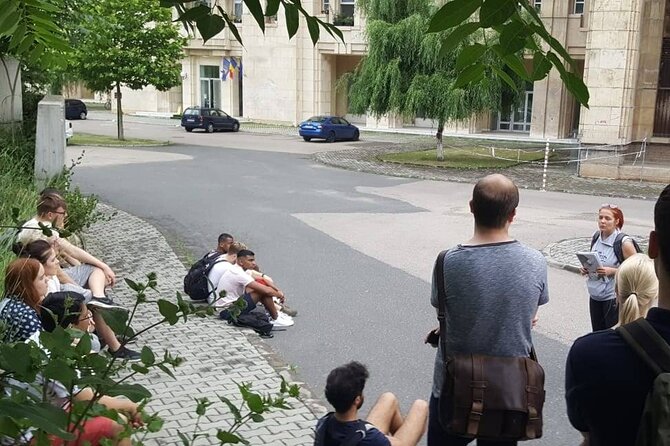
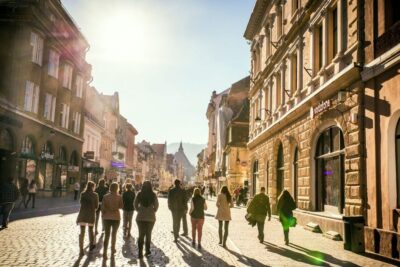
Next up is Calea Victoriei, one of Bucharest’s major avenues. This is where the story shifts from a single monument to the feeling of movement through the city.
On this section, the tour tends to highlight how regimes leave marks in everyday urban life. Communism in Bucharest was not only about speeches and police. It was about how cities were run, what got prioritized, and what got removed or rebuilt.
Calea Victoriei works well for the tour format because it gives you a sense of scale and direction. You can understand why certain views and street planning matter when you connect them back to nationalization, demolitions, and other regime actions discussed on the walk.
A practical note: avenue walking means you will be exposed to traffic noise at times. The guide will keep the focus on the historical thread, but you may want to plan your best listening moments when the group stops and the pace slows.
Stop 3: Piaka Revolukiei, when the city remembers revolt

Your third named stop is Piaka Revolukiei (spelled as provided on the itinerary). This area is a strong place to talk about the timeline, because it brings the story closer to turning points rather than only long-term policies.
In a tour like this, squares and streets are useful because they are built for public attention. When history includes protest, fracture, and sudden change, you want locations where you can feel the public nature of those moments.
This stop also sets you up for the rest of the route. After you see a major symbol of power and then move through urban arteries, you’re better prepared to understand what it means when the story turns toward revolution and afterward.
If you want an extra tip for your own exploration later: before you leave the area, take a few minutes to look around without rushing. Even without knowing every name of every event, you’ll start noticing how public space holds political memory.
The rest of the route: connecting nationalization, secret police, and demolitions
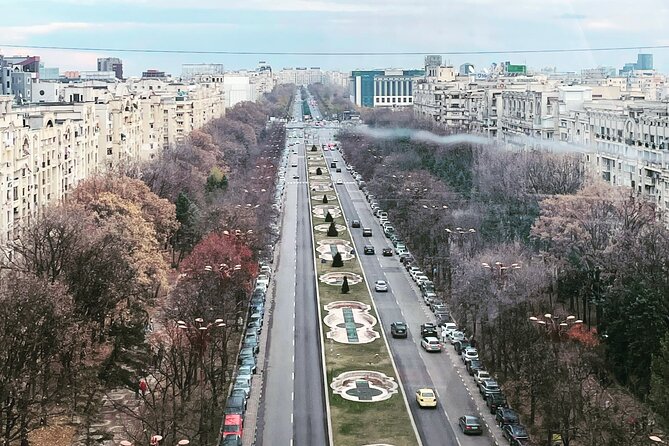
Beyond the three named anchors, you’ll visit around 15 objectives in total. The other stops are used to keep the narrative tied to key changes during the communist regime, including nationalization, the secret police, and demolitions.
This is where I think the tour earns its value. Those topics can stay abstract if you only read dates. Here, the guide uses the city as a visual index, so you can connect a policy to something you can actually point at while you walk.
You might also appreciate how the story treats the present as part of the explanation. The goal is not to wallow in tragedy. It’s to show why the city feels the way it does now, and why certain architectural and planning decisions still affect daily life.
One more reason this part matters: it gives you a framework for free roaming. Once you have a timeline in your head, you can look at other buildings and squares and ask better questions, like what was built, who benefited, and what got erased.
The mid-tour break and included snacks, plus drink plans
You’ll have a short break in the middle of the tour. The tour includes communist-type snacks, which is a fun detail if you like small food moments that match the theme.
Drinks are not included. The tour notes that you should plan to support yourself there, ideally with cash. This is worth remembering because water can make a walk more comfortable, and it helps you stay focused when the pacing quickens.
If you are coming in cooler weather, treat the break as part of the experience, not a pause. The tour often uses that reset to keep the group together and the guide’s energy up, especially when the subject matter gets intense.
Guide style: why Daniela, Andreea, Augustin, Andrea, and John fit this story
A walking tour is only as good as the guide’s voice and structure. What stands out from this experience is the way guides keep the explanations organized at each stop, so you leave with a clear picture of what changed and why.
Guides like Daniela are praised for being friendly and making the topic feel clear and human. Augustin is noted for a more nuanced view of the complexity of communism in Romania, with careful research driving the narrative. Andreea and Andrea show up in feedback for passionate topic focus and easy-to-follow English.
Some guides also add personal touches, including stories that connect the era to everyday life. I like this style because it avoids pure textbook delivery. It also helps you understand how people actually experienced the system, not just what policies said.
A practical perk: with a max of 15 travelers, the guide can adjust if someone asks a question. That is rare in larger group tours, and it makes a difference for topics like secret police or political surveillance, where people often want clarification.
Who should book this tour, and who should skip it
This tour is a strong match if you want to understand Bucharest beyond postcards. You’ll likely enjoy it most if you like political history that explains how the city changed, and if you want a guide who can translate heavy topics into street-level meaning.
It is also a good fit if you appreciate structure. The tour visits around 15 stops and moves through major changes brought by the regime. That keeps the story from feeling like a random scatter of sights.
You should consider skipping if you dislike walking or have trouble with moderate physical demands. Since it is a city walk, you are outside and moving for a few hours, and you’ll want a comfort plan for that.
It can also be a solid choice for families or mixed-age groups only if everyone is comfortable with walking. The tour allows service animals, which is a helpful detail for accessibility planning.
My call: should you book Life in Communism?
If you are trying to understand why Bucharest looks the way it does, I think this is worth your time. The pricing is reasonable for a structured 3-hour guided experience with included snacks, and the small group size means you actually connect with the story.
Book it if you want: a clear timeline, city landmarks tied to regime changes, and a guide who can make the topic feel understandable rather than overwhelming. It is especially good before you explore on your own, because you will get your bearings fast in a very specific way.
Skip it only if you want light entertainment or you are not up for walking. Otherwise, take the tour early in your trip day, wear comfortable shoes, and bring cash for drinks during the break. You will leave with a sharper lens for the city you came to see.
FAQ
What is the duration of the tour?
The tour lasts about 3 hours.
How much does the tour cost?
The price is listed as $31.24 per person.
How many stops will we see?
The experience includes roughly 15 objectives around the city, tied to the communist-era timeline.
Is the tour offered in English?
Yes, it is offered in English.
Is there a snack included?
Yes, snacks of a communist type are included.
Are drinks included?
No. Drinks during the short mid-tour break are self supported, and the guide suggests having cash.
What is the starting and ending point?
You start at the Patriarchal Cathedral (Aleea Dealul Mitropoliei 25, București) and the tour ends back at the same meeting point.
How big is the group?
The tour has a maximum of 15 travelers.
Is there anything about mobility or fitness?
You should have a moderate physical fitness level since it is a walking tour.
Is free cancellation available?
Yes, free cancellation is available. You can cancel up to 24 hours in advance for a full refund, based on the local time cutoff.
Everything Else We Reviewed In Bucharest
- Bucharest: Dracula’s Castle, Peles Castle, & Brasov Old Town
★ 4.5 · 17,858 reviews - Bucharest: Dracula Castle, Peles Castle & Brasov Old Town
★ 4.6 · 10,891 reviews - Bucharest: Dracula’s Castle, Peleș Castle & Brașov Day Trip
★ 4.5 · 5,919 reviews - Bucharest: Palace of Parliament Tickets and Guide
★ 4.3 · 3,182 reviews - Bucharest: Day Trip to Dracula Castle, Peles Castle & Brașov
★ 4.4 · 3,049 reviews
The Communist Years, Retold
- The Real tour of Communism
★ 5.0 · 666 reviews - Life under Communism
★ 5.0 · 358 reviews - 3-Hour Guided Tour of Communist Bucharest
★ 4.9 · 303 reviews - Bucharest Essential Tour: Old Town, Calea Victoriei & Communism
★ 5.0 · 142 reviews - Communism in Bucharest – Landmarks, Museum & Communist Appetizers
★ 5.0 · 111 reviews
Recently added around Bucharest
- Private Tasting Expedition Along Romania’s Most Famous Wine Route★ 5.0 · 3 reviews
- Private Guided Tour of Peles Castle and Bran Castle from Bucharest★ 5.0 · 3 reviews
- Private Sightseeing Tour of Bucharest★ 4.5 · 3 reviews
- Discover Europe’s Deepest Mines & Peles Castle’s Royal Charm★ 5.0 · 3 reviews
- Bucharest City Tour and Wine Tasting★ 5.0 · 3 reviews
Communism and Ceausescu Tours, compared.
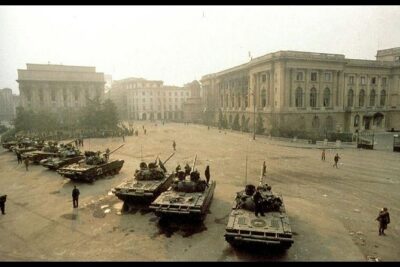 ★ 5.0The Real tour of CommunismFrom $32666 reviews
 ★ 5.0Life under CommunismFrom $42358 reviews
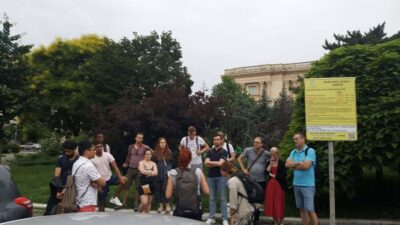 ★ 4.93-Hour Guided Tour of Communist BucharestFrom $29303 reviews
 ★ 5.0Bucharest Essential Tour: Old Town, Calea Victoriei & CommunismFrom $24142 reviews
 ★ 5.0Communism in Bucharest – Landmarks, Museum & Communist AppetizersFrom $48111 reviews
 ★ 4.9Bucharest: Relics of Communism 3-Hour Walking TourFrom $4477 reviews
 ★ 5.0Bucharest Under Communism: Life, Terror & HopeFrom $2376 reviews
 ★ 4.6Bucharest: Entry ticket at the Museum of CommunismFrom $957 reviews
Browse the lists this tour appears in