
REVIEW · BUCHAREST
Private Bucharest Communist Tour with the People’s House and Ceausescu Residence
Communism in Bucharest has a size problem. I love how this private tour pairs a guided walk inside the Palace of Parliament with a visit to the Ceausescu Residential Palace, so the story feels tangible, not abstract. One possible drawback: it is a heavy day with political prisons and propaganda-era power on the menu, so if you want light sightseeing only, pick a different tour.
What makes this one especially practical is that you start with hotel pickup and skip the hassle of getting between far-flung sites. Guides on this experience, including Mihae, Marcel, Claudia, Ciprian, Bogdan, Nicole, and Alexandra, have a knack for telling the rise and fall of communism in clear, story-driven ways, often using old photos and personal context to bring buildings to life.
In This Review
- Key highlights you should know
- The big picture: what this tour really delivers
- Entering the Palace of Parliament, the House of the People
- Beyond the main palace, Spark House and communist media power
- Driving through the former Ceausescu neighborhood, where access was controlled
- The memorial museum stop: remembering political prisoners and victims
- Ceausescu Residential Palace (Spring Palace): luxury turned into a museum
- Lunch at a Soviet-era style restaurant, and how to plan your time
- How the private format changes everything
- Price and value: is $261.65 per person worth it?
- Who should book this communist history tour
- FAQ
- How long is the Communist Bucharest tour?
- What time does the tour start?
- Do you pick up from hotels in Bucharest?
- What is included in the price?
- Is lunch included?
- Is there a photography fee at the Palace of Parliament?
- Is there a minimum age?
- Should you book this tour?
Key highlights you should know
- Palace of Parliament (House of the People), built under Ceausescu, with Guinness World Record scale
- Ceausescu Spring Palace, later used for VIP stays and now a museum
- Spark House, linked to the Central Communist Press headquarters
- A neighborhood route through the area once inaccessible under Ceausescu rule
- Memorial museum stop honoring political prisoners and other victims
- Hotel pickup and drop-off, plus a timed structure that keeps you on schedule
The big picture: what this tour really delivers
This is not a “check boxes, take photos” kind of day. It is a guided, full-throttle look at how a dictatorship shaped the built environment and how people lived under it. You spend your time in the places that still look too large to be real, then you balance that with a more human, remembrance-focused stop at a memorial museum.
For me, the value is the pacing. Instead of you trying to piece together transport, ticket windows, and the meaning of what you are seeing, a professional English-speaking guide handles the flow and turns each location into part of the same narrative. It is ideal if you like history but also want the comfort of not navigating alone.
Entering the Palace of Parliament, the House of the People
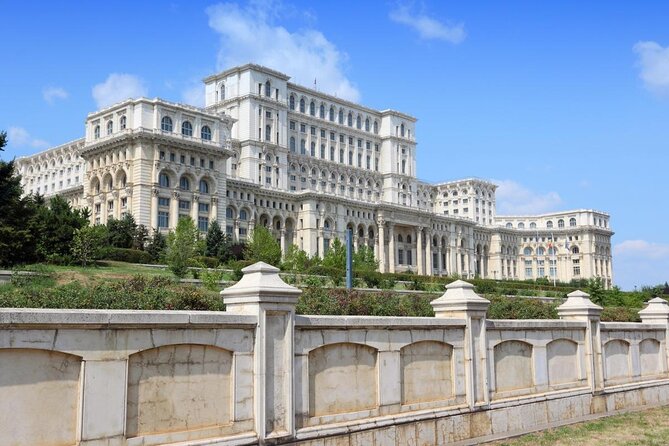
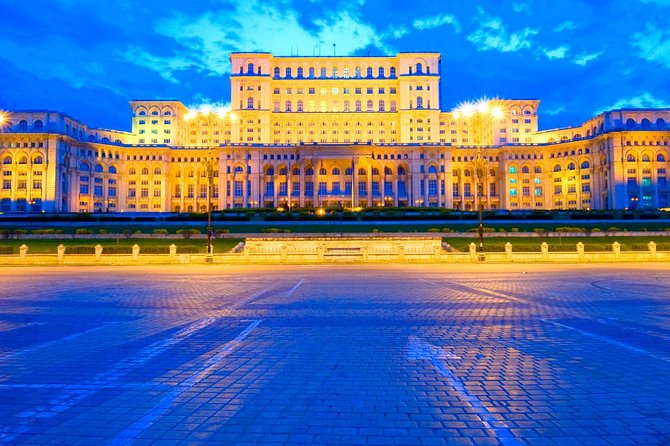
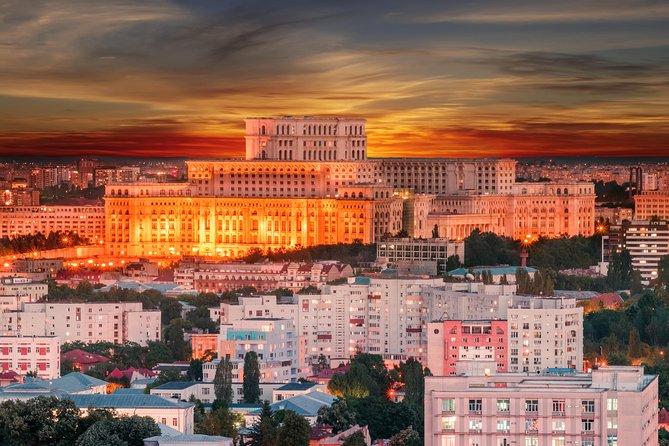
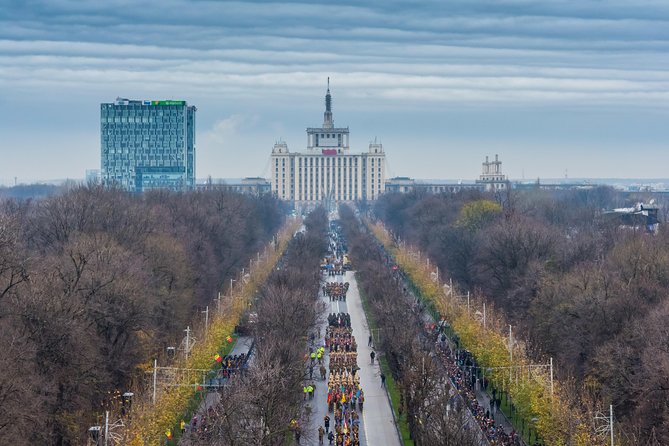
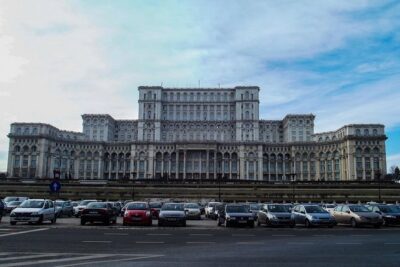
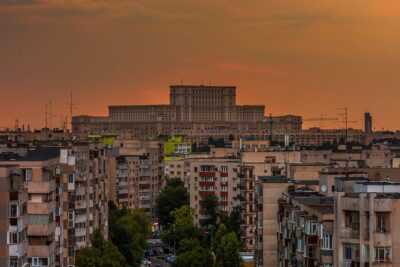
The Palace of Parliament, also known as Ceausescu’s Palace, is the star attraction in Bucharest for a reason. It originally carried the name House of the Republic, and it was built from 1984 to 1997 during Ceausescu’s rule. The sheer scale is the point: it is recognized as the second-largest administrative building in the world, and it holds a Guinness World Record, with measurements listed at 240 meters long, 270 meters wide, and 84 meters high.
When you tour it with a guide, you start to understand how power wanted to look. The building is not just architecture. It is propaganda in concrete form, designed to impress visitors and remind citizens who held the steering wheel.
Practical note: the Palace of Parliament includes an admission ticket on this tour, but there is a separate photography fee. If you plan to take lots of pictures, ask your guide what to expect before you get inside so you are not surprised at the counter.
The Ceausescu years, told other ways
Beyond the main palace, Spark House and communist media power
After the Parliament, you move to the Spark House, formally described as the headquarters of the Central Communist Press. This is the kind of stop that adds the missing layer. It is one thing to see government buildings. It is another to see where the system shaped information.
Think of it like the communication engine behind the statues and ceremonies. A good guide will connect what you see here to the propaganda culture that surrounded daily life, including how messages were controlled and spread. Even if you are most interested in the architecture, this stop helps explain the purpose behind the style.
Driving through the former Ceausescu neighborhood, where access was controlled
One of the most interesting parts of the route is that you travel through a neighborhood that had been inaccessible under Ceausescu, tied to the dictator and his family. This is a rare chance to get the feel of how special and sealed-off life could be at the top.
If you are the type who likes “read the city with your eyes” moments, this section is a win. Instead of only touring buildings, you also get a sense of location, distance, and the kind of urban separation that dictators rely on. It also works well for photo-minded travelers, because even when you are not walking much, the surroundings matter.
The memorial museum stop: remembering political prisoners and victims
You end the day’s heavy architecture and neighborhood imagery with a memorial museum stop that honors political prisoners and other victims of the brutal regime. This is the part that changes your mood, in a good way. It keeps the tour from becoming only spectacle.
In other words, it grounds the story. You see what power did, then you pause long enough to acknowledge the human cost. If you are sensitive to dark topics, I suggest you plan for it mentally, the same way you would when visiting Holocaust memorials or war cemeteries. This is not meant to be cheerful.
Ceausescu Residential Palace (Spring Palace): luxury turned into a museum
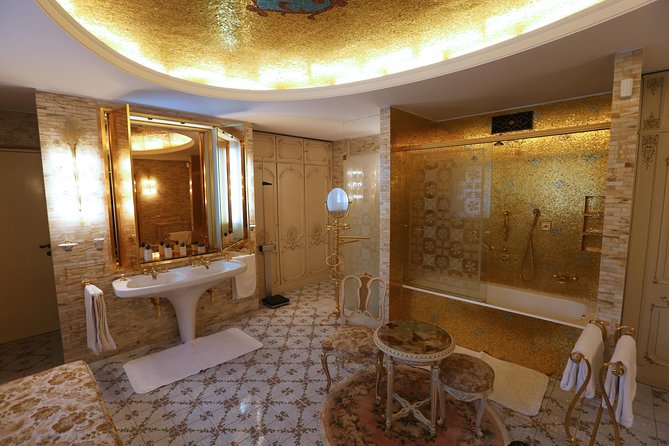
Next comes the Ceausescu couple’s home, the Ceausescu Residential Palace, also called the Spring Palace. This luxury estate was built in 1964 and 1965, and it hosted Elena and Nicolae Ceausescu from 1965 until their deaths in 1989.
After the communist regime fell, the Spring Palace shifted roles. It became a VIP residence for official delegations and foreign presidents, and in 2016 it opened as a museum. That timeline matters, because it shows how the state reused symbols after the system collapsed. You are walking through a place designed for privilege, then you are learning how it became public history.
What you should look for here is contrast. You are literally moving from dictatorship-era living into curated exhibits that explain what the place meant. A strong guide helps you see the difference between lived-in luxury and how that luxury represented the gap between leaders and ordinary people.
The private end of Bucharest

Lunch at a Soviet-era style restaurant, and how to plan your time
Lunch is where the day becomes more relaxed. The plan includes a stop for lunch at a local restaurant that still keeps an atmosphere reminiscent of Soviet-era Bucharest. That does not mean it is a museum. It means you might feel like you are eating in a period setting while you talk history with your guide.
Just know lunch is not included in the price. The tour lists lunch as approximately €13 per person. That is a normal add-on for a private full-day experience, especially one with paid entrances already covered. If you want to stay on budget, eat here rather than hunting for alternatives while you are already in the middle of the route.
Also, with a 6 to 8 hour day, you want lunch to be efficient. You do not need a long sit-down feast. In this setting, a simple meal that keeps you moving helps you enjoy the last two major stops without feeling rushed.
How the private format changes everything
This experience is private, meaning only your group participates. That matters more than it sounds. In Bucharest, the sites connected to communism can feel overwhelming if you are jumping from one stop to the next without interpretation.
With a private setup, you can ask questions in the moment. You can also control how much time you spend at each place, within the tour’s overall structure. The guide can point out details you might otherwise miss, like how particular spaces were meant to signal status.
Pickup and drop-off are also a big deal: you start at 10:00 AM and the operator picks you up from any hotel in Bucharest. At the end, you are dropped back at your hotel. That removes a lot of stress, especially if your hotel is not in the very center.
One more reason this works: the guides bring personality. I like that the experience has been guided by people such as Mihae and Marcel, who are praised for getting guests to the next ticketed site on time, and Nicole, who used old photos plus her own family stories about communism to make the day feel human.
In at least one account, a guide also added extra city movement like riding the subway with a local who knew the ropes. That is not something you should count on, but it is a clue about flexibility within the day.
Price and value: is $261.65 per person worth it?
At $261.65 per person, this is not a bargain-basement tour. But it is also not overpriced for what is included.
Here is what you are paying for, based on the tour details:
- A professional English-speaking guide
- Hotel pick-up and drop-off
- Entrance fees included for the Palace of Parliament and the Ceausescu Residential Palace
- Private transportation
Then you add what costs extra:
- Lunch (around €13 per person)
- A photography fee at the Palace of Parliament
- Personal expenses
So the real question is whether you value time and interpretation. If you try to do this on your own, you would still need transport between multiple sites, paid entry tickets to the same must-see locations, and a way to understand why they matter. That is where the guide earns their keep.
If you are traveling with a partner or a small group and you want a guided day that covers the major sites without you stressing over logistics, the value starts to make sense fast. If you are traveling solo and love free, unscripted wandering, the price might feel heavy.
Who should book this communist history tour
This tour is a strong fit if you:
- Are a history buff who wants the communism story in a guided, organized format
- Care about architecture and how buildings reflect politics
- Prefer not to manage tickets and transportation across Bucharest
- Want a full-day plan that starts at 10:00 AM and ends back at your hotel
It is also a good match if you enjoy learning through specifics. The structure of the day moves from official power buildings, to media influence, to the neighborhood scale of separation, then to remembrance at a memorial museum.
You might want to skip or choose a lighter alternative if you want a “happy sightseeing only” day. This is a theme tour about a harsh regime, and the memorial stop makes it clear.
FAQ
How long is the Communist Bucharest tour?
It runs about 6 to 8 hours.
What time does the tour start?
The start time is 10:00 AM.
Do you pick up from hotels in Bucharest?
Yes. The tour offers pick-up from any hotel in Bucharest, with pickup in front of your hotel.
What is included in the price?
Included are a professional English-speaking guide, hotel pick-up and drop-off, entrance fees for the Palace of Parliament and Ceausescu Residence, and private transportation.
Is lunch included?
No. Lunch is not included and is listed as approximately €13 per person.
Is there a photography fee at the Palace of Parliament?
Yes. Photography fees at the Palace of Parliament are not included.
Is there a minimum age?
The minimum age is 12 years, and children must be accompanied by an adult.
Should you book this tour?
If you like history with clear explanations, and you want to see the biggest communist-era sites without wrestling with transport, I think this is an easy yes. The combination of the Palace of Parliament, the Spring Palace, plus a memorial museum stop gives you both the spectacle of power and the reminder of what that power cost.
Book it if your goal is a guided, full-day understanding of Bucharest under communism. Skip it if you want a casual, feel-good city stroll. This one is serious, but it is also well structured, and that structure is part of the value.
Whatever Else Bucharest Is Selling
- Bucharest to Dracula Castle, Peles Castle and Brasov Guided Tour
★ 4.5 · 2,933 reviews - Bucharest: Palace of Parliament Tickets and Guided Tour
★ 4.4 · 1,877 reviews - Transylvania and Dracula Castle Full Day Tour from Bucharest
★ 4.5 · 1,589 reviews - Bucharest: City Highlights Guided Walking Tour
★ 4.9 · 1,482 reviews - From Bucharest: Brasov Peles & Dracula’s Castle Day Tour
★ 4.5 · 1,244 reviews
Everything Else We Reviewed In Bucharest
- Bucharest: Dracula’s Castle, Peles Castle, & Brasov Old Town
★ 4.5 · 17,858 reviews - Bucharest: Dracula Castle, Peles Castle & Brasov Old Town
★ 4.6 · 10,891 reviews - Bucharest: Dracula’s Castle, Peleș Castle & Brașov Day Trip
★ 4.5 · 5,919 reviews - Bucharest: Palace of Parliament Tickets and Guide
★ 4.3 · 3,182 reviews - Bucharest: Day Trip to Dracula Castle, Peles Castle & Brașov
★ 4.4 · 3,049 reviews
The Communist Years, Retold
- The Real tour of Communism
★ 5.0 · 666 reviews - Life under Communism
★ 5.0 · 358 reviews - 3-Hour Guided Tour of Communist Bucharest
★ 4.9 · 303 reviews - Bucharest Essential Tour: Old Town, Calea Victoriei & Communism
★ 5.0 · 142 reviews - Communism in Bucharest – Landmarks, Museum & Communist Appetizers
★ 5.0 · 111 reviews
Recently added around Bucharest
- Private Tasting Expedition Along Romania’s Most Famous Wine Route★ 5.0 · 3 reviews
- Private Guided Tour of Peles Castle and Bran Castle from Bucharest★ 5.0 · 3 reviews
- Private Sightseeing Tour of Bucharest★ 4.5 · 3 reviews
- Discover Europe’s Deepest Mines & Peles Castle’s Royal Charm★ 5.0 · 3 reviews
- Bucharest City Tour and Wine Tasting★ 5.0 · 3 reviews
Communism and Ceausescu Tours, compared.
 ★ 5.0The Real tour of CommunismFrom $32666 reviews
 ★ 5.0Life under CommunismFrom $42358 reviews
 ★ 4.93-Hour Guided Tour of Communist BucharestFrom $29303 reviews
 ★ 5.0Bucharest Essential Tour: Old Town, Calea Victoriei & CommunismFrom $24142 reviews
 ★ 5.0Communism in Bucharest – Landmarks, Museum & Communist AppetizersFrom $48111 reviews
 ★ 4.9Bucharest: Relics of Communism 3-Hour Walking TourFrom $4477 reviews
 ★ 5.0Bucharest Under Communism: Life, Terror & HopeFrom $2376 reviews
 ★ 4.6Bucharest: Entry ticket at the Museum of CommunismFrom $957 reviews
Browse the lists this tour appears in