
REVIEW · TIMIȘOARA
Timisoara Dream Tour in Elisabetin Neighborhood
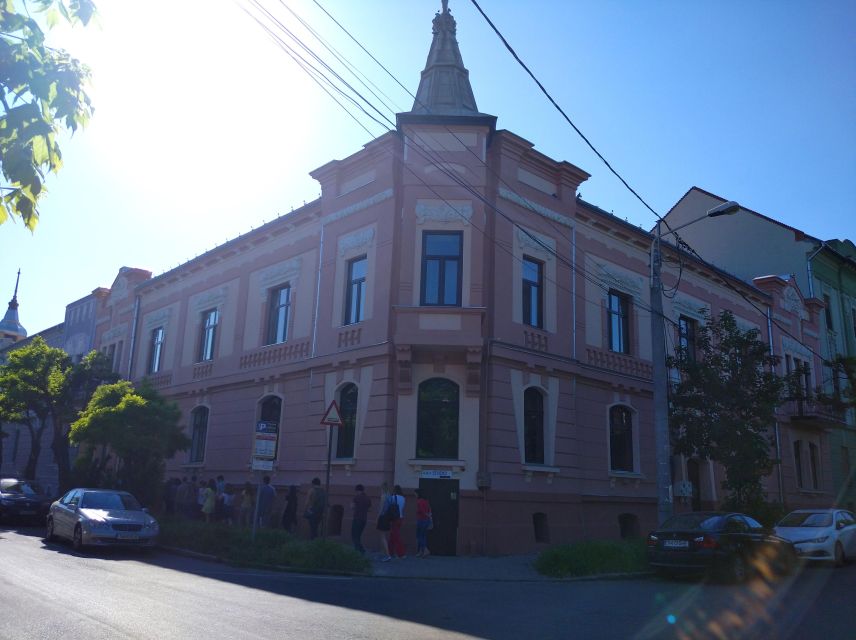
Elisabetin is where Timisoara gets personal. This 2.5-hour walk through the neighborhood shows Art Nouveau details up close, while your guide connects the streets to the 1989 Romanian Revolution and everyday life from the late 1800s. You start near Mocioni Square and end around Bălcescu Square, so it feels like a complete circuit, not a random stroll.
What I like most is the focus on what you can actually see. You get structured stops in key squares and streets, like Piața Plevnei and Strada Gheorghe Doja, and you learn what they mean. I also like that the stories aren’t limited to one era, you’ll hear about the Revolution beginning near Maria square, plus neighborhood life at the end of the 19th century.
One consideration: this is a rain-or-shine walking tour, and food and drinks are not included, so you’ll want to plan accordingly. Also, luggage or large bags are not allowed, so keep things light.
In This Review
- Key things to know before you go
- Elisabetin: the Art Nouveau neighborhood worth slowing down for
- Starting at Mocioni Square and Piața Alexandru Mocioni
- Maria Square and the Romanian Revolution starting point (1989)
- Piața Plevnei: Art Nouveau Secession facades and Gheorghe Doja in the center
- Strada Gheorghe Doja: what the buildings reveal on the main artery
- Carmen Sylva Park: a Greek Catholic church and the architect behind modern Timisoara
- Bulevardul Mihai Viteazu and Faculty of Mechanics: the city’s institutional face
- Balcescu Square finale: Catholic church and monastery in the same frame
- Price, pacing, and whether $30 makes sense for you
- Rain-or-shine reality and what to bring
- Who this tour suits best
- Should you book the Timisoara Dream Tour in Elisabetin?
- FAQ
- Where does the tour start?
- Where do you end the tour?
- How long is the Timisoara Dream Tour in the Elisabetin neighborhood?
- How much does it cost?
- What is included in the price?
- Is food or drinks included?
- What languages is the live guide available in?
- Does the tour run in bad weather?
- What is the meeting point?
- Are luggage or large bags allowed?
Key things to know before you go
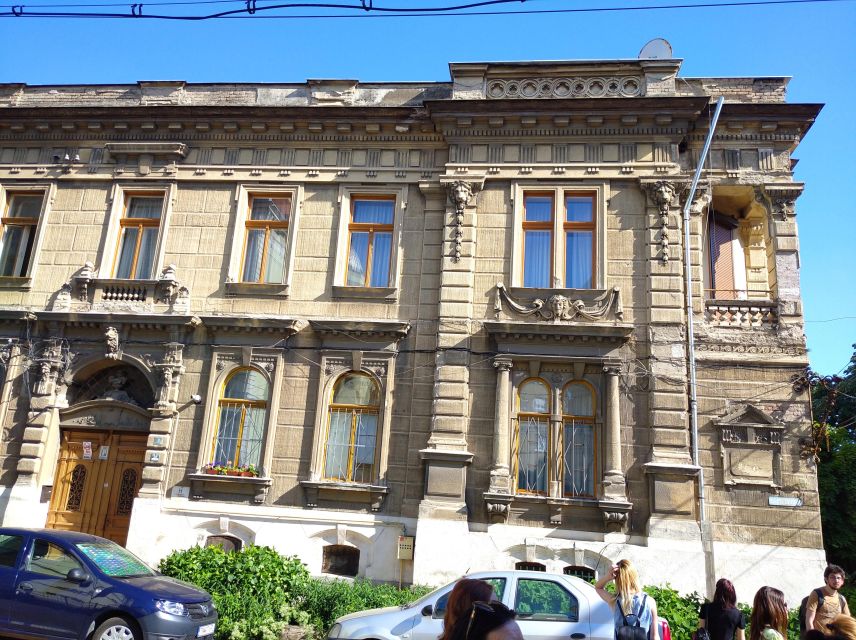
- Elisabetin’s Secession-style Art Nouveau is the main event, with stops in several standout squares and streets.
- Maria square ties to the Revolution of 1989, near the Protestant church, so the walk has real place-based context.
- Piața Plevnei centers the statue of Gheorghe Doja, with decorative Art Nouveau buildings framing the space.
- Carmen Sylva Park mixes a newer Greek Catholic church with a statue of the architect linked to modern Timisoara, László Székely.
- Your route through Mihai Viteazu boulevard and Bălcescu Square gives you architecture contrasts, from major institutions to the Catholic church and monastery area.
Elisabetin: the Art Nouveau neighborhood worth slowing down for
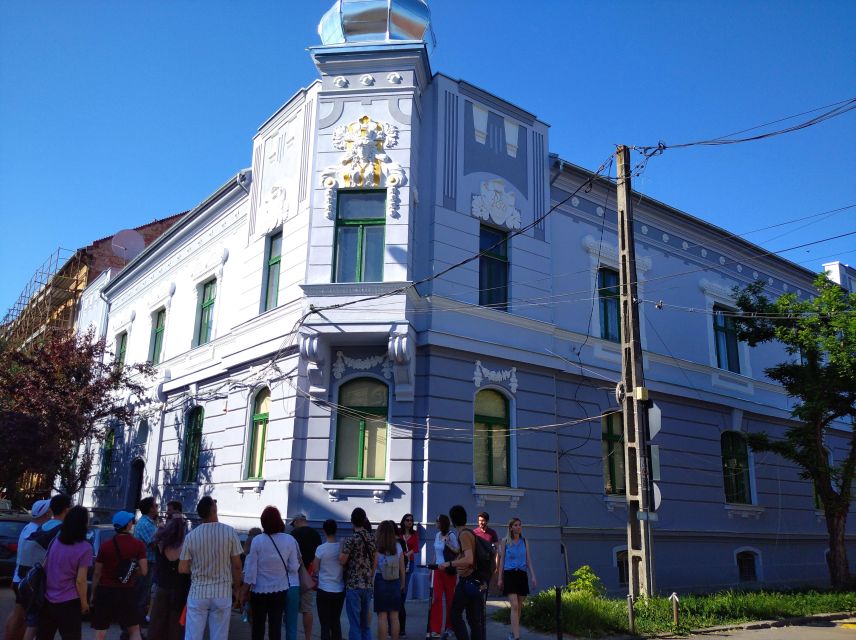
Timisoara has plenty of big sights, but Elisabetin rewards the slower pace. This area is known for residential streets lined with Art Nouveau, especially the Secession style, so the atmosphere is calm and refined while the facades do the talking.
What makes this tour practical is that it stays anchored to named places. You won’t just wander, you move stop to stop, learning why each square or street corner matters and what to look at when you’re standing there.
And because it runs in multiple languages (Romanian, English, French), it’s easier to follow even if you’re not fluent in Romanian. The format also includes flyers, so you’re not relying only on memory after the walk.
Starting at Mocioni Square and Piața Alexandru Mocioni
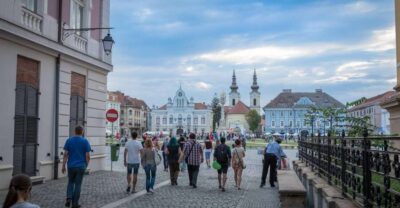
You begin at Mocioni Square, then your first guided stop is Piața Alexandru Mocioni. This opening block matters, because it sets the tone for the rest of Elisabetin: a neighborhood where architecture and stories are meant to be read together.
Expect the guide to orient you quickly so the walk doesn’t feel like a series of disconnected photo stops. You’ll get context on what you’re about to see next, and why these squares act like little outdoor rooms for the neighborhood.
The time here is about 20 minutes, which is just enough to get your bearings and start spotting Secession-style decorative choices on the buildings around you. If you like being able to link a building to a story, this start is designed for you.
Timisoara beyond the squares
Maria Square and the Romanian Revolution starting point (1989)
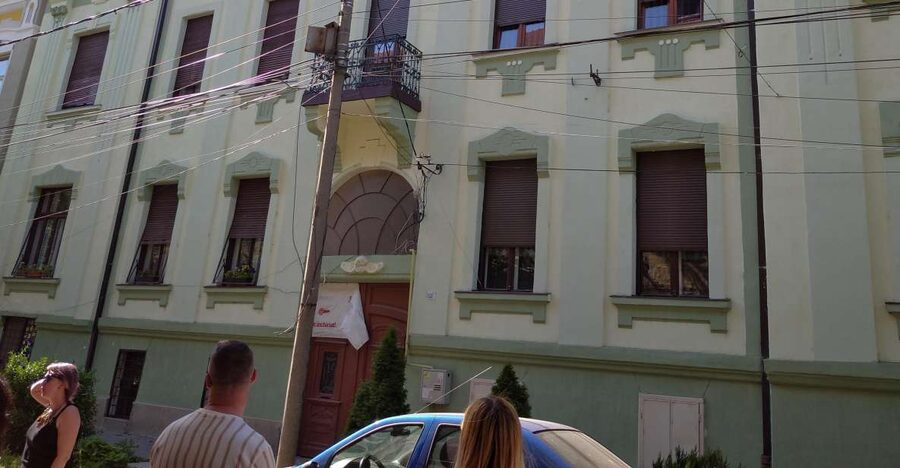
Next you head toward Piața Sfânta Maria, tied to Maria square, where the Romanian Revolution in 1989 began. The tour specifically notes that this started near the Protestant church, so the guide will help you connect the current street layout to a major moment in the city.
I like when a walking tour uses a specific location like that, because it turns history from a headline into something physical. You’re standing in the neighborhood, not just hearing it as a general fact.
One nice extra here is that the tour doesn’t treat the Revolution as the only thread. It also references stories about Elisabetin’s life in the late 1800s, so you’ll see how the neighborhood’s character long predates 1989 and continues afterward.
Piața Plevnei: Art Nouveau Secession facades and Gheorghe Doja in the center
Piața Plevnei is one of the most important stops on the route. The buildings around the square are decorated in Art Nouveau style, and in the middle you’ll see the statue of Gheorghe Doja, which becomes a focal point for the guide’s explanation.
A square like this works well for a tour because it’s easy to gather everyone and easy to notice details. Even if you’re not an architecture nerd, you can still appreciate the overall look and feel of the space and connect it to why it was designed that way.
A practical point: spend a little extra time visually scanning the edges of the square, not just the center. For Art Nouveau and Secession architecture, the “story” often lives in the small ornamental decisions on facades and corners, not only on the biggest landmark.
Strada Gheorghe Doja: what the buildings reveal on the main artery
From Piața Plevnei, you follow the main artery, Strada Gheorghe Doja. This section is about moving from a symbolic center into the everyday city fabric, where more representative buildings line the street.
Here’s where the tour earns its value. It helps you notice how streets function as long galleries of architecture. When you’re walking a route like this with a guide, you start seeing patterns, like repeated decorative approaches or recurring building styles, instead of treating each facade as a separate picture.
You get another focused 20-minute segment on this stretch, so you won’t feel rushed, but you also won’t get stuck staring at a single building. That balance is useful because it keeps the rhythm going while still giving you time to appreciate what’s in front of you.
Carmen Sylva Park: a Greek Catholic church and the architect behind modern Timisoara
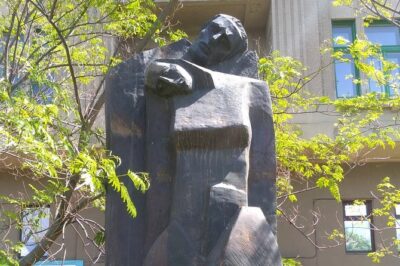
Next comes Carmen Sylva Park, where the tour shifts from street scale to green space and monuments. The highlight here is a new Greek Catholic church built in the park, plus the statue of Laszlo Szekely, the chief architect linked to the creator of the modern Timisoara.
This stop is especially good if you like architecture with a human connection. A statue of a named architect helps you understand that the city wasn’t just randomly built, it was shaped by people with plans and influence.
I also like how the tour pairs this with what you can see around you. In a park setting, buildings feel different. You tend to notice shapes, spacing, and how the monument and church relate to the surrounding paths, which can be hard to feel from a quick outside glance.
If you’re taking photos, this is a strong moment to slow down. Park lighting and open sight lines make it easier to capture the church area and the statue from a distance.
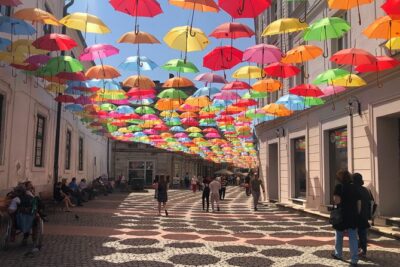
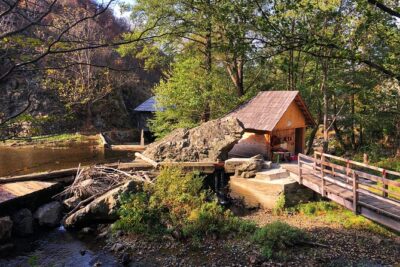
Bulevardul Mihai Viteazu and Faculty of Mechanics: the city’s institutional face
Then you move to Bulevardul Mihai Viteazu. The tour highlights the interesting buildings there, including the Faculty of Mechanics, which adds an academic and institutional layer to the walk.
This matters because it prevents the tour from becoming one-style-only. You’ll spend your time learning about Art Nouveau and Secession, but you’ll also see how major functions of the city sit in the same urban fabric.
It also helps your mental map of Timisoara. After a few stops, you’ll better understand where the neighborhood’s architectural story fits within the wider city. That makes your later independent exploring easier, even if you don’t follow the same route.
Again, this stop is about 20 minutes. Use it to look up at facades and then step back to see how the building sits within the boulevard. That simple change of viewpoint often makes architecture lectures click in your head.
Balcescu Square finale: Catholic church and monastery in the same frame
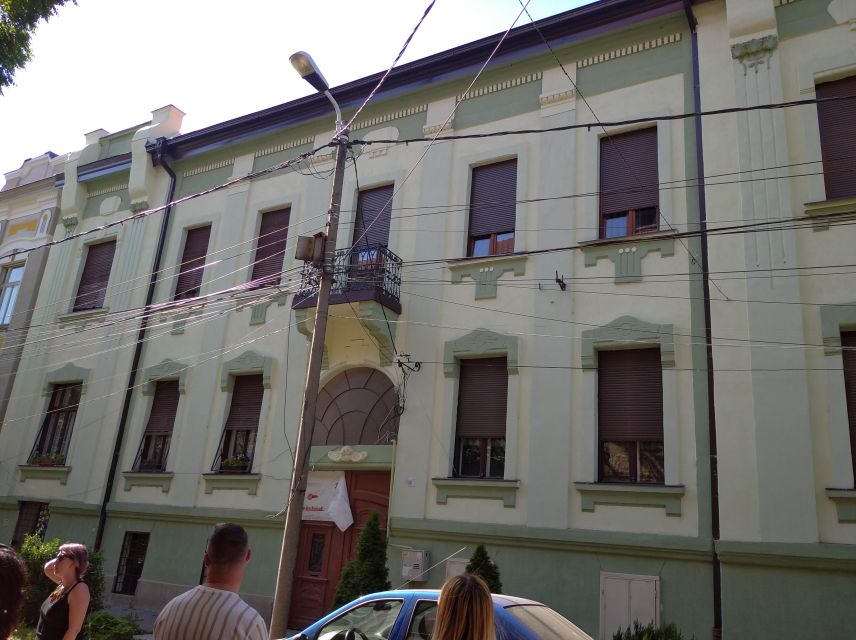
Your last big architectural moment is Piața Bălcescu, where you end up near Piața Nicolae Bălcescu. The tour spotlights the wonderful Catholic church and the building of the monastery located there, plus representative buildings on Mihai Viteazu Street and partially on Tudor Vladimirescu Street.
This finale works because it shifts from single-monument focus to a wider cluster. Churches and monasteries naturally create a stronger sense of place, and they give your walk a satisfying ending point you can reference later when you look at a map.
If you want to remember one final thing, remember the layout logic. Squares and churches are anchors for neighborhoods, and Elisabetin’s character shows up in how these spaces connect to the surrounding streets.
The walk ends around this area, so it’s also convenient if you plan to continue exploring on your own afterward. You’ll be in a part of the city with clear landmarks, not somewhere obscure where you have to hunt for your way out.
Price, pacing, and whether $30 makes sense for you
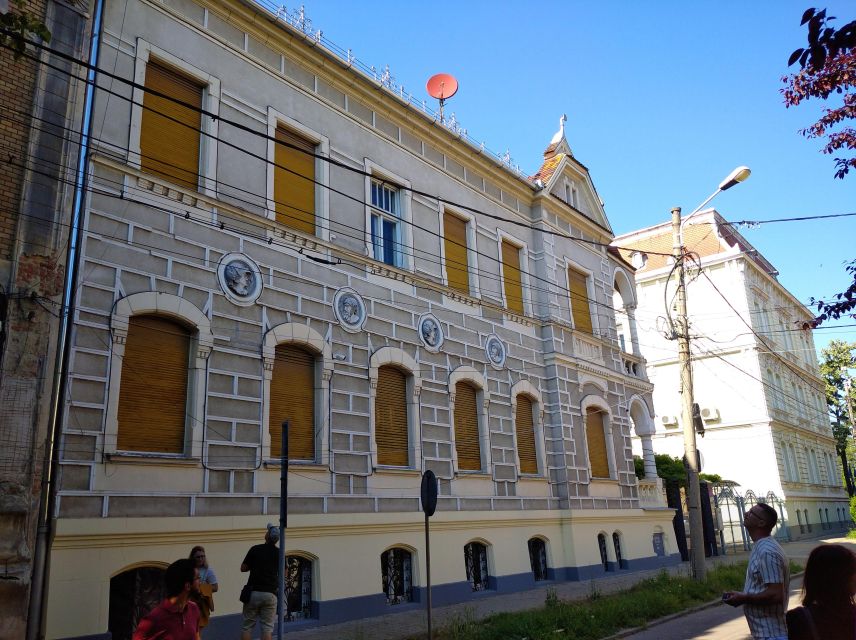
The price is $30 per person for a 2.5-hour guided experience, with flyers included and no food or drinks. For me, the value question comes down to how much you get for that time.
You’re paying for a guided route through multiple named stops, not just a single viewpoint. You’re also paying for interpretation, connecting architecture to stories tied to Elisabetin and events like the Revolution starting near Maria square in 1989.
Two things justify that cost for most people:
- You get multiple stops across squares, streets, and a park, so it feels like a tour with structure.
- You get printed flyers plus a guide who can explain what you’re seeing in Romanian, English, or French.
The pace is also a factor. With about 20 minutes at each listed stop, you can expect the route to move, not drag. That’s good if you want context without spending an entire afternoon stuck in one area.
If you prefer very slow travel, you might find the segments quick. But for a first pass through Elisabetin, the pacing is a strength.
Rain-or-shine reality and what to bring
This tour takes place rain or shine, so don’t assume weather will cancel plans. Plan your day so you can handle wet streets and slick sidewalks.
You’ll also want to travel light. Luggage or large bags are not allowed, which means this is best for carry-on-sized items or a small day bag.
Since food and drinks aren’t included, I recommend you plan a snack or water before you start. You’ll be walking through several squares and streets for about 2.5 hours, so it’s smart to keep your energy up.
Finally, meet your guide wearing a red coat. That small detail helps the experience feel smooth from the start, especially if you’re unfamiliar with Timisoara’s layout.
Who this tour suits best
This is a great fit if you want architecture without needing a degree in architectural history. The focus on Elisabetin’s Art Nouveau and Secession style gives you recognizable style cues, and the guide’s storytelling connects those buildings to specific places.
It’s also a good choice if you’re interested in how major events connect to everyday streets. The stop near Maria square, where the Romanian Revolution in 1989 began near the Protestant church, adds a real-world anchor you can’t get from a casual photo stop alone.
If you’re short on time and you want to see more than just one district, the route is compact but varied, from squares to a park to institutional buildings and a monastery area.
Should you book the Timisoara Dream Tour in Elisabetin?
Yes, if you want a guided, place-based way to see Elisabetin’s Secession-style Art Nouveau and hear stories tied to the city’s turning points. The $30 price feels reasonable for the combination of multiple named stops, interpretation in Romanian, English, or French, and included flyers.
Skip it or reconsider if you hate walking in the rain or you’re traveling with bulky luggage. Also, if you want a tour that includes meals, this one won’t cover that, since food and drinks are not included.
If you like your city travel grounded in what you can actually stand in front of, this route gives you a clean path through a neighborhood that’s easy to miss on your own.
FAQ
Where does the tour start?
The tour starts at Mocioni Square.
Where do you end the tour?
The tour ends at Piața Nicolae Bălcescu.
How long is the Timisoara Dream Tour in the Elisabetin neighborhood?
It lasts 2.5 hours.
How much does it cost?
The price is $30 per person.
What is included in the price?
You receive flyers with information.
Is food or drinks included?
No, food and drinks are not included.
What languages is the live guide available in?
The live tour guide speaks Romanian, English, and French.
Does the tour run in bad weather?
Yes, it takes place rain or shine.
What is the meeting point?
Your guide will be wearing a red coat.
Are luggage or large bags allowed?
No, luggage or large bags are not allowed.
Whatever Else Timisoara Is Selling
- The Classic Tour of Timisoara
★ 5.0 · 154 reviews - Weekly Guided Tour in English – Tuesday, Thursday, Saturday
★ 5.0 · 84 reviews - Timisoara All in One – Walking and Tram Tour
★ 5.0 · 72 reviews - Timisoara: Guided Walking Tour
★ 4.9 · 38 reviews - Timișoara Highlights – Walking Tour
★ 5.0 · 28 reviews
Everything Else We Reviewed In Timisoara
- The Classic Tour of Timisoara
★ 5.0 · 154 reviews - Weekly Guided Tour in English – Tuesday, Thursday, Saturday
★ 5.0 · 84 reviews - Timisoara All in One – Walking and Tram Tour
★ 5.0 · 72 reviews - Timisoara: Guided Walking Tour
★ 4.9 · 38 reviews - Day trip to Corvin Castle and Sibiu (and back) from Timisoara
★ 5.0 · 30 reviews
Timisoara On Foot And By Tram
- The Classic Tour of Timisoara
★ 5.0 · 154 reviews - Timisoara All in One – Walking and Tram Tour
★ 5.0 · 72 reviews - Timisoara: Guided Walking Tour
★ 4.9 · 38 reviews - Day trip to Corvin Castle and Sibiu (and back) from Timisoara
★ 5.0 · 30 reviews - Timișoara Highlights – Walking Tour
★ 5.0 · 28 reviews
Recently added around Timisoara
- Nera Gorge National Park – Private Day Tour from Timisoara★ 4.5 · 4 reviews
- Timisoara: Jewish Heritage Walking Tour★ 5.0 · 4 reviews
- Timisoara Downtown Dream Tour★ 5.0 · 5 reviews
- Timisoara: Private Walking Tour with a Local Guide★ 4.5 · 5 reviews
- The Jewish Heritage Tour of Timisoara★ 5.0 · 9 reviews
Timisoara Tours, compared.
 ★ 5.0The Classic Tour of TimisoaraFrom $48154 reviews
 ★ 5.0Timisoara All in One – Walking and Tram TourFrom $9272 reviews
 ★ 4.9Timisoara: Guided Walking TourFrom $2338 reviews
 ★ 5.0Day trip to Corvin Castle and Sibiu (and back) from TimisoaraFrom $18530 reviews
 ★ 5.0Timișoara Highlights – Walking TourFrom $3528 reviews
 ★ 5.0Timisoara: Classic Walking TourFrom $4226 reviews
 ★ 5.0The Grand Tour of Communist Ages at TimisoaraFrom $6617 reviews
 ★ 5.0One Day in Transylvania – Departure from TimisoaraFrom $17016 reviews
Browse the lists this tour appears in