
REVIEW · GUIDED
Weekly Guided Tour in English – Tuesday, Thursday, Saturday
Timisoara tells its story in squares. This small-group guided tour in English threads key landmarks together, so you understand what you are looking at, from the Castle of Huniade to the Ottoman period and beyond. I like the fact that you cover the center efficiently, with a convenient meetup at Palatul Culturii, right where most sightseeing starts. You also get the kind of pace that helps you actually remember what mattered and why it mattered.
The main drawback is simple: each stop is short, around 15 to 20 minutes. If you prefer slow looking, extra photos, or long explanations in one place, you might wish for more time per square.
In This Review
- Key things to know before you go
- Entering Timisoara by way of the Castle of Huniade
- Palatul Culturii is a smart meetup in the city center
- Ottoman Timisoara made readable at Libertatii and Piata Sfântul Gheorghe
- Maria Theresia Bastion, the last piece, and the shift after the Ottomans
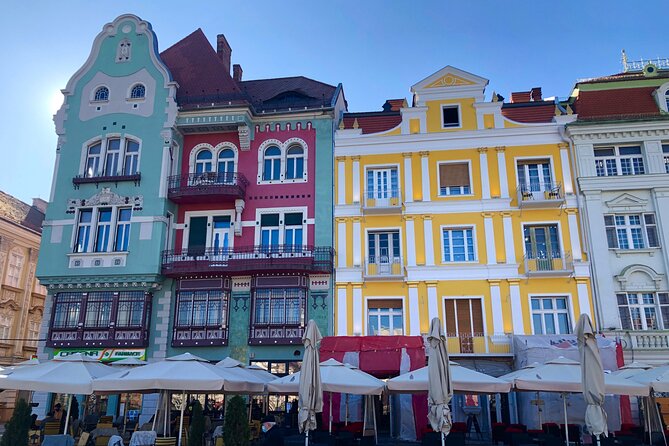
- Unirii Square: when the city’s look starts telling you who it is
- Libertatii Square again: the statue and the second layer lesson
- Piata Victoriei and the Romanian Revolution of 1989
- English guides who keep you engaged, from Sergiu to Dan
- Price and value for a 2-hour Timisoara overview
- Timing, days, and the simple walking rhythm
- Should you book this Timisoara guided tour?
Key things to know before you go
- Small group of up to 15 keeps the tour feeling personal, not like a crowded shuffle.
- English-speaking professional guide and clear storytelling through Ottoman times to 1989.
- Fast route through the old center, built around major landmarks and viewpoints.
- Free admission at every listed stop, so you spend money on food, not tickets.
- Two stops at Libertatii Square, which is useful because you will learn what changes when you look closer.
- Ends back near the start, so you can continue on your own without re-planning transport.
Entering Timisoara by way of the Castle of Huniade
If you want the quickest way to orient yourself in Timisoara, start with the Castle of Huniade. The tour begins with a short visit focused on a neat idea: you are not looking at one “castle moment.” You are seeing layers, because the site is linked to multiple castles being built across different eras. The last one, from 1856, is still standing today, and that makes the stop feel concrete rather than abstract.
In about 15 minutes, this first stop works like a map in your head. You start noticing how Timisoara keeps rebuilding after major shifts. Then the guide connects that pattern to the next era, setting you up to understand why later Ottoman-related sites feel the way they do.
Practical tip: since this stop is early in the route, you will benefit from arriving a few minutes ahead. That way you can settle in before the story starts moving fast.
Palatul Culturii is a smart meetup in the city center
The meeting point is Palatul Culturii, Strada Mărășești 2. I like this choice because it is central, easy to find, and it anchors you near the action right away. The tour also ends back at the meeting point, which is handy if you want to continue by yourself for museums, coffee, or a longer walk after the two-hour slot.
You can also expect logistics to be low-friction. The tour uses a mobile ticket, it is offered in English, and it runs on Tuesday, Thursday, and Saturday. Most importantly, the schedule is straightforward for planning a short visit, especially if you have only a day or two in Timisoara.
If you are booking around the middle of your trip, keep in mind it is often reserved in advance, averaging about 8 days ahead. That just means it can sell out in busy weeks, so lock it in when your dates firm up.
Guided, and already checked
Ottoman Timisoara made readable at Libertatii and Piata Sfântul Gheorghe
After the initial orientation, the tour shifts into Ottoman-era storytelling. This is where the route design starts doing real work for you. Instead of listing dates, the guide focuses on what you can see and what those visuals mean.
First comes Libertatii Square, where you will learn what happened in Ottoman times, how long Timisoara was under Ottoman reign, and what became of buildings from that period. This matters because it turns the square from “a place to stand” into “a place with an explanation.” You stop thinking of history as a timeline and start thinking of it as an overlay on the city.
Then you continue to Piața Sfântul Gheorghe. The theme continues, but the emphasis changes. You will see more Ottoman-related details, and you will also hear about Saint George. The goal is not to turn you into a scholar of every religious symbol, but to give you enough context that your eyes make sense of what is there.
Why this section is valuable: it prevents the common tourist problem where you only recognize a few famous landmarks, while everything else feels like background noise. Here, each stop feeds the next one.
Maria Theresia Bastion, the last piece, and the shift after the Ottomans
Next is Maria Theresia Bastion, a stop designed around contrast. You will hear about it as the only remaining piece from the former fortress of Timisoara. That single sentence does a lot of emotional work for a visitor. It helps you understand why a smaller fragment can feel more powerful than a bigger ruin. Something survived, so the city did not lose everything.
From there, the guide transitions you into what happened after the Ottoman period. Again, the timing is short, about 20 minutes, but that is the right length for this kind of stop. You do not need a full lecture to grasp the idea. You need enough context to see the shift in the cityscape and understand why fortifications and urban changes tend to travel together.
If you like photos, this is one of the better stops for quick shots that actually match the story you are hearing. The bastion fragment gives a clear visual anchor.
Unirii Square: when the city’s look starts telling you who it is
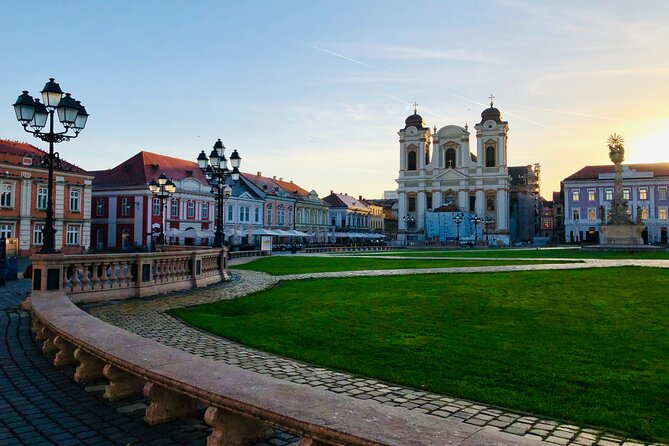
Then comes Unirii Square, often described as the most beautiful square in town. That is not just a subjective label. The stop is built around the square’s story and the special buildings you can spot while you are standing there.
This is one of the times when a guide pays off. When you are on your own, you might notice architecture, but you will not automatically know which details are worth your attention. Here, you get help picking out what makes these structures meaningful.
You will spend around 20 minutes at Unirii Square. That is enough time to absorb the main ideas without dragging. If you are the type who reads plaques but also likes moving on, this stop hits the sweet spot.
Libertatii Square again: the statue and the second layer lesson
Yes, the route loops back to Libertatii Square for a second visit. This is not repetition for repetition’s sake. It is a teaching strategy.
On the return, the guide focuses on other buildings in the square and pays attention to the statue in the middle. The benefit for you is that you learn to look at the same place twice, with two different angles. First you get the Ottoman-era explanation, then you get more local cues and the symbolic centerpiece.
Around 20 minutes here lets the guide widen the story without rushing. It is also a mental breather. After several narrative-heavy stops, it helps to revisit a familiar location with a new lens.
If you have limited time in Timisoara, a “two-look” square like this can do more than a longer stop elsewhere.

Piata Victoriei and the Romanian Revolution of 1989
The tour ends at Piata Victoriei, and this is where it shifts to the modern story. You will explore this 20th-century square and talk about the Romanian Revolution from 1989 against the communism regime.
It is a smart finish because it brings the tour out of the far past and into the era that shaped many people’s family memories and national identity. The timing is about 15 minutes, which is about right. If you want to go deeper, you can after the tour. But for a two-hour overview, it lands with clarity.
Also, Piata Victoriei gives you a practical finish point. You are ending in a place where you can continue your day in any direction, grab a meal, or connect with other plans.
English guides who keep you engaged, from Sergiu to Dan
The standout across the experience is the guide performance. Names that come up include Sergiu and Dan, and both are praised for staying engaged and keeping a nice pace.
Here is what you should look for, and what this tour style seems to deliver:
- Clear explanations that connect buildings to events
- A group-friendly pace, so you are not falling behind
- Help that feels supportive, like waiting for latecomers or helping people find their way
That last point matters more than you might think. In a city center with multiple side streets, a guide who keeps track of everyone makes the difference between a smooth trip and a stressful one.
The English format is also a real advantage. It means you can focus on understanding, not translating in your head.
Price and value for a 2-hour Timisoara overview
At $24.14 per person for about 2 hours, this is priced like an efficient “get oriented” tour, not a premium, long-form museum day. For me, the value equation comes from two things you actually feel as a visitor.
First, the stop entries you will hit are marked as free admission. So you are not getting trapped into extra costs just to stand in front of the right building. Second, you are paying for an English-speaking guide to connect the dots between eras that can feel confusing when you read about them alone.
The small-group size, up to 15 travelers, also improves the value. It is easier to ask questions and follow along when you are not squeezed into a large crowd.
What you are not paying for: souvenirs and personal expenses. That is normal. You should budget food and drinks as you would on any sightseeing day.
Timing, days, and the simple walking rhythm
The tour runs Tuesday, Thursday, and Saturday at 10:30 am, and it lasts roughly 2 hours. Since the route is built around multiple city-center stops, you should expect a steady rhythm of getting from one square to the next and listening in short bursts.
If your travel style is “one big thing at a time,” this could feel fast. But if you want a structured overview that helps you choose what to do next, it is a great way to start.
A small bonus: there is free cancellation, so if plans shift, you are not stuck.
Should you book this Timisoara guided tour?
Book it if you want a clear, English-friendly orientation to Timisoara that connects the city’s looks to the big historical shifts, especially the Ottoman period and the 1989 Revolution. It is also a strong choice if you appreciate small-group pacing and a guide who can keep the story moving without losing you.
Skip it if you have a “slow and deep” style, where you want longer stays at fewer places. The stop lengths are short by design, so this is not the tour for lingering in one square for an hour.
If you are on the fence, here is the decision shortcut I use: if you like getting your bearings fast and then choosing your own pace afterward, this two-hour center walk is a smart buy. If you want a slow tour that becomes your whole day, you will likely prefer something longer.
Guided And Already Checked
- Timisoara: Guided Walking Tour
★ 4.9 · 38 reviews - Timisoara: Private Walking Tour with a Local Guide
★ 4.5 · 5 reviews
Whatever Else Timisoara Is Selling
- The Classic Tour of Timisoara
★ 5.0 · 154 reviews - Timisoara All in One – Walking and Tram Tour
★ 5.0 · 72 reviews - Timisoara: Guided Walking Tour
★ 4.9 · 38 reviews - Timișoara Highlights – Walking Tour
★ 5.0 · 28 reviews - Timisoara: Classic Walking Tour
★ 5.0 · 26 reviews
Everything Else We Reviewed In Timisoara
- The Classic Tour of Timisoara
★ 5.0 · 154 reviews - Timisoara All in One – Walking and Tram Tour
★ 5.0 · 72 reviews - Timisoara: Guided Walking Tour
★ 4.9 · 38 reviews - Day trip to Corvin Castle and Sibiu (and back) from Timisoara
★ 5.0 · 30 reviews - Timișoara Highlights – Walking Tour
★ 5.0 · 28 reviews
Recently added around Timisoara
- Nera Gorge National Park – Private Day Tour from Timisoara★ 4.5 · 4 reviews
- Timisoara: Jewish Heritage Walking Tour★ 5.0 · 4 reviews
- Timisoara Downtown Dream Tour★ 5.0 · 5 reviews
- Timisoara: Private Walking Tour with a Local Guide★ 4.5 · 5 reviews
- The Jewish Heritage Tour of Timisoara★ 5.0 · 9 reviews
Guided, compared.
 ★ 4.3Bucharest: Palace of Parliament Tickets and GuideFrom $383,182 reviews
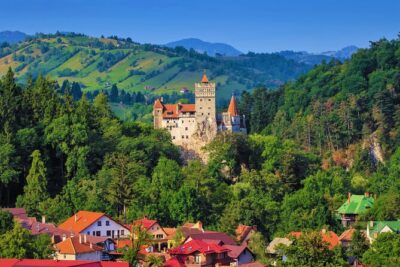 ★ 4.5Bucharest to Dracula Castle, Peles Castle and Brasov Guided TourFrom $332,933 reviews
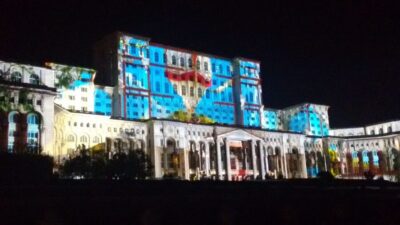 ★ 4.4Bucharest: Palace of Parliament Tickets and Guided TourFrom $281,877 reviews
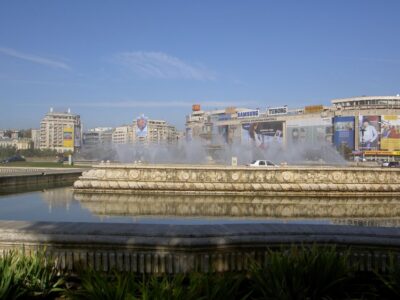 ★ 4.9Bucharest: City Highlights Guided Walking TourFrom $211,482 reviews
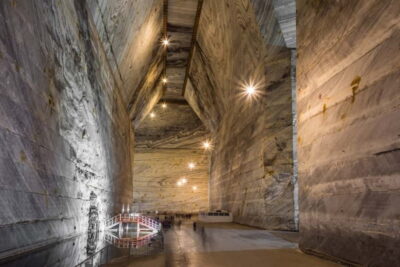 ★ 4.6Bucharest: Salt Mine Guided Day Trip to SlănicFrom $56559 reviews
 ★ 4.4Bucharest: Dracula Castle, Peles Castle & Brasov Guided TourFrom $116323 reviews
 ★ 4.93-Hour Guided Tour of Communist BucharestFrom $29303 reviews
 ★ 4.7Sibiu: Daily Sightseeing Guided TourFrom $16247 reviews