
REVIEW · TIMIȘOARA
The Grand Tour of Communist Ages at Timisoara
Communism leaves fingerprints on Timisoara. This guided tour strings together the Communist Party era and the Romanian Revolution through an off-the-beaten-track route, with comfortable transport between stops. You cover key moments tied to December 1989 while moving at a pace that fits a half-day plan.
Two things I really like: first, the way the guide connects the big story to the street-level details, including how the regime was installed and then developed. Second, you see objects and locations that make the period feel concrete, from the Muzeul Consumatorului Comunist to bullet-scarred landmarks tied to the protests.
One consideration: the stops are short for the major outdoor landmarks, so if you want to linger for photos or read every plaque, you may want extra time before or after the tour.
In This Review
- Key highlights worth your attention
- What Makes This Timisoara Communist Tour So Focused
- Price and Group Size: The $66.08 Value Test
- Getting Started at Three Holy Hierarchs, Then Riding to the Neighborhoods
- Șagului Neighborhood: Seeing How Communism Felt in Everyday Life
- Muzeul Consumatorului Comunist: The Objects That Explain the System
- Reformed Church: The Tram Interruption Moment
- Timisoara Orthodox Cathedral Stairs: Bullet Holes With Context
- Piata Victoriei: Victory Square, Opera Square, and 150,000 Voices
- Guides Matter: Dan and Ludovic’s Style of Explaining
- Why This Route Works for Root Causes, Not Just Dates
- Timing and Pacing: Short Landmarks, One Long Neighborhood Stop
- Who Should Book This Tour
- Quick Practical Notes Before You Go
- Should You Book the Grand Tour of Communist Ages at Timisoara?
- FAQ
- What time does the tour start?
- Where does the tour meet and where does it end?
- How long is the tour?
- How much does the tour cost?
- Is the tour offered in English?
- How big is the group?
- Are admission tickets required for the stops?
- Can I cancel for a full refund?
Key highlights worth your attention
- Small group up to 10 keeps questions flowing and helps you actually hear the guide.
- English guided storytelling makes the political timeline easier to follow without needing prior knowledge.
- At least eight locations in a 3 to 4 hour window means you see more than a typical walk-only history tour.
- Bullet-hole and protest-site stops bring the December 1989 events down to physical, visible evidence.
- Muzeul Consumatorului Comunist adds a rare look at everyday life artifacts made during the Communist era.
- Mobile ticket and free admissions at each listed stop help keep the outing simple.
What Makes This Timisoara Communist Tour So Focused
This tour is built around one place and one turning point: Timisoara, and the chain of events around 15 to 20 December 1989. Instead of spreading your time across random landmarks, the route is designed to show how Communist rule shaped daily life, then how resistance escalated into public action.
The “Communist Ages” theme works because it is not only about politics. It also covers the lived environment, including what life looked like in the neighborhoods and what everyday objects from the Communist era can still tell you today. That matters if you have ever wondered how a political system shows up in ordinary routines.
You will also move between locations in a comfortable vehicle. That is a practical win in a place like Timisoara, where history is scattered across the city rather than lined up in one neat museum district.
Price and Group Size: The $66.08 Value Test
At $66.08 per person for about 3 to 4 hours, this is not a bargain price. But the value is stronger than it looks because you get a guide who is there for the full window and a route that hits multiple sites tied to the revolution story.
A key detail is the cap of 10 travelers per group. In real terms, that usually means less waiting, fewer people blocking your view, and more time for the guide to answer questions. Several people also highlight that the guide had answers for their questions, and that thorough, direct style is a big part of why this tour earns a top score.
One more value point: the listed stop admissions are free. So you are not paying extra entry fees while you are out seeing the places that connect the timeline.
Timisoara beyond the squares
Getting Started at Three Holy Hierarchs, Then Riding to the Neighborhoods
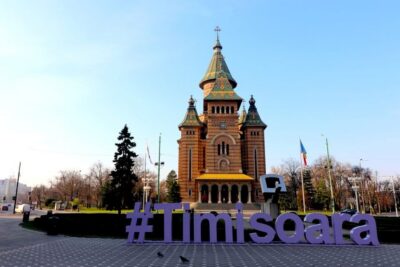
Your tour meets at the Three Holy Hierarchs Metropolitan Cathedral on Bulevardul Regele Ferdinand I in Timișoara. It starts at 3:00 pm, and it ends at Piața Victoriei. That timing is handy because it gives you a late afternoon history dose, after daytime errands or a museum visit.
The route uses a comfortable vehicle to travel between points, which helps you cover more locations without burning your energy on long transfers. It also makes the pacing feel more like a guided lecture with visuals than a long, fast walking tour.
If you like structure, you will appreciate the format: a neighborhood focus, then a museum-style stop, then a series of short, high-impact landmarks tied to December 1989. The guide ties each location back to the larger story so the city does not feel like a set of isolated photo stops.
Șagului Neighborhood: Seeing How Communism Felt in Everyday Life
The first stop is Șagului, a Timisoara neighborhood where you will spend about 2 hours. That is the longest part of the itinerary for a reason. Instead of jumping right into the dramatic moments, you start with the day-to-day environment that Communist rule created.
This is where you get the “before the break” context. The guide focuses on what life was like during Communist times, and the neighborhood setting helps you see why the later public protests mattered. Political change does not appear out of nowhere. It grows out of pressures and lived realities that people experience every day.
Practical tip: because this is the longest stop, wear shoes that handle uneven sidewalks and expect you will be outside for at least part of it. Bring a small water bottle if it is warm, and be ready to stand while the guide explains.
Muzeul Consumatorului Comunist: The Objects That Explain the System
Next comes Muzeul Consumatorului Comunist for about 30 minutes. This is one of the reasons this tour feels different from the standard “look at this building” format.
You are told the museum covers the beginnings of the Communist regime in Romania, including how it was installed and how it developed. Then it adds something more personal: a unique private collection of objects made in Romania during the Communist era.
That mix is smart. Politics can feel abstract on a page, but objects are stubborn and specific. They help you visualize what people could buy, what they used, and what daily life looked like under the system. Even in a short visit, this kind of stop makes the later revolution story feel less theoretical.
If you enjoy museum settings but want a lighter, city-based outing rather than a full standalone museum day, this stop hits the sweet spot.
Reformed Church: The Tram Interruption Moment
At Biserica Reformata (the Reformed Church), the tour zeroes in on the events of the 15th and 16th of December 1989. You will spend about 15 minutes here, which is short, but the moment is intense.
The guide explains how, in the afternoon of the 16th, a young man stopped a tram, and his friend climbed onto it to shout that message against Ceausescu. The point is not only the slogan. It is the idea that public defiance broke into the street, right in the middle of normal city life.
This is also a stop where you should pay attention to how the guide frames cause and effect. The tour is explicitly about the root causes of the Romanian Revolution. So this kind of origin moment helps connect the dots: protest begins, communication spreads, and fear starts to fail.
Practical tip: because the stop is brief, arrive ready to listen. If you want photos, do it quickly and give the guide your full attention for the key details.
The Ceausescu years, told other ways
Timisoara Orthodox Cathedral Stairs: Bullet Holes With Context
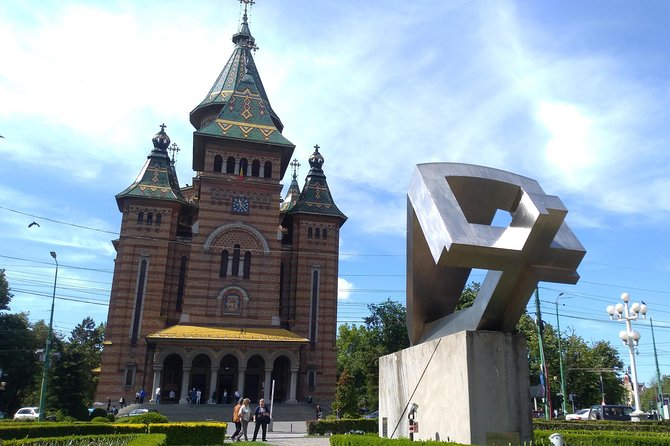
Another high-impact stop is Timisoara Orthodox Cathedral, where you will spend about 10 minutes. The guide focuses on how few young people died while protesting on the stairs of the cathedral after the Army opened fire without warning.
You will also see bullet holes, which makes this stop feel stark in a way that a timeline cannot. It is one thing to learn about the revolution. It is another to stand near visible evidence tied to a specific moment.
Because the time is short, the guide’s pacing matters. You will want to keep your eyes on the details the guide points out and not get distracted by the surrounding architecture. If you miss the explanation, the bullet holes become only visual background, and the whole point of the stop is the meaning behind them.
Piata Victoriei: Victory Square, Opera Square, and 150,000 Voices
The tour ends at Piața Victoriei, where the story lands on a crowd moment. You will spend about 10 minutes, and the guide connects that square to the 20th of December.
The key detail is the scale: 150,000 people shouting VICTORY as Timisoara was proclaimed the first city in Romania free of Communism. After that, the square was named Victory Square, and before it was called Opera Square.
This ending matters because it flips the mood. Earlier stops focus on tension, risk, and visible harm. Here, the energy shifts to collective declaration. Even if you know the broad outline of 1989, the way the tour ties the city’s naming history to the protest story helps you understand how revolutions get remembered in stone, street signs, and squares.
Practical tip: since this is the end point, plan your next steps nearby. Use the square as your launchpad for a late walk, or grab a meal close by while the story is still fresh.
Guides Matter: Dan and Ludovic’s Style of Explaining
One theme from the guide experience is that people felt the historian approach was practical and direct. I noticed two guide names showing up in positive feedback: Dan and Ludovic.
Both are described as having strong command of the material and answering questions thoroughly, which is exactly what you want on a tour where politics, timelines, and street-level evidence all collide. When the guide can respond to questions on the spot, you leave with a clearer mental map instead of a bundle of facts you struggle to organize later.
So, if you are someone who likes to ask why things happened, this tour’s format supports that. It is not only one-way explanation. It is a guided walk where questions fit naturally into the route.
Why This Route Works for Root Causes, Not Just Dates
This tour does more than list locations. It is built around learning the rise and reign of the Communist Party in Romania, how it was installed, and how it developed. It also targets the root causes of the Romanian Revolution, using Timisoara’s specific events as the thread.
You can feel that structure in the order of stops. You start with life in a neighborhood, you move to artifacts that reflect how the system shaped everyday consumption, then you reach the protest escalation moments tied to the tram interruption and the cathedral stairs, and finally you close with the victory declaration in the square.
That arc helps your brain do something useful: it organizes history into a sequence that makes sense. You are not just collecting photos. You are building a chain of cause and effect in your head.
Timing and Pacing: Short Landmarks, One Long Neighborhood Stop
The overall duration is 3 to 4 hours. The biggest time chunk is Șagului at 2 hours, then the museum at 30 minutes, then the church and cathedral and square with shorter segments of 10 to 15 minutes.
This is a good pacing model if you want breadth. You will see multiple key sites in one outing without spending an entire day in transport or in one large building.
The trade-off is depth at the short stops. You will get the essentials and the guide’s interpretation, but you will not have long independent time at each bullet-hole location or church step. If you prefer slow and detailed, plan to spend extra time later in Timisoara on your own.
Who Should Book This Tour
I think this one fits best if you fall into one of these groups:
- You want a Romanian history and Communism tour that focuses on Timisoara and the revolution timeline.
- You like city walks that also include an object-based stop, like the Muzeul Consumatorului Comunist.
- You enjoy off-the-beaten-track neighborhoods and want context that goes beyond grand monuments.
- You want something doable in an afternoon, starting at 3:00 pm and finishing at Piața Victoriei.
It may not be ideal if you want a museum-heavy day with long, quiet time at each site, because several key landmarks are intentionally brief.
Quick Practical Notes Before You Go
This experience is offered in English, with a maximum group size of 10. You get a mobile ticket, and the stops listed have free admissions. It is near public transportation, and service animals are allowed.
If you want the best chance of getting your preferred slot, book sooner rather than later. On average, this tour is booked about 11 days in advance, and you also get confirmation within 48 hours of booking depending on availability.
Should You Book the Grand Tour of Communist Ages at Timisoara?
If your goal is to understand how Communist rule shaped daily life and how the December 1989 events unfolded in Timisoara, I would book this. The combination of a long neighborhood segment, a focused museum stop with everyday objects, and then the fast, meaningful sequence of protest sites gives you a strong sense of the story without needing an all-day commitment.
I would especially choose it if you like guided interpretation and question-friendly history. The small group size and the guide’s track record for answering questions are exactly what makes this kind of tour worth your time.
If you are only interested in one or two buildings and you want long independent exploration, you might feel the shorter landmark stops are not enough. But if you want one coherent “timeline on the ground,” this tour is built for that.
FAQ
What time does the tour start?
The tour starts at 3:00 pm at the Three Holy Hierarchs Metropolitan Cathedral.
Where does the tour meet and where does it end?
It meets at Three Holy Hierarchs Metropolitan Cathedral on Bulevardul Regele Ferdinand I and ends at Piața Victoriei in Timisoara.
How long is the tour?
The tour lasts about 3 to 4 hours.
How much does the tour cost?
The price is $66.08 per person.
Is the tour offered in English?
Yes, it is offered in English.
How big is the group?
The tour has a maximum of 10 travelers.
Are admission tickets required for the stops?
Admission tickets are listed as free for the stops included in the tour.
Can I cancel for a full refund?
Yes. You can cancel up to 24 hours in advance for a full refund.
Everything Else We Reviewed In Timisoara
- The Classic Tour of Timisoara
★ 5.0 · 154 reviews - Weekly Guided Tour in English – Tuesday, Thursday, Saturday
★ 5.0 · 84 reviews - Timisoara All in One – Walking and Tram Tour
★ 5.0 · 72 reviews - Timisoara: Guided Walking Tour
★ 4.9 · 38 reviews - Day trip to Corvin Castle and Sibiu (and back) from Timisoara
★ 5.0 · 30 reviews
The Communist Years, Retold
- Timisoara: Grand Communism Tour
★ 4.9 · 13 reviews
Timisoara On Foot And By Tram
- The Classic Tour of Timisoara
★ 5.0 · 154 reviews - Timisoara All in One – Walking and Tram Tour
★ 5.0 · 72 reviews - Timisoara: Guided Walking Tour
★ 4.9 · 38 reviews - Day trip to Corvin Castle and Sibiu (and back) from Timisoara
★ 5.0 · 30 reviews - Timișoara Highlights – Walking Tour
★ 5.0 · 28 reviews
Recently added around Timisoara
- Nera Gorge National Park – Private Day Tour from Timisoara★ 4.5 · 4 reviews
- Timisoara: Jewish Heritage Walking Tour★ 5.0 · 4 reviews
- Timisoara Downtown Dream Tour★ 5.0 · 5 reviews
- Timisoara: Private Walking Tour with a Local Guide★ 4.5 · 5 reviews
- The Jewish Heritage Tour of Timisoara★ 5.0 · 9 reviews
Timisoara Tours, compared.
 ★ 5.0The Classic Tour of TimisoaraFrom $48154 reviews
 ★ 5.0Timisoara All in One – Walking and Tram TourFrom $9272 reviews
 ★ 4.9Timisoara: Guided Walking TourFrom $2338 reviews
 ★ 5.0Day trip to Corvin Castle and Sibiu (and back) from TimisoaraFrom $18530 reviews
 ★ 5.0Timișoara Highlights – Walking TourFrom $3528 reviews
 ★ 5.0Timisoara: Classic Walking TourFrom $4226 reviews
 ★ 5.0One Day in Transylvania – Departure from TimisoaraFrom $17016 reviews
 ★ 5.0Ecumenical Tour of TimisoaraFrom $3015 reviews
Browse the lists this tour appears in