
REVIEW · TIMIȘOARA
Timisoara: Grand Communism Tour
Communism has a pulse in Timișoara. This Grand Communism Tour connects the ideology to real places, from SCARTZ to churches and memorials tied to 1989. I like that it is organized as a story with real turning points, not a random list of landmarks, and you learn what the Communist system meant for daily life.
I also appreciate the small group format, limited to 10 people, which makes it easier to ask questions and actually follow the bigger political thread. In guides like Andrei and Sergio, you get clear English, strong storytelling, and personal touches such as family perspective mixed into the broader timeline.
One drawback to consider: this is heavy subject matter. You are hearing about Romania’s darkest years and the conflict around the Communist era, so it may not be for you if you prefer lighter history.
In This Review
- Key things that make this tour worth your time
- Why Timișoara is the right city for a Communist-era tour
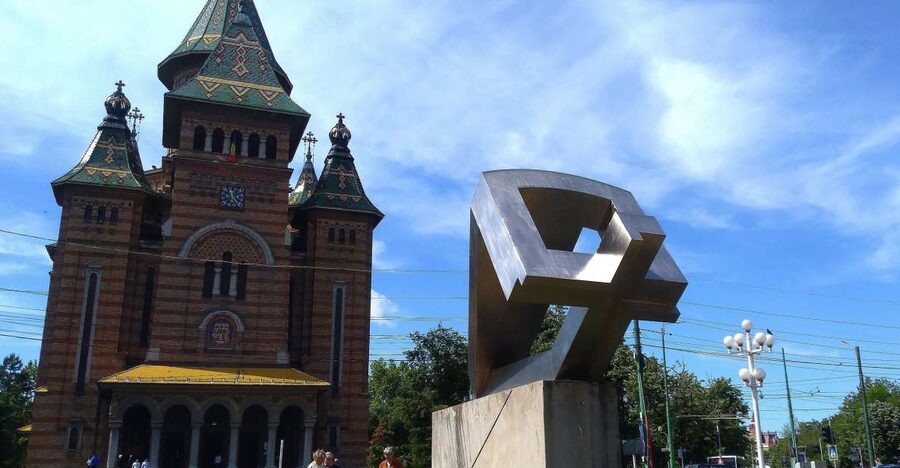
- Meeting at the Orthodox Cathedral, then getting oriented fast
- SCARTZ club and the Communist Customer Museum basement
- Ceausescu, the 50-year story, and how 1989 becomes inevitable
- The Anti-Communist Resistance Movement Monument in the 1950s and 1960s
- Reformed Hungarian Church: where the December 1989 uprising started
- Cemetery of Revolution Heroes and the final days of Ceaușescu’s regime
- Revolution Memorial of Timișoara: why the last stop matters
- The itinerary pacing: 3.5 hours with real momentum
- Price and value: $70 for a focused, guide-led history route
- What kind of traveler this tour suits
- Who might want to skip it
- Should you book the Grand Communism Tour?
- FAQ
- How long is the Timisoara Grand Communism Tour?
- How much does it cost, and what is included?
- Where do I meet the guide?
- What languages is the tour offered in?
- Is there an entrance fee during the tour?
- Is free cancellation available?
Key things that make this tour worth your time
- Start at SCARTZ and go underground, with the Communist Customer Museum in the basement setting.
- A guided, chronological story, tying 50 years of geopolitical change to the 1989 Romanian Revolution.
- Concrete sites of resistance, including a monument to anti-Communist resistance from the 1950s and 1960s.
- December 1989 in focus, at the Reformed Hungarian Church, where the uprising started.
- End at a purpose-built memorial, honoring the people of Timișoara’s anti-Ceaușescu revolution.
- Transportation between stops is included, so you spend more time listening and less time figuring out logistics.
Why Timișoara is the right city for a Communist-era tour
Timișoara hits differently because it was not just a backdrop for history. It became a key stage for opposition and change, and that shows in the specific sites you visit. When you walk from one landmark to the next, you can feel how protest, fear, and political power all lived in the same streets.
This tour also helps you understand Romania’s political shifts in human terms. You are not only learning names and dates, you are hearing how the Communist era played out and how pressure built until 1989. That makes the story easier to remember, and honestly more meaningful.
Meeting at the Orthodox Cathedral, then getting oriented fast
You meet in front of the Orthodox Cathedral, at the start point for the route. That matters because it helps you get your bearings before the tour begins, especially if you are arriving from outside the city center.
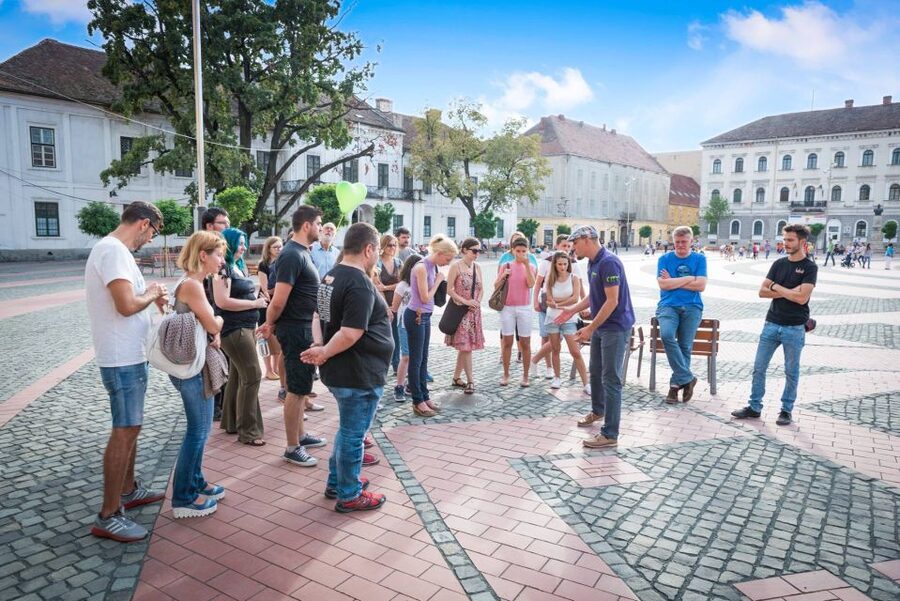
From there, the tour moves with a simple rhythm. You will hear what you need to know before each site, then you walk or travel to the next location where something happened or symbolizes what happened. With transportation between stops included, the pace stays focused on storytelling instead of navigation.
Timisoara beyond the squares
SCARTZ club and the Communist Customer Museum basement
The tour begins where you might not expect to find Communist history, at the misfit SCARTZ club. That contrast is part of the point. It shows how Timișoara’s modern identity overlaps with its older trauma and contradictions.
From SCARTZ, you go into the basement of the club for the Communist Customer Museum. Even if you only have limited time in the city, this stop gives you a strong anchor for the rest of the tour because it sets a tone of lived experience. You are guided through what the Communist era looked like day to day, not only what it claimed on paper.
I like how this creates a quick emotional setup. You come in expecting politics, and you leave seeing how systems affect ordinary routines and even how people interpret power. If you enjoy history with objects, settings, and atmosphere, this basement setting is a memorable start.
Ceausescu, the 50-year story, and how 1989 becomes inevitable
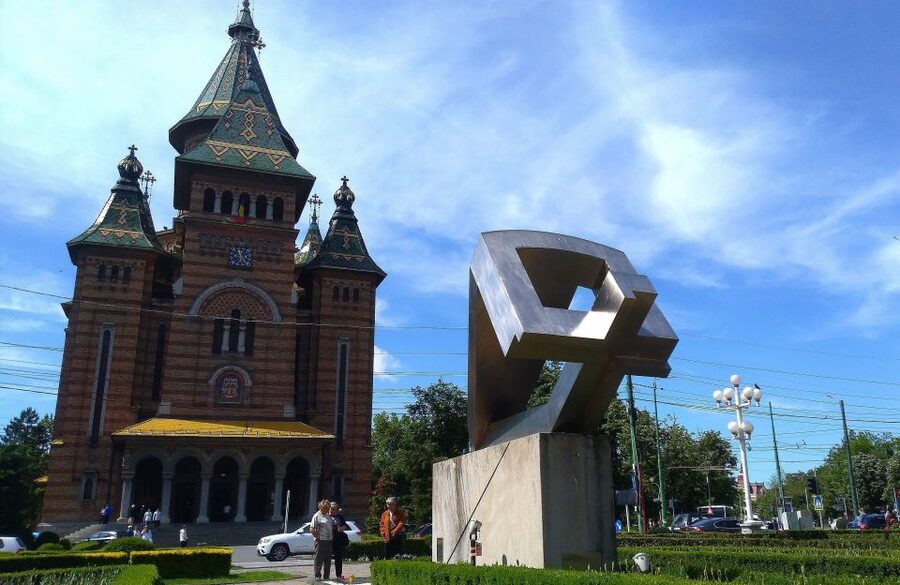
Once you are grounded in the museum context, the guide ties the thread to Nicolae Ceaușescu. You hear about why he mattered, and more importantly, how Romania’s political and geopolitical path evolved for decades under Communist rule.
What I value here is the way the tour frames 1989 as a result, not a random explosion. You are given the 50-years evolution that led to the Romanian Revolution of 1989, then you start seeing how each later site fits into that arc. This approach is useful if you want more than trivia, because it helps you connect events across time.
In the reviews, guides like Andrei and Roberta are praised for making this era feel more real through anecdote and context. Some guides also share personal or family perspective, which can add an important human layer when you are talking about such a heavy period. If that type of storytelling resonates with you, this tour will likely feel unusually vivid for the time you spend.
The Anti-Communist Resistance Movement Monument in the 1950s and 1960s
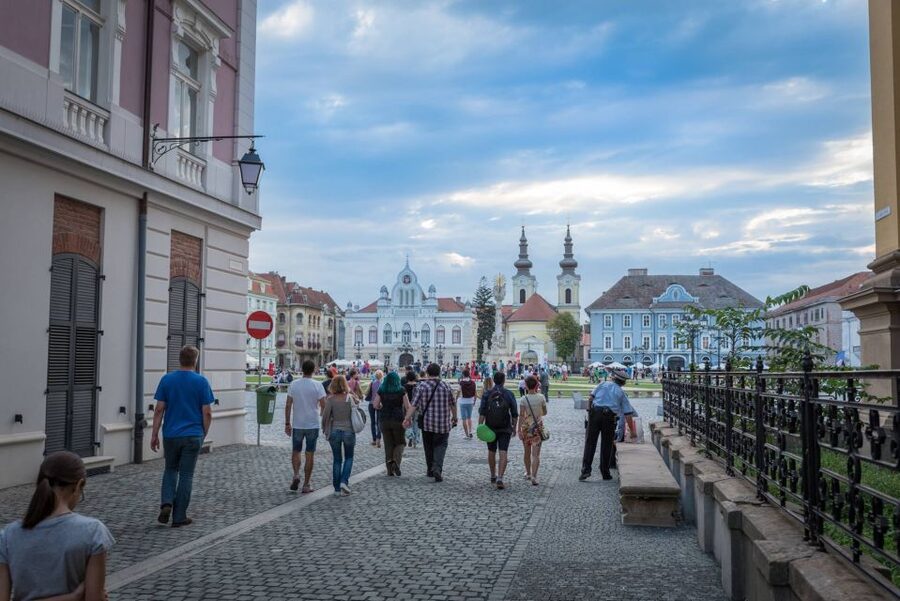
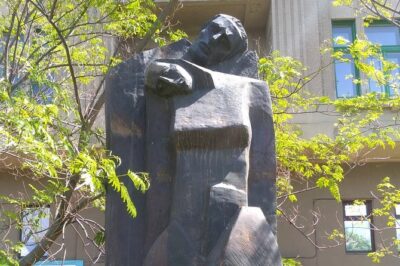
Next comes the Anti-Communist Resistance Movement Monument. This stop shifts the angle from the top-down story of Communist power to the ground-level reality of opposition.
You hear how Romanians harshly opposed the Communists during the 1950s and 1960s. That part is crucial because it corrects a common mindset that resistance only mattered at the end. Here, resistance is shown as persistent, risky, and shaped by fear and consequences.
This is also one of those places where a good guide matters. A monument can look like a simple point on a map, but the tour gives you the background to interpret what it represents. You learn what was at stake and why opposition did not come from nowhere.
Reformed Hungarian Church: where the December 1989 uprising started
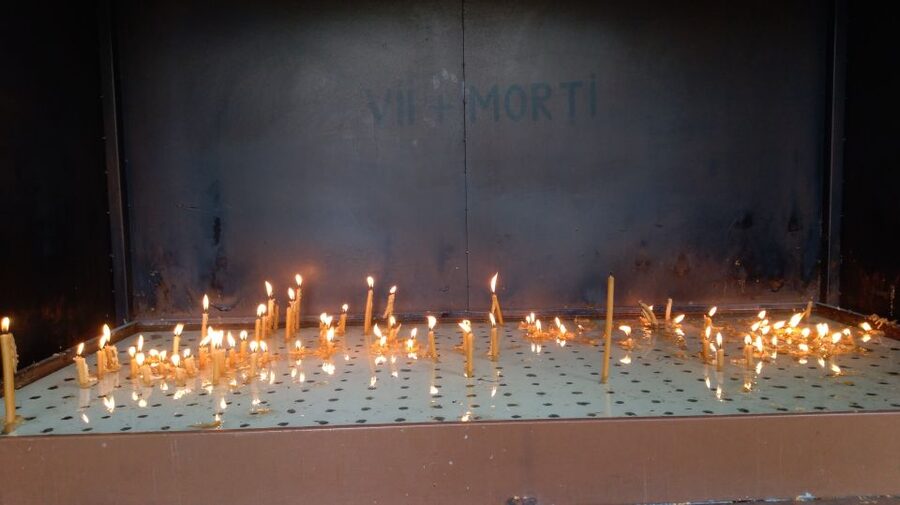
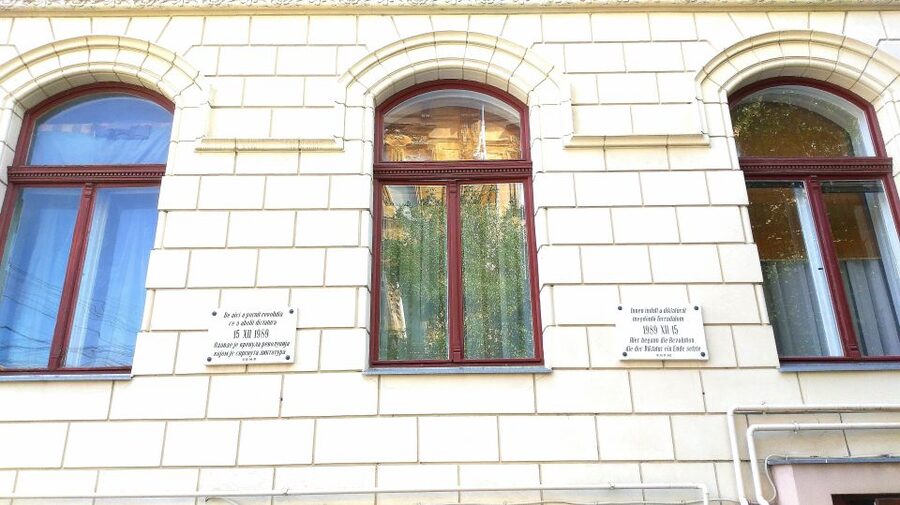
The Reformed Hungarian Church is one of the most important stops on the tour. It is presented as the place where the uprising started in December 1989, and that detail gives the site immediate meaning.
The tour also frames it as a local headquarters of the former Communist Party. That double-layer is powerful: the same building world can be connected to authority, tension, and then a sudden shift toward revolt. When you hear the context right before arriving, you can better understand how ordinary spaces can become political theaters.
Expect the guide to connect the story of Timisoara’s anti-Communist and anti-Ceaușescu revolution to the broader Romanian Revolution of 1989. If you like history that includes cause and effect, this is where the tour becomes very satisfying. You are not only learning what happened, you are learning why this moment mattered and how it moved forward.
Also, the church stop is where questions often come up. If you are the type who wants to understand the tension between different communities and political pressure, this is a good moment to slow down and ask.
The Ceausescu years, told other ways
Cemetery of Revolution Heroes and the final days of Ceaușescu’s regime
After the uprising focus, you move to the Cemetery of Revolution Heroes. This stop is about the late-stage events, the human cost, and the momentum that led to the end of Ceaușescu’s regime.
It is not just memorial work. The guide uses this setting to walk you through the final chain of events, so you understand how the revolution changed from protest into an ending. When you visit a place like this, it helps to have the context in your head, otherwise you may miss the story the site is trying to hold.
The value here is closure through clarity. You leave with a more complete picture of how the opposition, the conflict, and the final outcomes connected. For anyone who wants to understand why Timișoara is remembered in Romania’s national history, this cemetery stop does that job.
Revolution Memorial of Timișoara: why the last stop matters
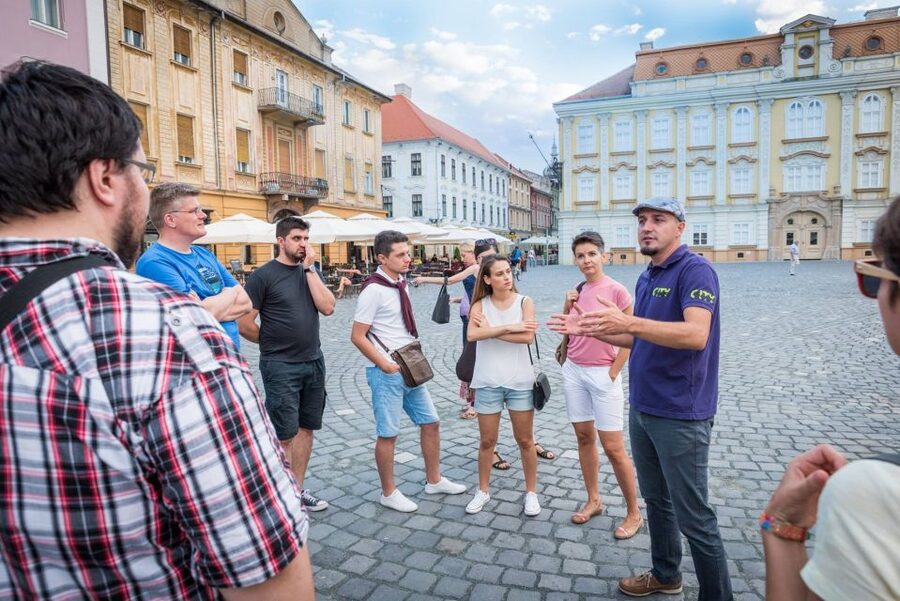
The tour ends with the Revolution Memorial of Timișoara, which honors the brave people of the anti-Ceaușescu revolution in Timișoara. This is where the tour shifts from explaining events to emphasizing meaning.
You will also want to know this specific practical point: there is an entrance fee for the Revolution Memorial, listed at 20 RON, and it is not included in the tour price. If you want to plan ahead, consider bringing cash or being ready to pay onsite so the end of the tour stays smooth.
I like how the memorial stop gives you something to process. After moving through sites of resistance, uprising, and tragedy, this is where the story turns toward commemoration. If you are the kind of traveler who prefers to understand history emotionally as well as intellectually, this final stop can feel especially grounding.
The itinerary pacing: 3.5 hours with real momentum
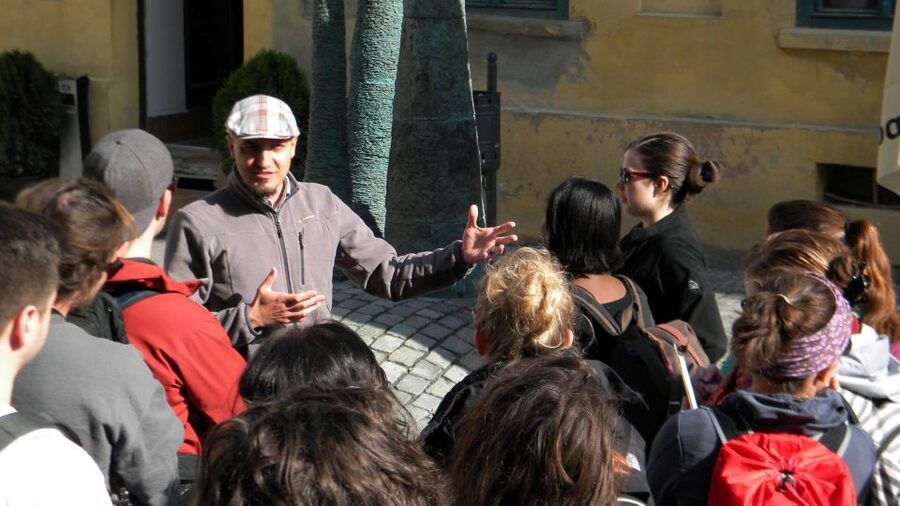
A 3.5-hour duration sounds short until you realize how much historical ground the tour covers. The pacing is designed so that each stop builds the next idea: Communist era context, resistance, uprising origins, final events, and then memorial meaning.
With transportation between stops included, you keep the momentum. You also avoid the common problem of history tours where you spend too long walking between locations and lose the thread. Here, you stay focused on the story.
Small-group size also changes the feel. With a maximum of 10 participants, you are less likely to get lost in a crowd and more likely to hear small details clearly. In reviews, that “easy going manner” and engagement comes up often, and it usually matters most on tours like this where comprehension is everything.
Price and value: $70 for a focused, guide-led history route
At $70 per person, you are paying for a live guide and transportation between stops. You are also paying for a route that concentrates on major, specific historical locations rather than generic sightseeing.
The value is strongest if you care about context. A Communist-era tour is not just about seeing buildings, it is about understanding what the system did and why it collapsed. If that matters to you, $70 for 3.5 hours with multiple major sites can feel reasonable, especially in a small group.
The one cost you should factor in is the Revolution Memorial entrance fee of 20 RON. It is not included, so add that to your mental budget. Otherwise, the rest of the experience is packaged around the guide-led story and the included movement between stops.
What kind of traveler this tour suits
This is a strong match for you if you like history that connects to specific places and dates. It is also ideal if you want a guide who can explain the political background without making it feel like a textbook.
In reviews, guides are praised for English quality and storytelling, including easygoing delivery from guides like Andrei and professional, helpful explanations from guides like Sergio. Roberta is also mentioned as knowledgeable, with tours that include anecdotes and information that helps outsiders feel what daily life might have been like.
If you want something light, quick, and casual, this might feel heavy. But if you want to understand Romania’s Communist past with a clear thread, this tour is likely one of the more meaningful ways to spend a half-day in Timișoara.
Who might want to skip it
You might want another type of tour if you dislike politically intense subject matter. This route is explicitly about the darkest days of Communism and the conflict leading to the end of Ceaușescu’s regime.
Also, if you only want a short overview and you do not care about the broader 50-year evolution, you may find the depth a bit much for a single afternoon.
Should you book the Grand Communism Tour?
I’d book it if you want more than “what happened” and you care about why events unfold the way they do. The combination of SCARTZ and its Communist Customer Museum basement, the resistance monument, the Reformed Hungarian Church as a starting point for December 1989, and the final memorial stop makes it feel like a complete storyline in 3.5 hours.
Two practical checks before you decide: make sure you are okay with serious historical themes, and plan for the 20 RON entrance fee at the Revolution Memorial. If those fit your comfort level, this tour is a high-value way to understand Timișoara’s role in Romania’s 1989 turning point.
FAQ
How long is the Timisoara Grand Communism Tour?
The tour lasts 3.5 hours.
How much does it cost, and what is included?
It costs $70 per person. The included items are the tour guide and transportation between stops.
Where do I meet the guide?
Meet in front of the Orthodox Cathedral.
What languages is the tour offered in?
The tour is offered with a live guide in English and Romanian.
Is there an entrance fee during the tour?
Yes. The entrance fee to the Revolution Memorial is 20 RON, and it is not included in the tour price.
Is free cancellation available?
Yes, you can cancel up to 24 hours in advance for a full refund. You can also reserve and pay later.
Everything Else We Reviewed In Timisoara
- The Classic Tour of Timisoara
★ 5.0 · 154 reviews - Weekly Guided Tour in English – Tuesday, Thursday, Saturday
★ 5.0 · 84 reviews - Timisoara All in One – Walking and Tram Tour
★ 5.0 · 72 reviews - Timisoara: Guided Walking Tour
★ 4.9 · 38 reviews - Day trip to Corvin Castle and Sibiu (and back) from Timisoara
★ 5.0 · 30 reviews
The Communist Years, Retold
- The Grand Tour of Communist Ages at Timisoara
★ 5.0 · 17 reviews
Timisoara On Foot And By Tram
- The Classic Tour of Timisoara
★ 5.0 · 154 reviews - Timisoara All in One – Walking and Tram Tour
★ 5.0 · 72 reviews - Timisoara: Guided Walking Tour
★ 4.9 · 38 reviews - Day trip to Corvin Castle and Sibiu (and back) from Timisoara
★ 5.0 · 30 reviews - Timișoara Highlights – Walking Tour
★ 5.0 · 28 reviews
Recently added around Timisoara
- Nera Gorge National Park – Private Day Tour from Timisoara★ 4.5 · 4 reviews
- Timisoara: Jewish Heritage Walking Tour★ 5.0 · 4 reviews
- Timisoara Downtown Dream Tour★ 5.0 · 5 reviews
- Timisoara: Private Walking Tour with a Local Guide★ 4.5 · 5 reviews
- The Jewish Heritage Tour of Timisoara★ 5.0 · 9 reviews
Timisoara Tours, compared.
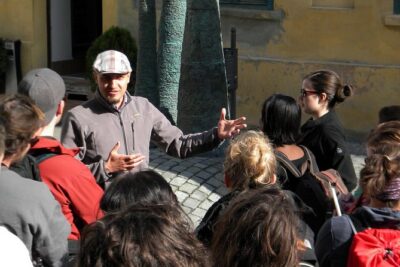 ★ 5.0The Classic Tour of TimisoaraFrom $48154 reviews
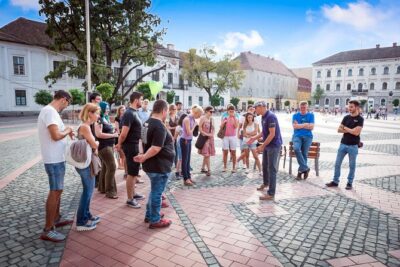 ★ 5.0Timisoara All in One – Walking and Tram TourFrom $9272 reviews
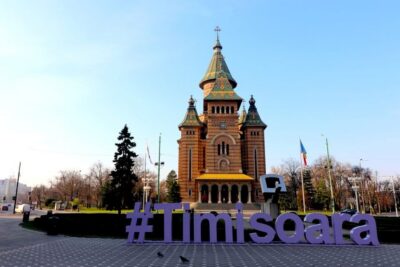 ★ 4.9Timisoara: Guided Walking TourFrom $2338 reviews
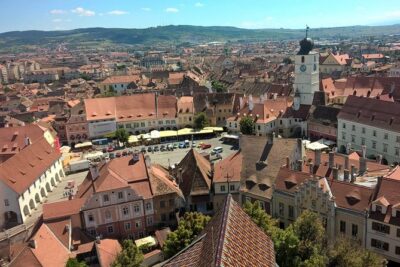 ★ 5.0Day trip to Corvin Castle and Sibiu (and back) from TimisoaraFrom $18530 reviews
 ★ 5.0Timișoara Highlights – Walking TourFrom $3528 reviews
 ★ 5.0Timisoara: Classic Walking TourFrom $4226 reviews
 ★ 5.0The Grand Tour of Communist Ages at TimisoaraFrom $6617 reviews
 ★ 5.0One Day in Transylvania – Departure from TimisoaraFrom $17016 reviews
Browse the lists this tour appears in