
REVIEW · BUCHAREST
Contrasts of Communism – Small Group Walking Tour in Bucharest
Communism’s stories are written into Bucharest. In small groups with guide Elena, you get sharp context and a more personal feel, plus useful stops you will not find on your own. The only real catch is it’s a moderate walking tour, so bring good shoes and be ready for streets and stairs.
This route moves like a history lesson you can follow in real life, starting at the Revolution and ending near the dancing fountains. You’ll ride along public transit to reach a working-class area, then step into quieter places like the memorial cemetery where the tone turns reflective fast.
Palace of Parliament is the big dramatic finisher, but the entry ticket is not included, so budget extra if you want to go inside.
In This Review
- Key Highlights You’ll Feel on This Walk
- Why This Bucharest Walk Works: History You Can See on the Street
- Revolution Square: Where the 1989 Last Speech Landed
- University’s Square (KM0): The Freedom of Speech Thread
- Eroii Revolutiei: Working-Class Blocks, Public Transit, and Street Art Change
- Memorial Cemetery at Cimit. Eroilor Revolutiei: Revolution Stories with Names
- Parcul Carol I: Big Views, Old Power, and a Monument That Still Speaks
- Palace of Parliament: The Second-Largest Administrative Building, and the Ticket Question
- Unirii Boulevard and the Dancing Fountains Finish: How the City Reuses Its Stage
- The Guide Makes the Difference: Elena, Photos, and Real Answers
- Getting There and Timing: A 3-Hour Walk That Uses the City
- What’s Included, What’s Not, and How to Think About Price
- Who Should Book This Tour (and Who Might Prefer Something Else)
- Should You Book Contrasts of Communism in Bucharest?
- FAQ
- How long is the Contrasts of Communism walking tour?
- How much does the tour cost?
- Is the tour in English?
- What is the group size limit?
- Does the tour include entry to the Palace of Parliament?
- Is there a weather requirement?
Key Highlights You’ll Feel on This Walk
- Small group size (max 8) means more time to ask questions and get answers in plain language.
- Elena’s storytelling style leans on photos and real perspective, not memorized monologues.
- Public transportation included, so you see more than postcard streets.
- Off-the-beaten-path neighborhood stop shows how 1970s communist blocks are being remade with street art.
- Memorial Cemetery stop keeps the revolution human, not just historical.
- Palace of Parliament is only outside, unless you add the ticket yourself.
Why This Bucharest Walk Works: History You Can See on the Street
Bucharest has a talent for mixing eras. One block can look like nothing, then the next turns into a clue: a square where crowds gathered, a monument that still casts a long shadow, or a neighborhood where the newest paint job has a quiet message about change.
This tour is built around contrasts, from the rise and fall of Romania’s communist dictatorship to how daily life looks decades later. You walk, you stop, you talk. That matters because communism is hard to picture from a distance. Hearing the story while you’re standing at the exact place where it happened makes the details stick.
And you do not get stuck in just “big sights.” You also get practical context on the current political climate, plus a working-class district that shows what “after” can look like.
Revolution Square: Where the 1989 Last Speech Landed
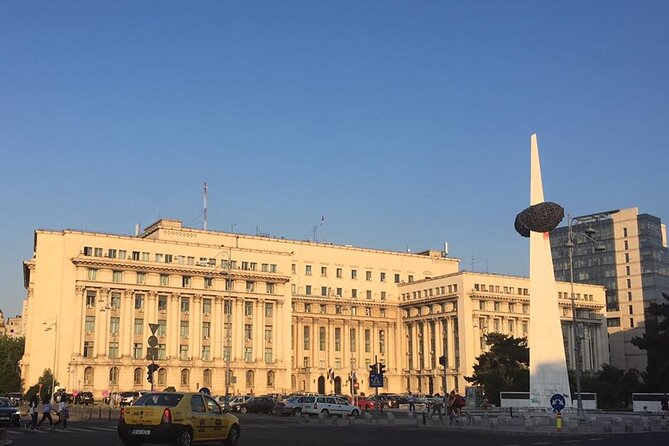
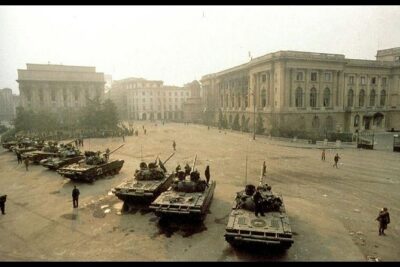
Your first stop is Revolution Square, tied directly to Nicolae Ceausescu’s last speech in 1989. Even if you only know the headline version of the revolution, this is where you start connecting the dots in a more grounded way.
You’ll spend about 30 minutes here, with the focus on the rise and fall of the dictatorship. The key value is timing. Instead of treating 1989 like a single moment, you get a sense of how the pressure built, how public life changed, and why that final speech turned into a tipping point.
One practical tip: this is the kind of start where your questions will start early too. If your guide is Elena (she often is), you’ll find she’s comfortable answering follow-ups in an organized, human way, not in a rush.
The Ceausescu years, told other ways
University’s Square (KM0): The Freedom of Speech Thread
Next comes University’s Square, described as KM0 of Romanian freedom of speech. That’s a loaded label, and it’s exactly why this stop helps.
You’ll stand where early heroes for liberty died in Bucharest on December 21, 1989. Then the discussion broadens into what the idea of freedom of speech means in Romania today, not just what it meant in one week of 1989.
What I like about this sequence is it avoids turning history into only dates and buildings. It uses the story of protest and loss to explain political attitudes that still matter in everyday life.
Eroii Revolutiei: Working-Class Blocks, Public Transit, and Street Art Change
After the squares, you travel off the beaten path using public transportation. That’s not just efficient, it’s smart. You get to see the city as residents actually move through it, not just as tourists hop between landmarks.
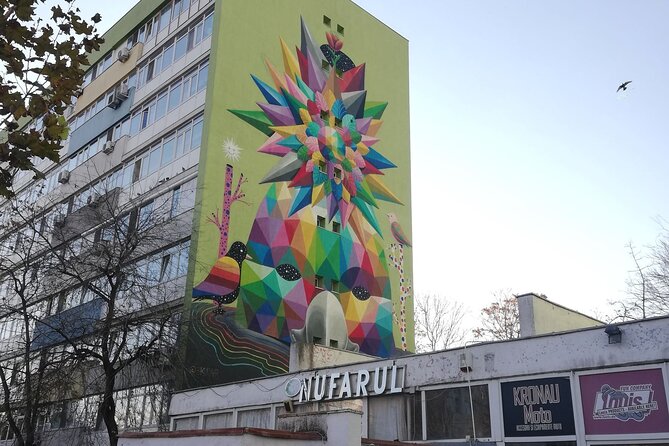
At Eroii Revolutiei, you explore a typical working-class neighborhood. You’ll see the 1970s grey communist blocks, then look at how the area is getting reinvented through colorful street art. The stop is shorter, around 15 minutes, but it lands an important point fast: the communist era didn’t vanish. It got absorbed into the urban fabric, and new people have kept reshaping it.
If you like walking tours that mix history with what you can see right now, this is one of the best parts. It’s also one of the most visually different stops, because the contrast between old concrete and new murals is immediate.
Memorial Cemetery at Cimit. Eroilor Revolutiei: Revolution Stories with Names
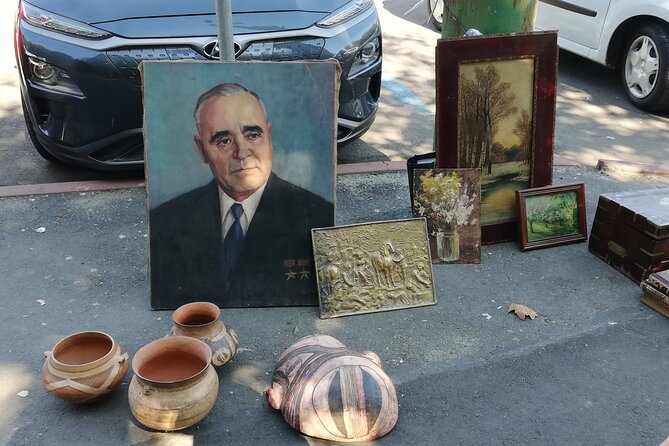
Then the pace turns quieter. You’ll walk around Cimit. Eroilor Revolutiei, the memorial cemetery dedicated to the heroes killed in the 1989 revolution, and learn personal stories along the paths.
This segment runs about 30 minutes, and the tone is more reflective than dramatic. It’s not meant to feel like a history lecture. It feels like the tour is asking you to slow down and remember that “events” were made of people.
A useful mindset here: if you go in expecting only grand political narratives, this cemetery stop can surprise you in a good way. It helps your brain shift from abstract systems to real lives impacted by those systems.
Parcul Carol I: Big Views, Old Power, and a Monument That Still Speaks
Now you head to Parcul Carol I, where you’ll get a unique view from one of Bucharest’s higher hills. The viewpoint matters because it turns buildings into patterns and makes the city feel navigable.
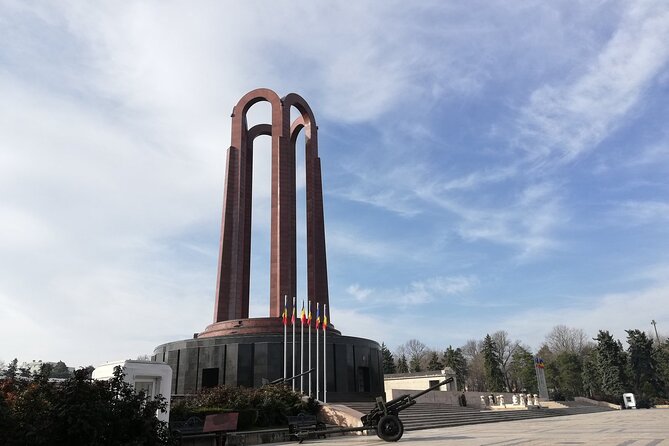
You’ll also discover the Monument of the Heroes for the Freedom of the Motherland, built in honor of communist party leaders. That’s a key contrast moment. The park view is open and scenic, but the monument is a reminder that regimes often stage “meaning” in stone.
This stop is about 30 minutes, and it helps tie together what you saw earlier: how power tried to control public space, public memory, and public emotion.
More Bucharest on foot
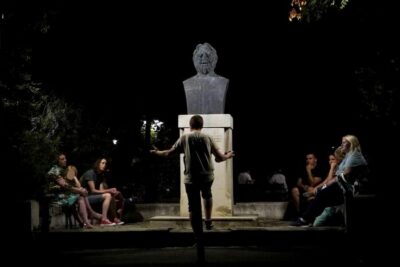
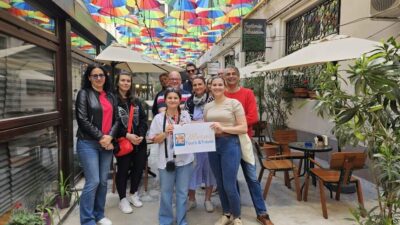
Palace of Parliament: The Second-Largest Administrative Building, and the Ticket Question
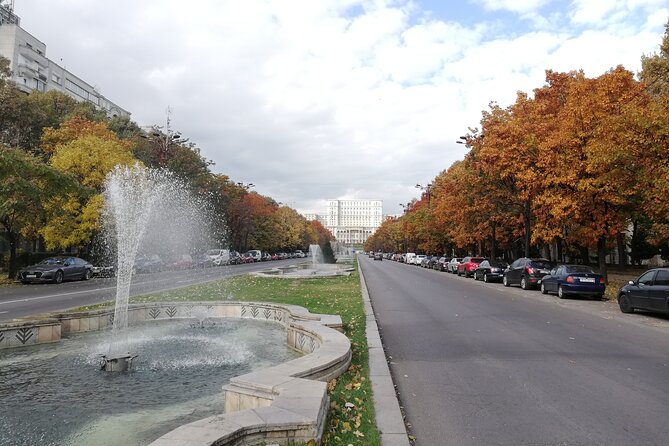
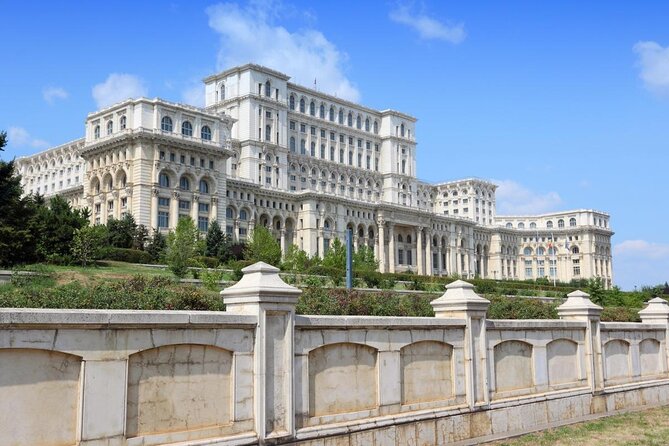
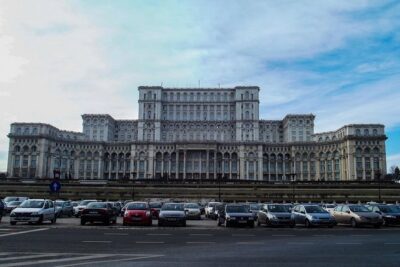
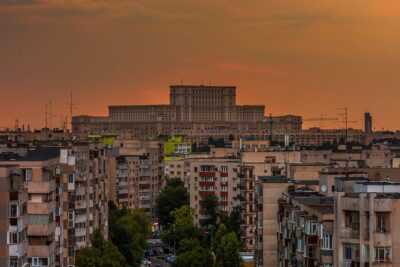
After the park, you return toward the city center and stand in front of the Palace of Parliament. It’s described as the second-largest administrative building in the world and the last whim of Nicolae Ceausescu.
You get around 30 minutes here, and you’re standing outside. Importantly, the Palace of Parliament admission ticket is not included. So if you want to go inside, you’ll need to plan for that separately.
This is where I’d steer your expectations carefully. Outside photos are dramatic, and the building’s size and symbolism are hard to miss. But if you want the full experience, treat it like an optional add-on.
Unirii Boulevard and the Dancing Fountains Finish: How the City Reuses Its Stage
You end near Bulevardul Unirii, close to the dancing fountains. The tour’s ending point is described as having a home-court advantage design, meant to humble world leaders.
That sounds odd at first, but it’s an interesting way to finish. You started with a regime’s final speech. You end with a public space designed to impress, to stage power, and to shape how people gather. It’s the same theme, just updated for a new century.
The final stop is short, about 15 minutes. It gives you time to regroup your notes, ask a last question, and get your bearings for the rest of your Bucharest day.
The Guide Makes the Difference: Elena, Photos, and Real Answers
A standout factor here is the human side of the tour. Many people specifically call out Elena for being friendly, passionate, and able to explain both big events and the everyday impact of communism. The most repeated compliment is not just her facts, it’s how she connects them.
A huge plus is that Elena uses historical photographs. That small detail changes how you process the story. When you can compare old streets and later changes, the transformation feels real, not theoretical.
Another frequent theme in the feedback is the pace. This does not feel rushed. With a maximum of 8 travelers, you can ask questions without feeling like you’re interrupting a conveyor belt. One person even noted the tour felt like a conversation with someone who has lived through the subject matter through family experience. That kind of perspective can make a history topic feel less like school and more like understanding.
Getting There and Timing: A 3-Hour Walk That Uses the City
The tour lasts about 3 hours. It’s designed to keep moving but not stampede. Your route includes a mix of standing time at key squares, walking between areas, and a public transit segment to reach the neighborhood stop.
That transit piece is practical. It also helps you learn the rhythm of Bucharest beyond the tourist core. You should expect a bit of walking spread across the morning or afternoon, depending on the departure time.
One practical recommendation: if you can, start with a solid breakfast. Several people point out that you should come fed because you’ll be on your feet for the full window.
What’s Included, What’s Not, and How to Think About Price
This tour costs $42.05 per person for about 3 hours, and it’s offered in English. Most stops have admission ticket marked as free, which keeps the experience from turning into a pay-to-enter scavenger hunt.
The main exception is Palace of Parliament, where the admission ticket is not included. So the honest way to judge value is this: you’re paying for guided context, route planning, and access to meaningful locations, with only one major possible extra cost if you decide to go inside the palace.
Given the small group limit, the language option, and the fact that you use public transportation as part of the experience, I think the price is fair. You’re not just buying a walk, you’re buying interpretation, and that’s what makes this kind of subject land.
Who Should Book This Tour (and Who Might Prefer Something Else)
Book it if you want more than surface-level sightseeing. If your goal is to understand Romania’s 1989 revolution, why it mattered, and how it echoes in daily life, this is a strong choice.
It’s also a good match if you like tours that mix the serious with the human scale. The cemetery stop is a good example, and the neighborhood street art angle keeps the story from becoming one-note tragedy.
Consider a different tour if you want a relaxed, low-effort stroll focused only on architecture and views. This is still a walking tour with moderate physical fitness expectations, plus the theme can get heavy at times. It’s not a party tour. It’s meant to help you think.
Should You Book Contrasts of Communism in Bucharest?
I’d book this if you’re the type of traveler who likes context while you’re standing in the middle of history. The blend of key 1989 locations, a working-class neighborhood, and a memorial cemetery gives you a balanced picture, not a one-sided script.
I’d also book it if you care about the guide experience. The repeated praise for Elena, including her ability to answer questions and her use of old photographs, is exactly what turns a route into a real understanding.
Just go in with two expectations set up front: you will walk, and Palace of Parliament entry is not included, so decide ahead of time if you want to pay for inside access.
FAQ
How long is the Contrasts of Communism walking tour?
It runs for about 3 hours (approx.).
How much does the tour cost?
The price is $42.05 per person.
Is the tour in English?
Yes, the tour is offered in English.
What is the group size limit?
The maximum group size is 8 travelers.
Does the tour include entry to the Palace of Parliament?
No. The Palace of Parliament admission ticket is not included, though you do stand in front of the building during the tour.
Is there a weather requirement?
Yes. The experience requires good weather, and if it’s canceled due to poor weather, you’ll be offered a different date or a full refund.
Whatever Else Bucharest Is Selling
- Bucharest to Dracula Castle, Peles Castle and Brasov Guided Tour
★ 4.5 · 2,933 reviews - Bucharest: Palace of Parliament Tickets and Guided Tour
★ 4.4 · 1,877 reviews - Transylvania and Dracula Castle Full Day Tour from Bucharest
★ 4.5 · 1,589 reviews - Bucharest: City Highlights Guided Walking Tour
★ 4.9 · 1,482 reviews - From Bucharest: Brasov Peles & Dracula’s Castle Day Tour
★ 4.5 · 1,244 reviews
Everything Else We Reviewed In Bucharest
- Bucharest: Dracula’s Castle, Peles Castle, & Brasov Old Town
★ 4.5 · 17,858 reviews - Bucharest: Dracula Castle, Peles Castle & Brasov Old Town
★ 4.6 · 10,891 reviews - Bucharest: Dracula’s Castle, Peleș Castle & Brașov Day Trip
★ 4.5 · 5,919 reviews - Bucharest: Palace of Parliament Tickets and Guide
★ 4.3 · 3,182 reviews - Bucharest: Day Trip to Dracula Castle, Peles Castle & Brașov
★ 4.4 · 3,049 reviews
The Communist Years, Retold
- The Real tour of Communism
★ 5.0 · 666 reviews - Life under Communism
★ 5.0 · 358 reviews - 3-Hour Guided Tour of Communist Bucharest
★ 4.9 · 303 reviews - Bucharest Essential Tour: Old Town, Calea Victoriei & Communism
★ 5.0 · 142 reviews - Communism in Bucharest – Landmarks, Museum & Communist Appetizers
★ 5.0 · 111 reviews
Recently added around Bucharest
- Private Tasting Expedition Along Romania’s Most Famous Wine Route★ 5.0 · 3 reviews
- Private Guided Tour of Peles Castle and Bran Castle from Bucharest★ 5.0 · 3 reviews
- Private Sightseeing Tour of Bucharest★ 4.5 · 3 reviews
- Discover Europe’s Deepest Mines & Peles Castle’s Royal Charm★ 5.0 · 3 reviews
- Bucharest City Tour and Wine Tasting★ 5.0 · 3 reviews
Communism and Ceausescu Tours, compared.
 ★ 5.0The Real tour of CommunismFrom $32666 reviews
 ★ 5.0Life under CommunismFrom $42358 reviews
 ★ 4.93-Hour Guided Tour of Communist BucharestFrom $29303 reviews
 ★ 5.0Bucharest Essential Tour: Old Town, Calea Victoriei & CommunismFrom $24142 reviews
 ★ 5.0Communism in Bucharest – Landmarks, Museum & Communist AppetizersFrom $48111 reviews
 ★ 4.9Bucharest: Relics of Communism 3-Hour Walking TourFrom $4477 reviews
 ★ 5.0Bucharest Under Communism: Life, Terror & HopeFrom $2376 reviews
 ★ 4.6Bucharest: Entry ticket at the Museum of CommunismFrom $957 reviews
Browse the lists this tour appears in